

Since 2014, 570 squares and parks have been created and renovated in the capital, including Peremoha, Sovky, and Nyvky, Kyiv Mayor Vitali Klitschko said.
“Since 2014, we have renovated and created a total of 570 parks and squares. From now on, Kyiv residents and guests of the capital, as well as families who took refuge in our city during the war, can walk along the breathtaking slopes of Volodymyrska Hill, the modern Kurenivskyi Park, and the renovated Peremoha, Sovky, and Nyvky parks, a new recreation area in Troyeshchyna, as well as a real green diamond of Kyiv – Natalka Park, which has already become part of a large recreational area that we continue to create in Obolon,” Klitschko wrote on his Telegram channel on Wednesday on the occasion of the 10th anniversary of his mayoralty in the capital.
Klitschko has been the mayor of Kyiv since June 5, 2014.

index housing prices in Ukraine at the end of January-March 2024 amounted to 116%, while in the same period of 2023 the index amounted to 111.4%, reported the State Statistics Service (Gosstat). According to its data, in the primary market housing prices in the first quarter of 2024 accelerated growth to 17.6% against 9.8% in the first quarter of last year. Three-room apartments went up in price the most – by 17.9%. The growth of prices for one-room apartments amounted to 17.8%, two-room apartments – 17.5%.
In the secondary market, prices accelerated growth to 15.3% in January-March 2024 against 12.5% in the same period of 2023. Thus, the price growth for one-room apartments amounted to 15.9%, two-room apartments – 15.2%, three-room apartments – 15.5%.
According to the agency, compared to the previous quarter, housing prices rose by 5.7%, with the primary market – by 5.2% and the secondary market – by 6%.
According to the State Statistics Committee, in the first quarter of 2024, prices on the “primary” increased for one-room apartments by 5.2% compared to the fourth quarter of 2023, for two-room apartments – by 5.3%, three-room apartments – by 4.9%. In the secondary market, prices rose by 6.1%, 6.2% and 5.9%, respectively.
The State Statistics Committee pointed out that the figures are given without taking into account the temporarily occupied territories and part of the territories where hostilities are (were) conducted.
Germany’s central bank expects the country’s economy to grow in April-June for the second consecutive quarter after falling at the end of 2023.
According to preliminary calculations of the statutory office of the Federal Republic of Germany, in January-March GDP increased by 0.2% compared to the previous three months. It fell 0.5% in October-December 2023.
“The economy is likely to expand slightly again in the second quarter,” the Bundesbank said in a statement on Wednesday.
Activity in the services sector was likely to have continued to strengthen on the back of rising household income and consumer spending.
“Growth in household disposable income is likely to take the upper hand from consumer uncertainty,” Central Bank analysts suggested.
However, they noted that the construction sector remains very weak.
The German labor market is expected to remain resilient and wages look set to continue to rise rapidly. This could be a risk to cooling inflation, which the Bundesbank estimates will accelerate slightly again in May.
The final data on Germany’s first-quarter GDP dynamics will be released on May 24, while preliminary information for the second quarter will be presented on July 30.
Earlier Experts Club analytical center and Maxim Urakin released a video analysis of how the GDP of the world’s countries has changed over the past years, more detailed video analysis is available here – https://youtu.be/w5fF_GYyrIc?si=BsZmIUERHSBJrO_3.
Subscribe to Experts Club YouTube channel here – https://www.youtube.com/@ExpertsClub
CENTRAL BANK, ECONOMY, EXPERTS CLUB, GDP, GERMANY, MACROECONOMICS, URAKIN
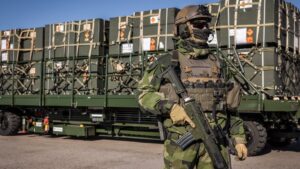
The Swedish government intends to provide long-term support to Ukraine through a three-year military support program (2024-2026) totaling SEK 75 billion (EUR 6.5 billion), the Swedish government website reports.
“In order to strengthen Swedish support for Ukraine, as well as to strengthen the long-term perspective, the government and the Sweden Democrats agree to introduce a military support program for Ukraine for 2024-2026. Sweden will increase its support, and its volume will amount to SEK 75 billion in military support for 2024-2026, SEK 25 billion per year,” the statement said.
It is noted that Sweden’s total military and civilian support for Ukraine, taking into account this proposal, will amount to more than SEK 100 billion. Military support within Ukraine can, for example, take the form of free transfer of defense equipment, financial contributions and financial support for the purchase of defense equipment.
The government also noted that, depending on the type of support used, the program’s framework could burden public finances for several years and even beyond 2026.
Following the Russian invasion in February 2022, Sweden has allocated the equivalent of SEK 37 billion for various efforts to support Ukraine. In particular, through 15 military support packages totaling about SEK 30 billion, and that Ukraine is now the largest country where Swedish aid is directed.
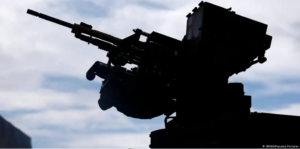
Governments face increased borrowing, taxes and public sector cuts to finance their soaring military budgets. European NATO members are set to spend a record $380 billion on defense this year — a tough sell to voters.
If you want a reminder of the security threats faced by the world today, take a look at how much governments have hiked defense spending. Global military budgets reached $2.44 trillion (€2.25 trillion) last year, nearly 7% higher than in 2022. It was the steepest year-on-year rise since 2009, recorded during the second year of Russia’s full-scale invasion of Ukraine. For every man, woman and child, world military spending is now at its highest since the end ofthe Cold War — at $306 per person.With Kyiv unprepared to fight such a large-scale conflict, Western countries ramped up military aid to Ukraine, while other escalating tensions with Russia and in the Middle East and Asia also prompted governments to shore up their defenses, unlike any time since World War II.
In 2024, the United States has allocated $886 billion for defense, a rise of more than 8% over two years. For the first time, NATO’s European partners are projected to meet the target set by the military alliance of spending 2% of gross domestic product (GDP) — a major bugbear of former US President Donald Trump, as many weren’t. This year alone, they’ve budgeted a collective $380 billion on defense, NATO chief Jens Stoltenberg said in February.
Poland leads the way (measured by GDP)
While Germany is still playing catch up with other NATO members — helped by Chancellor Olaf Scholz’s special €100 billion ($109 billion) fund to upgrade the Bundeswehr armed forces — Poland is due to spend 4.2% of GDP on defense this year, the highest in the military alliance. Others on NATO’s eastern flank also far exceed or will soon surpass the 2% target, due to the heightened security threat on their borders.
As a result, governments are facing an increasingly tough choice over how to pay for those new defense commitments, just as many economies weaken due to the effects of the ongoing global geopolitical tensions and lingering inflation. Many countries are already fiscally stretched.
“Short-term commitments for military equipment for Ukraine should be financed with additional debt. That’s the way wars have historically been funded,” Guntram Wolff, a senior fellow at the Brussels-based think tank Bruegel, told DW. “But for longer-term increased defense spending, either taxes need to go up or you cut other spending.”
“Is it painful politically? Sure! But if you spread it across the various government departments, it will be less so.”
Germany cuts ministry budgets, apart from defense
Germany, which faces the prospect of lower tax revenues due to weaker growth, has slashed spending across most government departments and has singled out international development aid for an almost €2 billion cut this year.
“Germany has some very significant trade-offs to make,” Jeffrey Rathke, president of the American-German Institute at the Johns Hopkins University in Washington D.C., told DW. “They need to be managed politically so that they don’t erode public support for strengthened security and defense.”
Leftist political parties in several countries have led calls for peace between Russia and Ukraine and have stoked the debate over whether the new military spending could be better spent on health care or social programs.
Rathke noted how Germany’s debt brake, which limits the government’s ability to borrow money to cover gaps in the budget, meant that Scholz’s coalition has less wiggle room compared to, say, France.
While Poland’s finances are in much better shape than many Western European countries, Prime Minister Donald Tusk, who ousted the right-wing populist government last October, is struggling to deliver on election promises, including raising the limit before income taxes are levied, due to the much higher defense budget.
Other EU states struggle with NATO target
Other countries, such as those hit worst by the 2011 European debt crisis, have already faced deep austerity measures and any further cuts could affect the quality of public services.
Italy, for example, is expected to spend just 1.46% of GDP on defense this year and warned that meeting NATO’s 2% target by 2028 would be tricky. The country’s debt-to-GDP ratio is forecast to hit 137.8% this year.
Other countries in similar fiscal tight spots, like Spain, could find limits on any additional deficits needed to fund new military spending, which could be anything from 0.5% to 1.5% of GDP. Last year, Madrid hiked its defense budget by 26%.
“The European debt crisis forced budgetary adjustments of 5% to 7%, even 10% for Greece,” Wolff said. “Fortunately, these cuts will be much less painful than anything the European south had to endure.”
Sweden, Norway, Romania and the Netherlands have lower debt burdens. But even so, Dutch far-right firebrand Geert Wilders also plans significant spending on social security housing and agriculture to ensure his new four-party coalition holds.
“As well as the fiscal capacity and the indebtedness problems, this resource debate is overlaid on an ongoing difference of threat perception across Europe,” Rathke said, so countries located further from Ukraine may be less keen to prioritize defense than those near its border.
Next target: 3%?
Defense spending is expected to keep increasing over the next decade. NATO’s 2% defense spending target was first set in 2014 after war broke out between the Ukrainian military and Russian-backed separatists in the east of the country and Moscow annexed Ukraine’s Crimea peninsula.
Last year, at a meeting in Vilnius, Lithuania, NATO leaders agreed that the target could often exceed 2%. Germany, which until now has struggled to meet the original target, has now mooted the prospect of a 3% budget target, which would have even bigger ramifications for government finances.

International tourism revenues reached $1.5 trillion in 2023, which means a full recovery to the level of pre-pandemic 2019 in nominal terms and by 97% adjusted for inflation, according to the United Nations World Tourism Organization (UN Tourism).
According to the organization, Europe received the highest revenues from international tourism – $660 billion, which is 7% more than in pre-pandemic 2019. Revenues in the Middle East increased by 33%. Last year, America recovered 96% of its pre-pandemic international tourism revenues, Africa – 95%, and the Asia-Pacific region – 78%.
According to UN Tourism, in 2023, GDP from tourism recovered to the level of 2019. It is estimated to have amounted to $3.3 trillion, or 3% of global GDP.
As noted, several destinations achieved outstanding results in terms of international tourism revenues in the first quarter of 2024 compared to 2019. Among them are Serbia (plus 127%), Turkey (plus 82%), Pakistan (plus 72%), Tanzania (plus 62%), Portugal (plus 61%), Romania (plus 57%), Japan (plus 53%), Mongolia (plus 50%), Mauritius (plus 46%) and Morocco (plus 44%).



