

Members of the “Ukrcement” association expect the newly formed Cabinet of Ministers to engage in an open dialogue with the industry regarding problematic issues and to prioritize the interests of domestic producers, Lyudmyla Kripka, executive director and head of the scientific and technical information department at the “Ukrcement” association, told the “Interfax-Ukraine” news agency.
“We expect the new government to engage in an open dialogue and be willing to listen to the industry’s position on problematic issues. We hope that protecting domestic producers will remain a priority of state policy, and that there will be a timely and state-oriented response to the challenges currently facing the cement industry,” she noted.
Among the achievements of the current government, Kripka highlighted the successful harmonization of national standards with European Union legislation as part of the implementation of Ukraine’s Law “On the Supply of Construction Products to the Market.” In addition, she emphasized the support provided to domestic producers, which has been a key factor in maintaining the competitiveness of Ukrainian industry.
At the same time, despite numerous appeals by the Association and its partners to the government, it has not been possible to protect Ukrainian cement producers from the discriminatory impact of the CBAM (Carbon Border Adjustment Mechanism), Kripka added.
“The default CO2 emission values set for Ukraine have effectively become a barrier to the export of Ukrainian cement products to European Union countries,” she explained.
For building materials manufacturers, it is important that issues related to infrastructure development, national reconstruction, and industrial policy remain among the government’s priorities regardless of the organizational model of central executive bodies, Kripka said in response to a question about the possible separation of a standalone Ministry of Infrastructure from the Ministry of Community and Territorial Development.
“We believe that the effectiveness of public administration is determined not so much by the number of ministries as by the quality of their work, the level of coordination, and the speed of decision-making. Furthermore, any structural changes should not lead to delays in the implementation of government programs, duplication of functions, or complications in business interactions with government agencies,” the executive director concluded.
The “Ukrcement” Association was established in January 2004 through the reorganization of the Ukrainian Concern of Cement Industry Enterprises and Organizations “Ukrcement.” The association comprises five groups of companies, including nine cement plants.
CABINET OF MINISTERS, CBAM, CEMENT, RECONSTRUCTION, UKRCEMENT

New Zealand’s Immigration Service has expanded opportunities for foreign entrepreneurs applying for a Business Investor Work Visa. The changes took effect on July 6, 2026, and pertain to the list of eligible business types, transaction structures, and sources of investment capital.
Applicants are now permitted to acquire franchise businesses that meet the established requirements. Previously, franchises were not considered an acceptable investment vehicle under this program.
Investors are also now permitted to purchase a business of their choice through a New Zealand-registered legal entity that is a tax resident of the country. Additionally, gifted funds or assets may now be used to finance the purchase, provided their lawful origin is verified.
Authorities explain the changes as an effort to align immigration requirements with standard commercial practices and expand the range of available investment opportunities. The reform is expected to make it easier to attract foreign capital, management expertise, and international business connections to New Zealand companies.
The Business Investor Work Visa was introduced on November 24, 2025, for entrepreneurs willing to acquire and personally manage a business already operating in New Zealand. The visa is valid for up to four years and may serve as a basis for subsequently obtaining resident status.
The program offers two investment options. With an investment of at least 1 million New Zealand dollars, an investor may apply for a resident visa after three years of managing the business. An investment of at least 2 million New Zealand dollars allows the investor to take advantage of an expedited process and apply for resident status after 12 months. In this case, the entrepreneur must continue to manage the acquired business for at least three years, including the period after receiving the resident visa.
In addition to the main investment, the applicant must confirm the availability of at least 500,000 New Zealand dollars in reserve funds for living expenses and family support. The applicant must be 55 years of age or younger. They must also have at least three years of relevant business experience or experience in a managerial position and be proficient in English. The application fee starts at 12,380 New Zealand dollars.
The business being acquired must have been operating in New Zealand for at least five years and have at least five full-time equivalent employees. The transaction value, excluding the cost of real estate and GST, must be at least 1 million New Zealand dollars, and the investor’s stake in the company must be at least 25%.
After the acquisition, the entrepreneur is required to actively participate in management, retain at least five jobs, and create at least one additional permanent job for a New Zealand citizen or resident. To transition to a resident visa, the investor must be present in the country for at least 184 days per year.
The value of real estate owned by the company does not count toward the minimum investment amount. This means that purchasing a business along with an expensive building or plot of land does not, in and of itself, guarantee that the program’s financial requirement will be met. The value of the operating business is assessed separately.
According to the industry publication *Investment Migration Insider*, which cites a representative of a New Zealand immigration firm, only one Business Investor Work Visa was approved between November 2025 and March 2026.
The Business Investor Work Visa differs from the Active Investor Plus program. The former is designed for entrepreneurs who purchase and personally manage an existing company. Active Investor Plus is intended primarily for high-net-worth investors and requires an investment of at least 5 million New Zealand dollars in the Growth category or 10 million New Zealand dollars in the Balanced category, without the requirement to actively manage a specific business.

The Polish government has approved a bill requiring the mandatory registration of apartments and houses rented to tourists for short periods. Rentals lasting up to 30 days will officially be classified as hotel services.
The bill must still be reviewed by parliament and signed by the president. Most of the new rules are set to take effect 14 days after the adopted law is published in the official gazette.
A central element of the reform will be the creation of a nationwide registry of tourist accommodations—the Centralny Wykaz Turystycznych Obiektów Noclegowych. This registry will include not only hotels and guesthouses but also private apartments offered through Airbnb, Booking.com, and other platforms.
Each property will be assigned a unique identification number. Owners will be required to include this number in all listings. Online platforms will be required to verify the presence of a registration number and provide booking information to government authorities.
For owners, this means that informal short-term rentals will become significantly riskier. Operating without registration, failing to include an identification number in a listing, or providing false information will result in administrative fines of up to 50,000 zlotys, which is approximately 11,600 euros.
Apartments for short-term rental will have to comply with health, building, and fire safety requirements. Each property must display the house rules, information on quiet hours, and contact information for the owner or manager. However, there are no plans to automatically subject residential buildings to the same fire safety requirements as full-fledged hotels.
Local authorities will be granted the right to designate zones where short-term rentals of private apartments will be restricted or completely prohibited. Such measures may be applied primarily in historic centers and the busiest tourist areas of Warsaw, Kraków, Gdańsk, Sopot, and other cities. The restrictions will not automatically apply to officially classified hotels, motels, and guesthouses.
Residents of apartment buildings, housing communities, and housing cooperatives will be granted additional powers. They will be able to request that the municipality inspect an apartment if tourists regularly disturb the peace, violate safety rules, or disrupt public order.
In the event of repeated violations, the property may be removed from the registry. In such a case, renting it to tourists will be prohibited, and the property may not be re-registered for at least one year. A property owner’s refusal to allow an inspection may also serve as grounds for removal.
Authorities explain the reform as necessary to reduce the informal sector, improve tourist safety, and ensure a level playing field for private landlords and the hotel industry. The Ministry of Sport and Tourism emphasizes that the government does not intend to completely ban affordable short-term rentals, which are used by many Polish families.
For investors, the changes mean higher costs for registering and maintaining properties. Owners will have to register each apartment, comply with safety requirements, and take into account the possibility of local restrictions. The reform may prove particularly challenging for owners of multiple apartments in popular tourist areas.
The reform is also linked to the implementation of EU Regulation 2024/1028 on the collection and exchange of data in the short-term rental market, which has been in effect in the European Union since May 20, 2026. The European rules provide for uniform registration mechanisms and the transfer of information by platforms to government agencies.
Thus, Poland is transitioning from a relatively unregulated model of daily rentals to a system similar to the regulation of the hotel industry. The final deadlines and wording will depend on the bill’s passage through parliament; however, property owners are already advised to prepare documentation for their properties and verify their compliance with health, building, and fire safety requirements.
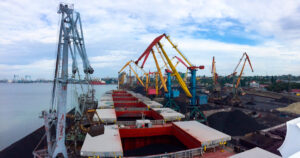
In January–June of this year, Ukraine’s mining companies reduced their exports of iron ore raw materials (IORM) by 25.4% in volume terms compared to the same period last year—down to 12 million 33.825 thousand metric tons from 16 million 137.809 thousand metric tons.
According to statistics released by the State Customs Service (SCS), 2,021,299 metric tons of iron ore were exported in June, 2,239,167 metric tons in May, 2,163,837 metric tons in April, in March—2,300,467 thousand metric tons, in February—1,254,516 thousand metric tons, and in January—2,054,539 thousand metric tons.
During the first six months of the year, foreign exchange earnings from raw material exports decreased by 26.3% to $935.258 million.
Mineral resources were exported primarily to China (42.36% of shipments in monetary terms), Slovakia (18.50%), and Poland (14.13%).
In addition, in January–June 2026, Ukraine imported 224 metric tons of raw materials worth $62,000 from the Netherlands (38.71%), Poland (32.26%), and Italy (29.03%), whereas in January–June 2025, it imported 75,000 metric tons worth $52,000.
As previously reported, Ukraine’s mining companies reduced ore exports in physical terms by 8% in 2025 compared to the previous year—to 30,995,363 metric tons from 33,699,722 metric tons, and foreign exchange revenue decreased by 16.6%—to $2 billion 337.765 million from $2 billion 803.223 million. Exports were primarily shipped to China (44.98% of shipments by value), Slovakia (17.15%), and Poland (16.09%).
In addition, in 2025, Ukraine imported 130 metric tons of raw materials worth $95 thousand from the Netherlands (46.32%), Italy (36.84%), and Norway (13.68%), whereas the previous year it imported 2,042 thousand metric tons worth $414 thousand
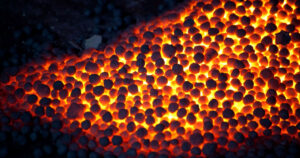
Ferrexpo plc, a mining and ore company with its main assets in Ukraine, produced 1,385,139 metric tons of pellets in January–June of this year, which is 36% lower than in January–June of last year (2,169,631 metric tons), but in the second quarter, it increased production of this product by 64% compared to the first quarter—to 860,213 thousand metric tons from 524,926 thousand metric tons.
According to the company’s press release on Wednesday, total production of marketable products (pellet and iron ore concentrate) for the first half of 2026 fell by 54% compared to the first half of 2025—to 1,556,160 thousand metric tons. In particular, production of premium-grade Fe67% concentrate amounted to 171,021 thousand metric tons, compared to 1,223,504 thousand metric tons (a decrease of 86%). The company also produced 1,221,968 thousand metric tons of premium-grade pellets (a 41% decrease) and 163,171 thousand metric tons of DR pellets (compared to 81,787 thousand metric tons produced in the first half of 2025).
The press release notes that the group continues to operate under significant constraints caused, in particular, by serious operational and financial risks related to the war in Ukraine. These factors include the mobilization of a significant portion of the workforce into the Armed Forces of Ukraine, as well as disruptions and restrictions in logistics, as a result of which only one iron ore pellet production line is currently in operation.
The group continues to focus on cost management and operational activities to preserve working capital amid significant constraints. At the same time, the Group continues to optimize its product mix (the ratio of pellet production to concentrate production) and manage the allocation of shipments among customers. In addition, operating expenses have been reduced across all business lines over an extended period, a situation that will require a solution in the future.
As a result of these measures, as of June 30, 2026, the Group’s available cash balance stood at approximately $27 million (excluding funds held at MBaer Merchant Bank (MBaer), whose banking license was revoked in February 2026). As of June 30, 2026, the Group’s net cash position (excluding lease obligations) was approximately $21 million (for comparison: as of March 31, 2026, this figure was approximately $25 million; as of December 31, 2025, it was $47 million; as of June 30, 2025, it was $50 million; and as of December 31, 2024, it was $101 million).
Given the measures taken by the Group, as well as current production volumes, actual and projected energy prices for the next quarter, and an optimized sales structure, the Group forecasts that its available net cash (net of lease obligations and funds locked up in MBaer) will be sufficient to continue operations under the current challenging conditions until the beginning of the fourth quarter of 2026. This forecast depends on the volatility of iron ore prices and operating expenses (particularly energy costs) and is based on the assumption that there will be no material changes in the Group’s operating conditions (including energy supply) Furthermore, the arbitration administrator appointed as part of the Poltava Mining and Processing Plant’s bankruptcy proceedings will not impose restrictive measures, and there will be no final, non-appealable adverse decisions in the various judicial and administrative proceedings to which the Group is currently a party.
The Group remains in a precarious financial position and is implementing cost-cutting measures across all areas of its operations, particularly with regard to operating and capital expenditures. In addition, significant operating expenditures have been deferred, particularly those related to the optimization of mining operations, repairs, and maintenance of processing and pellet production facilities, as well as mining equipment.
Against this backdrop, the group is maintaining its workforce at 6,299 employees to retain the skilled professionals needed to manage flexible production volumes in response to market demand. This figure currently includes 804 employees serving in the Armed Forces of Ukraine.
The press release states that the Group’s VAT refunds have been suspended since March 2025. As a result of this suspension, as of June 30, 2026, VAT receivables in Ukraine amounted to $90.4 million (net of related provisions); (for comparison: as of March 31, 2026, this figure stood at $90.3 million). Of this amount, as of the date of this announcement, $87.5 million had been claimed for refunds covering the period from January 2025 through June 2026, with the Ukrainian tax authorities having denied refunds for approximately $80.8 million (relating to the period from January 2025 through April 2026).
The company is in negotiations with Ukrainian authorities to find a long-term solution to the issue of obtaining VAT refunds. Although the company is striving to reach an agreement, given the complexity of the situation, the possibility of reaching such an agreement and the timeline for its implementation remain uncertain, according to the press release.
The company also provides an update on the status of its legal proceedings. Specifically, regarding the long-standing legal dispute between “Maxi Capital Group” Financial Company LLC (Maxi Capital) and PGZK regarding disputed guarantee agreements and a claim in the amount of 4.727 billion hryvnia (approximately $105.4 million as of June 30, 2026), the group reports that the main claim is currently being considered by the Supreme Court of Ukraine. On May 1, 2026, the court expanded the panel to 17 judges. The next court hearing in this case is scheduled for October 12, 2026.
Proceedings in the PGZK bankruptcy case: Following the local court of first instance’s decision on February 24, 2026, to open bankruptcy proceedings based on Maxi Capital’s petition, PGZK filed an appeal against that decision. Following the official recusal of the original three-judge panel on April 30, 2026, a new panel was appointed. During the hearing on June 2, 2026, the appellate court heard the parties’ arguments and scheduled the next hearing for July 27, 2026.
The company has updated information regarding its financing options. The Board of Directors continues to believe that raising equity capital is currently the most viable solution within the required timeframe. This capital raise will likely be structured as a conditional placement of new shares among certain existing and new institutional investors with the aim of raising at least $100 million. These funds are necessary to maintain the Group’s working capital levels, meet its short-term operational needs, increase production volumes, and carry out previously deferred work on deposit development (overburden removal) and capital expenditures while operating at reduced capacity over the next 18 months. The Group is actively working on a series of measures necessary to begin implementing the planned capital raise.
The Company continues negotiations with representatives of its largest shareholder—Fevamotinico S.a.r.l.—regarding its participation in the equity financing. At this stage, there is no certainty that the Group will be able to successfully carry out the planned fundraising. If the issues regarding the delay in VAT refunds and financing problems are not resolved in a timely manner, this could lead to serious negative consequences for the Group. In particular, the Company or Group entities may be forced to file for insolvency in the relevant jurisdictions, and shareholders may lose all or a significant portion of their investments.
Regarding the delay in the publication of the audited financial statements for 2025, the listing, and trading of the Company’s shares: Given that the preparation of the financial statements for the year ended December 31, 2025, under the going concern assumption, depends on the successful completion of the planned capital raising, the Company has not yet been able to publish its audited financial results for that period. The results for the 2025 fiscal year are expected to be released concurrently with the launch of the planned capital raising process.
Following the release of the results for the 2025 fiscal year, the company will apply to the UK Financial Conduct Authority (FCA) to lift the suspension of its listing, thereby allowing trading in the company’s shares to resume.
Commenting on the group’s performance, interim acting chairman Lucio Genovese stated, “We are very pleased that we were able to restore stable production during this period, despite the numerous operational and logistical challenges we faced.”
“We took the opportunity to improve our sales mix through exports of direct-recovery pellets (DR pellets/FDP) and continue to cut costs across the entire company to preserve our available working capital, which is being depleted due to the lack of VAT refunds starting in March 2025. We are continuing our efforts to raise capital, which is the most viable solution for addressing the working capital shortfall,” Genovese noted.
As previously reported, Ferrexpo produced 3,221,461 metric tons of pellets in 2025, which is 47% less than in the previous year (6,070,541 metric tons). At the same time, total production of marketable products (pellets and iron ore concentrate) for 2025 decreased by 9% to 6,141,759 thousand metric tons. Specifically, marketable concentrate output amounted to 2,920,298 thousand metric tons, compared to 709,803 thousand metric tons, respectively. The company also produced 81,787 thousand metric tons of DR pellets (compared to 489,720 thousand metric tons in 2024) and 3,139,674 thousand metric tons of premium-grade pellets (a 44% decrease).
In 2024, Ferrexpo increased pellet production by 58% compared to 2023—to 6,070,541 metric tons from 3,845,325 metric tons. In 2023, the company produced 3.845 million metric tons of pellets, which is 36.5% less than in 2022.
Ferrexpo owns a 100% stake in Yeristivsky Mining and Processing Plant LLC, a 99.9% stake in Bilanivsky Mining and Processing Plant LLC, and 100% of the shares in Poltava Mining and Processing Plant PJSC.
FERREXPO, MINING AND PROCESSING PLANT, PELLETS, PRODUCTION, VAT
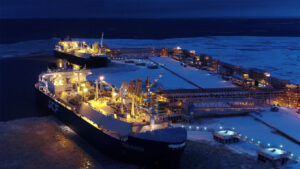
European Union countries imported a record amount of liquefied natural gas from Russia’s Yamal LNG project in the first half of 2026, despite the gradual implementation of a ban on Russian gas supplies, the Financial Times reported, citing data from the analytics firm Kpler and the environmental organization Urgewald.
According to the publication, European countries received approximately 9.9 million metric tons of LNG from “Yamal LNG” between January and June, which is about 18% more than during the same period in 2025. This marks the highest half-year figure since exports from the project began in 2017.
Reuters cites slightly different operational data: according to Kpler, shipments to the EU totaled 9.97 million metric tons and increased by 16%. The discrepancy between the figures may be due to updates in information regarding tanker movements and the actual unloading dates of the shipments. Overall, both sources confirm imports of approximately 10 million metric tons and the setting of a new record.
In total, 140 tanker shipments were dispatched from Yamal LNG in the first half of the year. Of these, 136—or more than 97%—arrived at EU ports. China received only four shipments during the same period. Thus, the European market effectively absorbed nearly all exports from Russia’s largest Arctic LNG project.
The estimated value of the shipments delivered to the EU is 5.96 billion euros, or about 6.82 billion dollars. The main destinations were terminals in France, Belgium, and Spain.
The increase in imports occurred as European companies prepared for the final cessation of Russian gas supplies. According to estimates by the EU Agency for the Cooperation of Energy Regulators (ACER), Russian LNG imports increased by 11% year-over-year in January–May 2026, while Russian pipeline gas supplies rose by 7%. Among the reasons cited by the agency is the early delivery of part of the contracted volumes before new restrictions took effect.
However, it is not yet accurate to say that the purchase of all Russian LNG is already banned in the EU. As of April 25, 2026, the ban applies to imports under short-term contracts concluded before June 17, 2025. Deliveries under previously concluded long-term contracts may continue until January 1, 2027. After that date, a complete ban on Russian LNG imports is set to take effect.
Therefore, a significant portion of Yamal LNG deliveries in the first half of the year could have been made under existing long-term contracts and did not formally violate European restrictions.
Data on the increase in the share of Russian gas in EU imports from 12% to 14% also requires clarification. According to the European Commission and the Council of the EU, Russian LNG and pipeline gas accounted for approximately 12% of European gas imports in 2025 overall. ACER estimated Russia’s share during the 2025–2026 winter season at approximately 14%. These figures relate to different periods and therefore cannot be directly interpreted as a definitive annual increase in market share of two percentage points.
The increase in supplies was also driven by the current restriction on the transshipment of Russian LNG at European ports for onward shipment to third countries. As a result, most of the gas arriving at EU terminals remains on the European market rather than being transshipped to other vessels for transport to Asia.
These record purchases highlight the tension between the EU’s policy of phasing out Russian energy sources and the need to ensure stable gas supplies amid a tight global market. At the same time, they highlight the Yamal LNG project’s dependence on European port, shipping, and financial infrastructure: with limited access to Asian routes, Russia has so far been unable to redirect a significant portion of its Arctic LNG to China.
The Yamal LNG project is located on the Yamal Peninsula in the Russian Arctic and is controlled by the Russian company Novatek. Novatek owns 50.1% of the project, with France’s TotalEnergies and China’s CNPC each holding 20%, and the Silk Road Fund holding 9.9%. The project’s production capacity is approximately 17.4 million metric tons of LNG per year.
The EU finalized its phased phase-out of Russian natural gas on January 26, 2026. A complete ban on Russian LNG is set to take effect on January 1, 2027, and on pipeline gas in the fall of 2027. In the event of a serious threat to energy supplies, the European Commission will be able to temporarily suspend certain restrictions for up to four weeks.
Original source Financial Times



