
EU countries have agreed to extend temporary protection for refugees from Ukraine for another year—until March 2028—but have imposed restrictions on granting it to new applicants who are subject to military service.
The decision was announced on Wednesday in Brussels, according to the EU Council’s press service.
“Today, EU countries agreed to extend the temporary protection status granted to refugees from Ukraine until March 4, 2028, fulfilling the EU’s commitment to support Ukraine and its people for as long as necessary. Extending protection for another year will provide clarity and predictability for all those fleeing the war,” the statement said.
At the same time, “recognizing both the need to protect displaced persons and Ukraine’s need to defend itself against Russia’s illegal war, EU countries agreed that temporary protection should be granted only to those who fulfill their military obligations in Ukraine.”
The press release notes that, “given Ukraine’s evolving defense needs, temporary protection will henceforth be granted only to those who are fulfilling their military obligations in Ukraine,” but this restriction will apply only to new applicants for temporary protection. “It will not apply to those who are already benefiting from temporary protection in the EU,” the press release explains.
The statement also clarifies that, in practice, to obtain temporary protection, individuals displaced from Ukraine will have to prove that they have fulfilled their military obligations. “ “For example, this can be done by presenting a passport with an exit stamp issued by the Ukrainian authorities, which confirms that they legally left Ukraine and, therefore, have fulfilled their military obligations. It can also be done by presenting a document, in paper or electronic format, confirming discharge from military service or the fulfillment of military obligations,” the statement notes.
Temporary protection has currently been extended until March 4, 2027, and since March 2022, more than 4 million displaced persons from Ukraine have been receiving protection in the EU.
Commenting on the decision, Jim O’Callaghan, Ireland’s Minister for Justice, Home Affairs, and Migration and current EU Presidency holder, said: “We remain unwavering in our support for Ukraine against Russia’s illegal war of aggression. Today, we decided to extend the protection status we provide to those fleeing the war for another year, until March 2028. This provides stability for those who have found safety in the EU. The message is clear: we continue to support Ukraine. And as part of our support, we also want to ensure that Ukraine can defend itself. That is why our temporary protection scheme takes into account Ukraine’s legitimate needs.”
The Council of the EU will formally adopt the decision to extend temporary protection in the coming weeks. The decision will be published in the Official Journal of the EU and will enter into force the following day.

Ukrainian and Uzbek companies intend to expand cooperation in mechanical engineering, energy, IT, the food industry, and the textile industry. Participants at the Ukrainian-Uzbek Business Forum, which took place on July 13, 2026, in Lviv, discussed prospects for implementing joint projects.
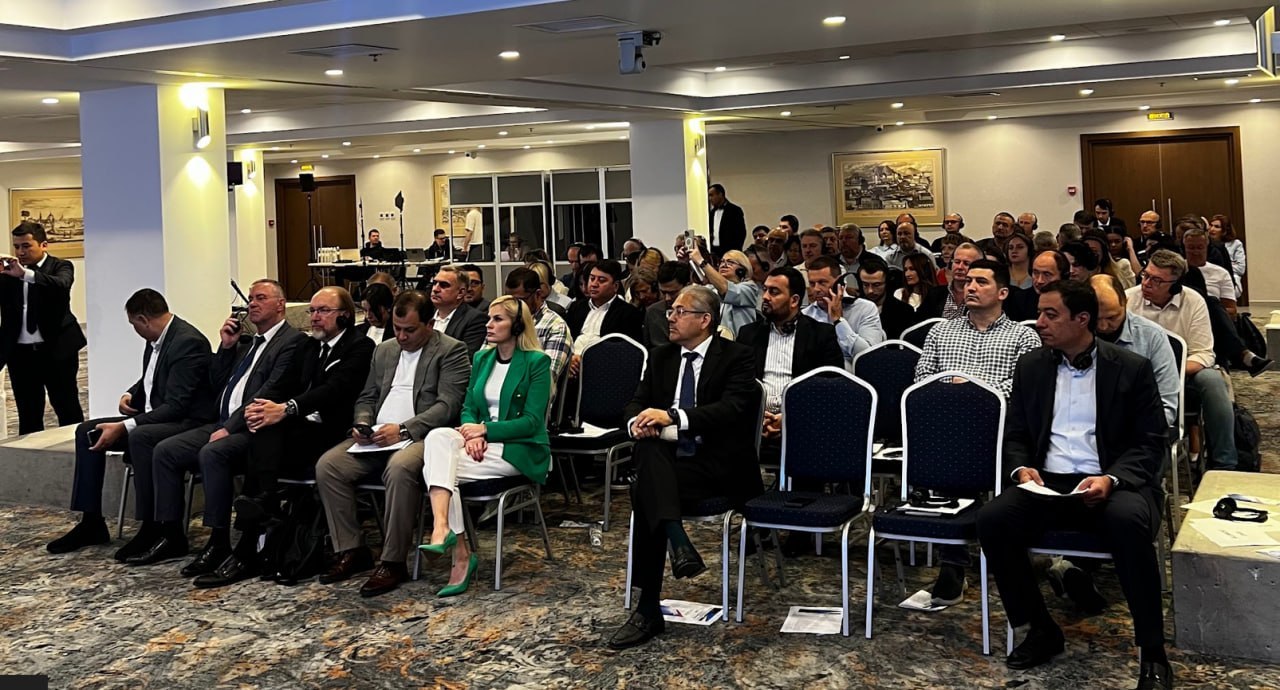
According to the Ukrainian Chamber of Commerce and Industry, the forum was opened by Gennady Chizhikov, President of the Ukrainian Chamber of Commerce and Industry, and Davron Vakhobov, Chairman of the Uzbek Chamber of Commerce and Industry. The event was attended by approximately 90 representatives from the business community, government agencies, industry associations, and chambers of commerce and industry from both countries.
Alisher Kurmanov, Ambassador Extraordinary and Plenipotentiary of the Republic of Uzbekistan to Ukraine, also took part in the forum. The participation of the head of the Uzbek diplomatic mission underscored the intergovernmental level of the meeting and Tashkent’s interest in developing direct contacts with Ukrainian businesses. Kurmanov has headed the Uzbek Embassy in Ukraine since 2020.
The forum participants were addressed by Khristina Kalish, head of the Department of Economic Policy of the Lviv Regional Military Administration; Natalia Karpenchuk-Konopatskaya, vice president of the Lviv Chamber of Commerce and Industry; Mirziyod Yunusov, chairman of the “Uzeltexsanoat” Association; Mirziyod Yunusov, Oleg Revchuk, head of the Ukrainian side of the Ukrainian-Uzbek Business Council, and Erkindjon Malikov, chairman of the Association of Exporters of Uzbekistan.
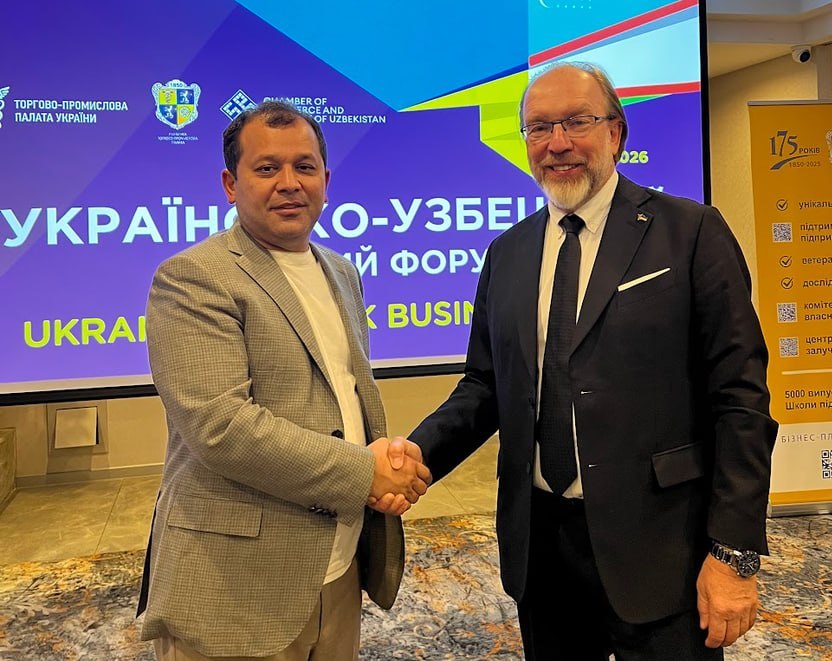
According to Chizhikov, the interest of Uzbek partners extends beyond traditional supplies of food and pharmaceutical products.
“We are ready to offer high-value-added niches—machinery manufacturing, energy equipment, and IT solutions for ‘smart’ cities. This is the level of cooperation that matches the ambitions of both our countries,” stated the president of the Ukrainian Chamber of Commerce and Industry.
Participants identified the development of new logistics routes between Ukraine and Central Asia as one of the main areas of cooperation. The Ukrainian side views Uzbekistan as a regional transportation and trade hub that can provide access to the markets of neighboring countries.
The Ukrainian Chamber of Commerce and Industry proposed that Uzbek logistics operators and customs services work together to create “green corridors.” Such routes could speed up the delivery of Ukrainian agricultural and food products to Uzbekistan, as well as the transport of Uzbek textiles through Ukraine to European countries.
Forum participants held direct B2B negotiations. Promising areas of cooperation identified included pharmaceuticals, machinery and industrial equipment manufacturing, energy, agricultural processing, food products, textiles, chemical products, and digital solutions for municipal services.
Industrial cooperation holds additional potential. Ukrainian companies can supply Uzbekistan with energy and technological equipment, components, pharmaceutical products, and value-added agricultural products. Uzbek enterprises, in turn, are interested in expanding exports of textiles, raw cotton, polymer materials, fertilizers, and other chemical products.
The legal framework for investment cooperation is provided by a bilateral agreement on the promotion and mutual protection of investments, signed in 1993. A preferential trade regime is also in effect between the countries, and imports of goods from Ukraine to Uzbekistan are exempt from customs duties under existing free trade agreements.
According to data from the Ukrainian Chamber of Commerce and Industry, trade turnover between Ukraine and Uzbekistan reached $315 million in 2025, an increase of 14% compared to 2024. Ukrainian exports totaled $186.5 million. Based on these figures, imports of Uzbek goods into Ukraine can be estimated at approximately $128.5 million, and Ukraine’s trade surplus at approximately $58 million.
Thus, the latest complete annual data indicate a trade volume of about $315 million. This figure remains significantly below the potential of the two markets; however, the 14% growth indicates a gradual recovery of economic ties.
Ukrainian exports to Uzbekistan consist primarily of pharmaceutical products, machinery and equipment, meat and meat products, confectionery, and other food products. Ukraine imports mainly textiles, cotton and textile raw materials, polymer materials, fertilizers, and chemical products from Uzbekistan.
In the medium term, growth in trade volume will depend on shipping costs and transit times, the restoration of reliable transport corridors, the availability of cargo insurance, and companies’ ability to organize regular shipments. Uzbekistan could become one of the main gateways for Ukrainian manufacturers to Central Asian markets, while Ukraine is of interest to Uzbek businesses as a potential route to the EU market.
The Ukrainian Chamber of Commerce and Industry is a non-governmental, self-governing organization representing the interests of Ukrainian businesses. The Chamber promotes exports, organizes business missions, and provides services related to product certification, force majeure certification, international arbitration, and the search for foreign partners.
The Chamber of Commerce and Industry of Uzbekistan represents the interests of the republic’s entrepreneurs, participates in the development of exports, the attraction of investments, the organization of business missions, and the establishment of contacts between Uzbek and foreign companies.
The “Uzeltexsanoat” Association brings together enterprises in Uzbekistan’s textile, apparel, and knitwear industries. It participates in the modernization of enterprises, the development of value-added cotton processing, and the promotion of finished textile products to foreign markets.
The Uzbekistan Exporters Association provides companies with support in entering foreign markets, finding buyers, and organizing export shipments.
BUSINESS FORUM, LVIV, UKRAINE, UZBEKISTAN, Vakhobov, ЧИЖИКОВ
According to Serbian Economist, Montenegro’s potential accession to the European Union by 2028 could become a new factor driving up real estate prices in the country, especially in the premium segment along the coast.
According to market experts, investors have about two years left to invest in Montenegrin properties before the country’s EU status ultimately locks in higher prices. Over the 20 years of Montenegro’s independence, the average cost of coastal real estate has risen from approximately 1,000 euros per square meter to 8,000–15,000 euros per square meter in premium branded residences.
Ana Zloković, sales director for the Luštica Bay complex, believes that, based on the experience of other countries in the region, potential EU accession could boost Montenegro’s real estate market by another 30% or so. According to her, the mere anticipation of membership is already driving up demand.
Kieran Kelleher, Managing Director of Savills Croatia & Montenegro, offers a more cautious assessment. He anticipates price increases of 30–40% for certain properties but warns that the era when investors could easily double their money in Montenegrin real estate is over. In his view, the market has already factored some of its future potential into current prices.
Experts cite not only the fact of European integration itself but also infrastructure modernization as the main driver of further growth. Montenegro is currently held back by poor roads, outdated airports, and overloaded border crossings, and resolving these issues could take at least five years. Improved transportation access is expected to increase tourist traffic and boost the value of resort real estate.
Analysts identify the “golden triangle” of Kotor–Tivat–Herceg Novi as the most promising area. In the Bay of Kotor, prices in the premium segment range from 4,000 to 15,000 euros per square meter. Stone houses in the Old Town of Kotor, a UNESCO World Heritage Site, are of particular interest: such properties are scarce, suitable for rental, and, according to experts, better protected against depreciation.
On the Budva Riviera, the price range is estimated at 3,000–12,000 euros per square meter; however, experts warn of the risks of market oversaturation and excessive development in Budva. Bar and Ulcinj remain more affordable destinations, with prices around 2,000–5,000 euros per square meter and potentially higher growth rates due to their low starting point.
The factor of European integration for Montenegro has indeed strengthened. According to the Council of the EU, the country applied for membership in 2008, received candidate status in 2010, and accession negotiations began in 2012. All 33 negotiation chapters have already been opened, 16 of which were provisionally closed as of mid-June 2026.
In addition, the 28th Intergovernmental Conference on Montenegro’s accession is scheduled to take place in Brussels on July 14, at which it is planned to provisionally close negotiations on Chapters 8—Competition—and 29—Customs Union. This confirms that Montenegro remains the most advanced candidate for EU accession among the countries of the Western Balkans.
https://t.me/relocationrs/3229

In January–June of this year, Ukraine’s metallurgical enterprises saw a 3.9% decrease in revenue from ferrous metal exports compared to the same period last year—down to $1 billion 478.041 million from $1 billion 538.513 million.
According to statistics released by the State Customs Service (SCS), ferrous metals accounted for 7.02% of total export revenue during this period, compared to 7.68% in January–June 2025.
In June 2026, export revenue totaled $293.644 million, compared to $291.757 million the previous month.
At the same time, Ukraine increased imports of similar products by 4.5% in January–June 2026, to $845.622 million. In June, imports totaled $140.744 million.
In addition, in January–June of this year, Ukraine reduced exports of metal products by 14.8% to $436.062 million. In June, exports of these products totaled $84.777 million.
Imports of metal products during this period rose by 13.6% to $590.757 million. In June, $125.767 million worth of these products were imported.
As previously reported, Ukraine’s metal enterprises increased their revenue from ferrous metal exports by 7.85% in 2025 compared to the previous year, reaching $3,339,487,000. Ferrous metals accounted for 8.25% of total export revenue for the year, compared to 7.42% in 2024. At the same time, Ukraine increased imports of similar products by 12.9% over the year—to $1 billion 669,544 million. In addition, Ukraine reduced exports of metal products by 3%—to $916,151 million. Imports of metal products rose by 24.4%—to $1 billion 290.608 million.
In 2024, metal companies increased their revenue from ferrous metal exports by 16.9% compared to 2023—to $3 billion 96.343 million. At the same time, Ukraine increased imports of similar products by 13.1%—to $1 billion 478.814 million.
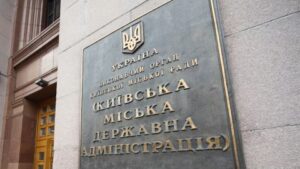
Temporary traffic and parking restrictions will be imposed on certain streets in the capital on July 15 in connection with celebrations marking Ukrainian Statehood Day, the Kyiv City State Administration reported, citing the State Security Service of Ukraine.
As noted, vehicle traffic—with the exception of public transportation—will be restricted on a number of streets at various times on July 14 and 15.
Specifically, from 6:00 p.m. on July 14 until 9:00 p.m. on July 15, traffic will be prohibited on Ihorivska Street from Petra Sagaydachnogo Street to Naberezhno-Khreshchatitska Street. From 5:00 a.m. to 1:00 p.m. on July 15, restrictions will be in effect on Velyka Zhytomyrska Street, Mykhailivska Street, Trekhsvyatytelska Street, Volodymyrsky Passage, Mala Zhytomyrska Street, and Alla Tarasova Street.
In addition, from 5:00 a.m. to 9:00 p.m. on July 15, traffic will be restricted on Vokzalna Street from Vokzalna Square to Pavlo Skoropadskyi Street, and from 6:00 p.m. to 8:00 p.m. – on Tsytadelna Street from Leipzigska Street to Ivan Mazepa Street and on Ivan Mazepa Street from Heroes of Kruty Alley to Dobrovolchykh Battalions Street.
Parking will also be prohibited from 6:00 p.m. on July 14 until 9:00 p.m. on July 15 on Vokzalna Street from Vokzalna Square to Pavlo Skoropadskyi Street, and from 6:00 a.m. to 8:00 p.m. on July 15—on Ivan Mazepa Street from Heroes of Kruty Alley to Volunteer Battalions Street.
“In addition, the routes of trolleybuses Nos. 6, 16, and 18 will be changed in the city center on July 15,” according to a statement published on Tuesday.
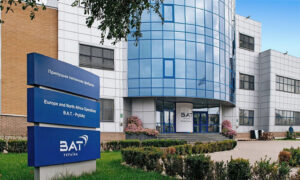
PJSC “Tobacco Company V.A.T. – Pryluky” (Chernihiv Oblast), a subsidiary of the international British American Tobacco (BAT), will pay 52 million hryvnias in dividends to a shareholder between July 14 and July 31 of this year.
According to the company’s filing with the National Securities and Stock Market Commission (NSSMC) disclosure system, the shareholder approved the decision on July 14.
The dividends will be paid in U.S. dollars directly to the shareholder via a bank transfer. According to the NSSMC, 100% of the company’s shares are owned by Precis (1814) Limited.
According to information in the disclosure system, the company continues its regular practice of paying dividends. Specifically, in 2026, on June 18, the shareholder decided to pay 54 million UAH in dividends from June 18 to 30; on May 19, to pay 52 million UAH from May 19 to 31; on April 9, to pay the same amount of dividends from April 9 to 30; in March, the same amount from March 17 to 31, and similarly in February and January. At the same time, the total amount of dividends to be paid this year has not been specified.
As previously reported, the National Bank of Ukraine has limited the transfer of dividends abroad to no more than EUR1 million per month.
According to the company’s information, “V.A.T. Pryluky” is one of the largest manufacturers and exporters of tobacco products in Ukraine, producing cigarettes under international brands and the national brand “Pryluky,” as well as TVEN.
According to the company’s annual report filed with the NSSMC’s disclosure system, in 2025 it saw its net profit decline by 37.3% compared to 2024—to 413.6 million UAH—amid an 11.8% decrease in net revenue to 5.04 billion UAH. Retained earnings amounted to 4.9 billion UAH.
The company produced more than 8 billion filtered cigarettes worth 2.95 billion UAH, 729 million TVEN units worth 422 million UAH, and nearly 3 billion filters worth 742.5 million UAH.
Average selling prices were 423.71 UAH per 1,000 cigarettes and 652.4 UAH per 1,000 TVEN units. Export volume totaled 0.95 billion UAH, or approximately 1.84 billion cigarettes. The main customer is “BAT Sales and Marketing Ukraine.”



