

PJSC “Philip Morris Ukraine” and LLC “Philip Morris Sales and Distribution” paid a total of 31.7 billion UAH in taxes for January–June 2026, which is 10% higher than the figures for the same period last year, according to a company press release.
The bulk of the payments consisted of excise tax—24 billion UAH—and value-added tax (VAT)—7.1 billion UAH.
“In the first half of the year, we managed to increase the amount of taxes paid by 10%. This was made possible by an increase in excise tax rates on tobacco products, despite a decline in market volumes and the consequences of the missile attack on our factory and warehouses,” the press service quoted Serhiy Kalnoochenko, CFO of Philip Morris Ukraine, as saying.
According to Kalnoochenko, since the start of the full-scale invasion, the company has paid more than 212 billion hryvnias to the budget, which is one of the highest figures among businesses in Ukraine.
“This is a real contribution by our business to funding defense, social programs, and economic recovery. However, this amount could have been at least 25–28 billion hryvnias higher if the country had been able to overcome the problem of the illegal tobacco trade. Instead, the market for illegal cigarettes continues to grow every quarter,” Kalnoochenko emphasized.
According to estimates by Kantar Ukraine in April 2026, the volume of the illicit tobacco market has grown again and now stands at 19.8%. With such market volumes, annual losses to the state budget due to unpaid taxes are estimated at a record 33.3 billion hryvnias, the statement noted.
Philip Morris Ukraine PJSC has been operating in the Ukrainian market since 1994 and is one of the largest taxpayers. In 2024, the company opened a new factory in the Lviv region, investing $30 million and creating 250 jobs. Last year, the company invested $5 million in promoting its “ZYN” nicotine pouch brand in Ukraine; this year, it plans to invest another $10 million in developing the nicotine pouch category and launching a new product line under the brand.
In late January 2026, part of the company’s Kharkiv factory was damaged in a nighttime missile strike; operations at the facility have been suspended since February 24, 2022. The company’s preliminary estimate of the damages is $16 million.
On the night of July 8, the company lost its finished goods warehouse in Kyiv due to Russian shelling.
The company also provides humanitarian aid to communities in the Kharkiv, Lviv, and Kyiv regions, and collaborates with the rehabilitation funds Superhumans, U+System, and UNBROKEN. Since the start of the full-scale invasion, projects totaling 431 million hryvnias have been implemented.
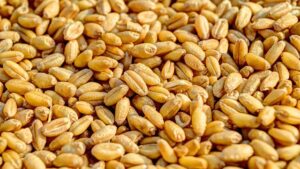
In its July WASDE report, the U.S. Department of Agriculture (USDA) raised its forecast for wheat production in Ukraine in the 2026/27 marketing year to 24 million metric tons from 23.5 million metric tons, which had been expected a month earlier.
According to the WASDE report, released on July 10, 2026, the forecast for global wheat production in the 2026/27 marketing year remained virtually unchanged at 819.97 million metric tons, compared to 820.06 million metric tons in June. At the same time, the USDA notes that the wheat production forecast was raised for Russia and Ukraine due to favorable conditions for winter wheat.
The USDA raised its forecast for Ukrainian wheat exports to 14.5 million metric tons from 14 million metric tons a month earlier. According to the report, global wheat exports for the 2026/27 marketing year have been raised to 213.1 million metric tons due to increased shipments from Argentina, Russia, and Ukraine, which more than offset the downward revision to Canada’s export forecast.
In the WASDE tables for the 2025/26 marketing year, Ukraine’s wheat production is estimated at 24.1 million metric tons, with exports at 14 million metric tons. In the 2024/25 marketing year, according to the USDA, Ukraine produced 23.4 million metric tons of wheat and exported 15.75 million metric tons.
The revision of the Ukrainian forecast comes amid a tighter global supply-demand balance. The USDA lowered its forecast for global ending wheat stocks in the 2026/27 marketing year to 272.8 million metric tons, which is 2.6 million metric tons less than the June estimate. At the same time, the forecast for global consumption was raised to 826.2 million metric tons.
Ukraine’s Ministry of Economy, Environment, and Agriculture had previously forecast the 2026 grain harvest at approximately 60.4 million metric tons, including about 22.4 million metric tons of wheat, about 4.7 million metric tons of barley, and about 31.6 million metric tons of corn.
According to the State Statistics Service, in 2025, Ukraine’s wheat harvest increased by 3.6% to 23.34 million metric tons, and the corn harvest rose by 14.6% to 30.9 million metric tons, while barley production fell by 2.4% to 5.2 million metric tons.
Ukraine remains one of the key wheat exporters in the Black Sea region; however, export volumes in the 2026/27 marketing year will depend not only on the harvest but also on the operation of the maritime corridor, logistics via the Danube and western borders, ship insurance, and the security situation regarding port infrastructure.

State-owned PrivatBank has launched a service in the “Privat24” app for filing single-tax payer returns for individual entrepreneurs (FOP) in the first through third groups, with the option to pay taxes afterward, the financial institution reported.
“Integrating electronic reporting into the mobile app will reduce the administrative burden on small businesses and minimize the risk of errors when filling out documents,” said Yevhen Zaigraev, a member of PrivatBank’s Management Board responsible for corporate business and small and medium-sized enterprises.
“Privat24” generates the tax return based on transactions in the entrepreneur’s bank accounts and calculates the income received. The sole proprietor must verify the data and sign the document using SmartID, after which it will be sent to the State Tax Service.
Once the tax service accepts the tax return, the entrepreneur can pay taxes within the app. The service is available in the “Tax Returns” section, where users can also view previously filed returns.
According to the bank, the number of active Privat24 users in the first quarter of 2026 increased by 2% compared to the same period last year—to 13.7 million—while the number of active business clients rose by 4%, to 952,000.
PrivatBank is Ukraine’s largest bank. According to the National Bank, the financial institution’s total assets as of June 1, 2026, amounted to 965.11 billion UAH (22.7% of the total).

The U.S. Department of Agriculture (USDA) left its forecast for corn production in Ukraine for the 2026/27 marketing year unchanged at 30 million metric tons in its July WASDE report.
The forecast for Ukrainian corn exports also remained unchanged at 23 million metric tons. According to the WASDE tables, the July estimate for Ukraine for the 2026/27 marketing year indicates production of 30 million metric tons, exports of 23 million metric tons, and ending stocks of 2.06 million metric tons.
For the 2025/26 marketing year, the USDA estimates Ukraine’s corn harvest at 30.9 million metric tons and exports at 23 million metric tons. Thus, compared to the current season, the new forecast suggests a slight decline in production but maintains export potential at the same level.
In its global corn balance sheet, the USDA lowered its production forecast for the 2026/27 marketing year to 1.297 billion metric tons in July, down from 1.300 billion metric tons a month earlier. The main decline is attributed to the European Union and Kenya, while the forecast for Ukraine remained unchanged.
Global corn exports for the 2026/27 marketing year, on the other hand, were raised to 209.88 million metric tons from 207.61 million metric tons in June. The USDA also lowered its forecast for global ending corn stocks to 275.26 million metric tons, down from 281.22 million metric tons in the June report.
The WASDE summary notes that foreign corn production has been reduced due to deteriorating prospects in the EU and Kenya. For the EU, the reduction is primarily due to the heatwave in France and a lower forecast for Hungary.
The Ukrainian corn forecast remains sensitive to weather conditions in the second half of the summer. Corn is more heavily dependent on precipitation and temperatures in July and August, so the actual harvest may differ significantly from the USDA’s current estimate.

Ukrainian steelmakers reduced pig iron production by 0.2% in January–June of this year compared to the same period last year, down to 3.661 million metric tons.
According to information released by the “Ukrmetallurgprom” association on Wednesday, 670.6 thousand metric tons of pig iron were produced in June, 634.4 thousand metric tons in May, 554 thousand metric tons in April, 690.2 thousand metric tons in March, in February—561.9 thousand metric tons, and in January—549.9 thousand metric tons.
As previously reported, Ukraine’s metallurgical enterprises increased pig iron production by 11.2% in 2025—to 7.884 million metric tons.
In 2024, Ukraine increased pig iron production by 18.1% compared to 2023—to 7.090 million metric tons. In 2023, pig iron production fell by 6.1% to 6.003 million metric tons, and in 2022, it fell by 69.8% to 6.391 million metric tons.
In 2021, before the war, 21.165 million metric tons of pig iron were produced, or 103.6% of the 2020 level.

According to The Serbian Economist, Ukrainian tennis player Oleg Prykhodko has decided to change his sporting citizenship and will henceforth compete under the flag of North Macedonia.
The athlete is renouncing the flag under which he previously competed in international tournaments. Details of the transition process, as well as the reasons behind his decision, have not yet been officially disclosed.
Oleg Prykhodko is currently ranked 296th in the ATP rankings, which will make him one of North Macedonia’s leading tennis players once the change in sporting citizenship is complete.
The 27-year-old tennis player primarily competes in ATP Challenger and ITF tournaments. Over the course of his career, he has won several titles in both singles and doubles.
https://t.me/relocationrs/3211



