

The share of electric vehicles in the new passenger car market in January–June 2026 decreased to 8.3% compared to the same period in 2025, when it stood at 18.9%, according to a report on Ukravtoprom’s Telegram channel.
At the same time, cars with conventional engines (gasoline and diesel) accounted for nearly 62%, up from 56.5% last year. In particular, the most popular gasoline models accounted for 39.2% of the market, while in the first half of last year they accounted for 37.1%. Diesel cars also increased their share—to 22.5% from 19.4% last year.
The share of hybrid cars rose from 26.5% to 29.8%. Cars with LPG systems, as was the case last year, accounted for less than 1% of new car sales.
According to data from “Ukravtoprom,” the Hyundai Tucson took the lead in the gasoline-powered car segment, the Toyota RAV-4 in the hybrid segment, the Renault Duster in the diesel segment, the BYD Leopard 3 in the electric car segment, and the Hyundai Tucson in the LPG-powered car segment.
As previously reported, in 2025 as a whole, driven by rapid growth in electric vehicle sales in the second half of the year, they increased their share of the new passenger car market to 28.3% from 14.5% in 2024, while cars with conventional engines (gasoline and diesel) accounted for only half of the market compared to over 65%. The diesel car segment also decreased from 25.6% to 17.4%.
At the beginning of this year, electric vehicles still held a 19% share of the new passenger car market (in January), but by February that figure had fallen to 3.3%; however, in March it began to gradually increase amid rising prices for traditional fuel.
As reported, according to data from “Ukravtoprom,” sales of new passenger cars in January–June of this year rose by 0.5% compared to the same period in 2025, totaling approximately 33,000 units.
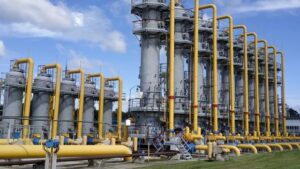
On Monday, July 6, 2026, the first annual auctions for the allocation of combined capacity at cross-border interconnection points with Hungary, Romania, and Moldova will take place, according to a statement by the Ukrainian Gas Transmission System Operator (OGTSU) on its website.
“Information regarding the conduct of combined auctions at cross-border interconnection points with Poland and Slovakia will be announced separately,” the company noted.
GTS Operator of Ukraine explained that combined capacity products allow for the booking of capacity on both sides of a cross-border interconnection point within a single auction and a single capacity product.
“The introduction of the combined capacity mechanism is the result of close coordination between OGTSU, operators of adjacent gas transmission systems, national regulators, and European institutions,” said Natalia Boiko, the company’s acting CEO.
The company asserts that the introduction of combined capacity products will contribute to the further integration of the Ukrainian natural gas market into the EU internal market, improve the efficiency of cross-border infrastructure use, develop cross-border natural gas trade, and strengthen the region’s energy security.
The application period for the allocation of annual capacity at domestic entry and exit points runs from June 29, 2026, through July 13, 2026, inclusive.
As previously reported, the National Commission for State Regulation of Energy and Public Utilities (NKREKP) adopted decisions at its June 23 meeting aimed at further integrating Ukraine’s gas market into the EU’s single natural gas market.
“The changes provide for the introduction of European rules for capacity allocation and tariff setting at cross-border interconnections of the gas transmission system,” the regulator stated.
In particular, the regulator has completed the regulatory steps to introduce joint auctions for capacity allocation at cross-border interconnections.
“This mechanism provides for the simultaneous allocation of capacity in the gas transmission systems of Ukraine and neighboring countries, which is in line with European practices for the functioning of the natural gas market,” the commission explained.
The new rules for allocating capacity at cross-border interconnections took effect in July 2026 and will apply to capacity used starting at the beginning of the new gas year—October 1, 2026.
To participate in auctions, customers of transportation services must enter into contracts not only with OGTSU but also with the operators of adjacent gas transmission systems in EU member states and the Republic of Moldova. A customer to whom combined capacity is allocated will have the right to transfer to another customer the right to submit nominations and renominations for such capacity.
AUCTION, ENERGY, GAS, INTEGRATION, ОГТСУ

Demand for short-term housing rentals in the EU through online platforms continued to grow in early 2026. From January through March, guests spent 144.3 million nights in short-term accommodations booked through Airbnb, Booking, or Expedia. This is 9.7% more than in the first quarter of 2025 and 16.6% higher than in the first quarter of 2024, Eurostat reported on July 2.
Malta showed the fastest growth—up 30.5% year-over-year. It was followed by Slovenia—up 24.7%, Slovakia—up 23.5%, and Cyprus—up 22.3%. Double-digit growth was also recorded in Finland, the Czech Republic, Ireland, Croatia, Greece, Germany, Italy, Sweden, Poland, Estonia, Latvia, and Lithuania.
Among the EU’s largest tourism markets, all seven of the most-visited countries also showed growth. Germany saw a 14.9% increase, Italy 14.7%, Poland 11.9%, France 8.1%, Spain 6.5%, Portugal 4.9%, and Austria 4%. This means that the market is growing not only in small countries with a low baseline but also in major tourism economies.
Eurostat clarifies that these figures specifically refer to guest nights in short-term accommodations booked through platforms, rather than hotels and campgrounds. For example, if a family of four stays in an apartment for three nights, this counts as 12 guest nights. The data is published as experimental statistics and is based on information that the platforms report directly to Eurostat.
Regional statistics are published with a delay. According to data for the fourth quarter of 2025, the most popular regions for short-term rentals through these platforms were Andalusia in Spain—9.9 million nights, the Canary Islands—8.2 million, and Île-de-France in France—7.2 million. Only regions from three countries—Spain, France, and Italy—made it into the top ten.
For investors, these statistics mean that focusing solely on overall market growth is no longer sufficient. It is necessary to take into account the specific country, city, seasonality, local restrictions on Airbnb and Booking, taxes, registration rules, and competition from hotels. In Europe, short-term rentals continue to grow, but are becoming an increasingly regulated and professional business.

According to Experts.news, Chancellor Friedrich Merz’s government has presented a package of 34 reforms designed to restore competitiveness to Europe’s largest economy following several years of weak growth, high energy costs, a slowdown in industrial development, and pressure on the export model.
According to Reuters, key measures cover pensions, taxes, the labor market, industrial policy, energy, infrastructure, housing, trade protection, and reducing bureaucracy. The government expects to pass the main elements of the package in parliament by the end of 2026.
One of the central components is tax relief for households amounting to approximately 10 billion euros per year. For a working family with two children, the benefit could exceed 600 euros thanks to increased tax deductions and a flatter tax rate for middle-income earners. This is planned to be partially financed by raising the top income tax rate from 45% to 47% for the highest earners—those earning 280,000 euros or more per year.
They also aim to make the labor market more flexible. Measures include eliminating the option to report sick by phone, requiring a doctor’s note from the first day of illness, extending the duration of fixed-term contracts to 48 months for new employees by 2030, and introducing more flexible severance pay mechanisms for high-earning employees.
The industrial sector is focused on supporting the automotive industry, chemicals, pharmaceuticals, mechanical engineering, clean technologies, batteries, semiconductors, and artificial intelligence. There are also plans to expand the Deutschlandfonds investment mechanism, accelerate the connection of industrial facilities to power grids, and cut the implementation time for grid projects by roughly half.
For Germany, this is an attempt to address several systemic problems at once. In its May forecast, the European Commission noted that after two years of recession and growth of only 0.2% in 2025, the German economy may grow by only 0.6% in 2026 and 0.9% in 2027. Among the reasons cited for this weakness were high energy costs, weak exports, competition from China, tariff risks, and a delay in the recovery of investment.
The package could give Germany new momentum, but it will not be a quick fix. According to economists’ estimates cited by Reuters, provided the reform is fully and swiftly implemented, the long-term economic growth rate could be raised from approximately 0.4% to 0.7% per year. This is an improvement, but not a return to the old model of strong industrial growth.
The main impact on the German economy could manifest through three channels: a reduction in administrative costs for businesses, an increase in domestic demand driven by tax breaks, and accelerated investment in infrastructure, energy, and technology sectors. But the weak spot remains the same—Germany depends on exports and global industrial supply chains, which are currently under pressure from geopolitics, tariffs, and competition from China.
The consequences will vary for Germany’s major trading partners. In 2025, China once again became Germany’s largest trading partner, with a trade volume of 251.8 billion euros. The United States ranked second with 240.5 billion euros, and the Netherlands ranked third with 209.1 billion euros. At the same time, the U.S. remained the main market for German exports, although shipments of automobiles, trailers, and semi-trailers to the U.S. fell by 17.8%.
For China, Germany’s reforms mean intensified competition in industry, particularly in the electric vehicle, battery, mechanical engineering, and clean tech sectors. Berlin has separately stated its intention to strengthen the EU’s anti-dumping and anti-subsidy measures and to consider technology transfer requirements in strategic sectors for non-European investments. This could make German-Chinese economic relations more strained.
For the U.S., the effect is twofold. On the one hand, a stronger Germany means greater demand for American technology, energy, financial services, and industrial equipment. On the other hand, Germany will seek to preserve its own industrial base and reduce its dependence on foreign suppliers in strategic sectors, particularly in semiconductors, batteries, and artificial intelligence infrastructure.
For the Netherlands and other EU countries, the reform package is likely to be positive. If German industry and consumption begin to recover, European logistics hubs, component suppliers, machine-building companies, chemical manufacturers, and countries integrated into German production chains will benefit.
The main risks of the reforms are political and time-related. Some of the measures may face resistance from labor unions, the medical community, and regional authorities, and the economic impact will not be immediate. Reuters notes that businesses and economists generally welcomed the package as necessary but emphasized that everything will depend on the speed and quality of its implementation.
Ultimately, the Merz package can be seen as an attempt to reshape the German growth model: less bureaucracy, more investment, greater labor market flexibility, and stronger protection for strategic industries. But Germany will not be able to return to its former role as Europe’s economic engine through this single reform package alone. To do so, it will have to simultaneously address the challenges of high energy costs, demographic shifts, technological lag, weak domestic demand, and dependence on foreign markets.

European airports and airlines have called on the European Commission to urgently intervene in the launch of the new Entry/Exit System (EES). In an open letter, ACI EUROPE, Airlines for Europe, and IATA stated that the system’s implementation has reached a “critical point” and is already causing serious disruptions at airports.
The EES is a new digital system for controlling the Schengen Area’s external borders for citizens of non-EU countries. It replaces passport stamps and records entry, exit, or refusal of entry. When crossing the border, the system collects passport data, a facial photo, fingerprints, and the date and location of the border crossing. The system became fully operational on April 10, 2026, following a phased rollout that began in October 2025.
The problem is that, in practice, biometric registration takes longer than expected. According to ACI EUROPE, A4E, and IATA, since the full launch of the EES, wait times at border control during peak periods have already reached five hours. This leads to flight delays, missed connections, strain on staff, and situations where passengers are stranded at the border while planes depart without being fully occupied.
Industry organizations warn that the situation could worsen in July and August: European airports are expecting approximately 40 million more passengers than in the previous two months. The risk applies not only to the largest hubs but also to smaller airports in popular tourist destinations, where border infrastructure is physically unable to handle the flow of passengers.
The aviation industry is asking the European Commission to allow Schengen Area countries to fully or partially suspend the EES in July and August if passenger traffic exceeds border control capacity. Starting in September, it is proposed to establish a permanent flexibility mechanism to temporarily disable the EES in exceptional situations and revert to standard checks in accordance with the Schengen Code, including passport stamps.
Airports and airlines are not calling for the abolition of border controls. They recognize the importance of the EES for security but believe the system must operate without disrupting transportation logistics or the tourist season. Among the unresolved issues, they cite a shortage of border guards, instability of the IT platform, the unreadiness of self-service kiosks and ABC gates, as well as the poor performance of the pre-registration app.
The EES was intended to make EU borders more digital and secure, but in the summer of 2026, it became an additional source of delays. If the European Commission does not grant airports greater flexibility, the tourist season could face long lines, missed flights, and a reputational blow to European tourism.

Industrial production in Ukraine rose by 0.3% in May 2026 (compared to the same month in 2025), following a 1.2% increase in April, a 4.5% increase in March, and a 2.6% decline in February, and 8.1% in January, according to the State Statistics Service (Derzhstat).
According to the statistics agency, industrial production in May 2026 increased by 3.5% compared to April 2026.
The State Statistics Service notes that, overall, industrial production in Ukraine decreased by 0.2% over the first five months of this year compared to the same period last year.
In the mining and quarrying sector, growth in January–May 2026 compared to the same period in 2025 was 3.8%; in the manufacturing sector, it was 1.5%; and in the supply of electricity, gas, steam, and conditioned air, there was a 13.5% decline.
As previously reported, industrial production in Ukraine declined by 1.7% in 2025, whereas in 2024 it had grown by 4.7%.
The data excludes territories temporarily occupied by the Russian Federation and parts of the country where hostilities are (or were) taking place.



