
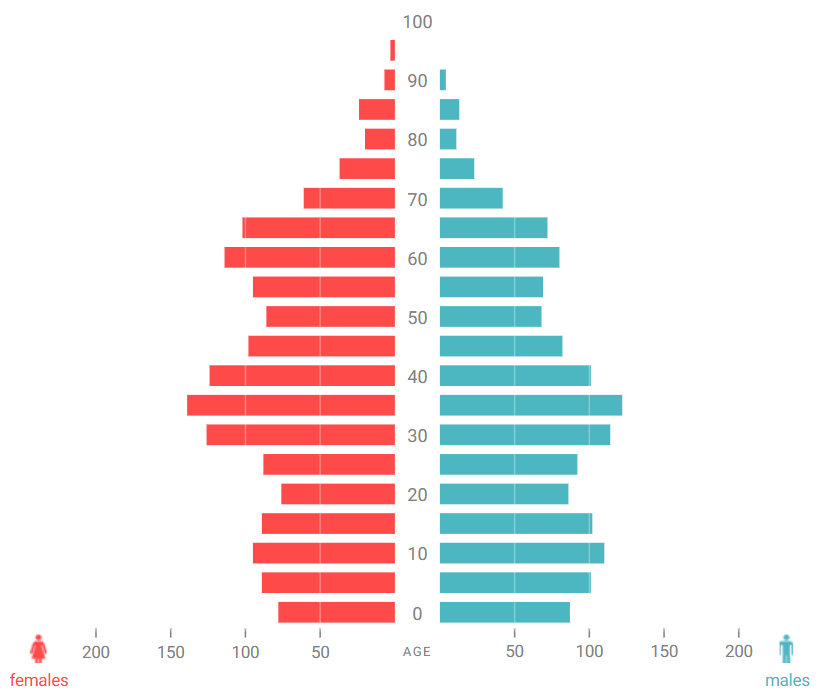
Age-sex pyramid of the population of Ukraine for 2024 (thousand people)
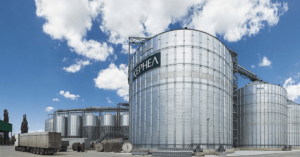
The Kernel agricultural holding’s elevator network, in fiscal year 2026 (FY, July 2025–June 2026) accepted more than 1 million metric tons of grain from third-party agricultural producers for the first time following the implementation of a new business model, under which the company opened its elevators for commercial storage and logistics services, the holding’s press service reported.
“Thanks to a shift in our approach to partnerships and our willingness to share our infrastructure, we were able to attract record volumes of grain,” the press service quoted Serhiy Shcherban, head of Kernel’s storage department, as saying.
According to him, competing in this market requires not just available storage space, but a guarantee of prompt acceptance, legally sound terms, and predictable logistics.
According to Kernel’s report for the first nine months of 2026 FR, the volume of grain and oilseeds accepted into the elevator network increased by 50% compared to the same period in the 2025 fiscal year—reaching 4.02 million metric tons. This includes 2.29 million metric tons accepted in January–March of this year, compared to just 0.09 million metric tons in January–March of last year.
According to the 2025F report, Kernel owns Ukraine’s largest private network of grain storage facilities, with a one-time storage capacity of 2.2 million metric tons.
The company explained that previously, the elevator network primarily served the holding’s own needs, but now it also works with independent agricultural producers. To this end, the agricultural holding revised its pricing policy, expanded its range of services, and introduced digital monitoring of grain movement—from electronic queuing to receipt and shipment.
In addition, Shcherban assured that during the current season, the company will pass on to third-party clients only the increase in electricity costs, while Kernel will cover all other additional operating expenses itself.
The Kernel agricultural holding is the world’s largest producer and exporter of sunflower oil, Ukraine’s largest grain exporter, the operator of an extensive network of logistics assets, and a leading producer of grains and oilseeds in Ukraine. It is one of the largest producers and sellers of bottled oil in Ukraine. It is engaged in the cultivation and sale of agricultural products.
According to results for the first nine months of fiscal year 2026 (July 2025–March 2026), Kernel’s net profit decreased by 5% to $208 million, while its revenue increased by 0.4% to $3.092 billion, and EBITDA rose by 1% to $403 million.
agricultural producer, GRAIN, GRAIN ELEVATOR, KERNEL, LOGISTICS
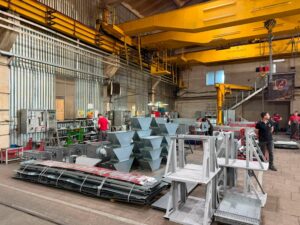
“Lubnymash” (Poltava Oblast), a manufacturer of grain elevators and related equipment, has begun construction of a 6,000-square-meter production complex, which will allow it to nearly double its total storage capacity to over 1 million metric tons of grain per year, said Dmytro Kysilevsky, deputy chairman of the Verkhovna Rada Committee on Economic Development.
“The new site will produce large-capacity silos—up to 50,000 cubic meters. Investment in the new project totals $2 million,” he wrote on Facebook on Thursday, adding that the plant in Lubny currently produces silos with a total storage capacity of up to 600,000 metric tons of grain annually.
Kisilevsky noted that the company secured additional investment resources through its participation in a program that reimburses 25% of the cost of Ukrainian agricultural machinery products.
According to the MP, in 2025, the “Lubnymash” plant produced grain storage facilities, silos, and grain bunkers worth over 1 billion hryvnias. The products are exported to European Union markets, and the African market holds great promise for the Ukrainian manufacturer.
The company employs 420 people.
Kysilevsky noted that the program to compensate farmers for 25% of the cost of Ukrainian agricultural machinery—part of the “Made in Ukraine” policy to support Ukrainian manufacturers—was in effect from 2017 to 2022 and was subsequently reinstated starting in 2024.
The 2026 state budget allocates 1.8 billion hryvnias for this program.
According to information on its website, “Lubnymash” is one of the leading companies in the design and manufacture of equipment for grain and grain products. It produces metal silos, grain dryers, conveyors, bucket elevators, and metal structures.
According to data from YouControl, in January–March of this year, the plant increased its net profit 3.3-fold compared to the same period in 2025—to 13.2 million UAH—as net revenue grew 3.4-fold to 288.4 million UAH.
Volodymyr Kudryk owns 100% of the authorized capital of Lubnymash.

On Saturday morning, rescue workers in the Kyiv region extinguished a fire covering an area of 130 hectares in one of the sections of the Chernobyl Exclusion Zone, according to the State Emergency Service.
Work is currently continuing at three other hotspots, one of which has already been contained. The situation is under control, and radiation levels are within normal limits, according to a statement on the Telegram channel.

The Embassy of Ukraine in the Hellenic Republic called on Ukrainian citizens who are in Greece or are planning trips around the country to take into account the increased risk of wildfires during the summer season. High temperatures, dry weather and strong winds may contribute to the rapid spread of fire throughout the country, the embassy reported.
Ukrainian citizens are advised to regularly check official announcements by the Greek authorities, in particular the daily Fire Risk Forecast Map published by the Greek Ministry of Climate Crisis and Civil Protection. The official website of Greece’s civil protection authorities also publishes up-to-date fire danger maps and information about the 112 emergency system.
The embassy emphasizes that wildfires can cause significant logistical difficulties for tourists and local residents, including road closures, power outages, disruption of transport infrastructure and deterioration of air quality. In areas near fire outbreaks, the Greek authorities may announce the evacuation of the population.
Ukrainian citizens are advised to comply with all instructions of the Greek authorities, follow official civil protection announcements, carry identity documents with them and think through an action plan in advance in case of an emergency. On a mobile phone, it is advisable to make sure that receiving emergency alerts from the 112 system is enabled.
If a fire is detected, it is necessary to call the Greek Fire Service at 199, and for emergency assistance — the single European number 112. In the event of possible changes to transport connections, citizens are advised to clarify information with tour operators, airlines or Athens International Airport at +30 210 353 0000.
In the event of a threat to life or health, Ukrainian citizens may contact the hotline of the Embassy of Ukraine in Greece in Athens: +30 693 276 5606, available via Signal, WhatsApp, Viber and Telegram. The hotline of the Consulate of Ukraine in Thessaloniki is also operating: +30 693 407 7385, the consulate’s email address is gc_grs@mfa.gov.ua. The 24-hour hotline of the Ministry of Foreign Affairs of Ukraine: +38 044 238 15 88.
In Greece, wildfires are one of the main seasonal risks during the summer period, especially in conditions of heat, drought and strong winds. For Ukrainian tourists and temporarily displaced persons, this means the need to plan routes more carefully, check the situation in the region where they are staying and respond promptly to messages from local services.

On July 4, the United States marks the 250th anniversary of the adoption of the Declaration of Independence — the key document that began the formation of the American state. The central events are taking place in Washington, where the anniversary is combined with the traditional Independence Day and the federal America250/Freedom 250 program.
The National Mall in Washington has become the main venue for the celebration. Under the Freedom 250 program, the day will feature the Great American State Fair, FIFA Fan Zone, aviation demonstrations and flyovers above the center of the capital, an evening concert program, an address by US President Donald Trump, and a major fireworks display. Organizers said the fireworks show is expected to be the largest in history and begin at 10:30 p.m. local time.
The anniversary is not taking place without adjustments. Because of extreme heat in Washington, organizers moved some activities to a later time, expanded cooling points, water stations, and medical support. The National Independence Day Parade, which was supposed to take place on July 4, was canceled because of an excessive heat warning.
Events are also taking place in other US cities. Associated Press notes that the celebration includes fireworks, concerts, and public ceremonies in Washington, New York, Chicago, Los Angeles, and other cities, while the anniversary is taking place against the backdrop of political polarization and debates about the country’s future.
“The 250th anniversary of the United States is not only a historic date, but also an occasion to assess the balance of strength and vulnerability of the world’s largest economy. America retains first place in nominal GDP, military spending, the depth of its financial market, the role of the dollar, and its energy base, but at the same time enters the anniversary year with debt of almost $39.4 trillion. For the global economy, this means that the United States remains the main center of power, but its fiscal sustainability is becoming one of the key risks of the next decade,” said Maksym Urakin, founder of the Experts Club analytical center.
Historically, Independence Day is associated with the decision of the 13 American colonies to sever political ties with Great Britain. The Declaration of Independence was adopted by the Continental Congress on July 4, 1776. Formal international legal recognition of US independence by Great Britain came later — under the Treaty of Paris of 1783, which ended the War of Independence.
Today, the United States remains a federal presidential republic consisting of 50 states and the federal District of Columbia. The country’s population, according to the IMF estimate, is about 343 million people, while nominal GDP in 2026 is estimated at approximately $32.38 trillion, preserving the United States’ status as the world’s largest economy at current prices.
The United States also retains several leading global positions. According to SIPRI, the country remains the world’s largest military spender: in 2025, US spending amounted to $954 billion, or about one-third of global military expenditure. According to the EIA, the United States set a new oil production record in 2025 — 13.6 million barrels per day — remaining the world’s largest oil producer. The US dollar, according to IMF COFER, accounted for 57.13% of allocated global foreign exchange reserves in the first quarter of 2026, remaining the world’s leading reserve currency.
The American financial market also remains the largest center of global capital. According to the World Federation of Exchanges, the two largest US exchanges alone — Nasdaq and NYSE — each had tens of trillions of dollars in domestic market capitalization at the end of 2025, significantly ahead of most global exchanges.
The main weak point of the United States in the anniversary year is the national debt. According to the US Treasury, as of July 2, 2026, total federal debt stood at $39.375 trillion, of which $31.679 trillion was debt held by the public.
The US Congressional Budget Office forecasts that the federal deficit in fiscal year 2026 will amount to $1.9 trillion, or 5.8% of GDP. Debt held by the public, according to the CBO estimate, will reach 101% of GDP by the end of 2026 and rise to 120% of GDP by 2036.
Thus, the United States enters its 250th anniversary as a country with a unique combination of global leadership and internal imbalances. The American economy remains the largest in the world, the dollar is the key currency of the international system, and the capital market is the main source of liquidity. But the scale of the debt and chronic budget deficits are increasingly becoming factors that investors, US allies, and competitors take into account no less than the country’s technological, military, and financial power.



