

According to “Serbian Economist”, the first group of prisoners from Denmark is expected to arrive in Kosovo in April 2027, said Ismail Dibran, director of the Kosovo Correctional Service, in an interview with Ekonomia Online. This is part of an agreement under which Denmark will be able to use up to 300 beds in a correctional facility in Kosovo to serve Danish sentences.
An important detail: this does not apply to Danish citizens, but primarily to foreigners convicted in Denmark who are subject to deportation after serving their sentences. Danish citizens convicted of terrorism or war crimes, as well as inmates with mental illnesses, are not to be sent to Kosovo.
The facility will operate under a joint management model: it will be run by a Danish governor and a Kosovar director.
The financial aspect of the agreement is based on a lease model. The agreement provides for an annual fee of 15 million euros once the facility is fully adapted to accommodate 300 inmates, as well as an initial payment of 5 million euros for the transition period. Public statements estimate the total value of the agreement at approximately 210 million euros over a ten-year period.
For Denmark, this is a way to relieve pressure on its overcrowded prison system and reduce the burden on prisons and staff. For Kosovo, it is a source of budget revenue, an opportunity to modernize its own correctional system, and a chance to gain access to Danish prison management practices.
At the same time, the project remains controversial. Human rights organizations have previously warned that such schemes may create a risk of “outsourcing” responsibility for detention conditions.
This practice is not entirely new in Europe. Previously, Belgium and Norway leased prison space in the Netherlands: Belgium used a prison in Tilburg from 2009 to 2016, and Norway leased space in the Netherlands from 2015 to 2018.
The difference with the Danish-Kosovo model is that it transfers the serving of part of the sentences outside the EU and effectively links criminal policy with migration policy: foreign prisoners are to be sent to Kosovo and, after serving their sentences, are not allowed to remain in Denmark. This makes the project not merely a technical solution to a shortage of prison cells, but a political signal of Copenhagen’s tougher approach toward foreign convicts.
Kosovo’s legal status remains disputed. Pristina declared independence from Serbia on February 17, 2008. In 2010, the International Court of Justice concluded that the declaration of independence itself did not violate international law; however, this did not imply automatic recognition of Kosovo by all states.
Serbia does not recognize Kosovo’s independence and considers it to be its autonomous province of Kosovo and Metohija. In EU international documents, the term “Kosovo*” is often used with the caveat that this designation does not imply a position on its status and is in accordance with UN Security Council Resolution 1244 and the opinion of the International Court of Justice.
Kosovo has been recognized by the United States, most EU countries, and more than 100 UN member states; however, it is not a member of the UN due to opposition from Serbia and a number of other states. Among the major countries that do not recognize Kosovo’s independence are China, India, Russia, Ukraine, Brazil, and South Africa; within the EU, they include Spain, Greece, Cyprus, Romania, and Slovakia.
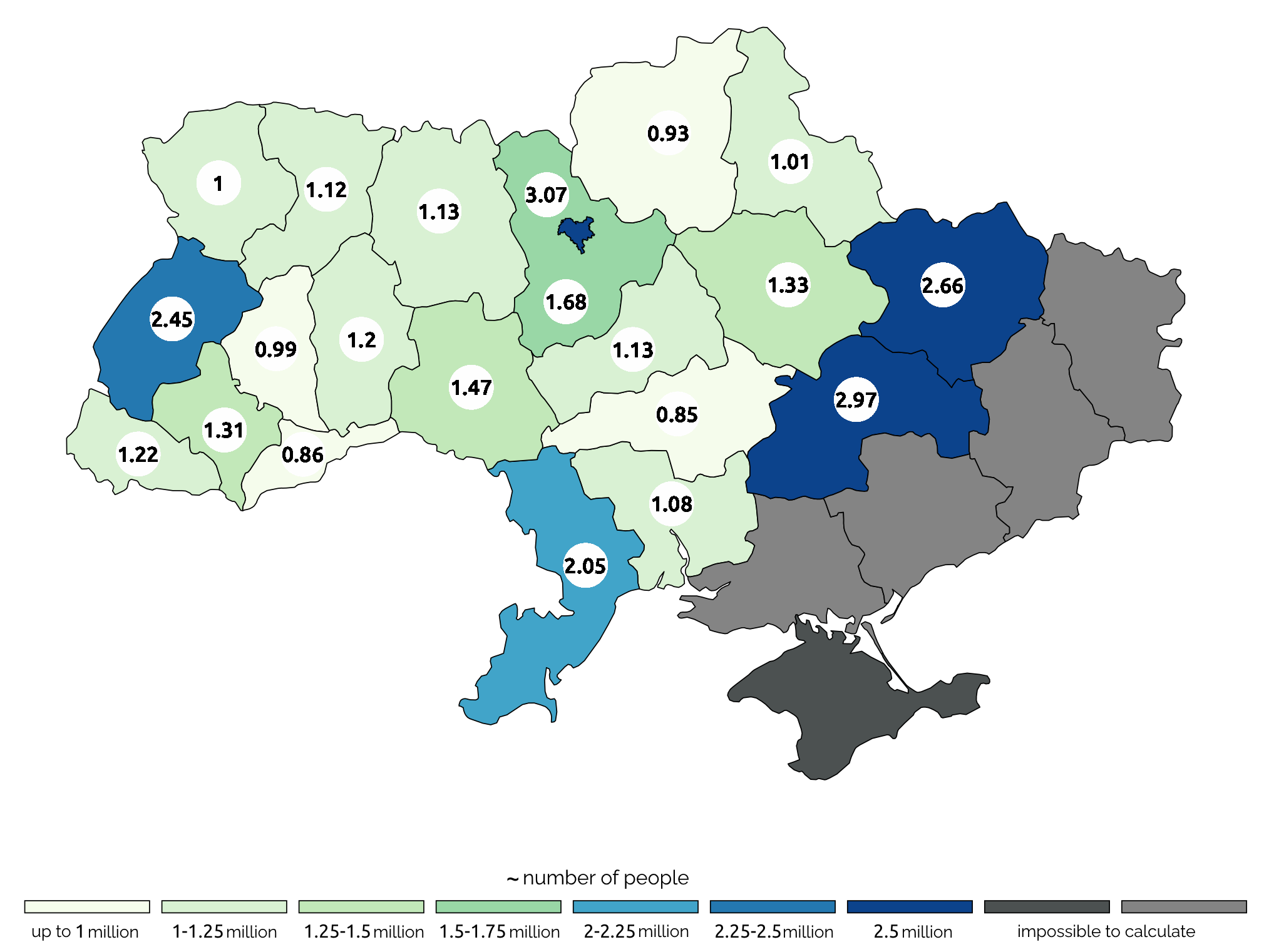
Estimated number of population in regions of Ukraine based on number of active mobile sim cards (mln)

The U.S. Department of Homeland Security (DHS) and U.S. Citizenship and Immigration Services (USCIS) published a draft of new rules for the EB-5 investor visa program, through which foreign investors can obtain U.S. permanent resident status by investing capital in an American business and creating jobs.
The primary source of the information is the DHS/USCIS document “EB-5 Reform and Integrity Act of 2022; Ensuring the Integrity of the EB-5 Program; Automatic Revocation of Petitions for Immigrant Classification,” published for the Federal Register. This is specifically a notice of proposed rulemaking, meaning a draft rule for public discussion, rather than a final regulation that has already entered into force. The document is to be published in the Federal Register, and comments will be accepted for 60 days after publication.
The EB-5 program allows a foreign national to apply for permanent residence in the United States if they invest in a new commercial enterprise in the United States and create at least 10 permanent jobs for qualified U.S. workers. Following the 2022 reform, the standard minimum investment amount is $1.05 million, while for projects in a Targeted Employment Area (TEA) or infrastructure projects it is $800,000.
The main change in the new proposal is that the United States wants to formally establish a stricter architecture for the EB-5 program following the adoption of the EB-5 Reform and Integrity Act of 2022. DHS states that the proposal is intended to bring the rules for investors and the Regional Center Program into line with the 2022 reform, strengthen transparency and oversight of participants, and protect the program from fraud.
One of the most notable provisions is a new category of high employment area, meaning areas with high employment. For projects in such locations, DHS proposes setting an increased minimum investment threshold of $1.4 million. This is higher than the standard $1.05 million and is intended to reduce the incentive to direct EB-5 money into already prosperous areas instead of territories that genuinely need investment and jobs.
DHS also proposes automatically reviewing investment thresholds starting January 1, 2027, and every five years thereafter. The standard amount is to be indexed to inflation, while for TEA and infrastructure projects the reduced threshold will equal 75% of the standard amount. For a high employment area, the amount is to equal 133% of the standard threshold, rounded to the nearest $50,000.
Another important section for investors concerns verification of the source of capital. DHS proposes establishing a requirement that the investor must prove the lawful origin not only of the investment itself, but also of the funds used to pay administrative expenses and fees. The document separately states the need to show the path of the money from the investor to the new commercial enterprise, including bank statements, tax documents, transfer confirmations and information about intermediaries.
The rules for intermediaries are also being tightened. The proposal provides for the registration of promoters, including migration agents, who advertise or promote investment offerings of regional centers. Promotional materials must accurately describe the visa process and permitted commissions, while the definition of promotional materials includes advertising, offering memoranda, recommendations, testimonials, solicitation and communication with investors.
Particular emphasis is placed on the Regional Center Program, through which the majority of EB-5 investments are made. DHS states that more than 90% of EB-5 petitions are filed through regional centers, and that since 1994 they have accounted for about $74.97 billion in investments and 239,580 jobs created. The Regional Center Program is authorized through September 30, 2027.
For regional centers, the proposal introduces stricter requirements for disclosure of information, changes in ownership structure and vetting of individuals associated with the centers, new commercial enterprises and job-creating entities. USCIS will be able to suspend the consideration of applications and petitions if changes in ownership or control require separate review.
The EB-5 visa quota accounts for 7.1% of the overall worldwide limit for employment-based visas, usually about 9,940 visas per year. Following the 2022 reform, 20% of EB-5 visas are reserved for investments in rural areas, 10% for areas with high unemployment and 2% for infrastructure projects.
For the investment immigration market, this means that EB-5 is becoming less like “buying a green card” and more like a regulated investment product with increased scrutiny of the source of funds, the project, intermediaries and the regional center. The new rules may be particularly sensitive for investors who planned to invest in projects in large and economically strong urban areas: there the threshold may rise to $1.4 million.
The practical conclusion for investors is simple: for now, this is a proposed rule, not a final regulation that has entered into force. But the direction of the reform is already clear: the United States wants to strengthen oversight of EB-5, limit the use of the program in prosperous areas, raise documentation requirements and make regional centers more accountable. Therefore, before filing under EB-5, an investor will have to check not only the profitability of the project, but also its geographic category, visa quota, regional center status, fee structure and documentary evidence.
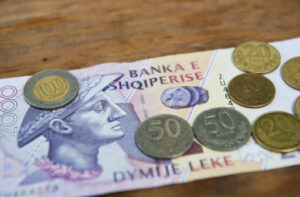
According to The Serbian Economist, foreign direct investment inflows into Albania rose by 3.4% in 2025 to 1.63 billion euros, up from 1.58 billion euros in 2024, the country’s central bank reported. Amid a decline in FDI in several countries in the region, Albania became one of the few markets in Southeast Europe where foreign investment continued to grow.
The Netherlands was the largest source of investment, contributing 201.9 million euros. Next were Italy with 186.9 million euros and Kosovo with 186.4 million euros. This geographic distribution differs from that of Montenegro, where the largest sources in 2025 were Serbia, Turkey, and Germany.
The main sector for foreign capital in Albania is real estate. In 2025, it attracted 560.9 million euros, or approximately one-third of total FDI. Insurance and financial services ranked second with 291.14 million euros, while wholesale and retail trade ranked third with 161.89 million euros.
The Albanian example demonstrates the same regional trend as Montenegro, but on a larger scale: foreign investors are actively investing in real estate, especially against the backdrop of growing interest in the coast, tourism, relocation, and infrastructure development. For Tirana and coastal cities, this means an increase in construction activity and prices, but at the same time, it exacerbates the issue of housing affordability for the local population.
Until recently, the Albanian market was viewed as peripheral, but now it is competing for capital with Montenegro, Croatia, Greece, and other Southern European destinations. At the same time, the volume of foreign direct investment in Albania already significantly exceeds that of Montenegro: 1.63 billion euros versus 531 million euros in net inflows in Montenegro.
Albania’s strengths lie in the size of its market and growing interest in real estate, tourism, financial services, and trade. Its weakness lies in the high concentration of investment in sectors that do not always ensure rapid productivity growth. As in Montenegro, the key question for long-term development is whether the country will be able to transform interest in real estate and services into more substantial greenfield projects, industry, logistics, and export capacity.
Albania is cementing its position as one of the most dynamic investment markets in the Balkans. But growth driven by real estate creates the same dilemma as in Montenegro: money flows in quickly, but the lasting impact on employment, exports, and productivity depends on whether more complex investment projects follow construction.
https://t.me/relocationrs/3162

According to Experts.news, Ukraine’s construction industry has shown mixed trends based on preliminary results for the first half of 2026: following growth in 2023–2025, the sector has faced a slowdown in the volume of work, rising construction costs, a labor shortage, and a shift in demand toward housing and infrastructure reconstruction.
The State Statistics Service has not yet released final data for January–June, so a current assessment can be made based on statistics for the first four months, data on housing completions in the first quarter, the “eOselya” and “eVidnovlennia” programs, as well as construction companies’ expectations for the second quarter.
According to the State Statistics Service, the volume of construction work completed in Ukraine in January–April 2026 decreased by 2% compared to the same period in 2025 and amounted to 59.3 billion UAH. At the same time, in April compared to April 2025, construction had already shown a 2.8% increase; specifically, residential construction rose by 5.8%, civil engineering structures by 9.7%, while non-residential construction declined by 7.4%. New construction accounted for 47.8% of the total in April, repairs for 29%, and reconstruction and other work for 23.2%.
By comparison, in 2025, the volume of construction work completed in Ukraine rose by 11.3% to 258.2 billion UAH, but the growth rate was already slowing down at that time, following 17.8% growth in 2024 and 31.8% in 2023. In 2025, residential construction grew by 13.5%, nonresidential construction by 25.4%, and civil engineering by only 3.1%.
“In the first half of 2026, the construction sector effectively transitioned from a phase of rapid post-shock recovery to a phase of selective growth. Housing, renovations, engineering infrastructure, and reconstruction-related projects remain the most resilient. At the same time, commercial non-residential construction remains weaker due to war risks, more expensive financing, and uncertainty for investors,” noted Maksym Urakin, founder of the Experts Club analytical center and candidate of economic sciences.
The residential segment appears more stable than the overall industry trend. In the first quarter of 2026, housing completions in Ukraine decreased by only 0.1% year-over-year, to 2.289 million square meters. During this period, 29,600 apartments were completed, which is 4.3% more than in the first quarter of 2025. The largest volumes of housing completions were recorded in the Lviv, Odesa, Ivano-Frankivsk, Zakarpattia, and Ternopil regions, while in Kyiv, 289,000 square meters of housing—or 4,900 apartments—were completed.
Government programs remain one of the key sources of demand for housing. According to the Ministry of Economy, as of June 22, 2026, 4,104 Ukrainian families had taken advantage of the “eOselya” program since the beginning of the year, receiving preferential mortgage loans totaling nearly 7.7 billion UAH. In just one week in June, 157 loans totaling 313 million UAH were issued, with the majority of new loans going toward first-time home purchases.
The “eVidnovlennia” program plays an even more important role for the construction market. As of June 2026, 206,447 Ukrainian families had received assistance for repairing or purchasing new housing, totaling 103.9 billion UAH. More than 138,000 families received payments to repair damaged homes, nearly 65,000 families received housing certificates for destroyed property, and a separate program for rebuilding on private land is already being funded through tranches.
At the same time, the industry is facing significant price pressure. According to the summary table of price indices for construction and installation work, in April 2026, the construction price index stood at 103.1% compared to March, following 109.4% in March, 101.8% in February, and 101.1% in January. The cumulative figure for the first four months of 2026 was 116.1%, indicating a significant increase in the cost of labor and materials.
Business expectations among construction companies remain cautious. According to a State Statistics Service survey for the second quarter of 2026, the business confidence indicator in construction improved by 1.9 percentage points compared to the first quarter but remained deeply negative at minus 25.7%. The current order volume was estimated at minus 41.5%, and expectations regarding the number of employees stood at minus 9.9%. Companies cited labor shortages, financial constraints, and other factors as the main limiting factors, while their order backlog was estimated to cover an average of six months of work.
At the macro level, the country’s recovery remains the industry’s main long-term driver. According to estimates by the World Bank, the Ukrainian government, the European Commission, and the UN, Ukraine’s needs for recovery and reconstruction over the next ten years are already estimated at nearly $588 billion. Direct losses reached $195 billion, with the housing, transportation, and energy sectors hardest hit. Damages to the housing sector alone are estimated at approximately $61 billion, and about 14% of the housing stock has been damaged or destroyed.
According to Experts Club’s assessment, in the second half of 2026, Ukraine’s construction industry will remain dependent on three key factors: the security situation, access to financing, and the stability of government recovery programs. Residential projects in hinterland regions, the reconstruction of damaged housing, engineering infrastructure, the energy resilience of communities, social housing, and critical infrastructure facilities will have the greatest potential.
“The Ukrainian construction sector cannot be assessed solely based on the current index of completed work. It is no longer just an economic sector, but one of the key tools for survival, the return of people, the recovery of communities, and the country’s future investment attractiveness. But the transition from repairs to large-scale modernization requires long-term financing, insurance against war risks, transparent project pipelines, and skilled personnel,” emphasized Maksym Urakin.
Thus, the first half of 2026 for Ukraine’s construction industry can be preliminarily assessed as a period of stabilization following the rapid growth of previous years. The market is not showing a uniform upturn, but it has significant structural demand related to housing, reconstruction, infrastructure, and future post-war reconstruction. For businesses, this means a shift toward more selective competition—companies with access to financing, qualified personnel, a transparent cost estimation framework, and the ability to work with government and international reconstruction programs will come out on top.
CONSTRUCTION, EXPERTS CLUB, HOUSING, INFRASTRUCTURE, RECONSTRUCTION, URAKIN
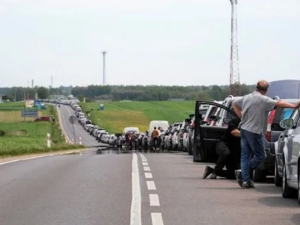
As of Sunday evening, a buildup of vehicles heading to Ukraine is observed on the Ukrainian-Polish border, the Western Regional Directorate of the State Border Guard Service of Ukraine reports.
Thus, at the Hrushev checkpoint, a queue of 30 cars and 6 buses has formed for entry into Ukraine; at the Krakivets checkpoint – 70 cars and 11 buses; at Shehyni – 45 cars and 15 buses; and at Nyzhankovychi – 20 cars.
“At present, the Ugryniv, Rava-Ruska and Smilnytsia checkpoints are not overloaded for entry into Ukraine,” the State Border Guard Service noted.
A buildup of passenger cars leaving Ukraine was recorded only at the Hrushev checkpoint – 30 cars; there is no buildup of passenger cars at the other checkpoints.
At the same time, in bus traffic leaving Ukraine, a buildup is recorded at the Krakivets checkpoint – 4 buses, at the Smilnytsia checkpoint – 8 buses, and at the Nyzhankovychi checkpoint – 1 bus.
“To avoid long waits in front of the checkpoint, we recommend choosing less congested checkpoints, as well as crossing the border early in the morning or late in the evening,” the border guards urged.



