
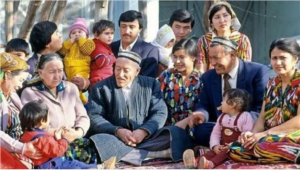
According to preliminary census results, Uzbekistan’s population reached 39.047 million people, the republic’s National Statistics Committee reported.
The population and agricultural census took place from January 15 to February 28, 2026, and was the first in the history of independent Uzbekistan. According to the statistics committee, 82.3% of the population participated in the online census, and when door-to-door visits were included, the total coverage rate was 97.3%.
The main finding is that the population turned out to be higher than current statistical estimates. Prior to the census, it was estimated at 38.236 million people, while the preliminary result was 39.047 million people. The difference is 810,600 people.
Compared to the 1989 census, Uzbekistan’s population has roughly doubled. This confirms the country’s main demographic trend: Uzbekistan remains one of the fastest-growing countries in the post-Soviet space.
The population is distributed almost evenly by gender, though there are slightly more men: 19.766 million men and 19.281 million women. The census also included 56,900 foreign citizens who have been residing in the country for more than one year. The majority of them are citizens of India, Russia, and Kazakhstan.
The ethnic composition remains predominantly Uzbek: Uzbeks make up 89.4% of the population, Tajiks 3.3%, Karakalpaks 2.2%, Kazakhs 1.8%, Russians 1.6%, Kyrgyz 0.6%, Turkmens—0.5%, and other nationalities—0.6%. 35.7 million people, or 91.3% of the population, identified Uzbek as their native language.
This is an important signal for the economy: population growth means an expansion of the domestic consumer market, the labor force, and demand for housing, schools, healthcare, transportation, energy, and urban infrastructure. At the same time, it increases pressure on the labor market and requires the government to engage in more precise planning for regional development.
Against this backdrop, Ukraine is experiencing the opposite demographic trend. At the end of 1991, the country’s population was estimated at 51.7 million; the 2001 census recorded 48.457 million; and as of early 2026, according to demographer Alexander Gladun’s estimate, 28 million people lived in territory controlled by the Ukrainian government. However, Ukraine’s current population is not known with certainty, as there has not been a census for more than 25 years, and millions of people are living abroad.
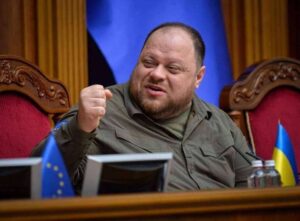
According to Serbian Economist, Ruslan Stefanchuk, Speaker of the Verkhovna Rada of Ukraine, has arrived in Belgrade, where he will participate in the Conference of Speakers of Parliaments of European Union Candidate Countries on July 7.
He was met at Nikola Tesla Airport by Ana Brnabić, Speaker of the National Assembly of Serbia. “Welcome to Serbia, dear friend,” Brnabić wrote, greeting the Ukrainian speaker.
On July 7–8, Belgrade is hosting a conference of speakers of the parliaments of EU candidate countries.
Stefanchuk’s visit is significant for Ukrainian-Serbian relations for several reasons. First, it represents a high-level parliamentary engagement against the backdrop of both countries’ European integration. Ukraine and Serbia are formally moving toward EU membership.
Second, Belgrade has been striving in recent months to adopt a more proactive parliamentary approach in its relations with Kyiv. In November 2025, Ana Brnabić visited Ukraine and met with Stefanchuk in Kyiv. At that time, the parties discussed interparliamentary cooperation, European integration, energy and humanitarian aid, and Brnabić stated that Serbia supports Ukraine’s European path.
For Serbia, the Ukrainian speaker’s visit is an opportunity to show Brussels that Belgrade is engaged in the pan-European parliamentary agenda and maintains channels of dialogue with Kyiv. For Ukraine, it is a chance to strengthen engagement with the Serbian political class not only through the government but also through parliament, expert circles, and the European integration agenda.
The practical substance of the meeting may extend beyond protocol: Ukraine and Serbia may discuss joint projects, the alignment of legislation with the EU, Ukraine’s recovery, humanitarian projects, energy, education, business contacts, and the role of parliaments in supporting bilateral dialogue.
The revival of economic dialogue between the two countries provided an additional backdrop to the visit. In May, a Serbian-Ukrainian business forum was held in Belgrade with the participation of the Ukrainian Chamber of Commerce and Industry and the Serbian Chamber of Commerce and Industry.
https://t.me/relocationrs/3172
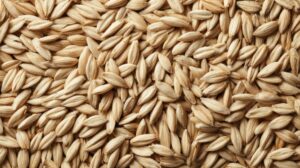
Ukraine exported 1.52 million metric tons of barley in the 2025/2026 marketing year, according to the Ukrainian Grain Association.
China was the leading importer of Ukrainian barley, with 487,000 metric tons. Turkey imported 297,000 metric tons, Libya—230,000 metric tons, Saudi Arabia—121,000 metric tons, and Lebanon—115,000 metric tons.
According to the UGA, total exports of grains and oilseeds for the season fell to 41.1 million metric tons from 46.7 million metric tons a year earlier.

Ukraine exported 21 million metric tons of corn during the 2025/2026 marketing year, according to the Ukrainian Grain Association.
Turkey was the largest buyer of Ukrainian corn, purchasing 6.5 million metric tons. It was followed by Italy (3.8 million metric tons), Spain (1.9 million metric tons), the Netherlands (1.7 million metric tons), and Israel (934,000 metric tons).
Total exports of grains and oilseeds from Ukraine in the 2025/2026 marketing year amounted to 41.1 million metric tons, which is 12% less than in the previous season.

Ukrainian companies that plan to attract financing, work with deferred payment, or expand international sales need to pay greater attention to the assessment of credit and commercial risks. For foreign banks, insurance companies, suppliers, and buyers, the quality of data about a counterparty is becoming a key factor in decision-making.
Dun & Bradstreet solutions make it possible to assess companies’ financial stability, their payment discipline, the risks of non-fulfilment of obligations, and their commercial history. Such data can be used both by Ukrainian companies themselves and by their potential partners. For businesses, this means that transparency is becoming a competitive advantage. A company that is easy to verify and understand has a better chance of obtaining better contract terms, financing, insurance, or trade credit. “In a world where capital has become more cautious, businesses must prove their reliability with data.
For Ukraine, this is especially important: the country has a high macro risk due to the war, so each individual company must reduce the information uncertainty surrounding it as much as possible,” Maksym Urakin noted. He stressed that systematic work with business data helps companies better manage their own risks and at the same time increases trust in them on the part of external partners. Dun & Bradstreet is an international company in the field of business data and analytics, founded in 1841. The company provides tools for business identification, counterparty verification, assessment of credit and commercial risks, compliance, and supply chain analysis.
One of D&B’s key tools is the D-U-N-S Number — a unique nine-digit company identifier used in international business practice. In Ukraine, D&B’s interests are represented by the Interfax-Ukraine agency. The partnership is aimed at expanding Ukrainian companies’ access to international business data, supporting exports, attracting financing, and integrating into global supply chains. Interfax-Ukraine is an independent Ukrainian news agency that has been operating since 1992.
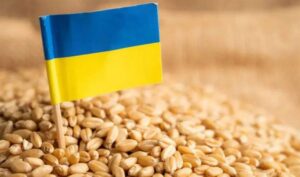
Ukraine exported nearly 14 million metric tons of wheat in the 2025/2026 marketing year, according to the Ukrainian Grain Association (UGA).
The main export markets for Ukrainian wheat were Egypt (3.9 million metric tons), Algeria (2.8 million metric tons), Indonesia (2.1 million metric tons), Yemen (1 million metric tons), and Spain (678,000 metric tons).
According to the association, the decline in total exports of grains and oilseeds during the season was due to a lower harvest, the introduction of quotas on Ukrainian wheat imports into the European Union, and logistical difficulties caused by Russian shelling of energy and transportation infrastructure, particularly ports and maritime grain terminals.



