

The Economist Intelligence Unit, the analytical division of The Economist Group, has published the Global Liveability Index 2026—a ranking of living conditions in 173 cities around the world. The index evaluates cities across five categories: stability, healthcare, culture and environment, education, and infrastructure.
For the second year in a row, Copenhagen was named the world’s most livable city. The top ten included: Copenhagen (Denmark), Vienna (Austria), Melbourne (Australia), Sydney (Australia), Zurich (Switzerland), Geneva (Switzerland), Osaka (Japan), Adelaide (Australia), Vancouver (Canada), and Tokyo (Japan).
Kyiv found itself at the bottom of the ranking: the Ukrainian capital dropped from 165th to 166th place and once again made the list of the world’s ten least livable cities. The main reason is the consequences and risks of a full-scale war, which directly affect stability, infrastructure, and the quality of the urban environment.
Damascus, Syria, remains in last place in the ranking, a position it has held since 2013. Other cities at the bottom of the list include Tripoli, Libya; Dhaka, Bangladesh; Tehran, Iran; Lagos, Nigeria; and Kyiv. The EIU notes that nearly all cities at the bottom of the ranking have been affected by war, political instability, poverty, or a combination of these factors.
For Ukraine, the result is painful but expected. Before the war, Kyiv ranked significantly higher: in 2021, it was in 117th place; in 2022, it was excluded from the ranking due to the war; and from 2023 to 2025, it held the 165th position. In 2026, the capital dropped another spot.
The ranking also reflects a general global trend: cities with high stability, advanced healthcare, quality education, and well-developed infrastructure remain at the top, while wars and crises quickly push cities down the list even when they possess strong human and economic potential.
For Kyiv, this index is not so much an assessment of the city’s quality as such, but rather an indicator of the cost of war. Provided that security normalizes, infrastructure is restored, and military risks are reduced, the Ukrainian capital has the potential to return to the middle of the ranking, where it stood until 2022.
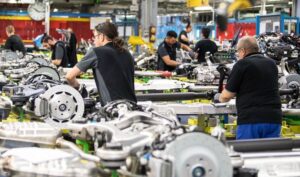
Industrial production in Germany rose 0.9% in May compared with the previous month—the largest increase since March of last year—according to the country’s statistics office.
Analysts had expected industrial production to rise by 0.2% on average, according to Trading Economics.
According to revised data, the figure rose by 0.2% in April, rather than 0.4% as previously reported.
Output of consumer goods rose by 1.2% in May, while output of capital goods increased by 1.3%. Meanwhile, production of intermediate goods fell by 0.4%.
Output in the automotive industry increased by 3.6%, construction output by 0.9%, and energy production by 0.8%.
On a year-over-year basis, industrial production in Germany remained unchanged in May after falling by 0.9% the previous month.

Ukraine exported 1.82 million metric tons of rapeseed during the 2025/2026 marketing year, compared to 3.2 million metric tons in the previous season, according to the Ukrainian Grain Association.
Germany was the main market for Ukrainian rapeseed, accounting for 876,000 metric tons. Belgium imported 453,000 metric tons, the Netherlands—247,000 metric tons, the Czech Republic—112,000 metric tons, and the United Kingdom—109,000 metric tons.
According to the UGA, the decline in rapeseed exports was due to a lower harvest and the introduction of an export duty on this crop.

The agro-industrial holding Astarta is considering the sale of its agricultural enterprise, Chernihiv Eco Plus LLC, which cultivates approximately 4,000 hectares of land and has associated production infrastructure; the buyer is Ridne Group of Companies LLC, a company affiliated with the Ridne consortium “Ridne Group of Companies” LLC.
According to Astarta’s announcement on the Warsaw Stock Exchange, the decision to sell is in line with the company’s strategy to review its agricultural portfolio and is aimed at optimizing its land bank by focusing on regions with higher agronomic efficiency and yield potential.
On July 2, the potential buyer already received approval from the Antimonopoly Committee of Ukraine to acquire control over the asset.
At the same time, Astarta noted that obtaining such approval was a procedural step that allows the parties to continue assessing the feasibility of the deal. As of the end of last week, a final agreement on the sale of the asset had not been concluded.
“Astarta” is a vertically integrated agro-industrial holding company operating in seven regions of Ukraine and is the country’s largest sugar producer. The company’s portfolio includes five sugar refineries, agricultural enterprises with a land bank of 214,000 hectares (including 129,000 hectares in Poltava Oblast, 42,000 hectares in Khmelnytskyi Oblast, and 16,000 hectares in Vinnytsia Oblast), and dairy farms with 30,000 head of cattle. The holding company also operates a soybean processing plant and a bioenergy complex in the Poltava region, as well as a network of six grain elevators. Astarta’s shares are listed on the Warsaw Stock Exchange.
Astarta’s net profit for 2025 fell 4.2-fold to $19.94 million, while consolidated revenue decreased by 23% to $472 million.
The co-owners of “Ridne Group of Companies,” on an equal footing, are Oleksiy Khvorostiany and Serhiy Kovalchuk, the CEO and COO of the “Ridne” consortium, respectively.
According to information on its website, the “Ridne” consortium was established in 2022 following the start of the Russian invasion; it brings together 80 farms and 11 Ukrainian food producers: cereals, flour, canned meat, vegetables, and fish, pasta, sunflower oil, and dairy products, and also operates its own packaging center.
The consortium members listed include Ridne Food Factories LLC (Ivanki, Cherkasy Oblast), Grocery Products Factory LLC (TM “Zhmenka,” Skvyra, Kyiv Oblast), Central Fish LLC (Cherkasy), KLM Group LLC (Kyiv), Agroproduct LLC (Znam’yanka, Kirovohrad Oblast), “Conservatory” Canning Plant LLC (Kolomyia, Ivano-Frankivsk Oblast), the Bila Tserkva Agro-Industrial Group (Bila Tserkva, Poltava Oblast), “Fabrika Zdorovo” LLC (Chernihiv), “Azot Agro” JSC (Cherkasy), and “Nadiya” LLC (Zlatopil, Kharkiv Oblast).
AGRICULTURAL HOLDING, AMCU, asset, ASTARTA, Chernihiv Eco Plus, LAND BANK, Ridne

The “Yarich” confectionery group has raised $10 million from the Norwegian state investment fund Norfund, which it will use to modernize production and further develop the business, Norfund announced,
“Yarich’s impressive growth in recent years, despite the war, reflects the strength and dedication of its management and owners. Supporting strong teams and helping reliable companies achieve further growth is a key part of Norfund’s investment approach,” said Norfund Project Manager Anastasia Andriyevska.
According to the fund, the funds will be used to modernize production facilities, specifically to install a new pretzel production line, which will enable the company to expand its product range and enter new market segments.
“This investment is a strong signal of confidence in Ukrainian business and the resilience of our team. It will facilitate further expansion into new product categories and continued growth in both the Ukrainian and export markets,” said Tetyana Shermolovych, the company’s CEO.
Norfund noted that Yarych’s production site in the Lviv region, which employs about 500 people, is a key hub for export development. In recent years, the company has significantly increased its exports, primarily to Poland.
Yarych Holdings Limited is the parent company of the “Yarych” confectionery group, whose production facilities are located in the village of Staryi Yarychiv in the Lviv region. The group specializes in the production of long-lasting cookies and crackers under the Yarych brand. The holding company directly owns 84.94% of Yarych Confectionery Factory LLC, while another 15.06% is owned by Yarychiv LLC.
Norfund is Norway’s state-owned investment fund, which finances private companies and projects in developing countries with the aim of creating jobs and supporting sustainable economic development. In Ukraine, the fund operates through the Investment Fund for Ukraine, established in late 2024 to support Ukrainian businesses and attract private capital.
As previously reported, the Norwegian government allocated 250 million Norwegian kroner for Norfund’s investments in Ukraine as part of the Nansen Support Program.
In late 2025, the fund also invested $15 million in the Rebuild Ukraine Fund (REBUF), managed by Dragon Capital, and approximately EUR8.5 million in the expansion of the M10 industrial park in the Lviv region.
BUSINESS, confectionery industry, EXPORTS, INVESTMENTS, MODERNIZATION, Norfund, PRODUCTION, YARYCH
Amsterdam, June 29, 2026 – OLX Group (“OLX”), the global leader in online classifieds with nearly 60 million listings daily across seven markets and a wholly owned subsidiary of Prosus, reported strong financial results for the full year ended March 31, 2026.
Christian Gisi, CEO of OLX Group, commented: “These results reflect our consistent strategy over the past few years—focusing on the right markets, the right categories, and the right model. For us, artificial intelligence is no longer just an investment category; it is the operating system of our business. This is directly reflected in the quality of our product and the results we deliver to customers, and ultimately in margin growth.”
Progress in Executing the Strategy
The financial results reflect OLX’s improved operational efficiency, continued investment in artificial intelligence, and the strengthening of the business in key categories. The company’s growth is primarily driven by its focus on Cars, Real Estate, and Jobs, which now account for 71% of total revenue.
Trends within OLX Group’s core categories:
OLX Ukraine: Steady Growth and a New Real Estate Platform
OLX Ukraine brings together approximately 22 million users each month, maintaining its leading position in the classifieds platform market and ensuring uninterrupted service delivery even during the war. In the “Real Estate” category, revenue grew by 13% year-over-year. In the “Jobs” category, thanks to an integrated 360° communication campaign, the number of daily active users increased by 15%, and the number of responses on the platform rose by 32% year-over-year.
Specifically, in the retail and young professionals segments, the number of reviews grew by 20% and 63%, respectively. Thanks to OLX’s brand development initiatives, OLX Jobs ranked second in unaided brand awareness (ABA) in the blue-collar professions category. The “Auto Parts” category remains the leader, with over 1.5 million active listings on the platform. OLX Ukraine is continuously building brand awareness and user loyalty in the “Goods” category. A large-scale campaign featuring over 30 Ukrainian influencers generated 10.7 million content views on social media and 135,000 visits to the platform.
OLX Group strengthened its presence in Ukraine by launching Otodim in May 2026. This is a specialized real estate platform designed to serve this market and expand access to verified listings for buyers, renters, and professional market participants across the country.
Leading AI Solutions
Over the course of the year, OLX Group invested $30 million in AI-based solutions, and since 2018, total investments have exceeded $200 million. The company has implemented over 85 AI-powered projects and 12 generative AI solutions on its platforms.
AutoIQ, an operating system for car dealers, helps them make smart decisions regarding pricing and inventory, resulting in a weekly retention rate of 21%. AI-powered matching in the “Jobs” category accounts for 59% of all interactions, with 63% of employers responding within five minutes of receiving a match. In the “Real Estate” category, AI-powered listing tools reduce listing time by 50%, and CompassGPT enables conversational search for buyers.
These services boost efficiency, drive automation, improve the customer experience, and generate 8–10% more premium leads, the value of which is now included in product packages.
Changes to the portfolio reflect a strategic focus
In fiscal year 2026, OLX Group expanded its presence in Western Europe by acquiring the French automotive platform La Centrale, complementing the company’s existing portfolio of automotive products in an attractive market. This deal demonstrates OLX’s ability to acquire leading vertical platforms and rapidly implement its product and AI solutions to scale. This resulted in a 13% increase in traffic and a 30% increase in leads compared to the previous year.
The company divested non-core assets in Uzbekistan and Kazakhstan, as well as the Polish service platform Fixly and the Romanian real estate financing platform Kiwi Finance, strengthening its strategic focus on fast-growing markets and core categories.
Outlook for Fiscal Year 2027
OLX Group began fiscal year 2027 with strong momentum for growth. AI-powered solutions are delivering real value to customers, core categories continue to strengthen, and the integration with La Centrale is ahead of schedule. The company is well-positioned to deliver further growth and margin expansion throughout the year.
About OLX Group
OLX is a global leader in digital marketplaces, creating AI-powered trading platforms for people. Its services are trusted by millions of people, professional market participants, and businesses across Europe and South Africa. By leveraging its scale and powerful AI solutions to develop its proven brands, OLX helps people buy and sell cars, find housing, find jobs, buy and sell home goods, and more. OLX Group is a classifieds platform business owned by Prosus. Prosus is a global technology company that owns leading lifestyle e-commerce brands in Latin America, Europe, and India. For more information about OLX, visit www.olxgroup.com
The transaction was completed on November 17, 2025.
OLX Group signed agreements to sell its assets in Uzbekistan on August 4, 2025, in Kazakhstan on October 21, 2025, and Fixly on October 29, 2025. The company completed the sale of Kiwi Finance on August 1, 2025.



