

Romania, Bulgaria, and Turkey have agreed to expand the mission of the joint Black Sea Mine Countermeasures Task Group by adding the protection of critical infrastructure to its mandate.
The agreement was reached during the NATO summit in Ankara. This involves expanding the authority of the Mine Countermeasures Black Sea Task Group, which had previously focused primarily on locating and neutralizing mines in the Black Sea.
According to Reuters, the new mandate calls for the protection of energy and telecommunications facilities and undersea pipelines owned or operated by the three countries.
The Romanian Ministry of Defense stated that protecting critical infrastructure in the Black Sea requires a comprehensive, integrated, and long-term approach. The ministry also noted that a memorandum establishing the mine countermeasures security group was signed on January 11, 2024, by the defense ministers of Romania, Bulgaria, and Turkey.
The joint group became the first trilateral initiative of its kind among the three NATO countries with access to the Black Sea. Its initial task was to improve the safety of navigation following the appearance of drifting mines in the sea as a result of Russia’s war against Ukraine.
According to Reuters, the group has already neutralized more than 150 mines since its creation. The expansion of its mandate reflects growing concerns among countries in the region regarding the security of maritime infrastructure, particularly against the backdrop of developing gas projects in the Black Sea.
For Ukraine, this decision is of direct importance, as Black Sea security affects shipping, export routes, energy infrastructure, and the overall naval situation in the region. Stronger coordination between Romania, Bulgaria, and Turkey also signals greater NATO focus on the Black Sea region.
BLACK SEA, BULGARIA, DEFENSE, INFRASTRUCTURE, ROMANIA, TURKEY
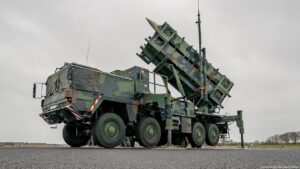
Norway has announced the allocation of 3 billion kroner (268 million euros) to strengthen Ukraine’s air defense, specifically as part of the PURL program and to purchase Patriot missiles from countries that already have them, the Norwegian government’s press service reported.
“Norway is now providing an additional 3 billion Norwegian kroner to strengthen Ukraine’s air defense systems,” the government press service stated on its website.
It is reported that Norway, together with Denmark, Germany, and Canada, will order new Patriot air defense missiles directly from the manufacturer in the U.S. as part of the PURL program.
“Given the long delivery times for some of these missiles, Norway also plans to purchase Patriot missiles from countries that already have them in order to deliver them to Ukraine as quickly as possible,” the Norwegian government emphasized.
Norway is also allocating funds to join Ukraine’s initiative to jointly develop anti-ballistic systems with European partners. “Ukraine has invited European partners to participate in the development of a specialized missile defense system. This could also be significant for the defense of Norway and other NATO member states. Norway is allocating funding to be able to contribute to this initiative,” the statement said.
“In the future, ballistic missiles may also pose a serious threat to Norway and its allies. Therefore, the Ukrainian initiative is of interest from the perspective of strengthening Norway’s defense capabilities,” said Defense Minister Tore O. Sandvik.
During the NATO summit in Ankara, Ukrainian President Volodymyr Zelenskyy stated that a key topic of discussion with partners would be the supply of interceptor missiles for the Patriot air defense system, which are critical to Ukraine’s ability to shoot down Russian ballistic missiles—and noted that these missiles are not exclusive to the United States.
As previously reported, the Netherlands, Germany, Finland, Sweden, Lithuania, Estonia, Latvia, Denmark, and Poland have appealed to the European Commission to grant authorization as soon as possible for the purchase of missiles for U.S.-made air defense systems as part of the 90 billion euro “defense” component that the EU is providing to Ukraine in 2026–27.
The International Monetary Fund forecasts that Ukraine will be one of Europe’s fastest-growing economies in 2027–2031, according to a Euronews analysis based on data from the IMF’s World Economic Outlook. The primary source of the data is the IMF’s World Economic Outlook database, which publishes country-specific forecasts, including real GDP growth figures through 2031.
According to Euronews’ calculations, the IMF expects Ukraine’s economy to grow at an average annual rate of 3.8% from 2027 to 2031. The strongest year in the forecast period is expected to be 2028, when growth could reach about 4.2%. Based on this indicator, Ukraine ranks among the top five European economies expected to grow more than twice as fast as the eurozone.
In the list of Europe’s fastest-growing economies, Ukraine is ranked after Malta and Kosovo. Further down the list are Serbia, with an average annual growth rate of 3.52%, and Moldova, with a forecast of about 3.5%. By comparison, according to the IMF, the eurozone economy is projected to grow by an average of 1.2% per year from 2027 to 2031, while the EU economy as a whole is expected to grow by approximately 1.4%.
The key factor driving Ukraine’s growth is cited as the post-war recovery of its economy and infrastructure. Euronews notes that the IMF’s forecast is effectively a recovery scenario: it assumes a gradual de-escalation of the war and the launch of large-scale investments in reconstruction. According to the report, the estimated cost of reconstruction is approaching $600 billion.
At the same time, the outlook for Ukraine remains one of the most uncertain in Europe. In its June 12, 2026, report on Ukraine, the IMF explicitly noted that the country’s prospects remain “extremely uncertain,” as the war continues to inflict severe damage on the population and the economy. The IMF also indicated that Ukraine’s GDP growth in 2026 could slow to 1.0–1.6% due to the consequences of Russia’s ongoing war against Ukraine and external shocks.
It is precisely this difference between the short-term and medium-term outlooks that is the key element of the forecast. In 2026, the Ukrainian economy remains under pressure from military risks, infrastructure damage, fiscal expenditures, labor shortages, and high dependence on external financing. However, in 2027–2031, provided the security situation improves, recovery could become the main source of growth.
For Ukraine, this forecast implies that the country could become one of Europe’s most dynamic economies—not through typical cyclical growth, but through the effects of post-war reconstruction, investments in infrastructure, construction, energy, logistics, industry, and integration with the EU market.
However, this scenario depends directly on security, international aid, the sustainability of public finances, the pace of reforms, and the ability to attract private capital.
Without a reduction in military risks, growth could turn out to be significantly lower: Euronews notes that under the IMF’s adverse scenario—assuming intense hostilities continue—Ukraine’s growth in 2027 could be only about 1%.
Thus, in the IMF’s projections, Ukraine appears to be one of Europe’s most promising economies for the 2027–2031 period, but this potential remains closely tied to the end of the war, the scale of reconstruction, and the country’s ability to translate international support into long-term economic growth.
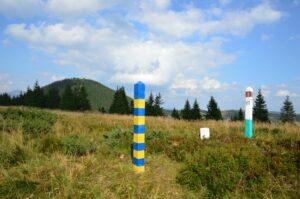
Nearly 2,500 Ukrainian citizens were detected by Romanian border guards while illegally crossing the border from Ukraine into Romania in the first half of 2026, according to the Romanian Border Police.
According to the Territorial Inspectorate of the Border Police in Sighetu Marmației, between January 1 and June 30, 2026, approximately 1,200 Ukrainians were detected in Maramureș County, about 1,000 in Suceava County, and more than 300 along the section of the border between Satu Mare County and Ukraine.
Compared to the same period in 2025, the number of such cases decreased by approximately 33%. At that time, Romanian border guards detected more than 3,700 Ukrainian citizens who had crossed the border illegally.
The Romanian Border Police note that most of those detained claim they left Ukraine because of the war and are applying to the Romanian authorities for one of the forms of protection provided for under the country’s legislation.
The most dangerous routes remain the Tisa River and the mountainous regions of Maramureș. According to Romanian authorities, the challenging terrain, unpredictable weather, and lack of proper equipment make such crossings life-threatening.
During the first six months of 2026, Romanian border guards, in collaboration with the Salvamont Maramureș mountain rescue team, conducted 22 search-and-rescue operations, during which 38 Ukrainian citizens who found themselves in distress in the mountainous border area were rescued.
Since the start of the full-scale war, the Inspectorate in Sighetu Marmației has identified more than 34,000 Ukrainian citizens along Romania’s northern border. During this period, border guards, together with rescue teams, conducted more than 230 search-and-rescue operations in the Maramureș Mountains and rescued more than 430 Ukrainians.
The Romanian side emphasizes that it continues to secure the 366 km of the Romanian-Ukrainian border within the Inspectorate’s area of responsibility, using modern surveillance equipment and in coordination with other units of the Ministry of Internal Affairs and institutional partners.

In September, the Ivan Franko National Academic Drama Theater in Ivano-Frankivsk will present the musical “Hutsulka Ksenia” in Slovakia for the first time; the tour was organized to mark the 35th anniversary of Ukraine’s independence.
Performances will take place on September 11 at 6:00 p.m. in Prešov at the Divadlo Jonáša Záborského and on September 12 at 6:00 p.m. in Bratislava at the new building of the Slovak National Theater. The Divadlo Jonáša Záborského program lists the performance of “Huculka Kseňa” for September 11 at 6:00 p.m. on the main stage, while the Slovak National Theater has confirmed a guest performance by the Ivano-Frankivsk Drama Theater on September 12 from 6:00 p.m. to 9:00 p.m.
“Huculka Ksenia” is one of the most famous productions in contemporary Ukrainian theater. The play has had over 200 sold-out performances and attracted thousands of viewers, according to the Slovak National Theater’s announcement of the Bratislava performance.
The production is directed by Rostyslav Derzhypilsky, People’s Artist of Ukraine and laureate of the Taras Shevchenko National Prize of Ukraine. The music by Yaroslav Barnych is performed in a contemporary orchestral arrangement, conducted by Bohdan Tkachuk, Honored Artist of Ukraine.
The production combines live music, choreography, costumes inspired by Hutsul culture, set design, and a laser show. The lead roles are played by Oleksiy Hnatkovsky, Pavlo Kilnytskyi, Myroslava Polatayko, Yuriy Vykhovanets, Yana Ivasyuk, Oleg Panas, Lilia Abramyuk, Nadiya Levchenko, and Olesia Pasichnyak.
The organizers note that the tour in Slovakia aims to present Ukrainian musical classics, Hutsul traditions, and a contemporary stage interpretation of Ukrainian culture to the Ukrainian community and Slovak audiences.
In Prešov, the performance will take place at the Divadlo Jonáša Záborského at Námestie legionárov 6. In Bratislava, the performance will be hosted by the Slovak National Theater at Pribinova 17.
The Ivan Franko National Academic Drama Theater in Ivano-Frankivsk is one of Ukraine’s leading theaters, with a repertoire that combines classical works, contemporary drama, and large-scale musical theater productions.
BRATISLAVA, Ksenia Hutsulka, musical, Prešov, SLOVAKIA, Theater, TOUR
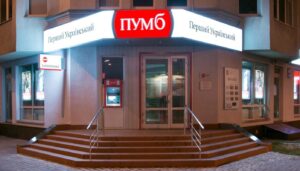
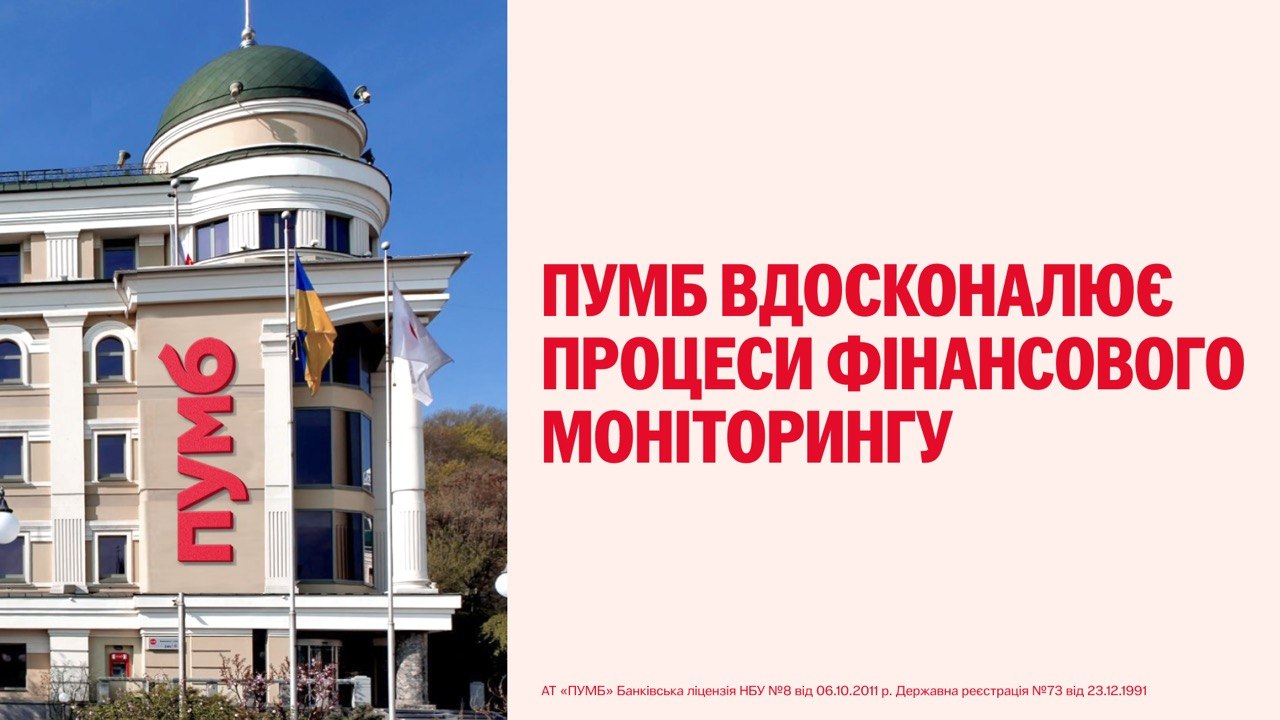
FUIB respects the decisions of the National Bank of Ukraine and prioritizes compliance with financial monitoring legislation.
The bank has taken into account the NBU’s comments to further improve and fine-tune its processes and procedures to meet the requirements of financial monitoring legislation. At the same time, the identified violations are not systemic and do not indicate a lack of an adequate risk management system or proper organization and conduct of initial financial monitoring at PUMB.
To date, PUMB has already developed an action plan to address the identified shortcomings and further improve internal procedures and controls in the area of financial monitoring. The bank systematically invests in the development of technological solutions and process automation aimed at enhancing the effectiveness of its financial monitoring system.
FUIB continues to engage constructively with the National Bank of Ukraine and is consistently working to improve the effectiveness of its financial monitoring system.
It should be noted that FUIB is one of the largest taxpayers in Ukraine. Since 2022, the bank has paid 20.4 billion UAH in taxes to budgets at all levels. At the same time, PUMB actively supports Ukraine and its defense forces: the bank’s investments in social projects since 2022 have exceeded 1.4 billion UAH, of which more than 544 million UAH has been allocated to support the Armed Forces of Ukraine, the Territorial Defense Forces, the State Emergency Service, the National Police, the National Guard, the Main Intelligence Directorate, and the Security Service of Ukraine.



