

Global steel production in April 2026 fell by 1.9% compared to the same period in 2025, to 153.449 million tons, according to data from the World Steel Association (Worldsteel).
China remains the leader in global steel production, having reduced output in April by 2.8% compared to April of last year—to 83.630 million tons. India took second place with a 3.9% increase in production to 13.829 million tons. The U.S. increased production by 9.4% to 7.160 million tons and ranked third.
The top ten steel producers in April also included Japan—6.620 million tons (+0.3%), South Korea—5.245 million tons (+4.8%), Russia—5.020 million tons (-12.4%), Turkey—3.291 million tons (+9.4%), Germany—3.233 million tons (+9.5%), Brazil – 2.720 million tons (+2.8%), and Vietnam – 2.130 million tons (+4%).
Iran recorded the largest percentage decline among the countries included in Worldsteel’s statistics in April, with steel production falling by 45.7% to 1.8 million tons.
In April 2026, Ukraine ranked 25th among 69 countries in the Worldsteel ranking. Ukrainian steel mills produced 517,000 tons of steel during the month, which is 25.3% less than in April 2025, when the figure stood at 692,000 tons. Compared to March 2026, when 702,000 tons were produced, the decline amounted to 26.3%.
In the January–April 2026 period, global steel production decreased by 2% compared to the same period last year, to 613.323 million tons.
The top ten steel-producing countries for the four-month period are as follows: China – 331.120 million tons (-4.1%), India – 58.681 million tons (+9.4%), the U.S. – 28.140 million tons (+6.6%), Japan – 26.670 million tons (-1.2%), South Korea – 21.041 million tons (+2.5%), Russia – 20.570 million tons (-12%), Turkey – 13.037 million tons (+6.3%), Germany – 12.493 million tons (+9.1%), Brazil – 10.793 million tons (-1.6%), and Vietnam – 8.520 million tons (+8.4%).
In January–April 2026, Ukraine reduced its steel output by 7.4% compared to the same period in 2025—from 2.425 million tons to 2.246 million tons. At the end of the four-month period, the country ranked 24th in the global ranking.
As reported, at the end of 2025, the world’s largest steel producers were China—960.810 million tons (-4.4%), India—164.887 million tons (+10.4%), the United States—81.951 million tons (+3.1%), Japan—80.679 million tons (-4%), Russia—67.820 million tons (-4.5%), South Korea—61.882 million tons (-2.8%), Turkey—38.118 million tons (+3.3%), Germany – 34.090 million tons (-8.6%), Brazil – 33.347 million tons (-1.6%), and Iran – 31.8 million tons (+1.4%).
In total, 70 countries produced 1,803.774 million tons of steel in 2025, which is 2% less than in 2024.
In 2025, Ukraine produced 7.409 million tons of steel, which is 2.2% less than in 2024. At the end of last year, the country ranked 21st in the global ranking of steel producers.

The mining and metallurgical group Metinvest is working to bring specialists back from abroad.
According to information from the company cited by the online publication LIGA.net, the priorities include regular personal contact with managers, invitations to online strategic sessions, involvement in important decisions, and updates on changes and opportunities.
“People return to where they remain visible,” the company emphasized.
In addition, it is noted that the company is using other practices to bring compatriots back from abroad to overcome the labor shortage. At the same time, it is noted that, in general, businesses in Ukraine are facing an unprecedented labor shortage. According to the European Business Association, 74% of Ukrainian companies reported a labor shortage in 2025.
At the same time, Ukraine has a large talent pool—5.6 million Ukrainians living abroad. 43% of them plan to return home, according to a study by the Center for Economic Strategy.
Business initiatives, in particular, offer educational and career opportunities, as well as financial support to attract Ukrainians back to their homeland. These programs are aimed at creating conditions for professional development and participation in the country’s reconstruction. The metallurgical holding company also emphasizes career opportunities and involvement in the reconstruction effort.
In 2025, Metinvest launched the Steel Force program for Ukrainian students studying at universities in the UK and Poland. The students completed paid internships at the Group’s facilities in the UK, Switzerland, Bulgaria, the Netherlands, and elsewhere. Some of them remained to work at Metinvest after completing the program.
“The program offers the opportunity to build a career at an international company and participate in projects aimed at rebuilding Ukraine and developing the domestic mining and metallurgical sector,” the company’s press service noted.
Metinvest is a vertically integrated group of mining and metallurgical enterprises. Its facilities are located in Ukraine—in the Donetsk, Luhansk, Zaporizhzhia, and Dnipropetrovsk regions—as well as in European Union countries, the UK, and the US.
The holding’s main shareholders are the SCM Group (71.24%) and Smart Holding (23.76%). Metinvest Holding LLC is the management company of the Metinvest Group.

The National Securities and Stock Market Commission (NSSMC) has registered a report on the results of Kyivmiskbud’s share issuance without a public offering; the relevant resolution took effect on the date of adoption, May 20, 2026, according to the developer’s press service.
“This is the final stage of the company’s recapitalization, which took place thanks to the support of the city authorities. We are grateful to the National Securities and Stock Market Commission for this decision, as we have received an effective tool to resume Kyivmiskbud’s active operations and unconditionally fulfill all obligations to investors and the community in full,” said Valerii Zasutskyi, chairman of the company’s board.
As a reminder, on October 31, 2024, the Kyiv City Council voted to recapitalize Kyivmiskbud by UAH 2.56 billion through the issuance and redemption of additional shares. On June 23, 2025, the company’s shareholders approved a decision to increase the authorized capital by UAH 2.56 billion through the issuance of additional common registered shares. The company received this recapitalization in December 2025. The Kyiv territorial community was the sole participant in the share placement.
As reported, Kyivmiskbud’s balance sheet includes 24 construction sites where over 120 residential buildings at various stages of completion have been erected. The total area of unfinished construction exceeds 548,000 square meters. The developer resumed work in March 2026 at a number of sites, including “Podil Grad,” “Gvardiyisky,” “Rainbow,” Freedom, “Obereg-2,” Twin House, and “Urlovsky-1.” The resumption of work at the “Apricot” residential complex is scheduled for June, and work on meeting technical requirements for utility infrastructure at the “Mirax” and “Medovy” residential complexes has also continued.
Kyivmiskbud Holding Company was established in 1994 on the basis of the assets of the state-owned municipal construction corporation Kyivmiskbud by consolidating controlling stakes in 28 enterprises and other assets into its authorized capital.
It comprises 40 joint-stock companies in which the company holds shares, as well as six subsidiaries and 51 enterprises with associate member status.
According to data from the National Securities and Stock Market Commission (NSSMC), the Kyiv City Council is the major shareholder of Kyivmiskbud Holding Company.

Nova Post is launching its own courier delivery service in the Czech Republic, which is already available in Prague and the Plzeň, South Moravian, Moravian-Silesian, and Karlovy Vary regions, according to a company statement released on Friday.
According to the company’s press release, Nova Post has introduced precise two-hour delivery time windows with mandatory advance notification. This service is available seven days a week.
The company explained that within city limits, a courier will pick up a package at the customer’s request within one to two hours or at a time convenient for the customer. Same-day pickup is available throughout the region provided the request is submitted by 10:00 a.m.
It is noted that within 24 hours, the package will be delivered to 16 cities in the Czech Republic, as well as to Bratislava, Milan, Warsaw, and Berlin. At the same time, delivery to Lviv will take two business days.
“Expanding coverage for our own courier delivery is part of Nova Post’s strategic development in the Czech Republic. We strive to make the service as fast as possible and tailored to the daily needs of our customers,” the press release quotes Andriy Artemenko, CEO of Nova Post in the Czech Republic.
According to him, provided the pilot is successful, the company plans to expand this service nationwide starting in June.
Nova Post also clarified that from now on, customers will not need to pack parcels for shipment from their address or via AlzaBox parcel lockers; the courier will be able to pack them independently.
“There is also no need to label the shipment: it is sufficient to mark the parcel number in any way, or the courier will do so during processing,” the statement reads.
Additionally, customers can pay for the service online, in cash, or by bank card via a POS terminal directly when handing over or receiving a package. For pickups at a parcel locker, payment is made through the Nova Post mobile app.
As reported, last year the NOVA Group handled 522 million shipments, 29 million of which were in Europe. The group, which currently ranks 30th globally in parcel volume among express delivery and postal services, aims to enter the top 20 by 2030 and increase the number of shipments to 2 billion.
Vyacheslav Klimov, co-owner of the leading express delivery company “Nova Poshta,” Vyacheslav Klimov noted at the “Dialogues with NV” event dedicated to European integration that Nova Post Europe, part of the NOVA Group, plans to double its network of branches in Europe by 2026 and keep its strategic focus on ensuring maximum delivery speed.
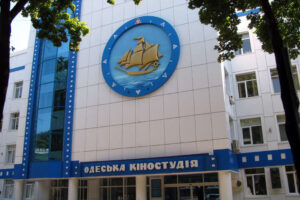
According to Fixygen, PJSC “Odessa Film Studio” has scheduled an extraordinary general meeting of shareholders for May 27, 2026, as indicated in a notice on the SMIDA disclosure system. The meeting will be held remotely.
PJSC “Odessa Film Studio” is registered in Odessa at 33 Frantsuzsky Boulevard. According to OpenDataBot, the company’s EDRPOU code is 33932816, the date of registration is December 2, 2005, and the authorized capital is UAH 62.172 million. Anna Docheva is listed as the company’s director, and its primary activity is the production of films, videos, and television programs.
OpenDataBot’s public profile for the company lists the following financial indicators: revenue—31.187 million UAH, net profit—1.229 million UAH, assets—26.625 million UAH, liabilities—18.847 million UAH.
The Odesa Film Studio dates back to the early 20th century and is considered one of the oldest film production centers in Ukraine. In 2005, it was reorganized into a private joint-stock company. According to reference data, 50%+1 of the company’s shares are owned by the state, with the remainder held by private shareholders.
https://www.fixygen.ua/news/20260522/odeska-kinostudiya-27-travnya-provede-zbori-aktsioneriv.html

According to Serbian Economist, Albania is stepping up tax oversight of the short-term rental market, which has become one of the country’s fastest-growing segments of the tourism real estate sector in recent years. The tax administration has launched a sectoral plan for the tourism sector through 2026, under which the activity of property owners on Airbnb, Booking.com, and other platforms will be cross-checked against tax returns.
In essence, Albania is becoming one of the first countries in Europe to transition tax oversight of short-term rentals via digital platforms to an automated format using artificial intelligence. This makes the country a regional test case for stricter control over revenue from tourism real estate.
The main tool of the new control system will be an AI-based automated monitoring system. Algorithms will scan the Albanian segments of Airbnb and Booking on a weekly basis, analyzing nightly rates, price trends, actual occupancy rates, booking calendars, as well as the number and dates of guest reviews.
Private homeowners renting out one or more apartments through Airbnb and Booking are not required to register as sole proprietors, but must file an annual individual DIVA tax return and pay income tax at a rate of 15%. The tax is calculated on net income after deducting the platform’s commission. Separate clarifications regarding new obligations for short-term rentals starting in 2026 also highlight the use of DIVA as a digital system for reporting individual income.
The authorities are paying special attention to VAT. In Albania’s tourism sector, a reduced rate of 6% applies instead of the standard 20%, but it may only be applied by properties that have passed a physical inspection and received an official classification certificate from the Ministry of Tourism. If an owner applies the 6% rate without such a certificate, the tax authority may retroactively assess VAT at the full 20% rate, along with fines and penalties.
Another requirement concerns cashless payments. By May 30, 2026, all accommodation facilities in Albania, including hotels, hostels, campgrounds, and certified guesthouses, must install physical POS terminals to accept payments. At the same time, the limit on cash transactions between commercial entities has been reduced from 150,000 to 100,000 lek.
For the real estate market, this marks the end of a period of lax oversight of income from short-term rentals. In recent years, Albania has experienced an investment boom in resort real estate, particularly along the coast, where buyers have relied on income from tourist rentals.
But now, the profitability of such properties will increasingly depend not only on occupancy and price, but also on the owner’s tax compliance.
For foreign investors, the new rules mean they must consider the property’s tax model in advance.
The Albanian model reflects a broader trend in the region. Montenegro is also tightening control over payments and taxes in the real estate and tourism sectors, but Albania is taking the next step—using digital monitoring and AI to compare actual activity on platforms with tax reporting.



