
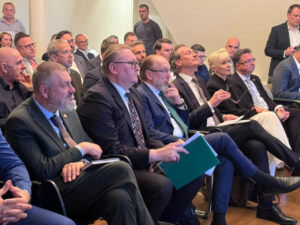
Ukraine and Serbia have agreed to resume work on a free trade agreement, which could become one of the most important economic steps in relations between the two countries in recent years.
In Belgrade, Ukraine’s Deputy Prime Minister for European and Euro-Atlantic Integration and Trade Representative of Ukraine Taras Kachka, and Serbian Minister of Internal and Foreign Trade Jagoda Lazarević signed a joint statement on the resumption of negotiations on a free trade agreement.
For Serbia, this document is of particular importance, since Ukraine remains the only European country with which Belgrade still has not signed a free trade agreement.
According to Kachka, work on the agreement is an important stage in the development of Ukrainian-Serbian relations and should contribute to deepening trade, industrial cooperation and the creation of new regional production chains.
The possibility of applying diagonal cumulation of origin will have separate importance. This will allow producers in Ukraine and Serbia to use raw materials and components from countries with which free trade agreements have been concluded and which are participants in the Pan-Euro-Mediterranean Convention, without losing the preferential origin of goods. For Serbian industry, this is especially important, since Ukrainian raw materials and semi-finished products have already played a significant role in a number of sectors.
The economic part of the Ukrainian delegation’s visit to Belgrade was accompanied by the Serbian-Ukrainian Business Forum, organized by the chambers of commerce and industry of the two countries. According to the Ukrainian Chamber of Commerce and Industry, representatives of 30 companies took part in the event, and the forum took place against the backdrop of the intensification of political and economic dialogue between Kyiv and Belgrade.
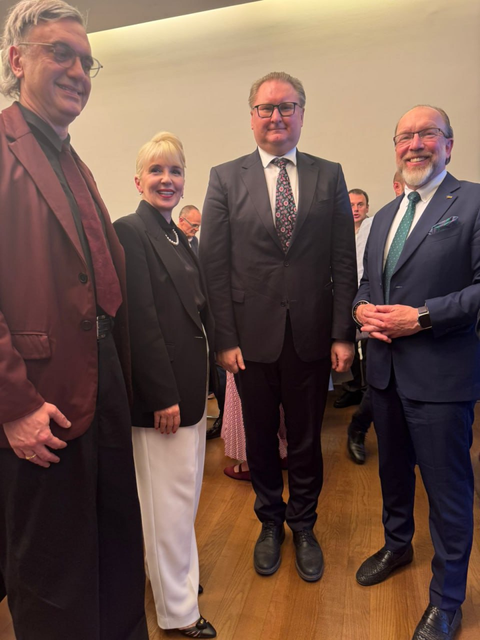
The Ukrainian delegation included President of the Ukrainian Chamber of Commerce and Industry Gennadiy Chyzhykov. The forum was opened by Deputy Prime Minister of Ukraine Taras Kachka, Serbian Minister of Internal and Foreign Trade Jagoda Lazarević, Serbian Ambassador to Ukraine Andon Sapundži, Ukrainian Ambassador to Serbia Oleksandr Lytvynenko, President of the Serbian Chamber of Commerce and Industry Marko Čadež, and President of the Ukrainian Chamber of Commerce and Industry Gennadiy Chyzhykov.
“For us, this forum is a practical working platform. It brings together representatives of the government, diplomatic missions, chambers and companies in one hall. It is precisely this format that helps business move from general interests to specific contacts, contracts and projects,” Chyzhykov said.
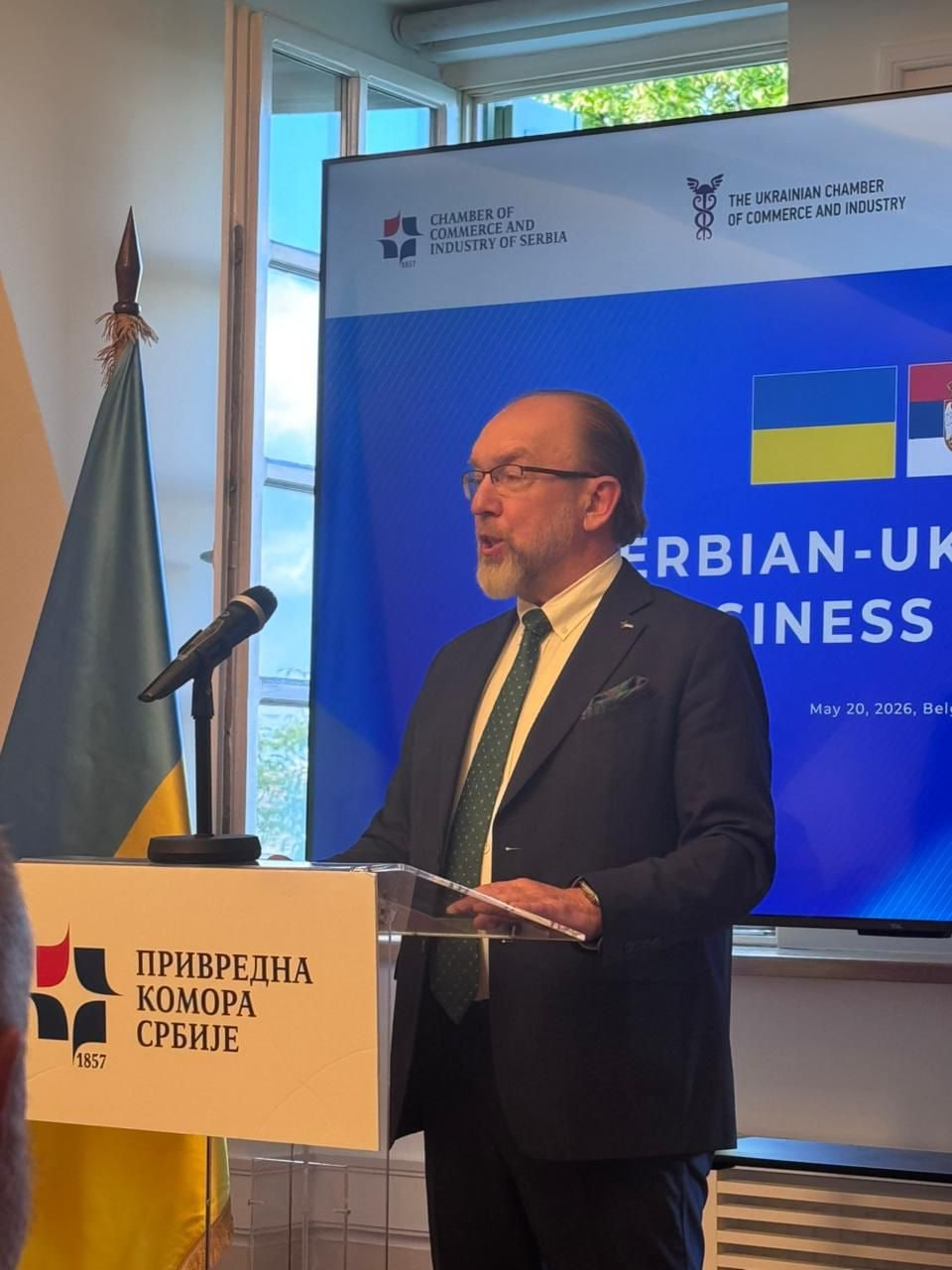
He thanked the Serbian Chamber of Commerce and Industry and personally Marko Čadež for preparing the meeting, as well as the ambassadors of the two countries for supporting bilateral economic dialogue.
“Your work is important because economic cooperation requires political trust, regular communication and institutional support,” the president of the Ukrainian Chamber of Commerce and Industry noted, addressing the diplomats.
According to Chyzhykov, the business community highly appreciates the fact that bilateral work is advancing at the government level.
“For business, predictability, clear rules and better access to the market are important. When state institutions and business organizations move in the same direction, companies receive a much stronger signal to invest time, resources and trust in bilateral cooperation. Serbia is a strategic partner for us in the Balkans,” he emphasized.
Chyzhykov also noted that Ukraine is interested in pragmatic cooperation with Serbia based on mutual respect, economic logic, reliable partnership and practical results.
“There is a range of groups of goods that is underestimated in the context of cooperation. This visit of our delegation and the forum became an excellent platform for bringing the Ukrainian and Serbian sides closer to a new stage of our relations. We are keeping the agricultural sector, the food sector and the energy sector in focus,” the president of the Ukrainian Chamber of Commerce and Industry added.
According to BGNES, in the first quarter of 2026, trade between Serbia and Ukraine amounted to $152.8 million, while Serbia recorded a positive balance of $36.8 million, and export coverage of imports reached 163.4%.
At the end of 2025, trade turnover between the two countries amounted to $442.2 million. Serbian exports to Ukraine reached $202.9 million, while imports from Ukraine amounted to $239.3 million. The main goods of Serbian exports are electricity, mineral and chemical fertilizers, tires and other industrial products, while semi-finished rolled products, iron ore and frozen raspberries are named among the goods imported from Ukraine.
President of the Serbian Chamber of Commerce and Industry Marko Čadež earlier noted in an interview with the Interfax-Ukraine agency that the chambers of the two countries have “excellent bilateral relations,” secured by a memorandum of cooperation signed three years ago within the framework of a business forum in Belgrade. According to him, the Serbian Chamber of Commerce and Industry and the Ukrainian Chamber of Commerce and Industry already have experience in organizing business forums, B2B negotiations, online business missions during the pandemic and joint statements on complex topics.
Čadež also emphasized that he and Chyzhykov are connected by years of joint work in Eurochambres and the World Chambers Federation, mutual understanding, common views on problems and solutions, as well as on the European future of the economies of the two countries.
“I consider him not only a colleague, but also a great friend, with sincere respect for everything that the Ukrainian Chamber and he personally are doing in order, even under impossible conditions, to help Ukrainian entrepreneurs in the country and connect them with international partners,” the president of the Serbian Chamber of Commerce and Industry said in an interview with the agency.
According to Čadež, the parties will also work on creating a Serbian-Ukrainian Business Council. He expressed confidence that in the future a business forum could also be organized in Ukraine with the support of the foreign ministers of the two countries, Marko Đurić and Andrii Sybiha.
The parties name IT, construction, agriculture and the food industry, energy, logistics and transport as practical areas of cooperation between Ukrainian and Serbian business. Earlier, the Ukrainian Chamber of Commerce and Industry reported that the program of the business mission to Serbia included B2B meetings with Serbian companies, the establishment of new business contacts, visits to enterprises and discussion of potential joint projects.
The Serbian side also sees opportunities for cooperation in Ukraine’s reconstruction projects. This concerns construction materials, energy equipment, agricultural machinery, irrigation systems, seed material, technologies for increasing yields, as well as supplies of products for the energy sector.
For Ukraine, Serbia is important not only as a trading partner, but also as a potential logistics and production hub for access to the markets of the Western Balkans, the EU, Asia and Africa. Čadež noted that Serbia, being located in the center of Southeastern Europe, can use its logistical links with the EU, the East and the South for the development of joint production and the export of Ukrainian and Serbian companies to third markets.
Danube logistics has separate importance. Using the route from the Ukrainian ports of Izmail and Reni toward Serbian ports and intermodal terminals, goods from Ukraine can more efficiently reach Corridor X, the markets of Central Europe and the Adriatic region.
Thus, the visit of the Ukrainian delegation to Belgrade, the signing of the statement on the resumption of negotiations on a free trade agreement, and the holding of the Serbian-Ukrainian Business Forum move the bilateral economic agenda from the level of intentions into the practical plane. Against the backdrop of recovering trade, the active role of the chambers of commerce and industry, and the discussion of the Serbian-Ukrainian Business Council, the parties are forming a new infrastructure of cooperation that can strengthen the industrial, logistical and investment link between Ukraine and Serbia.
Interfax-Ukraine is the official media partner for the organisation of the Serbian-Ukrainian Business Forum in Belgrade.
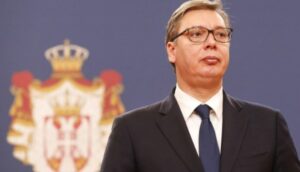
According to Serbian Economist, Serbian President Aleksandar Vučić published an op-ed for the American television network Fox News, in which he presented Serbia as a country ready for a closer partnership with the US, and stated that Donald Trump’s policies are viewed in Belgrade not as a threat, but as an opportunity for stability and economic development.
In the column, Vučić contrasted the attitude of some European elites toward Trump with the mood in Serbia. He wrote that “contempt” for the America First philosophy has spread from Brussels to Berlin, whereas Serbia sees it as an opportunity for a more pragmatic policy focused on results, security, and economic growth.
Vucic emphasized that Serbia, despite the painful memory of the 1999 NATO bombings, has in recent years become one of the few corners of Europe where sympathy for the U.S. has grown. According to him, reflexive anti-Americanism—which he believes has spread throughout much of Europe—is rarely found in the country today.
Separately, the Serbian president described his experience interacting with Trump and his team during his first presidential term. According to Vučić, his meetings at the White House following difficult negotiations left him with the impression that Serbia’s position was listened to without prejudice or arrogance. He also wrote that the image of Trump as an “aggressive bully” did not match his personal experience of interacting with him.
The column’s key political thesis is that Serbia’s European path should not mean distancing itself from the U.S. Vucic stated that for Belgrade, the path to Brussels “does not require distancing from Washington,” and that Serbia’s special relationship with the U.S. could be an asset for the stability and growth of the entire European continent.
The economic section of the text was built around the idea of Serbia as a modern and strategically important partner for the West. Vučić noted that Serbia is one of Europe’s most dynamic economies, with GDP growth exceeding that of the Eurozone, and is becoming a hub for future technologies—from data centers to supply chains for electric vehicles.
He gave special attention to the lithium agenda. According to the president, Serbia has the second-largest lithium reserves in Europe, and this resource is key to Western industrial independence. Vucic also emphasized that Serbia is not seeking aid, but rather “deals” that secure supply chains, accelerate energy independence, and create jobs.
This is an important signal for the Serbian economy. Belgrade is attempting to position the country not only as an EU candidate and a regional player in the Western Balkans, but also as a potential component of American and European industrial strategy. In this context, lithium, energy, infrastructure, IT, data centers, and manufacturing for the electric vehicle industry are not separate projects but part of Serbia’s broader geo-economic agenda.
Vucic also effectively urged Washington to reconsider its view of the region. He stated that it is time for the U.S. to stop viewing the Balkans through the lens of the 1990s and to pay attention to Serbia as the largest economy in the Western Balkans, an “anchor of stability,” and a country that remembers its friends.
The most striking part of the column was the invitation to Trump to visit Belgrade. Vucic noted that no American president has visited the Serbian capital in over half a century since Richard Nixon’s visit in 1970, and stated that if Trump were to come to Belgrade, he would receive “a welcome the likes of which Europe hasn’t seen since Nixon.”

Slovenia is experiencing a new surge in housing prices, putting increased pressure on buyers in one of the region’s most expensive and scarce real estate markets. According to data from Slovenia’s national statistics office and industry reports, real estate prices in the country have resumed active growth following a period of more moderate trends. Price increases are particularly noticeable in Ljubljana, along the coast, and in the most sought-after urban areas, where housing supply remains limited.
Official Slovenian statistics show that in 2025, housing prices rose by 5.8% compared to the previous year. At the same time, the number of transactions involving existing apartments in Ljubljana increased by approximately a quarter, indicating a return of buyer activity to the most liquid segment of the market.
According to market data, the median price of existing apartments in Slovenia in 2025 exceeded EUR 3,000 per square meter for the first time, reaching approximately EUR 3,200 per square meter. In Ljubljana, the median price rose to EUR 5,050 per square meter, and in the coastal region, to EUR 4,810 per square meter.
Eurostat also recorded an acceleration in price growth in early 2026. In the fourth quarter of 2025, Slovenia still showed a quarterly price decline of 1.1%, but in the very next housing market report, the country was among the EU leaders in quarterly growth: prices rose by 5.1%, one of the highest rates in the European Union.
The main reason for the growth is a chronic supply shortage. The Slovenian market suffers from limited new housing construction, complex planning procedures, high land costs, and a concentration of demand in Ljubljana, along the coast, and in tourist destinations. In a separate report, the OECD noted that Slovenia’s housing problems are linked to strong demand and insufficient supply, as well as rising construction and financial costs.
For buyers, this means a further decline in housing affordability. Slovenia has long been considered one of the most expensive real estate markets among the countries of the former Yugoslavia, and new data confirms that the gap between household incomes and apartment prices continues to widen. This is particularly true for young families and first-time homebuyers.

The Experts Club think tank reported that Ukraine ranked 73rd in the Nomad Passport Index 2026—a ranking of the world’s most valuable passports compiled by Nomad Capitalist. Ukrainian citizenship received 85 points and shared this position with Tuvalu and El Salvador.
According to the ranking, the Ukrainian passport has a high freedom of movement score—146 points in the travel category. This reflects fairly broad visa-free and simplified access for Ukrainians to other countries, including the European Union. However, Ukraine’s overall ranking is lowered by other factors considered by the Nomad Passport Index.
Ukraine received 20 points for tax criteria, 40 points for international perception, 30 points for dual citizenship, and 10 points for personal freedoms. It was precisely the low score in the personal freedom category that became one of the factors limiting the country’s overall result in the ranking.
This result highlights the difference between “passport power” in the narrow sense and “the value of citizenship” in a broader methodology. If we evaluate mobility alone, the Ukrainian passport appears significantly stronger than Ukraine’s position in the overall Nomad Capitalist ranking. But when taxes, freedoms, reputation, and the flexibility of citizenship are taken into account, the final ranking drops.
In the European context, Ukraine ranks below most EU countries and a number of Western Balkan states. For comparison, Serbia ranked 71st, North Macedonia 78th, Montenegro 82nd, Bosnia and Herzegovina 87th, Albania 91st, and Moldova 87th.
At the same time, Ukraine outperforms a number of post-Soviet countries and states with more limited international mobility. Russia ranked 96th, Belarus 123rd, Kazakhstan 114th, Armenia 120th, and Azerbaijan 131st.
For Ukraine, the ranking is important primarily as an indicator that international mobility is already a strength of Ukrainian citizenship, but the overall “value of the passport” will depend on broader factors—the quality of institutions, the legal framework, security, the country’s reputation, and future integration into the EU.
After the war ends and Ukraine moves forward on its European path, it can improve its position in such rankings, especially if legal institutions, the protection of freedoms, the investment climate, and the country’s international reputation are strengthened.
https://expertsclub.eu/ukrayina-posila-73-tye-miscze-v-rejtyngu-najczinnishyh-gromadyanstv-svitu/

PJSC “Tobacco Company ”V. A.T. – Pryluky” (Chernihiv region), which is part of the assets of the international British American Tobacco (BAT), will pay UAH 52 million in dividends to shareholders between May 19 and May 32 of this year, at a rate of UAH 0.0006 per share.
According to the company’s report in the disclosure system of the National Securities and Stock Market Commission (NSSMC), the relevant decision was adopted by the shareholder on May 19.
“The entire dividend amount will be paid in full in May 2026, and if it is impossible to make the full payment during the specified period, the payment deadline will be extended in accordance with the sole shareholder’s decision,” the report states.
Dividends will be paid in U.S. dollars directly to the shareholder. According to the NSSMC, 100% of the company’s shares are owned by Precis (1814) Limited (United Kingdom).
At the same time, according to information from the NSSMC, this is not the first time this year that the company has made a similar decision regarding dividend payments. Specifically, on April 9, the shareholder decided to pay UAH 52 million in dividends from April 9 to 30; in March, the same amount was paid from March 17 to 31; and similarly in February and January.
The total amount of dividends to be paid this year has not been specified.
As reported, the National Bank of Ukraine has limited the transfer of dividends abroad to no more than EUR1 million per month.
According to its information, “V.A.T. Pryluky” is one of the largest manufacturers and exporters of tobacco products in Ukraine, producing cigarettes under international brands and the national brand “Pryluky,” as well as TVEN.
According to the NSSMC, 100% of the shares are owned by Precis (1814) Limited (United Kingdom).
According to the company’s annual report in the NSSMC disclosure system, in 2025 it reduced its net profit by 37.3% compared to 2024, to UAH 413.6 million, due to a 11.8% decrease in net revenue—to UAH 5.04 billion.
Retained earnings amounted to UAH 4.9 billion.
The company produced more than 8 billion filtered cigarettes worth UAH 2.95 billion, 729 million units of TVEN worth UAH 422 million, and nearly 3 billion filters worth UAH 742.5 million.
Average selling prices were UAH 423.71 per 1,000 cigarettes and UAH 652.4 per 1,000 TVEN units. Export volume amounted to UAH 0.95 billion, or approximately 1.84 billion cigarettes. The main client is BAT Sales and Marketing Ukraine.
The company’s average headcount as of the beginning of this year was 417 people.
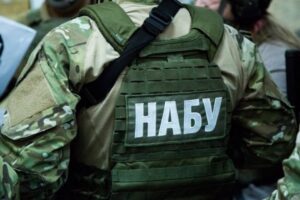
The Specialized Anti-Corruption Prosecutor’s Office (SAPO) and the National Anti-Corruption Bureau (NABU) have notified the former head of the State Reserve Agency and three other participants in a scheme to embezzle funds from a state-owned enterprise of their status as suspects, according to SAPO.
“Under the procedural guidance of a SAPO prosecutor, NABU detectives served notices of suspicion to four participants in a criminal scheme to embezzle funds from a state-owned enterprise under the management of the State Agency for Reserve Management of Ukraine,” the SAPO stated in a post on its Telegram channel on Friday.
According to the Anti-Corruption Prosecutor’s Office, the suspects include: the former head of the State Reserve, the former deputy director of the state-owned enterprise, the organizer of the transaction, and an accomplice (an individual).
The individuals’ actions are classified under Part 5 of Article 191 of the Criminal Code of Ukraine (misappropriation or embezzlement of property on an especially large scale or by an organized group).
As part of the pre-trial investigation, it was established that in the fall of 2022, the individuals devised a scheme to misappropriate funds that the state-owned enterprise received for warehousing services.
“The scheme involved providing warehouse space to affiliated private companies under the guise of storage services. Officials of the state-owned enterprise entered into fictitious contracts with these firms and entered knowingly false information into the acceptance and transfer acts,” the statement notes.
According to the SAP, documents show that the area of the leased premises was significantly smaller than what was actually used. Subsequently, the controlled companies subleased significantly larger areas of warehouse space to the real sector of the economy.
“Such actions resulted in losses of approximately 36 million hryvnias. The participants in the scheme cashed out these funds and disposed of them at their discretion,” the Anti-Corruption Prosecutor’s Office clarified.
The SAP notes that the organizer of the criminal scheme was detained while attempting to cross the state border. The court has now imposed a preventive measure in the form of detention.



