

Serbian companies are interested and have the potential to participate in Ukraine’s post-war reconstruction, particularly in transportation infrastructure, energy, residential construction, and industrial facilities, said Marko Čadež, President of the Serbian Chamber of Commerce and Industry.
“Once the war ends, Ukraine will become Europe’s largest construction site, and Serbian companies are interested and have the potential to participate in the restoration of transport infrastructure, energy and residential facilities, as well as industrial enterprises,” Čadež said in an interview with Interfax-Ukraine.
According to him, the potential for cooperation includes construction companies, manufacturers of building materials, manufacturers of transformers for the energy sector, manufacturers of agricultural machinery, as well as companies that possess technologies for the restoration and modernization of industry.
Čadež noted that Serbian President Aleksandar Vučić has already expressed Serbia’s readiness to participate in Ukraine’s post-war reconstruction—specifically in rebuilding one or two cities or a small region.
“Through contacts with the Serbian Chamber of Commerce and Industry and the Ukrainian Embassy in Belgrade, Serbian entrepreneurs are already expressing their readiness to contribute by supplying their products, for example, to meet the needs of the energy sector,” noted the president of the Serbian Chamber of Commerce and Industry.
https://interfax.com.ua/news/interview/1169380.html
President of Serbia, RECONSTRUCTION, Serbian companies, UKRAINE
Global rice prices continue to rise amid growing concerns about this year’s harvest, according to Bloomberg.
Thai white rice, considered the benchmark, rose to $446 per ton on Wednesday, according to the Thai Rice Exporters Association. This is the highest level in over a year—since February 2025.
Prices have been rising for the third consecutive week. This was driven by a forecast from the U.S. Department of Agriculture predicting a decline in global rice production in the 2026-2027 crop year for the first time in 11 years.
Surge in fertilizer and fuel costs have raised concerns that some farmers in Southeast Asia may decide not to plant crops this year. India, the world’s largest exporter of this crop, also faces the prospect of below-average monsoon rains, which could negatively impact yields.
Rice is a staple food in many Asian countries, so rising prices could accelerate inflation. Rice prices in recent years have remained well below the multi-year highs reached in 2024, the agency notes.
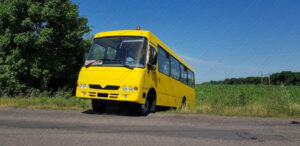
Cherkasy Bus JSC ended the first quarter of this year with a net profit of UAH 1.33 million, whereas for the same period in 2025, the company reported a loss of nearly UAH 3 million.
According to the interim report published in the NSSMC’s disclosure system, net sales revenue increased by 3% compared to January–March 2025, reaching UAH 240 million.
The plant increased its gross profit by 34% to UAH 39 million, with operating profit growing 2.6-fold to UAH 5 million.
According to the report, in the first quarter, “Cherkasy Bus” manufactured 102 buses worth UAH 295.2 million and 59 trucks worth UAH 98.2 million, while selling 69 buses worth UAH 205.1 million and 17 trucks worth UAH 34.3 million.
The company’s plans, as outlined in its annual report, call for the production of 385 Ataman buses, the assembly of 300 Isuzu trucks, and 302 Isuzu pickups this year (in line with plans for 2025).
At the same time, last year the plant actually reduced bus production by 8% compared to the previous year—to 391 units—and truck production by 1.9% (by 6 units), to 315 units. A total of 393 buses (7.5% fewer) and 240 trucks (24.8% fewer) were sold.
Annual production volume increased by 12.7% overall—to 1.763 billion UAH.
This year, the plant plans to invest 35.8 million UAH in development, specifically in the purchase of technological, transport, and power equipment, the modernization and repair of equipment, production and office facilities, and the improvement of the plant’s grounds.
In 2026, the plan is to begin production of 2- and 3-axle FTS 34 trucks, special-purpose and specialized vehicles on NPR, NQR, FSR, and D-MAX chassis, as well as A092 and A093 buses using Euro 6-compliant chassis.
“Currently, two-thirds of the company’s production consists of orders from the public sector,” the report states.
Founded in 1994, the “Cherkasy Bus” plant manufactures Ataman small-class buses (including city, suburban, school, and specialized models), as well as other wheeled vehicles based on Japanese Isuzu components, specifically, through the large-assembly method for Isuzu trucks with a payload capacity of 3 to 18 tons (dump trucks, fire trucks, emergency repair vehicles, aerial work platforms, and vehicles with superstructures—for Ukrposhta, local communities, and the State Border Guard Service).
It also manufactures Isuzu pickups for the National Police, the State Emergency Service, the State Border Guard Service, forest patrols, and energy and gas companies.
The plant ended 2025 with a net profit of nearly 83 million UAH—32% less than in 2024—amid a slight decline in net revenue to 1.733 billion UAH. It did not plan to pay dividends.
As of the beginning of this year, the company employed 374 people—33 fewer than at the start of 2025—and the average monthly salary for the year increased by 25.5% to 35,750 UAH.
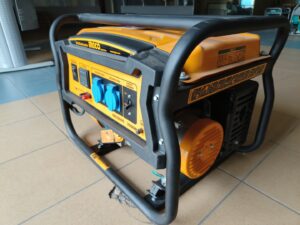
Imports of electric generator sets and rotating electrical converters into Ukraine in January–April 2026 fell by 30.4% compared to the same period in 2025—to $359.1 million, according to statistics from the State Customs Service.
According to the data, imports of this equipment in April fell by 27.4% compared to April 2025 and by 23.3% compared to March 2026, reaching $60.3 million.
Most frequently in January–April, electric generators and converters were imported from the Czech Republic (19.6% of total exports of these products, or $70.3 million), China (18.7%, $67.2 million), and Romania (8%, $64.8 million), whereas last year they were the Czech Republic ($93.7 million), Austria ($80.3 million), and the United States ($77.3 million).
Exports of electric generators from Ukraine during this period were insignificant—$0.8 million, mainly to Turkey.
At the same time, according to data from the State Customs Service, imports of electric batteries and separators to Ukraine increased nearly fourfold over the first four months of this year—to $1.137 billion, with the majority coming from China ($1 billion, or 89.3%), as well as from the Czech Republic ($26.6 million) and Poland ($13.3 million).
Last year during this period, the largest suppliers were China with a 78.4% share ($226 million), Taiwan with 5.3% ($12.3 million), and Bulgaria with 4.1% ($12 million).
In April, imports of this equipment increased 4.3-fold compared to April 2025 and by 7.6% compared to March 2026, reaching $303.5 million.
Over the first four months, Ukraine exported $14.8 million worth of batteries, mainly to Poland ($4.2 million), France ($2.4 million), and Germany ($2.2 million), whereas last year exports totaled $17.1 million, of which 27.9% went to Poland, 15.9% to France, and 11.3% to Germany.
As reported, at the end of July 2024, Ukraine exempted imports of electric generator equipment and batteries into Ukraine from customs duties and VAT.
According to the State Customs Service, in 2025 Ukraine increased imports of electric generators and converters by 2.3 times compared to 2024—to $1.69 billion—and batteries by 55% to $1.48 billion. At the same time, in January 2025, imports of electric generators increased eightfold compared to January 2024, and imports of batteries tripled.

According to Serbian Economist, trade turnover between Serbia and Ukraine in 2025 returned to the level of the last pre-war year, 2021, and amounted to $442.2 million, said Marko Čadež, president of the Serbian Chamber of Commerce and Industry, in an interview with the Interfax-Ukraine agency.
According to him, despite the initial shock following the outbreak of the war, mutual trade did not cease. In the first year of the war, it fell by 25%—to $339 million—but then began to gradually recover and can now be considered stable.
Serbian exports to Ukraine in 2025 amounted to $202.9 million, while imports from Ukraine totaled $239.3 million. About 900 Serbian companies continue to do business with Ukraine, 670 of which import Ukrainian goods.
“In the first quarter of this year, the growth trend continued—Serbian exports to Ukraine doubled compared to the same period last year, while Ukrainian exports to Serbia grew by 4.5%,” said Čadež.
The president of the Serbian Chamber of Commerce and Industry noted that the pandemic, followed by the war, demonstrated the high interdependence of the two economies. This is particularly true for supplies of Ukrainian raw materials and intermediate products for Serbian industry. According to Čadež, prior to the war, such supplies accounted for about 70% of Serbian imports from Ukraine.
Among the key Ukrainian goods for Serbia, he cited iron ore, coal, aluminum wire, and cellulose. Supply disruptions after February 2022 created problems for a number of Serbian industries, particularly metallurgy.
Serbian-Ukrainian trade continues to be dominated by raw materials, industrial products, and goods for the processing industry. Ukraine purchases mineral and chemical fertilizers, PVC flooring, paper and cardboard, automobile tires, as well as detergents and cleaning products from Serbia.
The National Bank of Ukraine (NBU) has imposed a penalty of UAH 1.7 million on JSC “Ukrposhta” for violating the laws governing activities in the payment market, the regulator announced.
It is noted that the relevant decision was adopted on May 18, 2026, by the Committee on Banking Supervision and Regulation, and Oversight of Payment Infrastructure.
The fine was imposed due to the company’s failure, as a provider of financial payment services, to fulfill its obligation to ensure the proper functioning of its corporate governance system, internal control system, and risk management system.
The violation was identified based on the results of an off-site supervision and inspection of the national postal operator conducted on November 1, 2025.
“Ukrposhta” is required to pay the fine within five business days of receiving the committee’s decision.
As previously reported, in March 2026, “Ukrposhta” paid a fine of 255,000 UAH imposed by the NBU for failing to submit the requested information within the established deadlines, while also announcing its intention to challenge the regulator’s decision in court.
In December 2025, the National Bank also issued a written warning to Ukrposhta for violating legal requirements in the payment market, specifically regarding payment services, management systems, and the submission of statistical reports, as determined by the results of off-site supervision.
Ukrposhta reported a net loss of UAH 204.8 million for the first quarter of 2026, which is UAH 1.1 million, or 0.5%, more than in the same period of 2025, but 40% less than projected in the plan. The company’s revenue for this period decreased by 0.1%, or UAH 5 million, to UAH 3.34 billion, which is 2% less than planned.



