

Between May 11 and 17, Ukraine increased electricity imports by 50% compared to the previous week—to 81,700 MWh—while exports fell by 23%—to 17,700 MWh, the DIXI Group analytical center reported on Tuesday, citing data from Energy Map.
“Throughout the week, Russia continued its attacks on Ukraine’s energy infrastructure. In particular, on May 13–14, another massive attack on energy facilities took place, leading to power outages in a number of regions,” the center noted.
Against this backdrop, daily import volumes rose significantly: on May 13 to 15,200 MWh (+78% compared to May 12) and on May 14 to 16,000 MWh (+87% compared to May 12).
At the same time, sunny weather at the beginning and end of the workweek facilitated active operation of residential solar power plants and reduced the load on the power grid. In the middle of the week, consumption increased due to deteriorating weather conditions. Despite this, domestic generation and imports fully covered consumer demand without the need for restrictions.
According to Energy Map, Hungary accounted for the largest share of imports last week—46.5 thousand MWh, or 57%. Poland accounted for 18.4 thousand MWh, or 23%, Romania – 16.7 thousand MWh, or 20%, and Moldova – 0.1 thousand MWh (<0.1%).
Electricity imports increased across all sources by 14–80%. Additionally, on May 13–14, after a week-long hiatus, imports from Moldova resumed in small volumes—0.06 thousand MWh between 10:00 PM and 11:00 PM. There were no imports from Slovakia during the week.
As reported, between May 4 and 10, Ukraine reduced electricity imports by 63%—to 54.6 thousand MWh, and in April—by 41%,—to 558.3 thousand MWh.
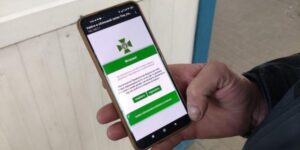
The State Border Guard Service of Ukraine (SBGS) is launching a new “Personal Account” service so that citizens can independently check for restrictions on travel abroad, according to the SBGS press office.
“The new service on the SBSU website allows users to receive real-time information about restrictions imposed based on court decisions and rulings by the State Enforcement Service,” the statement said.
The service specifically addresses temporary restrictions imposed by a court or the enforcement service (child support, fines, other debts).
The “Personal Account” will be useful for parents who evade alimony payments or individuals who evade the enforcement of court decisions.
Previously, to obtain such information about travel restrictions, one had to submit a written request to the Main Center for Processing Special Information of the State Border Guard Service (by mail or in person) and wait several weeks for a response.
However, travel restrictions due to martial law (for men aged 18–60 and individuals subject to the provisions of paragraph 214 of the Rules for Crossing the State Border by Citizens of Ukraine, approved by Resolution of the Cabinet of Ministers of Ukraine No. 57 dated July 21, 1995) are verified according to separate rules and are not displayed in the account.
The State Border Guard Service notes that the service does not lift existing restrictions but allows users to quickly identify and resolve them.
The service operates 24/7 and is accessible from any device—smartphone, tablet, or computer.

The Embassies of Austria, Belgium, Canada, Denmark, Estonia, Finland, France, Germany, Iceland, Ireland, Italy, Latvia, Lithuania, Luxembourg, Malta, Netherlands, Norway, Slovenia, Sweden, the United Kingdom, the Delegation of the European Union in Ukraine, and the Council of Europe Office in Ukraine
18 May 2026
On this International Day Against Homophobia, Biphobia, and Transphobia, we stand in solidarity with the people of Ukraine in their pursuit of a just, inclusive, and democratic society.
As Ukraine demonstrates remarkable resilience against Russian aggression, it reaffirms its commitment to the universal values of human dignity, equality, and the rule of law. Ukraine’s aspiration to join the European Union reflects a historic choice.
We acknowledge and honor the contribution of all Ukrainians to the defense of Ukraine’s sovereignty and territorial integrity, including LGBTQI+ volunteers, activists, and service members.
Ukraine has made important progress in strengthening human rights protections and aligning its legal framework with European standards.
We welcome the ongoing legislative initiatives to address the long-standing issues of combating discrimination and hate crimes and the recognition of registered partnership, in line with the relevant rulings of the European Court of Human Rights, the European Court of Justice, and Ukraine’s commitments under the Rule of Law Roadmap, in view of Ukraine’s European integration path.
We note that the Ukrainian judiciary has recognized legal value to the same-sex partners in long-term relationships and underline the importance of ensuring that all legislative reforms remain consistent with Ukraine’s international human rights obligations and commitments undertaken within the EU accession process. To that effect, we believe that further development of the draft Civil Code would help ensure stronger safeguards for equality and non-discrimination.
Today, we reaffirm our solidarity with LGBTQI+ individuals in Ukraine and beyond.
We call for inclusive dialogue, respect for diversity, and consolidated efforts to promote dignity, freedom, and non-discrimination — values upheld by democratic Europe and for which the Ukrainian people are fighting today.
We remain committed to supporting a Ukraine where every individual can live with dignity, contribute fully to society, and enjoy equal protection under the law.
Unity in diversity is our strength.

In January–April of this year, Ukraine exported nearly 11 million tons of corn, which is 27.6% more than during the same period last year; in monetary terms, corn exports rose by 26.6% to $2.33 billion.
According to statistics released by the State Customs Service, Turkey was the main buyer of Ukrainian corn during this period, as it was last year, and its share of total exports rose to 30.3% ($705.16 million) compared to 22% ($405.8 million) in January–April 2025.
Italy spent $363.3 million on Ukrainian corn—50.2% more than last year—and its share of total exports of this crop increased by nearly 2.5 percentage points to 15.6%.
Exports to Spain increased by 2.9% to $260 million, with its share of total exports decreasing by 2.6 percentage points to 11.18%.
Corn exports to all other countries totaled $1 billion—6.5% more than in the first four months of last year.
According to the State Customs Service, corn accounted for 16.75% of Ukraine’s total exports in January–April 2026, compared to 13.82% last year.
In April, Ukraine exported $574.7 million worth of corn—67.6% more than in the same month of 2025; specifically, shipments to Turkey increased by 55.7% to $213.2 million, to Italy by 2.7 times to nearly $76 million, and to Spain by 3.3 times—to $60.9 million.
At the same time, in January–April, Ukraine imported 11,000 tons of corn worth $65.1 million, mainly from France (43.6%), Hungary (16.4%), and Austria (14%), while last year it was 11,500 tons worth $61.9 million from the same countries.
According to statistics from the State Customs Service, in 2025 Ukraine exported 17.96 million tons of corn—39.4% less than in 2024—reducing revenue by 23% to $3.9 billion.

The telecommunications operator PJSC “Datagroup,” which has been part of the DVL group of companies (Datagroup-Volia-lifecell) since September 2024, reported a net loss of UAH 83.28 million for January–March 2026, compared to a net profit of UAH 49.97 million for the same period in 2025, according to the company’s interim report.
According to the report, Datagroup increased its net revenue for the first quarter of 2026 by 36.1% compared to the same period in 2025, reaching UAH 587.20 million.
It is noted that revenue from internet services grew by 9.9%—to UAH 232.93 million—while revenue from mobile telecommunications services decreased by 28.1%—to UAH 99.91 million, and total revenue from telecommunications services decreased by 5.2% to UAH 388.31 million.
Gross profit decreased in the first quarter of 2026 to UAH 32.78 million from UAH 129.99 million in the first quarter of last year, while the operating loss amounted to UAH 79.49 million compared to a profit of UAH 51.51 million for the same period in 2025.
The company reported that in the first quarter of 2026, its pricing policy was revised; specifically, certain rate plans and service costs were updated for some customers to account for rising operating expenses, including costs for electricity and maintaining uninterrupted network operations.
“These changes are aimed at maintaining a stable level of revenue and covering the company’s rising costs,” the report states.
In addition, the portfolio of cybersecurity services has been expanded. Specifically, a cybersecurity program for small and medium-sized businesses was launched in partnership with an international technology provider
As reported, in 2025, Datagroup increased its net loss by 4.3 times compared to 2024—to 66.60 million UAH—while net revenue grew by 21%—to 1.98031 billion UAH.
In September 2024, NJJ Holding, led by French investor Xavier Niel, completed the acquisition of the national fixed-line internet service provider Datagroup-Volia and the third-largest mobile operator, lifecell. The assets were consolidated into the DVL group.

Bali authorities are tightening controls on foreigners by stepping up checks on compliance with visa regulations, residency rules, and employment laws on the island. The decision stems from a rise in violations by foreigners and the province’s shift toward a “quality tourism” model, under which authorities aim to attract affluent and law-abiding visitors rather than simply increasing overall tourist numbers.
Among the recorded violations, 2,026 cases led to the immediate revocation of residence permits and forced deportation. Another 1,323 foreign nationals were officially barred from entry and added to Indonesia’s long-term national blacklist. The remaining violators were sent to temporary detention centers or received substantial fines.
Bali’s immigration authorities have also launched a 24-hour hotline through which residents and businesses can report possible violations of immigration rules by foreigners. This includes, in particular, visa overstays, illegal employment, violations of stay conditions, and other activities not permitted under the type of visa.
Authorities are paying particular attention to foreigners who work or conduct commercial activities on tourist visas. The Indonesian Immigration Service has warned that even unpaid advertising or promotional activities may be considered a violation of visa regulations if they are effectively related to work or business promotion. Bloggers, influencers, and content creators have come under increased scrutiny.
Bali authorities are also preparing additional entry rules for foreigners. Starting in 2026, tourists may be screened for financial solvency, length of stay, and stated travel plans. Bali Governor Wayan Koster stated that one element of “quality tourism” could involve verifying tourists’ savings from the previous three months.
Bali remains one of Asia’s most popular tourist destinations, but mass tourism is straining the island’s infrastructure, housing market, transportation, and cultural sites. In recent years, local authorities have increasingly emphasized the need to protect traditions, public order, and the economic interests of local residents.
For foreigners, this means that travel to Bali is becoming more regulated. Tourists need to pay closer attention to their visa validity periods, refrain from working without the appropriate permit, observe local rules of conduct, and be prepared for stricter checks of documents and the purpose of their stay.
Tighter controls are also significant for the real estate and relocation markets. Bali remains a popular destination for remote workers, entrepreneurs, and long-term renters; however, the authorities are sending a clear signal: residency on the island must correspond to visa status, and attempts to use a tourist visa for actual work or business may result in fines, deportation, and a ban on entry.



