
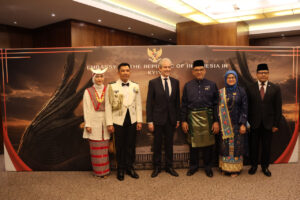
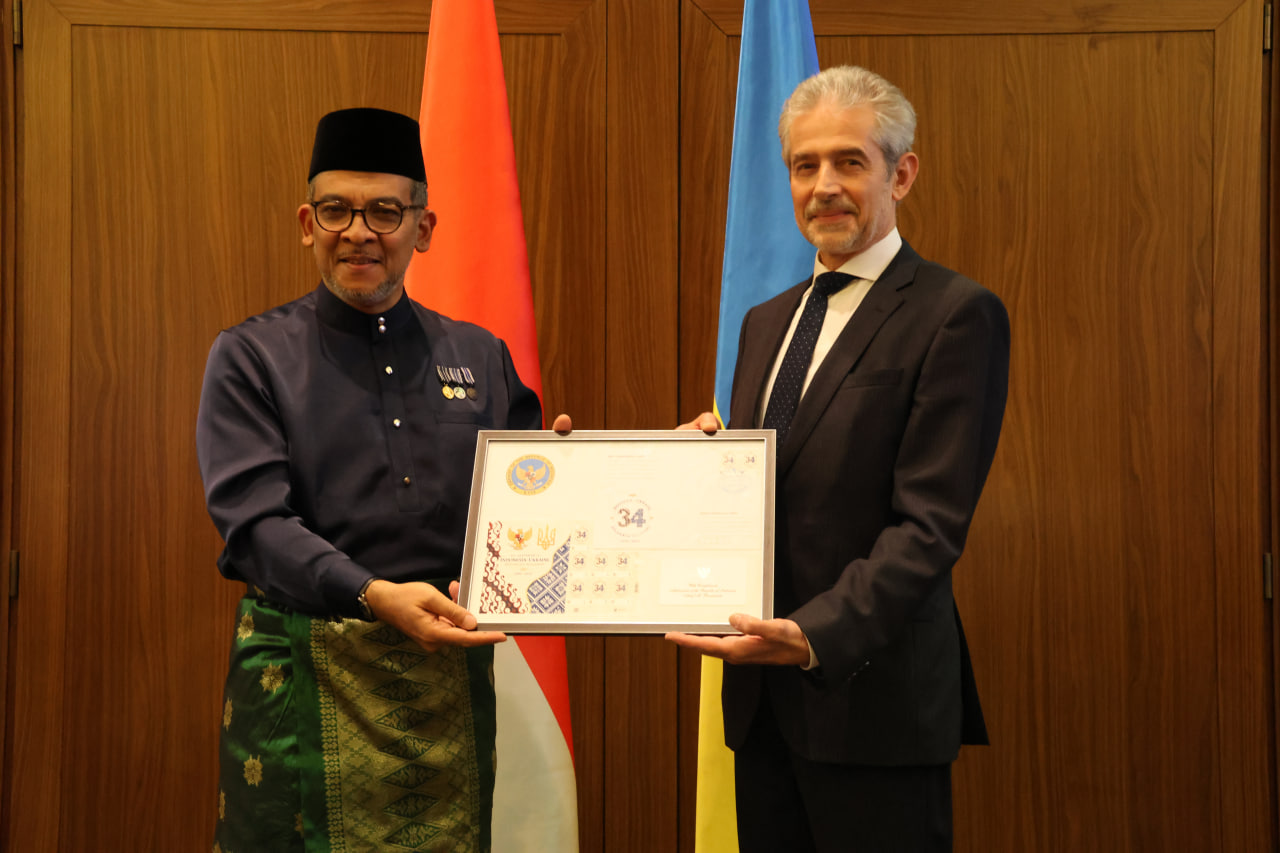
Indonesia is ready to expand practical cooperation with Ukraine, particularly in trade, investment, critical minerals, science, and the country’s future recovery, said Arif Muhammad Basalamah, Ambassador of the Republic of Indonesia to Ukraine.
“Indonesia is ready to explore practical areas of cooperation that can contribute to recovery and reconstruction, while opening up new opportunities for our bilateral partnership,” he said during a diplomatic reception in Kyiv marking the 81st anniversary of Indonesia’s independence.
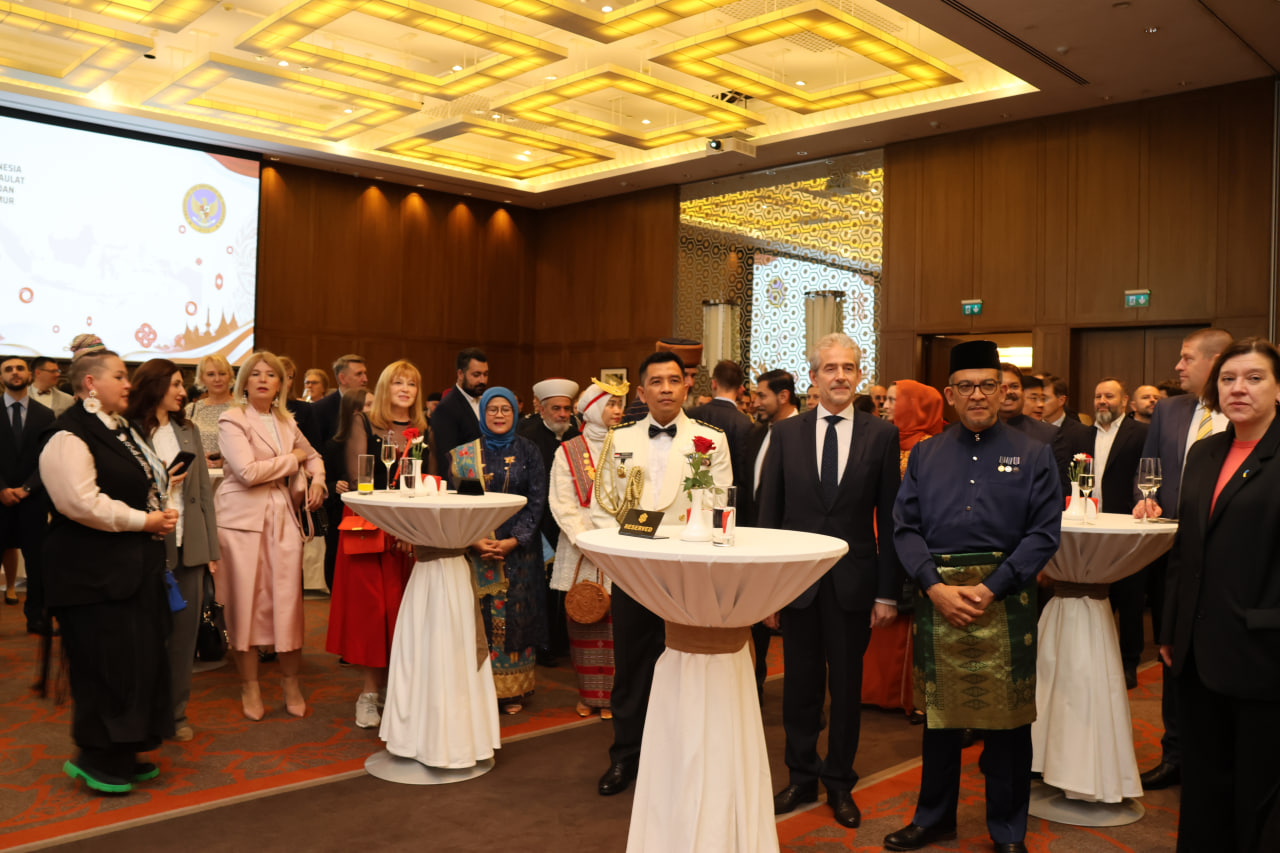
The reception took place on September 22 and was attended by representatives of the Ukrainian government, the diplomatic corps, international organizations, the business community, and the Indonesian community. In his speech, the ambassador specifically congratulated Andriy Dronyuk, Ukraine’s Deputy Minister of
Foreign Affairs for Digital Development, Digital Transformation, and Digitalization, and Artem Kunaev, chair of the Ukraine-Indonesia Interparliamentary Friendship Group.
Basalamah noted that, despite the war, political dialogue between the countries remains active, and cooperation continues to expand. At the same time, bilateral trade in 2025 fell to $492.6 million compared to a peak of $1.45 billion in 2021.
“We see opportunities to develop new areas of cooperation and to more fully realize the potential of a mutually beneficial economic partnership,” the ambassador emphasized.
According to him, one such new area could be critical minerals and rare earth elements, where the parties see opportunities for research, technological cooperation, and future business projects. The Indonesian side is also interested in more active interaction between businesses from both countries in trade, investment, and joint production.
The ambassador invited Ukrainian companies to participate in Trade Expo Indonesia 2026, which will take place October 14–18 and is expected to serve as a platform for establishing contacts with Indonesian exporters and potential investment partners.
Basalamah identified tourism as another area for expanding ties. According to him, more than 18,000 Ukrainian citizens had already visited Indonesia by 2026.
“We hope that as transportation links improve and when circumstances permit, more Ukrainians will have the opportunity to discover Indonesia—its natural beauty, cultural heritage, and diverse culinary traditions,” the diplomat said.
The ambassador also highlighted the intensification of educational and scientific ties. He noted that in 2026 alone, the Indonesian Embassy in Kyiv facilitated the signing of four agreements between universities in Ukraine and Indonesia. Ukrainian students can also study in Indonesia through the Darmasiswa and KNB Scholarship programs.
In addition, Indonesia’s National Agency for Research and Innovation and Ukraine’s National Antarctic Scientific Center recently signed an agreement on cooperation in the field of Antarctic and tropical research. The document opens up opportunities for joint research projects and scientific exchange.
Speaking about the war, Basalamah noted that Indonesia continues to advocate for the use of dialogue and diplomacy to achieve lasting peace, as well as adherence to the principles of the UN Charter.
“Peace means that people can live in safety, rebuild their communities, provide education for their children, and look to the future with hope,” he said.
Diplomatic relations between Ukraine and Indonesia were established on June 11, 1992, several months after Indonesia recognized Ukraine’s independence on December 28, 1991.
The Embassy of the Republic of Indonesia in Kyiv began operations in January 1994. Currently, Arif Muhammad Basalamah serves as Indonesia’s Ambassador Extraordinary and Plenipotentiary to Ukraine.
The Embassy of Ukraine in Jakarta was opened in the second half of the 1990s; the official opening of the diplomatic mission took place on May 16, 1997. Currently, the position of Ambassador Extraordinary and Plenipotentiary of Ukraine to Indonesia is vacant. Following the conclusion of Vasyl Hamyanin’s mission, the
Ukrainian Embassy in Jakarta has been headed by Yevheniia Shynkarenko, Chargé d’Affaires ad interim of Ukraine. As of September 2026, she continued to serve as the head of the Ukrainian diplomatic mission in Indonesia.
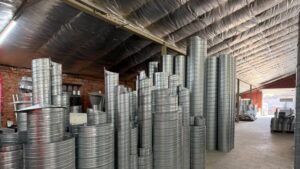
The Lviv Ventilation Plant (LVP) has completed construction of the second phase of its production facilities and plans to install equipment by the end of 2026 that will allow the plant to double its production volume, according to Dmytro Kysilevsky, deputy chair of the parliamentary committee on economic development.
“The Lviv Ventilation Plant has completed construction of the second phase of its production facilities. The equipment has already been purchased and, according to the plan, will be installed by the end of 2026. The investment in the plant’s second phase totaled approximately $1.5 million,” he wrote on Facebook on Wednesday.
Kisilevsky noted that to implement the project, the plant utilized tools from the “Made in Ukraine” policy, specifically the “5-7-9” affordable loan program, as well as a grant for equipment for the processing industry. In addition, the plant is preparing to participate in the state program that compensates 15% of the cost of Ukrainian-made equipment.
According to the MP, in 2025, production volumes at the Lviv Ventilation Plant increased by 30% and have remained at the same level this year.
“The company has a full production cycle and currently processes about 55 metric tons of sheet metal per month. Investments totaling $2.5 million are planned for the construction of the plant’s third phase,” he added.
Kysilevsky also noted that the plant’s investors previously engaged in importing ventilation equipment but have now shifted their focus to developing production in Ukraine—the launch of the plant’s first phase, with investments of approximately $1 million, took place in 2022, a few months after the full-scale invasion.
The Lviv Ventilation Plant manufactures air ducts, sound absorbers, and components for ventilation systems designed for use in industry, retail, hotels, and business centers.
According to data from YouControl, in 2025 the plant increased its net sales revenue by 20% compared to the previous year—to 50.1 million UAH—while net profit decreased by 34.6%—to 1.6 million UAH. In the first half of this year, net revenue amounted to 19.6 million UAH, and net profit was 0.71 million UAH.
Serhiy Vozgomenchuk, a resident of the Rivne region, owns 100% of the company’s shares and serves as its CEO.
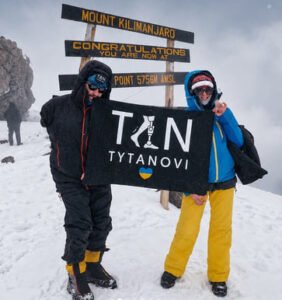
The Ukrainian documentary project “The Summit of Freedom,” which focuses on rehabilitation and the return to a full life after severe war-related injuries, has received a number of awards and has been selected to participate in international film festivals.
According to the project team, the film has already been named an Award Winner, Official Selection, and Semi-Finalist at festivals in various countries and cities around the world.
“Every festival award means a new independent jury, a new audience, and yet another confirmation that this story resonates across borders,” the project’s creators noted.
The film’s team emphasizes that its main themes are freedom, resilience, courage, and human dignity.
The documentary film “The Summit of Freedom” was released in 2026. The film was directed and produced by Maria Springis, founder of the London-based production company Dreams Into Reality Production. In her filmography, the project is listed as a 2026 documentary.
One of the film’s confirmed international selections was the Los Angeles Film and Documentary Awards, where “The Summit of Freedom” was included in the Official Selection.
The project tells the story of Ukrainian veteran Stepan Korobkin, who lost his arm as a result of a war injury and underwent 32 surgeries, after which he climbed Kilimanjaro alongside Ukrainian mountaineer Tetiana Yalovchak. The expedition became part of a documentary exploring physical and psychological recovery from a severe injury.
According to the filmmakers, the film tells not only the story of climbing Africa’s highest peak but also of a person’s return to an active life, overcoming the consequences of an injury, and finding a new purpose.
Tetyana Yalovchak previously reported that the film “The Summit of Freedom” has already received more than two dozen international nominations.
The film’s team notes that its festival tour is ongoing, and new screenings and results will be announced later.
Tetyana Yalovchak is a Ukrainian mountaineer, volunteer, and Ukrainian record-holder—the first Ukrainian woman to complete the “Seven Summits” program, which involves climbing the highest peaks on every continent, including Everest.
DOCUMENTARY FILM, film festival, The Summit of Freedom, UKRAINE, ветеран
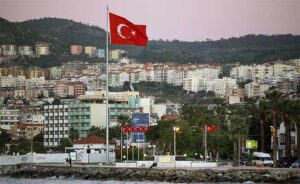
Turkey has identified another 1,070 people who, according to the investigation, obtained Turkish citizenship through fake real estate transactions. This marks the second major wave of investigations into schemes involving the granting of citizenship through residential property investments.
Turkish Justice Minister Akın Gürlek announced the new operation on September 21. The investigation is being conducted by the Istanbul Chief Prosecutor’s Office in collaboration with police units responsible for combating illegal migration.
Investigators examined real estate transactions conducted through the companies Gül İnşaat, Beyaz İnşaat, and LİV İnşaat. The audit covered sales to 734 foreign nationals, with 274 transactions deemed fictitious or suspicious. The total value of the transactions exceeded 3.5 billion Turkish lira, or approximately $72 million.
According to the Turkish Ministry of the Interior, among the 1,070 people who obtained citizenship under these agreements, 263 were direct investors, while another 807 were their family members. Of these, 1,015 received citizenship at the same time as the initial decision, and another 55 children received it later. In addition, 11 individuals were identified whose citizenship application processes were still ongoing.
As part of the operation, judicial measures were applied to 2,011 real estate properties, one hotel, 86 vehicles, two yachts, and 42 bank accounts. State administrators were appointed to 30 companies. Legal proceedings have been initiated against 88 suspects, and dozens of people have been detained.
This is already the second wave of the investigation. The first major operation took place on August 4, 2026. At that time, the investigation established that another 687 people had obtained Turkish citizenship through artificially inflated appraisal reports and fictitious real estate sales. The prosecutor’s office has initiated proceedings to revoke their citizenship. In that case, authorities estimated the amount of investments that did not actually reach Turkey at approximately 2.5 billion lira.
Thus, the two most recent investigations in Istanbul alone involve at least 1,757 cases of citizenship acquisition linked to suspicious real estate transactions, when combining the 687 individuals from the first wave and the 1,070 from the second. However, these two figures pertain to specific criminal investigations and do not cover all reviews of investment-based citizenship in the country.
At the same time, the Turkish Ministry of the Interior has, for the first time, released broader statistics on the review of citizenship obtained through investment programs. According to the ministry, as of September 21, citizenship decisions had been revoked for 5,391 individuals, including investors and their family members. Additionally, citizenship was revoked after it had been granted for 743 individuals, specifically for reasons related to public order and national security. In total, this amounts to 6,134 individuals.
As of February 11, 2026, citizenship grants were separately revoked for 1,393 individuals associated with 458 investors whose documents certifying that their investments met the established requirements were annulled. Citizenship was also revoked from seven other individuals on grounds of national security and public order.
Turkish authorities have not published a breakdown of the 1,070 individuals implicated in the current investigation by their country of origin. No similar official breakdown was published regarding the 687 individuals identified in August either. Therefore, reports claiming a predominance of Russians, Iranians, citizens of Middle Eastern countries, or other nationalities in these specific cases are not currently supported by official documents.
The scheme being investigated by law enforcement agencies was based on fictitious or inflated real estate values and the simulation of required financial transactions. In some cases, real estate with a significantly lower actual value was valued much higher in the documents in order to formally meet the requirements of the citizenship-by-investment program.
Turkey allows foreign investors to apply for citizenship, specifically through the purchase of real estate valued at no less than $400,000. The property must meet established requirements, and the investment and flow of funds are subject to verification by government agencies.
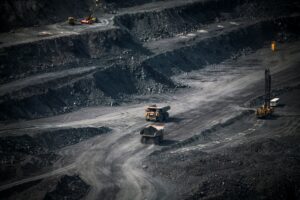
PJSC “Ingulets Mining and Processing Plant” (Ingulets Mining and Processing Plant, Kryvyi Rih, Dnipropetrovsk Oblast), which is part of the Metinvest Group and is currently temporarily idle, allocated 3.4 million UAH in January–June of this year to preventive measures and programs aimed at improving safety, occupational health, and the work environment.
According to information on the implementation of the collective bargaining agreement for the first half of 2026, despite martial law and the temporary suspension of the production cycle, the main priorities of the joint efforts between management and the labor union remain the people—their safety, employment, timely payment of wages, and the preservation of social guarantees.
At the same time, it is noted that 19 planned comprehensive measures have been implemented. As a result, working conditions have been improved for 217 employees, and sanitary and living conditions have been improved for 48 employees. Over 1.7 million hryvnias were allocated to provide employees with personal protective equipment and work clothing.
Under martial law, certain provisions of the collective bargaining agreement are being partially implemented due to the lack of organizational and technical conditions necessary for the plant’s full-scale operations. However, specific obligations were fulfilled for those employees involved in maintaining the plant’s essential functions and ensuring the rapid resumption of the production cycle. Specifically, in the first half of 2026, the average monthly salary exceeded 17,000 UAH—a 30.4% increase compared to the first half of 2025.
As reported by Oleksandr Myronenko, Chief Operating Officer (COO) of the Metinvest Group, the Ingulets Mining and Processing Plant has been shut down since 2024—production there is uneconomical due to high electricity prices. The facility has been properly mothballed, and production can be resumed if market conditions are favorable.
Ingulets GOK specializes in the extraction and processing of ferruginous quartzites from the Ingulets deposit, located in the southern part of the Kryvyi Rih iron ore basin. It produces iron ore concentrate. The company’s production capacity is 14 million metric tons of iron ore concentrate per year.
Ingulets Iron Ore Mine is part of the Metinvest Group, whose major shareholders are PJSC “System Capital Management” (SCM, Donetsk, 71.24%) and the “Smart-Holding” group of companies (23.76%). The management company of the Metinvest Group is Metinvest Holding LLC.
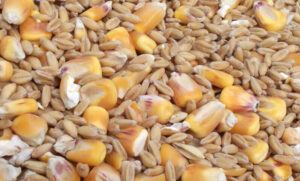
As of September 21, Ukraine had exported 4.662 million metric tons of grains and legumes since the start of the 2026/27 marketing year (MY, July 2026 – June 2027), had exported 4.662 million metric tons of grains and legumes as of September 21, which is 22% less than the 5.979 million metric tons recorded as of September 24, 2025, according to the press service of the Ministry of Agrarian Policy and Food.
At the same time, corn exports rose by 103.4%—to 1.841 million metric tons, compared to 905,000 metric tons as of September 24, 2025.
Wheat exports since the start of the 2026/27 marketing year totaled 2.337 million metric tons, a 43.9% decrease compared to 4.168 million metric tons as of September 24, 2025. Barley exports totaled 420,000 metric tons, down 46.9% from last year’s figure of 791,000 metric tons.
Wheat flour exports since the start of the 2026/27 marketing year totaled 6,800 metric tons, down 48.9% from 13,300 metric tons as of September 24, 2025. Exports of other types of flour remained at 0.6 thousand metric tons. Overall, flour exports fell by 46.8%—to 7.4 thousand metric tons, compared to 13.9 thousand metric tons as of September 24, 2025.



