

Miroslav Bojchin, Chairman of the Board of PJSC “European Travel Insurance,” was named the winner in the “Insurance Market Leader of the Year” category as part of the 30th anniversary nationwide “Person of the Year 2025” program.
Boychin has been working in the international insurance business for over 20 years. He holds three advanced degrees, including in foreign languages, finance, and management. He began his professional career in government agencies and has worked in the insurance industry since 1996.
Since 2005, Boychin has worked for the international insurance groups Generali, Munich Re, and EIG. In 2006, he became the head of “European Travel Insurance,” which specializes in travel insurance. Since 2021, he has also served as chairman of the supervisory board of the insurance company “Euroins Ukraine.”
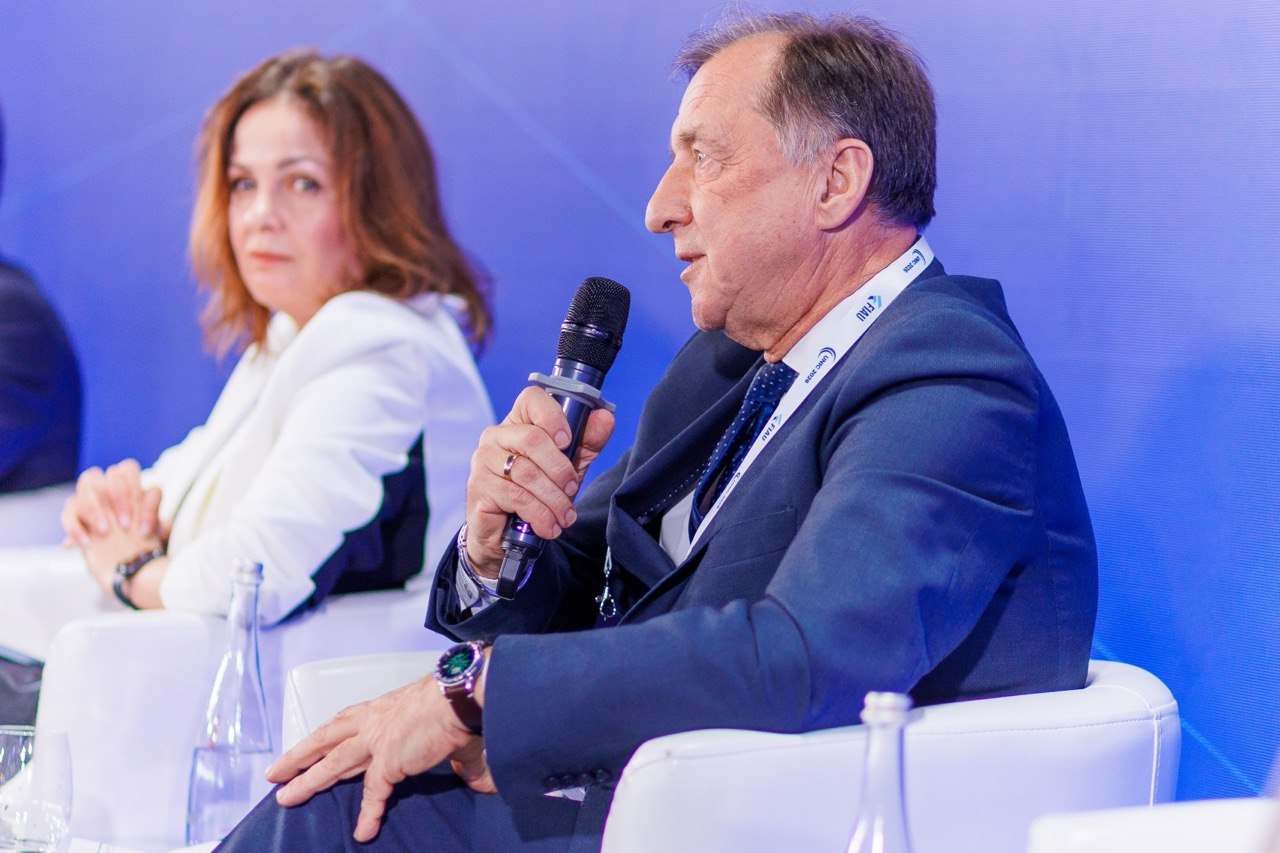
Under Boychin’s leadership, “European Travel Insurance” has strengthened its position in the Ukrainian travel insurance market and expanded its customer base. According to the company, the number of its insured customers exceeded 1 million in 2025.
The company specializes in insurance for travelers going abroad, medical and travel insurance, as well as travel-related insurance products. “European Travel Insurance” is a member of ITIA, an international group of specialized travel insurers that brings together companies from several countries.
The company notes that in recent years, one of its key priorities has been adapting its insurance products to changes in the travel patterns of Ukrainians, growing demand for medical care abroad, and new risks associated with martial law.

In addition to its insurance activities, “European Travel Insurance” participates in social and charitable initiatives, including providing funds to support Ukrainian military personnel.
The nationwide “Person of the Year” program has been held in Ukraine since the 1990s and annually honors representatives from business, government, culture, sports, and other fields. In 2025, the program was held for the 30th time.
Open4business is the program’s information partner.

Issue No. 1 – September 2026
Analysis of the Current Situation in Ukraine’s Foreign Exchange Market
The National Bank of Ukraine is firmly keeping the hryvnia exchange rate under control, strengthening its influence by increasing the volume of foreign exchange interventions. As a result, the hryvnia is strengthening despite a serious foreign exchange shortage in the market caused by a lack of funds from exporting companies. The hryvnia exchange rate set by the NBU remained virtually unchanged during the first half of September: as of September 1, it stood at 44.52 UAH/USD, and as of September 15, it was 44.62 UAH/USD. Of course, the cost of maintaining a stable hryvnia is quite high, as the volume of interventions reached $5.915 billion between August 3 and September 4. However, demand for foreign currency remains consistently high, as preparations for winter continue, and companies are therefore continuing to import energy equipment. The difficult situation with grain exports, caused by regular Russian attacks on port infrastructure and ships, is creating additional pressure on the foreign exchange market. According to the Ministry of Agrarian Policy, total exports of grains and legumes since the start of the 2026/27 marketing year amount to 4.255 million metric tons, compared to 5.162 million metric tons a year earlier. The resumption of Russian attacks on gas stations will also mean a need for additional equipment and fuel purchases, which must also be paid for in foreign currency—with the NBU remaining the primary seller on the interbank foreign exchange market.
Global Context
The global market is experiencing its final days of complete uncertainty, as the Federal Reserve (Fed) is set to announce its interest rate decision on September 16. Currently, the Fed is expected to raise rates by 25 basis points. A new report on U.S. inflation showed that prices rose more than expected in August. According to data from the Bureau of Labor Statistics, the Consumer Price Index rose 3.4% year-over-year and 0.4% month-over-month in August, which was fully in line with the consensus forecast. Core inflation slowed to 2.4% year-over-year (the lowest level since 2021), but its monthly increase of 0.3% was higher than the 0.2% forecast by economists. According to CME FedWatch, markets are pricing in a 90% probability of a rate hike at the Fed’s September 16 meeting.
Meanwhile, gold is rebounding strongly. U.S. gold futures rose 0.1% to $4,409.30 per troy ounce, driven by the Consumer Price Index data and, consequently, expectations of a Fed rate hike in September.
The EUR/USD pair is trading around 1.1530 USD/EUR in mid-September, although the dollar periodically dipped to 1.1630–1.1648 USD/EUR during the first two weeks of the month. However, compared to August, when the exchange rate peaked at 1.1709 USD/EUR, the dollar has been steadily strengthening in September. This is happening precisely as the Fed’s policy meeting—the “H-hour”—approaches.
Domestic Ukrainian Context
In the first half of September, the foreign exchange market was under pressure from high demand for foreign currency. The volume of NBU interventions is increasing: while the NBU sold $1.018 billion on the interbank market during the first week of August, it sold $1.329 billion during the week of August 31 through September 4. In total, from the beginning of August through September 4, according to data published by the National Bank, the regulator’s currency sales amounted to $5.915 billion, while its currency purchases totaled only $0.45 million.
The increase in the volume of interventions is leading to a rapid decline in international reserves. According to the NBU, Ukraine’s international reserves as of early September, based on preliminary data, stood at $48.66 billion. They had decreased by 5% in August. The National Bank explained that this trend was driven by a reduction in international financial aid, while the volume of foreign exchange interventions remained at a level close to that of July.
Demand for foreign currency among the public is growing because, against the backdrop of stable exchange rates, citizens are choosing to convert their savings from hryvnia to dollars and euros for a sense of security amid high uncertainty and the prolonged continuation of military operations. In August, net foreign currency purchases by households increased by 26% to $0.562 billion, while in July the balance between purchases and sales stood at $0.5 billion.
Foreign currency is becoming not only a way for households to avoid losses in the event of a hryvnia devaluation, but also an opportunity to preserve their funds amid rising inflation. And inflation in Ukraine is rising. According to the NBU, it accelerated to 8.1% year-over-year in August. Among the main reasons are rising fuel prices, as well as higher administrative inflation amid increases in water supply and wastewater disposal rates. NBU experts note that price pressures remain elevated due to the consequences of Russian military aggression and the war in the Middle East, while the intensification of Russian attacks on logistics, manufacturing, and energy infrastructure facilities is increasing business costs and limiting the domestic supply of goods and services.
Significant challenges are emerging regarding the fulfillment of the state budget revenue plan. As Finance Minister Serhiy Marchenko recently stated, the government has established a procedure for financing expenditures under conditions of limited liquidity: upon receipt of funds, the security and defense sectors will be financed first, with the remaining expenditures covered only if additional resources become available.
Ukraine has already received the main international aid packages planned for 2026. However, there is news of a new multi-billion package that has already been approved by the European Commission. This amounts to 6.1 billion euros for the purchase of drones and missiles for the Patriot air defense system. As for support for social needs through new tranches from the EU, there is currently no clear information on how much additional funding Europe will allocate to Ukraine by the end of 2026. However, European Commission spokesperson Balázs Újvári recently stated that the European Commission continues to assess the situation with Ukraine’s public finances to determine the country’s priority needs for additional funding this year. Therefore, the EU will discuss potential sources of additional funding in detail and subsequently announce the amounts of additional tranches to support Ukraine’s state budget.
U.S. Dollar Exchange Rate: Trends and Analysis
In the first half of September, the hryvnia initially managed to strengthen to 44.46 UAH per dollar, but then the National Bank of Ukraine (NBU) gradually brought the exchange rate back to its late-August level through interventions; as of September 15, the exchange rate stood at 44.62 UAH/USD. The hryvnia’s future trajectory depends entirely on the volume of interventions the National Bank is prepared to carry out.
In the cash market in mid-September, the buying rate was 44.20–44.50 UAH/USD, and the selling rate was 44.80–45.00 UAH/USD. Spreads have remained virtually unchanged, ranging between 0.50–0.60 UAH/USD.
Key influencing factors:
· Rising demand for foreign currency in the interbank foreign exchange market. Businesses and infrastructure damaged by shelling require restoration, and equipment is being purchased abroad, which is driving additional demand for foreign currency.
· The NBU controls the exchange rate and keeps the hryvnia within strict limits. The NBU remains the primary seller of foreign currency, and its participation in trading determines the exchange rate.
· The public seeks to safeguard its savings, and consequently, demand for foreign currency in cash is rising. Anticipating blackouts, a harsh winter, new logistical challenges, and possibly commodity shortages, citizens are accelerating the transfer of their savings into major currencies—the dollar and the euro.
· International factors: The conflict between the U.S. and Iran continues, significantly destabilizing international security and oil prices. Meanwhile, U.S. President Donald Trump has stated that the war in the Middle East will end after the midterm congressional elections, which will take place in November.
· Market expectations: In the global market, expectations are centered on the Federal Reserve’s September meeting, and traders are forecasting a 25-basis-point increase in the Fed’s benchmark interest rate. In Ukraine, attention is focused on the new strategy of drone and missile attacks on rear cities, which is causing economic losses and heightening public fears about getting through the winter.
Forecast
· Short term (1–2 weeks): base range of 44.65–44.95 UAH/USD; fluctuations may move in different directions depending on the volume of NBU interventions.
· Medium term (2–3 months): 44.90–45.60 UAH/USD. On the international market, the dollar may strengthen in response to the Fed’s rate hike, as the value of Treasury securities—which will attract investors—will automatically rise. No sharp fluctuations are expected in Ukraine, and if the National Bank adopts a devaluation policy, it will occur very gradually with short-term pullbacks.
· Long term (6+ months): In the baseline scenario, the trend toward devaluation remains, as before, and by the end of winter—assuming the situation regarding the state budget deficit worsens and there are fairly prolonged delays in the receipt of new tranches of international aid—the exchange rate could reach 45.80–46.50 UAH/USD. As previously forecast, Russia’s massive attacks on cities, infrastructure, and businesses are leading to increased pressure on the foreign exchange market, as import needs automatically rise. Exchange rate fluctuations will be most influenced by new inflows of international aid, the extent of damage caused by the attacks, and fluctuations in international oil prices.
Euro Exchange Rate: Trends and Analysis
During the first half of September, the euro initially strengthened on the Ukrainian market but then retreated. While the official exchange rate was 51.64 UAH/euro at the beginning of the month, it stood at 51.52 UAH/euro as of September 15. As before, the euro’s exchange rate dynamics in Ukraine are influenced by a single factor: the euro’s position on the international market.
On Ukraine’s cash market, the buying rate ranges from 51.05 to 51.40 UAH/euro, while the selling rate ranges from 51.80 to 52.00 UAH/euro. There is a very noticeable trend toward wide spreads: in the first half of September, the spreads between the euro’s buying and selling rates widened to 0.80–1.0 UAH/EUR.
Key influencing factors:
· On the international market, the euro still outperforms the dollar.
Currency quotes are most influenced by the ECB’s recent decision to raise the key deposit rate by 0.25 percentage points to 2.5%.
· Risks to EU economies are mounting, calling into question the euro’s further strengthening in the global market. Europe’s economic outlook is considered extremely uncertain, and the risk of accelerating inflation remains high.
· Demand for the euro remains high in the cash market. Citizens are purchasing euros—both in cash and non-cash forms—to build savings, pay for their children’s education, prepare for potential migration, and for other purposes. Although the dollar dominates sales in the cash market, the euro’s share is growing steadily in 2026.
Forecast:
· Short term (2–4 weeks): On the Ukrainian market, the euro may trade within the range of 51.60–51.80 UAH/euro.
· Medium term (2–4 months): If the euro changes direction on the international market as a result of the Fed’s September decision to raise interest rates, the official exchange rate in Ukraine may range between 51.70 and 51.95 UAH/euro.
· Long term (6+ months): Next year, the official euro exchange rate could reach a range of 52.80–53.50 UAH/EUR. The main factors influencing the euro exchange rate are inflation in the U.S. and EU countries, the monetary policies of the Fed and the ECB (i.e., planned changes to the benchmark interest rate), escalation or, conversely, a lull in the Middle East, and energy price trends.
Recommendations for Businesses and Investors
By the end of September, fluctuations in the euro/dollar exchange rate may stabilize. These fluctuations will be primarily driven by the monetary policy of the U.S. Federal Reserve.
The dollar may soon regain ground, while the euro will lose value. The dollar will be supported by the U.S. Federal Reserve’s decision to raise the benchmark interest rate by 25 basis points. This will affect the price of U.S. Treasury bonds and signal to investors to invest in the dollar.
The Fed is preparing to adjust interest rates. Rising inflation in the U.S. has deprived the Fed of the opportunity to lower rates, and markets are now pricing in a rate hike at the Fed’s next meeting. This will provide support for the U.S. dollar while simultaneously putting downward pressure on the euro.
Politics also plays a role in the EUR/USD currency pair. The U.S. is actively preparing for the midterm congressional elections in November, which means that intense political battles in the U.S. will periodically push the dollar to peak levels.
The U.S.-Iran conflict—the timeline for a resolution remains unknown. In the Middle East, the war in Iran is creating new risks for the currency market, as the situation is negatively impacting the oil market. During this period, investors would be wise to consider several scenarios and multiple currencies when building their currency reserves.
The key is investment security. Although the hryvnia is holding steady at up to 45 UAH/USD, the national currency is best suited for urgent and one-off decisions, while a long-term plan should include liquid currencies—the dollar and the euro.
Investment liquidity—after a detailed analysis of the situation. The high volatility of the euro/dollar pair signals the need to develop a currency plan that takes key influencing factors into account, and at the core of the strategy, it makes sense to plan investments in the most liquid currencies—the dollar and the euro. The optimal ratio this fall could be 50/50 or 65/35 (with a larger share of the dollar).
Diversify your currency portfolio using liquid currencies. If an investor’s plan includes not two but four currencies, it is worth considering the British pound and the Swiss franc. The share of savings in these two European currencies can reach 20%.
The investor’s goal is to make cautious and reliable investments. This means that the majority of savings should be held in liquid currencies, with a smaller portion (up to 15%) allocated to other instruments—among which purchasing three-month government bonds denominated in foreign currency appears to be the optimal choice.
Central banks will indicate where exchange rates are headed on the global market. Paying attention to the monetary policies of the EU and the U.S. will help you rebalance your currency portfolio in a timely manner as part of a medium-term investment strategy.
It’s important not to panic. Markets are often influenced by unpredictable events, but an investor’s strategy is their personal financial plan; therefore, a cool-headed assessment—not emotions—will help avoid risks.
What’s important in the news. First and foremost, news from the U.S. regarding the Federal Reserve Committee’s decision on changing the benchmark interest rate. We are also analyzing statements from U.S. President Donald Trump regarding the war in Iran. We are monitoring oil and gold prices. The most important signal for adjusting our strategy will be a strengthening of the dollar to 1.1350–1.1400 USD/EUR. In Ukraine, the main factors influencing the situation on the foreign exchange market will be the NBU’s strategy for intervening in the interbank market, the state of international reserves, news regarding the receipt of multi-billion-dollar loan tranches and aid from partners (particularly in terms of budgetary support), the situation in the energy sector, and any potential news from the front lines.
This material was prepared by analysts at KYT Group, an international multi-service product-based FinTech platform, and reflects their expert, analytical, and professional judgment. The information presented in this review is for informational purposes only and should not be construed as a recommendation for action.
The company and its analysts make no representations and assume no liability for any consequences arising from the use of this information. All information is provided “as is,” without any additional guarantees of completeness, obligations regarding timeliness, or updates or supplements.
Users of this material should independently assess risks and make informed decisions based on their own evaluation and analysis of the situation using various available sources that they themselves deem sufficiently reliable. Before making any investment decisions, we recommend consulting with an independent financial advisor.
REFERENCE
KYT Group is an international, multi-service, marketplace-style FinTech product platform that provides financial companies with access to services for promoting their offerings, as well as advertising and consulting services.

The Kyiv region became the largest among the regional markets for new residential construction listed by the State Statistics Service in January–June 2026, with a figure of 599,300 square meters, while 437,900 square meters were reported in Kyiv, according to Experts.news.
In the Kyiv region, approximately 9,100 apartments were registered at the start of construction. On an annual basis, the area of new construction remained virtually unchanged, decreasing by only 0.3%.
In Kyiv, the area of registered new housing decreased by 10.7%—to 437,900 square meters.
At the same time, the statistics on the number of apartments in the capital appear unusual: the State Statistics Service reports approximately 1,400 registered apartments despite a significant total area. This may be related to the structure of specific projects and the characteristics of the published data.
The Lviv region became the third-largest market, where 501,500 square meters of housing and approximately 7,200 apartments were announced in the first half of the year.
In the Ivano-Frankivsk region, the area of new construction totaled 248,400 square meters, down 20.5% year-over-year. At the same time, approximately 5,800 apartments were registered.
In the Odesa region, the figure reached 328.7 thousand square meters and approximately 1,100 apartments; however, the State Statistics Service has not disclosed comparable figures for the previous year.
Thus, in terms of the volume of announced new construction, the largest markets continue to be concentrated around Kyiv and the western regions of the country.
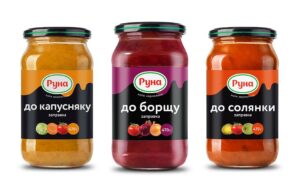
PJSC “Lutsk Foods,” which manufactures sauces, ketchups, mustard, and mayonnaise, intends to rescind the decision of the remote general meeting of shareholders held on April 29, 2024, regarding the non-payment of dividends based on the results of operations in 2023, and to allocate 20.48 million UAH of retained earnings to pay dividends for 2022–2023.
The company reported this in the information disclosure system of the National Securities and Stock Market Commission (NSSMC).
According to the draft resolution, it is proposed to allocate 9.26 million UAH for dividend payments based on the 2022 financial results and 11.21 million UAH for 2023. The total dividend amount will be 0.32 UAH per share.
It is proposed that the dividends be paid through the Ukrainian depository system in a single lump sum no later than the deadlines specified by current Ukrainian legislation.
The extraordinary general meeting of shareholders of “Lutsk Foods” will be held remotely on September 28, 2026.
PJSC “Lutsk Foods” was founded in 1997 on the basis of the Lutsk City Food Combine, established in 1945. It manufactures a wide range of tomato paste-based sauces, as well as ketchup, adjika, mustard, mayonnaise, and various types of vinegar under the “Runa,” “Ridnyi Krai,” and “Sribnytsia” brand names. Since 2009, it has been collaborating with a number of retail chains and producing over 40 product items under their private labels. PJSC “Lutsk Foods” exports its products to markets in more than 20 countries.
According to Opendatabot, in 2025, PJSC “Lutsk Foods” reported revenue of 840.7 million UAH and net income of 39.4 million UAH. The company employs 325 people.

Sunflower meal exports from Ukraine in the 2026/27 marketing year may increase to 3.3 million metric tons, up from 2.861 million metric tons in the previous season, according to a USDA forecast.
This represents an increase of about 15.3%, according to data from the September report “Oilseeds: World Markets and Trade.”
At the same time, sunflower meal production in Ukraine is expected to reach 5.204 million metric tons, which is approximately 20% higher than the 2025/26 marketing year’s figure of 4.337 million metric tons.
The USDA estimates domestic consumption of sunflower meal at 1.875 million metric tons, compared to 1.675 million metric tons the previous season.
Ukraine will retain its second-place position among the world’s largest sunflower meal exporters, behind Russia. Russian exports are forecast at 2.8 million metric tons, while Ukraine’s figure is higher at 3.3 million metric tons; thus, for this product, Ukraine actually outpaces Russia.
Overall, global sunflower meal exports in the new season may increase from 8.809 million metric tons to 10.404 million metric tons, or by approximately 18%.
The growth in meal production is directly linked to the recovery of sunflower processing and increased oil output in the Black Sea region.
Source: USDA FAS, Oilseeds: World Markets and Trade, September 2026.

In January–August 2026, Ukraine exported 1.64 billion eggs worth a total of $164 million, which is an 18.3% increase in volume and a 37% increase in value compared to the same period in 2025, said Serhiy Karpenko, executive director of the Ukrainian Poultry Farmers’ Union, in an interview with the “Interfax-Ukraine” news agency.
The main buyers of Ukrainian eggs during the first eight months of 2026 were Spain—25.4% of exports—the United Kingdom—13.2%—Poland—8.7%—and the Czech Republic—7.4%. The share of EU countries in exports amounted to 75.9%.
Exports of egg products from January through August 2026 totaled 6.7 thousand metric tons, a 36% increase compared to the same period last year. The main importing countries were Latvia, Poland, and Croatia. The share of EU countries in exports was 76.4%.
According to Karpenko, the top priority markets for further export development are Asian countries, particularly China, the MENA region (the Middle East and North Africa), and ASEAN countries (Vietnam, Malaysia, the Philippines, and Indonesia).
In addition, it is important to open up markets in the United States, South Africa, and Mexico, and to expand exports to EU countries, the United Kingdom, Saudi Arabia, and Iraq.
As reported, in the first eight months of 2026, Ukraine increased poultry meat exports by 12.5%—to 330,200 metric tons—while foreign exchange earnings from these exports decreased by 2.6%—to $697.9 million. The main buyers were the Netherlands, the United Kingdom, Slovakia, and the UAE.



