
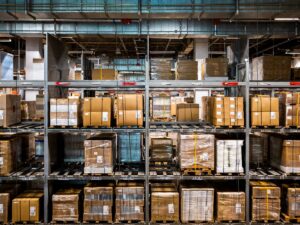
Rental rates for warehouse space in Ukraine have increased by 12–13% over the past few months, UTG Director Yevgeniya Loktionova told the “Interfax-Ukraine” news agency.
“Due to the destruction and rapid reduction in vacant space, the market has turned into a ‘landlord’s market.’ In recent months alone, as the shortage has worsened, rates for high-quality space have risen by an average of 12–13%,” she noted.
According to UTG, in the Kyiv region, the prime effective rental rate for Class A space remains in the range of $5–$5.5 per square meter per month (excluding VAT and OPEX), while in some deals for the most sought-after or well-protected properties, it reaches $6 per square meter. In western regions (particularly Lviv Oblast), rates range from $6 to $7 per square meter.
As previously reported, according to a WINHUB study, as of early September, Ukraine’s warehouse infrastructure had shrunk by 50%—from 4.2 million square meters at the start of 2022, with the enemy having destroyed 2.1 million square meters (Classes A/B). New construction between 2022 and 2026 (800,000 square meters) only partially offset these losses. The situation is even more acute in the capital region, where more warehouses were lost in the first eight months of 2026 than during the entire period from 2022 to 2025. In total, 68% of the inventory (1.5 million square meters) was lost.
UTG was founded in 2001. The company has developed over 1,300 real estate concepts. Over the years, 4.7 million square meters of commercial space in Ukraine have been leased with the company’s involvement.
According to Serbian Economist, the U.S. Embassy in Pristina has warned citizens about possible large-scale demonstrations on September 16 in downtown Pristina and other major cities in Kosovo. According to the diplomatic mission, the demonstrations could lead to road blockages, major traffic jams, and serious disruptions to public transportation.
U.S. citizens are advised to limit their travel and, if possible, avoid routes passing through areas where protests are taking place. U.S. government employees are advised to avoid any non-essential travel near locations of mass gatherings and not to send their children to school on September 16 due to likely transportation problems.
The heightened security measures are related to the expected September 16 ruling by the Kosovo Chambers in The Hague in the case of former Kosovo President Hashim Thaçi and three former leaders of the Kosovo Liberation Army—Kadri Veseli, Jakup Krasniqi, and Redžep Selimi. All four deny the charges of war crimes and crimes against humanity.
On September 12, a rally attended by thousands took place in Pristina in support of the defendants.
Kosovo declared independence from Serbia in February 2008, but its statehood still lacks universal international recognition. Serbia does not recognize Kosovo’s independence and continues to consider it part of its territory. Kosovo is also not recognized by, among others, China, Russia, and Ukraine, and within the EU—Spain, Greece, Romania, Slovakia, and Cyprus. The European Parliament notes that the issue of Kosovo’s status remains linked to the EU-mediated dialogue between Belgrade and Pristina.
https://t.me/relocationrs/3669
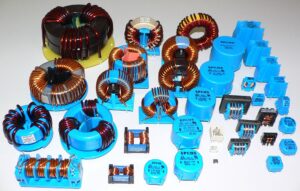
According to Experts.news, Ukraine increased its imports of transformers, inductors, and chokes by 49% in January–August 2026 compared to the same period last year—to $1.02 billion—with China accounting for nearly 88% of all shipments of these products, according to data from the State Customs Service.
Over the eight-month period, Ukraine imported $890 million worth of transformers, inductors, and chokes from China, accounting for 87.7% of total imports in this product category.
A year earlier, imports from China totaled $563.4 million, or 82.7% of Ukraine’s imports. Thus, over the course of the year, China not only significantly increased the volume of its exports but also raised its share of the Ukrainian market by approximately 5 percentage points.
Turkey and Germany remained other major suppliers. Turkey accounted for about 3% of imports, while a year earlier its share was 2.5%. Germany’s share, conversely, fell from 5.8% to 1.4%.
The growth rate of transformer equipment imports has been gradually slowing throughout 2026. In the first quarter, imports increased by 81% year-over-year; in the first half of the year, by 63%; and from January through August, growth stood at 49%.
In August 2026, Ukraine imported transformers, inductors, and chokes worth $115.7 million, which is 7.7% more than in August of last year.
The high volume of purchases of transformer equipment persists amid the need to restore and modernize Ukraine’s energy infrastructure.
In March 2026, the Cabinet of Ministers removed transformers from the list of goods that could be imported on preferential terms under agreements with the EU Secretariat. In May, the European Business Association appealed to First Deputy Prime Minister and Minister of Energy of Ukraine Denys Shmyhal with a proposal to temporarily exempt certain types of power transformers from import duties and VAT.
At the same time, Ukraine continues to export its own transformers and related electrical equipment. From January through August 2026, the value of these exports totaled nearly $24.8 million, compared to $19.9 million a year earlier. The main export markets were Germany, Poland, and Hungary.
By comparison: for the full year of 2025, Ukraine imported transformers, inductors, and chokes worth $1.12 billion, which was 88% higher than the 2024 figure. Imports from China rose 2.3-fold during that period—to $957.3 million.
Thus, in just the first eight months of 2026, the volume of Ukraine’s imports of these products approached the figure for the entire previous year, and China further solidified its status as a key supplier of transformer equipment to the Ukrainian market.

The government’s draft law “On the State Budget of Ukraine” for 2027 was registered with the Verkhovna Rada on Tuesday evening under No. 16000.
The relevant information has been published on the parliament’s website.
At this time, the text of the budget bill and accompanying materials are not yet available, nor is there a statement from the Cabinet of Ministers regarding its adoption at the meeting held on Tuesday evening.
According to the Budget Code, the government must submit the draft state budget for the following year to parliament by September 15 inclusive.
BUDGET, CABINET OF MINISTERS, DRAFT LAW, UKRAINE, VERKHOVNA RADA
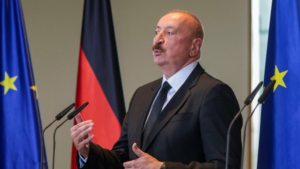
President of Azerbaijan Ilham Aliyev on September 15 sharply criticized the European Parliament, calling it “a den of corrupt officials.” He made the statement in Baku during a meeting with participants of international conferences. The quote is confirmed by the official transcript on the website of the President of Azerbaijan.
Aliyev referred to the Qatargate corruption scandal, which erupted in the European Parliament at the end of 2022 and was linked to former EP Vice-President, Greek politician Eva Kaili. According to him, “suitcases containing millions of dollars were seized from the home of its vice-president,” after which, Aliyev claims, the case was allegedly “hushed up.” He also accused the European Parliament of bias against Azerbaijan and Islamophobia.
At the same time, the factual circumstances of the case differ somewhat from the wording used by the Azerbaijani president. In December 2022, Belgian investigators did indeed discover about EUR1.5 million in cash as part of Qatargate, but the money was seized in several locations: about EUR150,000 in Kaili’s apartment, around EUR750,000 in a suitcase that was with her father, and another approximately EUR600,000 in the home of another person involved in the investigation.
Kaili was arrested in December 2022, lost her position as Vice-President of the European Parliament and spent some time in custody. Therefore, Aliyev’s claim that “no measures were taken” against her does not correspond to the full chronology of the case. Kaili herself denies committing any crimes.
It is also not yet possible to say that the case was closed or officially “hushed up.” As of the end of June 2026, the Belgian Qatargate investigation was continuing and had not yet reached trial. In February 2026, the Brussels Chamber of Appeal rejected procedural objections from the main suspects and allowed the investigation to continue. At the same time, the investigation has been criticized because of its duration and a number of procedural problems.
AZERBAIJAN, CORRUPTION, EUROPEAN PARLIAMENT, QATARGATE, Алієв

In January–August of this year, Ukraine’s ferroalloy exports decreased by 67.5% in volume terms compared with the same period last year—to 23,964 thousand metric tons from 73,774 thousand metric tons.
According to statistics released by the State Customs Service (SCS), 4,675 thousand metric tons of ferroalloys were exported in August, 4,077 thousand metric tons in July, 6,432 thousand metric tons in June, 4,851 thousand metric tons in May, in April—2,755 thousand metric tons, in March—337 metric tons, in February—72 metric tons, and in January—765 metric tons.
In monetary terms, ferroalloy exports for January–August fell by 65.2% to $28,778 million.
In addition, over the first eight months of the year, Ukraine imported 18,337 thousand metric tons of these products—a 32.8% decrease compared to January–August 2025. In monetary terms, imports fell by 33.2% to $34.613 million.
As previously reported, the Pokrovsk Mining and Processing Plant (PGZK, formerly the Ordzhonikidze Mining and Processing Plant) and the Marganetsk Mining and Processing Plant (MGZK, both located in Dnipropetrovsk Oblast), which are part of the “Privat” Group, ceased the extraction and processing of raw manganese ore in late October–early November 2023, while the NZF and ZZF plants halted the smelting of ferroalloys. In the summer of 2024, the ferroalloy plants resumed production at a minimal level.
Since January 19, 2026, due to problems with electricity supply and high electricity prices, NZF has been idle, while ZZF has been operating at a minimal level.
In 2025, ferroalloy plants increased their exports of ferroalloys by 21.4% in volume terms compared to 2024—to 93,841 thousand metric tons—while revenue rose by 19% to $105.441 million. The main export destinations were Poland (28.69% of shipments in monetary terms), Turkey (21.62%), and Algeria (21.48%).
In 2025, Ukraine imported 38,434 thousand metric tons of this product—a decrease of 53.3% compared to 2024. In monetary terms, imports fell by 47.5% to $73.839 million. Imports came primarily from Norway (16.11%), Kazakhstan (15.89%), and France (12.56%).
Prior to the nationalization of the financial institution, PrivatBank managed the business operations of the ZZF, NZF, Stakhanov Steel Plant (located at NKT), and the Pokrovsk and Marganets Mining and Processing Plants. The Nikopol Ferroalloy Plant is controlled by the EastOne Group, formed in the fall of 2007 as a result of the restructuring of the Interpipe Group, as well as by the Privat Group.



