

In August of this year, Ukraine increased its manganese ore exports by 30% compared to the previous month—to 3,511 thousand metric tons from 2,701 thousand metric tons.
According to statistics released by the State Customs Service (SCS), a total of 28,158 thousand metric tons of manganese ore were exported over the first eight months of this year, compared to 8,014 thousand metric tons during the same period last year.
In July of this year, Ukraine increased its manganese ore exports by 14.9% compared to the previous month—to 2,701 thousand metric tons from 2,350 thousand metric tons; in June, exports rose by 36.6% compared to May—to 2,350 thousand metric tons from 1,720 thousand metric tons; in May, it reduced exports by a factor of 3.1 compared to April—to 1,720 metric tons from 5,319 metric tons; in April, it increased exports by a factor of 2.8 compared to March—to 5,319 metric tons from 1,932 metric tons; in March, exports fell by a factor of 3.1 compared to the previous month—to 1,932 thousand metric tons from 6,072 thousand metric tons—and by a factor of 2.4 compared to January, when 4,553 thousand metric tons were exported.
In monetary terms, exports of this raw material amounted to $4.843 million in January–August (for the first 8 months of 2025 – $1.329 million).
In January–August 2026, Ukraine imported 23,099 thousand metric tons of ore worth $3.578 million, whereas there were no imports last year.
As previously reported, Ukraine reduced its manganese ore exports by 50.4% in 2025 compared to the same period last year—to 22,281 thousand metric tons—but stepped up shipments in August–December. While shipments totaled 2,977 thousand metric tons over the first seven months of 2025, exports more than doubled in August, when 5,037 thousand metric tons were shipped; in September, they amounted to 1,725 thousand metric tons; in October—3,993 thousand metric tons; in November—3,860 thousand metric tons, and in December—4,689 thousand metric tons.
In monetary terms, exports for the entire year 2025 fell by 45.2% compared to 2024—to $3,599 million. The majority of exports went to Slovakia (99.22% of shipments in monetary terms) and Poland (0.78%). Over the course of the year, the country imported 37,006 thousand metric tons from Ghana worth $5.546 million. All shipments took place in November. In 2024, 84,293 thousand metric tons of ore worth $18.302 million were imported.
The Pokrovsk Mining and Processing Plant (PGZK, formerly the Ordzhonikidze Mining and Processing Plant) and the Marganetsk Mining and Processing Plant (MGZK, both located in Dnipropetrovsk Oblast), which are part of the “Privat” Group, ceased the extraction and processing of raw manganese ore in late October–early November 2023, while the NZF and ZZF plants halted the smelting of ferroalloys. In the summer of 2024, the ferroalloy plants resumed production.
PGZK and MGZK did not produce any output in 2024, whereas in 2023, PGZK produced 160.31 thousand metric tons of manganese concentrate, while MGZK was idle.
In 2025, PGZK produced 63.9 thousand metric tons of manganese concentrate worth 342.138 million UAH and sold 25.4 thousand metric tons worth 216.309 million UAH. In 2026, the plant plans to increase manganese concentrate production by 3.44 times compared to the previous year—to 220 thousand metric tons.
In Ukraine, manganese ore is mined and processed by the Pokrovsk and Marganets Mining and Processing Plants.
The consumers of manganese ore are ferroalloy plants.

On September 10, 2026, the Switzerland-Ukraine Municipal Cooperation Forum was held in Basel, focusing on the development of partnerships between Ukrainian and Swiss cities and the implementation of joint projects to rebuild and strengthen the resilience of communities, according to the Embassy of Ukraine to the Swiss Confederation and the Principality of Liechtenstein.
The forum brought together representatives of central and local authorities from Ukraine and Switzerland, as well as relevant organizations from both countries. It was jointly organized by the Swiss government, the cities of Basel, Bern, and Zurich, the Verkhovna Rada of Ukraine, the Embassy of Ukraine in Switzerland, the Ukrainian Association of Switzerland, and the Support and Recovery Platform.
Konradin Kramer, President of the Government of the Canton of Basel-Stadt; Iryna Venediktova, Ambassador of Ukraine to Switzerland; Vitaliy Bezgin, Minister of Community and Territorial Development of Ukraine; and Jacques Herber, the Swiss Federal Council’s delegate for Ukraine, delivered welcoming remarks to the participants.
Under the slogan “Building Partnerships. Achieving Results,” participants discussed the transition from inter-municipal contacts to specific investment and infrastructure projects. The main areas of cooperation identified were energy supply and energy efficiency, water infrastructure, local governance, and the development of public services.
The forum’s program included two panel discussions—one on the political foundations of municipal partnerships in reconstruction and the other on practical models for implementing such projects. Separate City Labs working sessions were held, during which representatives of Ukrainian and Swiss cities jointly developed specific proposals for further cooperation.
Municipal partnerships are one of the areas of Switzerland’s long-term support for Ukraine. The Swiss cooperation program with Ukraine for 2025–2028 specifically provides for support to local and regional authorities in the reconstruction and modernization of urban infrastructure and the provision of basic services, particularly in the areas of transportation, energy, water supply, healthcare, and education.
Swiss cities are already participating in practical projects in Ukraine. In particular, Basel is transferring up to 25 trams to Lviv as part of a program that Switzerland is funding with CHF 2.5 million from 2024 to 2028. Previously, Bern also donated trams to Ukraine.
Switzerland views the development of direct ties between cities as one of the mechanisms for Ukraine’s reconstruction. The country’s national program notes that Vinnytsia, Odesa, Sumy, and Kharkiv, among others, have previously expressed interest in partnerships with Swiss cities.
Holding the forum in Basel is intended to facilitate the transition from general agreements between communities to specific joint projects that can leverage Swiss technology, municipal expertise, and funding for the reconstruction of Ukraine’s infrastructure.

Ukraine’s oilseed crop is expected to total about 20 million metric tons, Minister of Agrarian Policy and Food Taras Vysotsky said at a briefing on Friday.
“Preliminary estimates indicate a sunflower harvest of about 12 million metric tons. We have harvested 4 million metric tons of rapeseed. We expect the soybean harvest to be about 4 million metric tons as well,” Vysotsky said.
He also noted that once the sunflower harvest is complete, there may be adjustments in the range of 1–1.5 million metric tons. According to him, this is because sunflowers are grown by small-scale farmers who are not required to submit statistics and, consequently, do not do so.

One of the well-known hotels on the Montenegrin coast — Plaza in Herceg Novi — will be put up for public auction on September 14. The property together with the land plot has been valued at €30.742 million, the Serbian business portal Parametar.rs reports.
At the first auction, the hotel cannot be sold for less than 80% of its appraised value, so the minimum price will amount to about €24.6 million. To participate, potential buyers were required to pay a deposit of €3.074 million.
The sale is connected with a years-long dispute surrounding the company Vektra Boka, which managed the property. The proceeds from the sale of the assets are to be used to settle the claims of former employees and other creditors. Among them are the municipality of Herceg Novi and the local Water Supply and Sewerage company. CKB banka also has separate claims against Vektra Boka.
If no buyer is found at the first auction, at the second one the minimum price may fall to 50% of the valuation — approximately €15.37 million.
The package being sold includes land worth €7.01 million and buildings worth €23.73 million. The area of the main hotel property is about 5.44 thousand sq. m.
Source — Parametar.rs
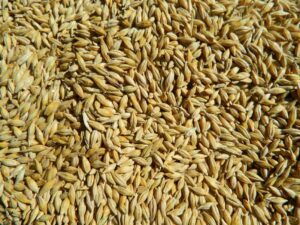
In September, the U.S. Department of Agriculture raised its forecast for feed grain production in Ukraine for the 2026/27 marketing year by 0.5 million metric tons—to 39.09 million metric tons, according to data from the WASDE report.
The USDA includes corn, barley, sorghum, oats, rye, millet, and mixed grains in this category. Since the corn production forecast for Ukraine remained unchanged at 31.8 million metric tons, production of other feed grains is estimated at approximately 7.29 million metric tons, compared with about 6.79 million metric tons in the August forecast.
The USDA explicitly states that in September it raised its estimate for barley production in Ukraine, as well as in Australia and Kazakhstan.
At the same time, the forecast for total feed grain exports from Ukraine has been lowered from 24.27 million metric tons to 23.77 million metric tons. Since corn exports are still estimated at 22 million metric tons, other feed grains account for about 1.77 million metric tons of exports, which is 0.5 million metric tons less than the August estimate.
Total domestic consumption of feed grains in Ukraine has been raised from 11.24 million metric tons to 11.34 million metric tons, while the forecast for ending stocks has been raised from 7.13 million metric tons to 8.63 million metric tons.
This figure of 8.63 million metric tons includes corn, for which the USDA estimates ending stocks at 5.46 million metric tons. Consequently, the remaining feed crops account for approximately 3.17 million metric tons of ending stocks.
The increase in production, coupled with a downward revision of the export forecast, suggests that grain supply in Ukraine’s domestic market is likely to rise in the 2026/27 marketing year.
Source: USDA WASDE-675, published on September 11, 2026: official USDA report

In its September forecast, the U.S. Department of Agriculture (USDA) raised its estimate for wheat production in Ukraine in the 2026/27 marketing year by 0.6 million metric tons compared to August—to 26 million metric tons—but at the same time lowered its forecast for Ukrainian exports by 1 million metric tons—to 12.5 million metric tons.
According to the September World Agricultural Supply and Demand Estimates (WASDE) report, published by the USDA on September 11, 2026, the upward revision of the harvest forecast is due to record-high yields of Ukrainian wheat as the harvest nears completion. In August, the agency had estimated production at 25.4 million metric tons.
The forecast for domestic consumption of Ukrainian wheat has been raised from 9.2 million metric tons to 9.5 million metric tons, including feed consumption—from 4.2 million metric tons to 4.5 million metric tons.
At the same time, the USDA significantly raised its forecast for Ukraine’s ending wheat stocks—from 4.8 million metric tons in the August forecast to 6.1 million metric tons in September. Imports are expected to total 0.1 million metric tons.
Thus, despite the improved harvest estimate, the additional production is not translating into a corresponding increase in exports and is largely contributing to a buildup in domestic stocks.
The USDA attributes the downward revision of Ukraine’s export estimate—as well as Russia’s—to slow shipment rates in August and logistical challenges in the Black Sea region due to the ongoing war.
Ukraine remains one of the largest suppliers of wheat to the global market. According to the USDA forecast, global wheat trade in the 2026/27 marketing year will total approximately 211.8 million metric tons.
Source: USDA WASDE-675 report dated September 11, 2026: USDA WASDE September 2026



