

Ivan Dyryv, mayor of the Dolyna City Territorial Community, was named the winner in the “Territorial Community Head of the Year” category of the 30th anniversary nationwide “Person of the Year 2025” program.
According to the program’s materials, Dyryv has led the Dolyna community since December 2020. According to the data provided, the community has a population of 48,600 people. The community’s development priorities include energy efficiency, infrastructure modernization, support for small and medium-sized businesses, the development of agricultural production, healthcare, and education, as well as attracting international partners and investments.
One of the community’s key areas of focus is energy sustainability. A number of energy-saving measures have been implemented in Dolyna, including the insulation of educational facilities, the modernization of heating systems, and the installation of solar collectors and solar power plants, some of which are equipped with energy storage systems.
According to information provided in the materials about the awardee, three solar power plants supply electricity to the municipal utility “Vodokanal.” One of them also sells surplus electricity.
The community is developing international cooperation, has 11 sister cities, and participates in cross-border and European projects. Other areas of economic development include industry, farming, and the production of eco-friendly products. In particular, the community grows blueberries on plantations covering a total area of about 100 hectares and is developing the production of artisanal ice cream made from goat’s milk.
Special attention is given to youth policy, tourism development, and the introduction of general aviation. The community operates the “Khyzhka” Youth Center.
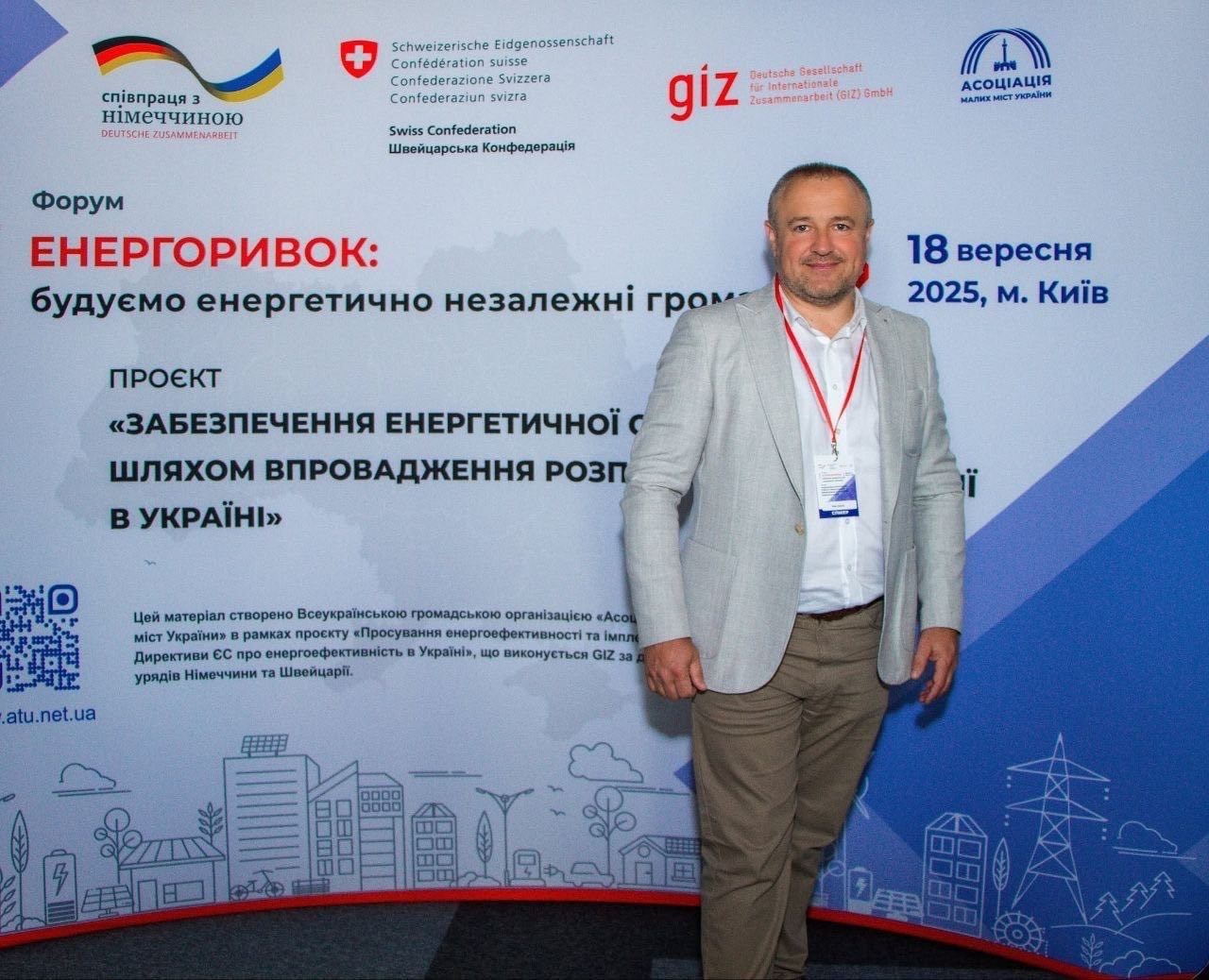
Ivan Dyryv is an electrical engineer by profession. In 2014–2015, he served in the military under mobilization and participated in combat operations. Before being elected mayor, he served for over 14 years as a council member in Dolyna and the surrounding district.
According to the program’s materials, Dolyna also became the first city in Ukraine to receive a European certificate for energy-efficient management.
The nationwide “Person of the Year” program honors representatives from various fields for their professional achievements and contributions to the country’s development. Ivan Dyryv’s victory recognizes his work as head of the local community and the implementation of local initiatives in the areas of energy efficiency, economic development, and international cooperation.
Open4Business is an information partner of the nationwide “Person of the Year 2025” program.
community, ENERGY EFFICIENCY, Ivan Dyryv, PERSON OF THE YEAR, Долина

Using artificial intelligence to manage building systems can reduce their overall energy consumption by 22% compared to traditional control systems, according to the results of a new study by Schneider Electric.
The company presented the study, “AI for Climate: Quantifying the Energy and Carbon Impact of Building Optimization,” on September 21 as part of Climate Week NYC 2026. Its findings show that artificial intelligence can use existing data on building operations to automatically manage energy consumption and reduce operating costs.
In particular, using artificial intelligence to optimize heating, ventilation, and air conditioning (HVAC) systems through an intelligent building management system delivers additional energy savings ranging from 7.2% to 12.7%.
In some simulated scenarios, total energy savings exceeded 200 MWh per year per building, and emissions reductions reached nearly 60 metric tons of CO₂ equivalent. According to Schneider Electric’s calculations, the volume of emissions avoided was more than 100 times greater than the carbon footprint of the AI system itself.
Based on current commercial rates in the markets used in the study, the potential cost savings ranged from $13,600 to $49,300 per year per building. The specific financial impact depends on the country, energy costs, building type, climatic conditions, and the existing management system.
The study was conducted using building energy modeling, with the results validated through real-world pilot projects. The analysis covered various operational scenarios for facilities in the United States, Australia, and India.
Artificial intelligence analyzes several types of information simultaneously—actual occupancy levels, weather forecasts, equipment status and performance, and other operational metrics. Based on this data, algorithms can adjust the operation of heating, ventilation, and air conditioning systems in real time.
“The future of building management will be determined by how effectively organizations can integrate and utilize data that was previously stored in siloed systems. The level of artificial intelligence integrated into existing business systems is capable of transforming complexity into intelligence, and intelligence into action, while simultaneously reducing emissions, cutting costs, and increasing efficiency,” said Pankaj Sharma, Executive Vice President of Software and Services at Schneider Electric.
A key finding of the study was the potential effectiveness of AI not only for large commercial complexes. Schneider Electric notes that buildings with an area of less than 100,000 square feet—or about 9,300 square meters—can also benefit significantly.
Previously, the implementation of complex energy management systems in relatively small facilities was often limited by cost and the need to maintain specialized staff. The use of AI allows for the automation of certain processes and makes intelligent energy management accessible to a wider range of facilities.
For Ukraine, improving the energy efficiency of buildings is particularly important due to damage to the energy infrastructure and the need to simultaneously rebuild the residential, commercial, and public building stock.
“For Ukraine, the issue of energy efficiency today is no longer just a matter of electricity costs or decarbonization. It is a matter of sustainable development. Every kilowatt-hour that a building can avoid consuming without compromising conditions for its occupants reduces the load on the energy system. Artificial intelligence makes it possible to move from simply tracking consumption to actively managing it—taking into account building occupancy, weather, and equipment operating modes to automatically select the most efficient scenario,” said Mykhailo Bubnov, CEO of Schneider Electric Ukraine.
According to him, this approach may be particularly promising for facilities with high and relatively complex energy consumption.
“In Ukraine, we see great potential in hospitals, universities, administrative and office buildings, shopping centers, hotels, and industrial facilities. But even more important is the ability to immediately implement modern management systems during renovations and new construction. If we incorporate digital infrastructure and energy efficiency right from the design stage, we can create buildings that consume less energy from the outset and are better able to adapt to changes in load and operating conditions,” emphasized Bubnov.
According to Schneider Electric Ukraine, the widespread adoption of smart building management systems has the potential to benefit more than just individual property owners. Reducing and more flexibly managing energy consumption across a large number of facilities can alleviate the strain on the power grid during periods of peak demand.
However, the results of international studies cannot be automatically applied to every Ukrainian facility. The actual savings potential depends on the condition of the building, its engineering systems, operating mode, climatic conditions, and the degree of automation.
The company notes that when restoring damaged facilities, it is advisable to implement digital management systems as early as the design phase. In this case, energy efficiency becomes an integral part of the building’s engineering infrastructure from the moment it is commissioned, rather than a separate, subsequent modernization.
Schneider Electric operates in the fields of energy technologies, electrification, automation, and digitalization of buildings, industry, data centers, infrastructure, and power grids. The company operates in over 100 countries worldwide.
artificial intelligence, BUILDING, ENERGY EFFICIENCY, Schneider Electric, UKRAINE, Бубнов
Life Cycle Assessment (LCA) of buildings is gradually evolving in Europe from a voluntary tool to a mandatory regulatory requirement, changing the approach to design, material selection, and calculating the true cost of a building over its entire service life.
This is discussed in an analytical report by the Ukrainian engineering and construction company Rauta, published on September 20, 2026.
According to data cited by the company from the United Nations Environment Programme’s Global Status Report for Buildings and Construction 2025–2026, the construction and operation of buildings account for nearly 50% of global material extraction and about 37% of global carbon dioxide emissions. This is drawing increased attention from investors and designers not only to the initial construction costs but also to a building’s environmental impact over decades of operation.
LCA assesses the environmental impact of a building or a specific material from the extraction of raw materials through production, transportation, construction, operation, repair, demolition, and final recycling or disposal.
The methodology involves analyzing global warming potential, energy and water consumption, emissions to air, water, and soil, as well as waste generation. In Ukraine, this approach is based, in particular, on the international standards ISO 14040 and ISO 14044 and the European standard EN 15978.
According to Rauta, applying LCA as early as the design stage allows architects and engineers to compare alternative solutions not only in terms of price or thermal insulation performance, but also in terms of their total carbon footprint.
This makes it possible to change materials or structural solutions even before construction begins, when making adjustments to the project is significantly less expensive. LCA can also improve a building’s rating during certification under international systems such as LEED, BREEAM, and DGNB.
Environmental Product Declarations (EPDs), which contain verified data on a specific material’s environmental impact, are a key component of such analysis. Integrating this information into a BIM model allows for the automatic recalculation of the environmental performance metrics for the entire project following design changes.
According to Rauta, LCA calculations utilize both universal software solutions such as SimaPro, Sphera LCA, and openLCA, as well as specialized construction systems like Athena Impact Estimator and Preoptima, along with Revit add-ins such as One Click LCA, Tally, and Beacon.
The application of this methodology also changes the criteria for selecting building materials. Preference is given to solutions with lower embodied carbon, a long service life, the ability to be repaired or replaced without interrupting the building’s operation, as well as the potential for reuse or recycling.
Rauta notes that, based on these criteria, steel load-bearing and enclosure structures can offer a number of advantages due to their lower weight, reduced costs for foundations and transportation, and the ability to recycle steel and reuse metal structures, profiled sheeting, sandwich panels, and facade elements.
Changes in European regulations are becoming a particularly important factor for the Ukrainian construction market.
The EU Directive on the Energy Performance of Buildings (EPBD) (EU) 2024/1275 provides for the gradual introduction of accounting for the total carbon footprint of new buildings throughout their entire life cycle. Starting in 2028, the Global Warming Potential (GWP) must be included in the energy performance certificates for large new buildings with an area exceeding 1,000 square meters, and starting in 2030—for all new buildings.
In Ukraine, there is currently no mandatory requirement to conduct LCA calculations, so the methodology is primarily used in projects involving international clients or funding.
At the same time, Order No. 168 of the Ministry of Community and Territorial Development, dated February 6, 2025, which establishes requirements for nearly zero-energy buildings, lays the groundwork for a gradual transition from assessing energy efficiency alone to a broader life-cycle assessment.
At Rauta, they believe that European integration and post-war reconstruction could serve as additional incentives for the widespread adoption of LCA in Ukraine, as international financial organizations and donors are increasingly focusing on projects that meet European standards for energy efficiency and sustainable construction.
Companies that begin using LCA even before mandatory regulatory requirements are introduced can gain advantages in the form of lower operating costs, better preparedness to attract international financing, and faster adaptation to future European regulations.
A separate tool is Life Cycle Costing (LCC), which assesses not the environmental impact but the total cost of owning a building over its life cycle. Combining LCA and LCC allows investors to simultaneously evaluate the environmental consequences and long-term financial costs of various design solutions.
Thus, the approach to building assessment is gradually shifting from minimizing initial construction costs to analyzing the total cost and environmental impact over decades of operation.
Original source: Rauta article “How Building Life Cycle Assessment Is Changing the Approach to Design and Material Selection,” published on September 20, 2026. Rauta – Building Life Cycle Assessment

Schneider Electric has implemented a large-scale infrastructure project: 26 Ukrainian cities have received state-of-the-art equipment to improve the energy efficiency and operational reliability of their district heating systems.
Completing the project before the start of the 2025/2026 heating season allowed heating utilities to better prepare for peak loads. Thanks to the equipment provided, the cities were able to navigate the heating season more smoothly, reducing the risk of unscheduled outages and improving the overall efficiency of their systems.
As part of the project, Schneider Electric supplied control cabinets for pumps and blower mechanisms, equipped with state-of-the-art variable-frequency drives, to 26 cities in Ukraine across the Chernihiv, Cherkasy, Lviv, Ivano-Frankivsk, Ternopil, Rivne, Vinnytsia, Khmelnytskyi, Zhytomyr, Odesa, Kirovohrad, Kherson, Sumy, Poltava, and Kyiv regions.
A key element of the project was the implementation of variable-frequency drives to regulate the operation of pumping equipment at heat supply companies, which significantly improved the energy efficiency of the systems, reduced electricity consumption, optimized operating costs, and extended the service life of the equipment.
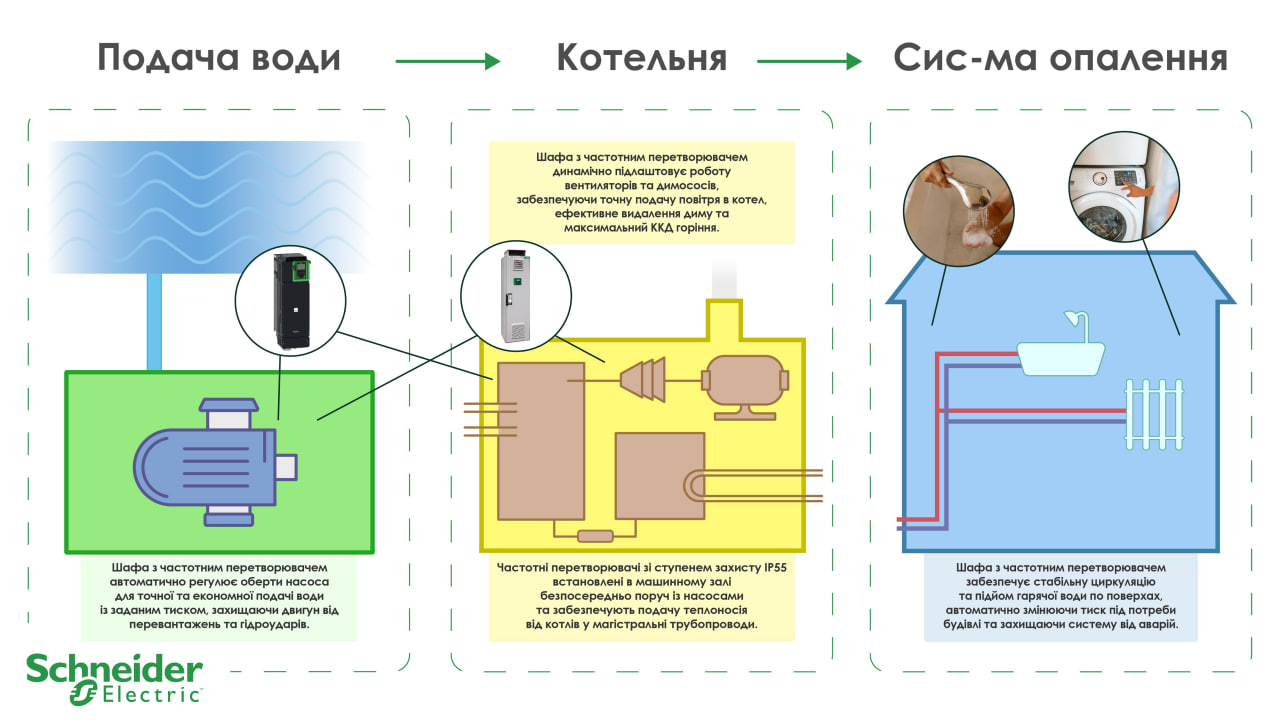
The solutions, based on Schneider Electric technologies, include fully equipped control cabinets for pumping equipment. The cabinets are protected against moisture and dust, allowing them to be installed directly in machine rooms, thereby reducing costs and simplifying installation.
The companies have gained tools for more flexible equipment management, reducing the load on the power grid, and improving the quality of heat supply services for consumers.
“This is not just about supplying equipment, but about a long-term investment in energy efficiency and the stability of heat supply in Ukraine. Already today, we are seeing how the implemented solutions are helping enterprises optimize energy consumption, improve system reliability, and lay the foundation for further modernization of the industry,” said Mykhailo Bubnov, CEO of Schneider Electric Ukraine.
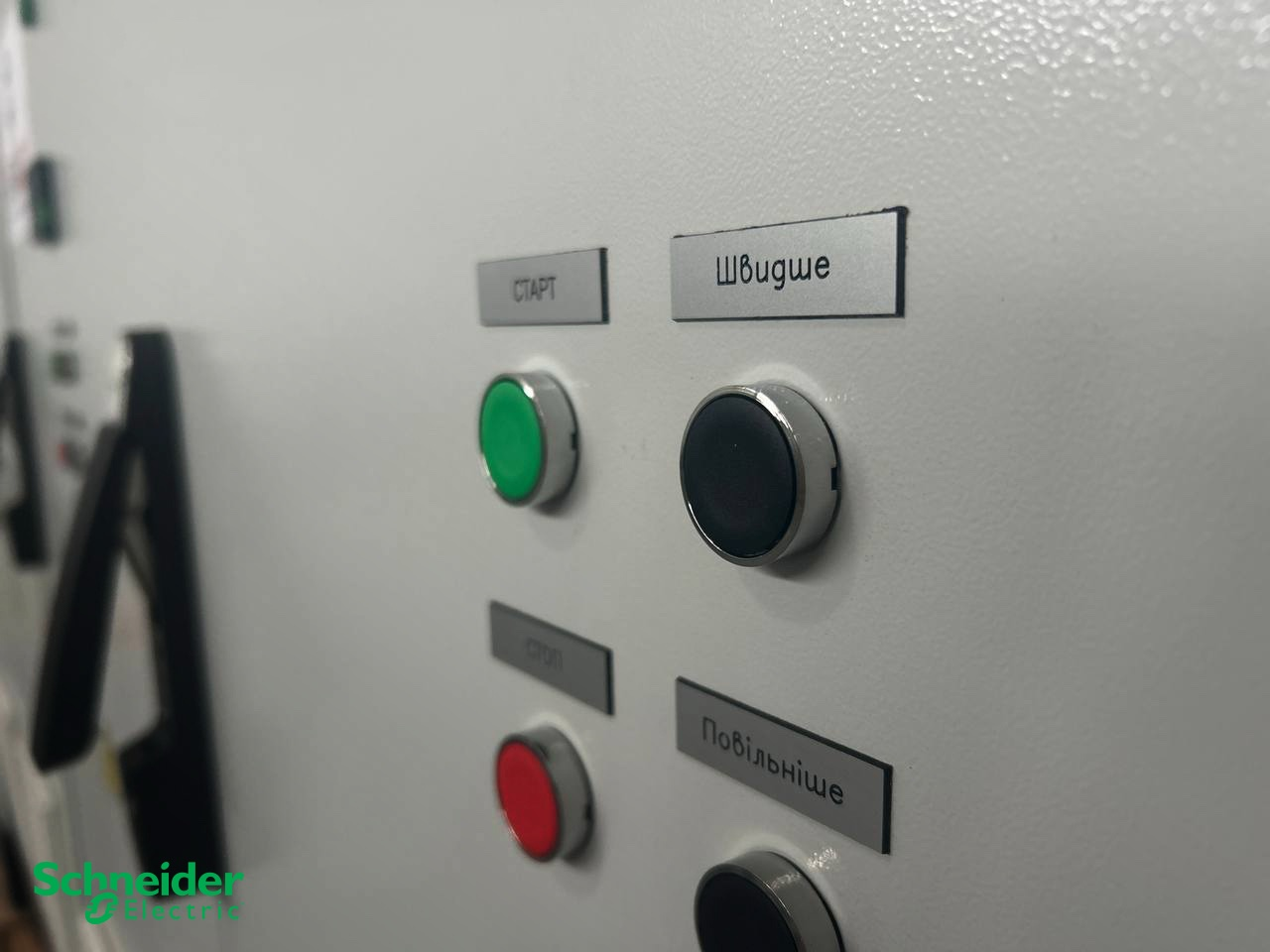
The completed project serves as an example of collaboration aimed at implementing modern energy-efficient technologies and improving the operational efficiency of Ukraine’s utility companies.
Schneider Electric is a global leader in energy technologies that enhances efficiency and promotes sustainable development through the electrification, automation, and digitalization of industry, business, and residential spaces. The company’s technologies enable buildings, data centers, factories, infrastructure, and power grids to function as open, interconnected ecosystems, increasing productivity, resilience, and environmental sustainability. The company’s portfolio includes smart devices, software-defined architectures, artificial intelligence-based systems, digital services, and professional consulting services. With 160,000 employees and 1 million partners in over 100 countries, Schneider Electric consistently ranks among the world’s most sustainable companies.
ENERGY EFFICIENCY, EQUIPMENT, HEATING, MODERNIZATION, Schneider Electric
The ‘Kametstal’ plant, part of the “Metinvest” mining and metallurgical group and established at the facilities of the Dniprovsky Metallurgical Plant (Kamenskoye, Dnipropetrovsk Oblast), has reduced electricity consumption in its converter shop by 6 kWh per ton of steel produced, from 27.4 to 21.4 kWh/t, through measures to reduce equipment load during periods between smelting runs.
According to the company, in particular, the downtime for unloading converter exhaust fan rotors has been cut in half. Operations have been organized on a rotational basis for each of the two converters, allowing equipment not involved in the current melt to be shut down and minimizing idle time, thereby ensuring a systematic reduction in electricity consumption.
In addition, electricity consumption by circulation pumps No. 1 and No. 2—which supply water to the converter gas cooling boilers on both operating converters—has been reduced by 1.2 kWh/t. As part of the investment project, frequency converters and modern controllers from Schneider were installed on CN-1 and CN-2. This allows for the automatic unloading of pumping equipment in accordance with the steelmaking process, thereby minimizing its electricity consumption between converter purges.
In the post-converter steel processing department, electricity consumption was reduced by 4.6 kWh/t through the phased implementation of effective engineering solutions to optimize metal heating. At the same time, the algorithm for automatic control of the metal heating process in the “furnace-ladle” unit was refined and improved by selecting the optimal combination of heating stages and heating rates.
Kametsal was established on the basis of PJSC Dniprovsky Coke Chemical Plant (DKCHZ) and PJSC Dniprovsky Metallurgical Plant (DMP). It is part of the Metinvest Group.
Metinvest is a vertically integrated group of mining and metallurgical enterprises. Its facilities are located in Ukraine—in the Donetsk, Luhansk, Zaporizhzhia, and Dnipropetrovsk regions—as well as in European countries. The holding’s main shareholders are the SCM Group (71.24%) and Smart Holding (23.76%). Metinvest Holding LLC is the management company of the Metinvest Group.

Dragon Capital plans to invest over $3 million in 2026 to develop energy-efficient solutions at its facilities, with a focus on solar power plants, Alexander Shmorgun, Director of Facility Management at Dragon Capital PM, told Interfax-Ukraine.
He emphasized that the company continues to increase equipment capacity not only in view of the upcoming heating season.
“All of our shopping centers have gas heating, except for the Piramida shopping center, where heating is provided by electricity. During emergency power outages this winter—which totaled about 300 hours in January—the temperature at Piramida dropped to 14 degrees on the coldest day of the month. “We purchased additional generators with sufficient capacity to power the entire heating system of this shopping center,” he said on the sidelines of UCSC TALKS on Wednesday in Kyiv.
According to him, backup equipment is now necessary even in the summer: “We have also installed additional generators at other retail and office properties. The new equipment enables the cooling system to operate, ensuring a comfortable environment for tenants and visitors.”
Among Dragon Capital’s shopping centers, a 1.5 MW rooftop solar power plant has already been installed at the Victoria Gardens shopping center in Lviv, and preparations are underway to install a 2.5 MW solar power plant at the Victoria Gardens shopping center in Kyiv (formerly the Karavan Outlet shopping center). In the near future, a solar power plant project is planned for the Piramida shopping center with a capacity of just 275 kW, due to roof space limitations.
“We are relying on generators; they are expected to meet 100% of the demand. In winter, the solar power plant can generate about 10–15% of its capacity for the shopping center’s needs, which reduces the load on the generators. In summer, these capacities are projected to cover a significant portion of the shopping center’s needs,” Shmorgun said.
A similar concept of energy independence is being implemented in logistics complexes and office buildings. In total, the company plans to invest over $3 million in this area by 2026.
Currently, Dragon Capital PM manages 25 commercial real estate properties, including 12 office properties, 6 retail properties (the Victoria Gardens shopping centers in Lviv and Kyiv, the Smart Plaza Obolon, Piramida, and Aladdin shopping centers, as well as the McDonald’s location in Lviv), and 7 logistics complexes. The entire portfolio spans over 570,000 square meters, making the company one of the largest players in the real estate market in Ukraine.



