
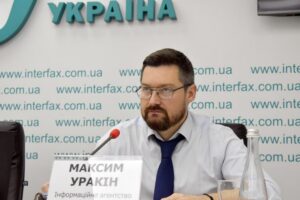
According to Interfax-Ukraine, Ukraine’s economy showed the first signs of emerging from a recession in the first half of 2026, however, the high foreign trade deficit, inflationary pressures, and the dependence of public finances on international aid remain key macroeconomic risks, according to the latest issue of “Economic Monitoring.”
As noted by Maksym Urakin, Ph.D. in Economics and founder of the Experts Club information and analytical center, after real GDP fell by 0.6% year-over-year in the first quarter, the economy returned to growth in April–June.
In the second quarter, Ukraine’s real GDP increased by 0.4% compared with the same period last year and by 0.3% compared with the previous quarter. At the same time, the National Bank’s forecast projected growth of the Ukrainian economy at only 1.3% for the full year of 2026.
“Positive factors in the first half of the year included the resumption of at least minimal GDP growth, the return of international reserves to above $50 billion, stability in the foreign exchange market, more consistent international financing, and the adaptability of Ukrainian businesses. The main risks remain the war, the state of the energy sector, high production costs, a labor shortage, weak commodity exports, and a growing trade imbalance. Ukraine has a significant supply of external liquidity, but it cannot replace domestic economic growth,” Urakin noted.
Consumer inflation slowed to 7.2% in June, while core inflation accelerated to 8.1%. The NBU’s discount rate remained at 15%.
At the same time, after four months of decline, Ukraine’s international reserves increased by 12.1% in June—to $51.27 billion. The NBU’s foreign exchange interventions remained substantial.
Foreign trade remains one of the main structural risks to the Ukrainian economy. From January through June 2026, merchandise imports totaled approximately $49.3 billion, while exports amounted to about $21 billion. Thus, the merchandise trade deficit reached approximately $28.3 billion.
Public finances also remain under significant strain. Revenues to the General Fund of the state budget for the first half of the year totaled nearly 1.9 trillion UAH, while expenditures amounted to approximately 2.23 trillion UAH.
Approximately 1.4 trillion UAH, or about 63% of all General Fund expenditures, was allocated to the security and defense sector. The volume of international grants totaled 569.6 billion hryvnia.
According to Urakin, one of the main objectives of economic policy should be to transform significant imports of equipment, international funding, and defense spending into a foundation for creating new domestic production capacity.
“The next phase of economic policy should consist not only of maintaining financial stability, but also of transforming imported equipment, international funds, and defense spending into new production assets. The foundation for long-term development should be energy self-sufficiency, the defense-industrial complex, agricultural processing, machine building, production localization, logistics, digital technologies, and exports of high-value-added products,” says the founder of Experts Club.
At the same time, the first half of the year revealed significant differences between the world’s largest economies and emerging markets.
The Chinese economy grew by 4.7% in the first six months of 2026, while India posted a growth rate of about 7.8% in April–June.
Turkey continued to combine economic growth with extremely high inflation. In the second quarter, its GDP increased by 2.3% year-over-year and by 1.1% compared to the previous quarter, while annual inflation in June remained near 32%.
Brazil showed more moderate growth: its GDP in the second quarter increased by 2% year-over-year and by 0.5% compared to the previous quarter. In the first half of the year, the country’s economy grew by 1.9%, and annual inflation in June slowed to 4.64%.
“Key emerging economies ended the first half of the year with very different growth patterns. China grew by 4.7%, but its second quarter was weaker than the first, and domestic consumption lags significantly behind industrial output and exports. India continues to grow by nearly 8%, driven by the size of its domestic market and investment. Turkey remains an example of how inflation exceeding 30% limits the quality of economic growth, while Brazil is showing more moderate growth with gradual control of inflation. For Ukraine, the main conclusion remains the same: long-term growth requires its own industrial, technological, and export base,” Urakin emphasized.
In his assessment, the first half of the year confirmed the viability of Ukraine’s macrofinancial stabilization model, but at the same time revealed its limitations.
“The return of GDP to modest growth and the replenishment of reserves are positive signs; however, the $28.3 billion merchandise trade deficit, high underlying inflationary pressures, and the budget’s dependence on external financing reveal the limits of this model. Only by developing its own production and export base will Ukraine be able to transition from an economy of wartime stabilization to a model of sustainable postwar growth,” concluded Maksym Urakin.
“Economic Monitoring” is a monthly analytical and statistical publication led by Maksym Urakin, Ph.D. in Economics. The publication analyzes the main macroeconomic indicators of Ukraine and the world’s leading economies, as well as trends in GDP, inflation, public finances, international reserves, foreign trade, and key risks to economic development.
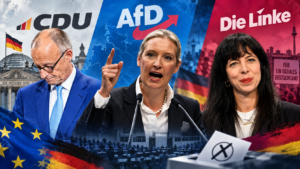
Regional elections in Germany on September 20 demonstrated the weakening positions of traditional parties and the further fragmentation of the German electorate: Alternative for Germany (AfD) won in Mecklenburg-Vorpommern, while in Berlin the Left took first place, according to an analysis by the Experts Club analytical center.
In Mecklenburg-Vorpommern, AfD received 38.2% of the vote, compared with 16.7% in the previous elections in 2021. The Social Democratic Party of Germany received 35.5%, the Left — 6.5%, and the Greens — 5.7%. Chancellor Friedrich Merz’s Christian Democratic Union received 4.9% and, for the first time in history, failed to cross the five-percent threshold in a state election.
The CDU received 13.3% in the previous election in this state, meaning it lost more than 8 percentage points of support. According to the preliminary distribution of seats, AfD receives 32 seats, the SPD — 29, while the Left and the Greens receive five each. Since the other parliamentary forces rule out a coalition with AfD, the voting result alone does not determine the composition of the future state government.
In Berlin, the results demonstrated a different political configuration. The Left received 25.7% of the vote, compared with 12.2% in the previous election. The CDU came second with 18.8%, AfD received 16.3%, the Greens — 14.3%, and the SPD — 12.1%. The incumbent coalition of the CDU and the Social Democrats lost its parliamentary majority.
Experts Club points out that the September 20 results continued a trend that emerged at the beginning of the month. On September 6, AfD took first place in the election in Saxony-Anhalt with 43.8%, while the CDU received 17.2%. In 2021, the CDU had 37.1% in this state, while AfD had 20.8%.
Thus, according to Experts Club, the results of the September elections should not be reduced exclusively to a movement of the German electorate in a single ideological direction. In two eastern states, AfD received the greatest support, while in Berlin the Left strengthened significantly. This indicates that some voters of traditional parties are shifting toward different alternative political forces depending on the region and the structure of local problems.
According to Infratest dimap, in Mecklenburg-Vorpommern AfD managed to mobilize around 66,000 citizens who had previously not voted, as well as attract around 48,000 former SPD voters and approximately 32,000 former CDU supporters.
At the same time, the SPD’s result in this state is largely associated with the personal support enjoyed by Minister-President Manuela Schwesig. Almost half of Social Democratic voters surveyed after the election said that they would not have supported the party without her. This demonstrates the importance of the personal ratings of state-level politicians even when their parties have weaker positions at the federal level.
A separate problem for the CDU was voters’ perception of the party’s economic competence. Only 13% of respondents in Mecklenburg-Vorpommern named the CDU as the political force best able to solve economic problems. Some 89% of respondents also agreed with the statement that before the federal election the party had promised a great deal but delivered little. These results characterize one specific federal state and cannot automatically be applied to Germany as a whole.
In Berlin, one of the central factors of the campaign was the housing issue. The Left focused attention on rental costs, the shortage of affordable housing and regulation of the activities of large property owners. At the same time, migration and security remained among the important issues for AfD voters.
“These elections show not a linear movement of German society in one ideological direction, but a fragmentation of the electorate. In Mecklenburg-Vorpommern, protest is concentrated around AfD, while in Berlin the Left became the main recipient of the protest vote and the vote of young urban residents. In other words, the common denominator is not ideology, but the declining ability of traditional parties to keep different groups of voters within the former model of the political center,” said sociologist and co-founder of the research company Active Group Oleksandr Poznii.
According to him, the mobilization of citizens who had not previously participated in elections is particularly illustrative. This may indicate not only a redistribution of the already established electorate, but also an expansion of the base of individual political forces.
Poznii also drew attention to the decline in confidence among some voters in the CDU’s traditional economic competence. In his view, for centrist parties the coming months will be associated primarily with the need to restore the confidence of different groups of voters, rather than only with personnel discussions.
Federal dynamics also demonstrate changes in party support. In the September ARD-DeutschlandTrend conducted by Infratest dimap from August 31 to September 2 among 1,319 voters, AfD was supported by 27% of respondents, the CDU/CSU by 21%, the Greens by 15%, the SPD by 13%, and the Left by 12%.
At the same time, state elections do not directly change the composition of Germany’s federal government or Berlin’s foreign policy. However, they influence the domestic political debate on the economy, budget spending, energy, migration and other issues.
The preliminary results of the elections in Mecklenburg-Vorpommern and Berlin were released on the night of September 21. The final results are to be approved after the electoral records are checked.
The material was prepared on the basis of a study by the Experts Club analytical center, “AfD won in Mecklenburg, the Left in Berlin: regional elections increased pressure on Germany’s traditional parties,” published on September 21, 2026. Experts Club study on Experts.news
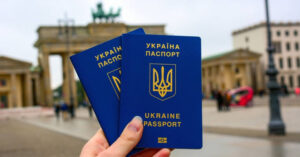
According to Experts Club, Ukrainian citizens received 335,100 first-time residence permits in European Union countries in 2025, ranking first among citizens of all non-EU countries, according to Eurostat data.
Ukrainians accounted for 8.7% of all first-time residence permits issued in the EU to third-country nationals. Citizens of India ranked second with 227,600 permits, or 5.9%, while Morocco ranked third with 202,100 permits, or 5.2%.
Compared to 2024, the number of first-time residence permits issued to Ukrainians increased by 13.6%. A year earlier, there were about 295,000. Thus, despite the continuation of the temporary protection mechanism, the flow of Ukrainians who are transitioning to or initially applying for other grounds for legal residence in the EU remains significant.
The main reason Ukrainians obtained their first residence permit was employment. According to Eurostat, approximately two-thirds of the permits issued to Ukrainian citizens in 2025 were related to employment.
Poland remained the primary destination: it accounted for 72% of all first residence permits issued to Ukrainians in the EU.
At the same time, Eurostat specifically notes that these figures do not include individuals benefiting from temporary protection in connection with Russia’s full-scale invasion of Ukraine. Temporary protection is accounted for in separate statistics; therefore, the 335,100 permits reflect other grounds for residence—primarily work, family, education, and other categories.
In total, EU countries issued approximately 3.9 million first-time residence permits to third-country nationals in 2025.
EU, Eurostat, EXPERTS CLUB, MIGRATION, RESIDENCE PERMIT, UKRAINE
Direct funding for security and defense in Ukraine’s draft 2027 state budget amounts to approximately UAH 4.855 trillion, or 66.8% of all planned expenditures, reports the Experts Club information and analytical center.
Including UAH 30 billion in state guarantees, the government declares a total defense resource of UAH 4.885 trillion. Compared with the 2026 plan, this represents an increase of approximately UAH 517.8 billion, or 11.9%.
Most of the increase is allocated to military pay and salaries with related charges, which rise from UAH 1.454 trillion to UAH 1.792 trillion. Meanwhile, the comparable allocation for weapons and military equipment in the Finance Ministry’s presentation remains virtually unchanged at UAH 2.299 trillion, compared with UAH 2.297 trillion in 2026.
Civilian sectors will also receive nominal funding increases. Social spending rises to UAH 540.3 billion, education to UAH 328.5 billion, and healthcare to UAH 292.5 billion. However, part of these increases will be absorbed by projected average annual inflation of 8.6%.
The draft budget also relies on several tax measures that still require legislative approval. In particular, the calculations include an increase in the standard VAT rate from 20% to 21%, expected to generate an additional UAH 58.7 billion. Four proposed tax measures together are expected to raise UAH 117.3 billion.
The macroeconomic forecast assumes real GDP growth of 1.3% in 2027, average annual inflation of 8.6%, and an average exchange rate of UAH 47.1 per US dollar, compared with an expected UAH 44.4 in 2026. The year-end 2027 exchange rate is projected at UAH 48.3 per dollar.
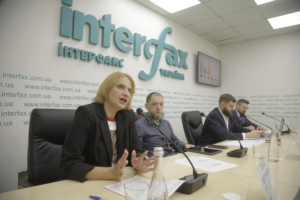
Canada ranked first in terms of the balance of positive and negative attitudes among Ukrainians among Ukraine’s 50 largest trading partners, while China, which leads in trade turnover, received the lowest indicator, and attitudes toward Poland deteriorated significantly, according to the results of a study by Active Group and the Experts Club information and analytical center.
According to the published ranking, the balance of positive and negative assessments of Canada amounted to plus 73.8 percentage points. It was followed by Sweden – plus 70.6 p.p., the Netherlands – 69.7 p.p., Finland and Norway – 69.3 p.p. each, France – 69.1 p.p., Italy – 67.1 p.p., Lithuania – 65.9 p.p., Switzerland and the United Kingdom – 65.6 p.p. each.
This indicator is the difference between the shares of positive and negative responses. In particular, 76.3% of respondents have a positive attitude toward Canada, 2.5% have a negative attitude, and 19.2% have a neutral attitude.
The worst balance was recorded for China – minus 25.4 p.p.: 18.2% of respondents assess it positively, 43.6% negatively, and 33.9% neutrally. India also has a negative indicator – minus 14.3 p.p., Hungary – minus 12.7 p.p., and Lebanon – minus 9.2 p.p.
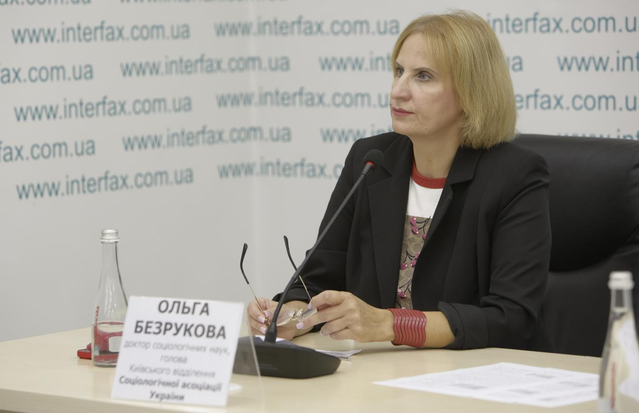
Doctor of Sociological Sciences and head of the Kyiv branch of the Sociological Association of Ukraine Olga Bezrukova called China an illustrative example of the gap between the scale of economic interaction and the country’s public image.
“We saw that China is Ukraine’s largest economic partner in terms of total trade turnover, but this is in no way converted into a positive public image. This shows that Ukrainian citizens clearly distinguish between the pragmatism of economic interaction and the overall assessment of a state. Economic dependence and interaction do not equal public sympathy for this country,” she emphasized at a press conference at the Interfax-Ukraine agency on Tuesday.
One of the most noticeable changes was the deterioration in attitudes toward Poland. While in March 2026 the balance of assessments stood at plus 41.7 p.p., in August positive and negative responses were practically equal, with a slight predominance of negative ones. A positive attitude was expressed by 34.6% of respondents, a negative one by 37%, and a neutral one by 25.4%.
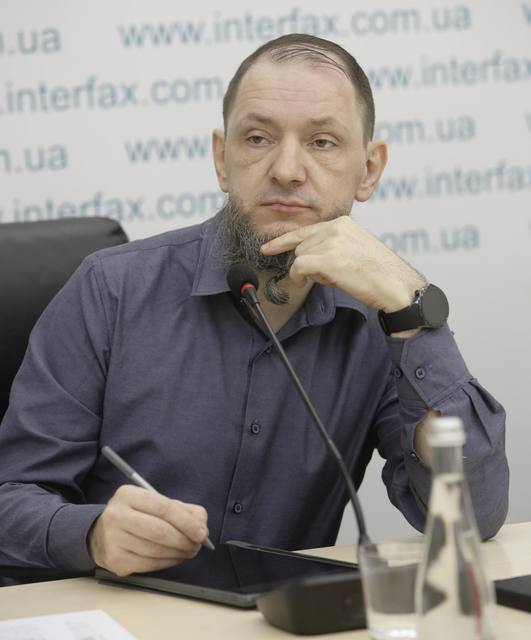
“At the beginning of the invasion, Poland was perceived almost as the main partner. We asked about the rapprochement between Ukraine and Poland, political and economic, even about uniting into some kind of common union, and we saw enormous positive results. But here we see: Poland seemingly still remains a key partner, but the idea of unification has already been forgotten, and we see stable negativity,” said Active Group founder Andriy Yeremenko.
He linked the deterioration in assessments to the position of part of the Polish authorities, which he considers anti-Ukrainian.
At the same time, the balance of attitudes toward Hungary improved from minus 33.6 p.p. in March to minus 12.7 p.p. in August, although negative assessments still prevail. For the United States, the indicator rose from plus 19.4 to plus 38.4 p.p. Some 55% of respondents have a positive attitude toward the United States, 16.6% a negative attitude, and 25.6% a neutral attitude.
When asked who contributes most to achieving peace in Ukraine, 44.6% of respondents named European Union countries, 25.2% the United States, 23.3% the United Kingdom, 4.1% China, 1.8% India, and 1% Brazil. Regarding priority development of trade and economic relations, 69.9% chose EU countries and the United Kingdom, 11.9% the United States, and 8.4% China.

According to Bezrukova, assessments of the U.S. role in achieving peace remained relatively stable throughout the three waves of the study.
“General sympathy toward a country and an assessment of its functionality at the international level are related but not identical things. Images of countries are multidimensional. A person may change their emotional attitude toward a state but continue to recognize its international weight,” the sociologist explained.
Another model, she said, is demonstrated by India: 48.3% of respondents express a neutral attitude toward it, but among formed assessments negative ones prevail – 31.5% versus 17.2% positive.
The economic indicators were presented by Experts Club founder, deputy director of the Interfax-Ukraine agency and PhD in Economics Maksym Urakin. According to State Customs Service data cited by him, in the first half of 2026 Ukraine’s trade turnover amounted to $70.3 billion, exports to $21 billion, and imports to $49.3 billion. The negative balance of trade in goods reached $28.3 billion.
“If we compare this with the first half of 2025, there was also an imbalance then, but now exports have increased by approximately 5%, while imports have risen by almost 30%. That is, the deficit increased by more than $10 billion over the year. Therefore, it is very important for us to analyze our main partners,” he emphasized.
According to the materials presented, trade turnover with China in January-June amounted to about $14.68 billion. Ukraine exported $778 million worth of goods to China and imported $13.90 billion, forming a deficit of approximately $13.12 billion. Poland remained the largest buyer of Ukrainian goods, with a volume of $2.38 billion. Türkiye ranked second among export markets with $1.78 billion, and Italy third with $1.28 billion.
In terms of total trade volume, China is followed by Poland – $7.05 billion, Türkiye – $4.90 billion, Germany – $4.48 billion, and the United States – $3.07 billion. Yeremenko highlighted Türkiye as an example of a combination of significant trade turnover and predominantly positive perception: 52.3% of respondents have a favorable attitude toward it, while 7.4% have a negative attitude.
Urakin separately drew attention to partners with which trade provides Ukraine with a positive balance. In the first half of the year, the largest was with Spain – $578.1 million, Egypt – $527.1 million, and Moldova – $467.2 million. They were followed by Algeria – $309.2 million, the Netherlands – $221.5 million, and Lebanon – $220.5 million. Libya, Tunisia, Iraq, and Yemen also entered the top ten.
At the same time, neutral attitudes prevail toward a number of these partners. Egypt is assessed neutrally by 61.3% of respondents, Algeria by 65.8%, and Tunisia by 67.3%. Participants in the press conference linked this to insufficient awareness among Ukrainians about these countries and emphasized the need for more active economic and public diplomacy.

“It is necessary to develop not only general awareness better. First of all, business associations, the Ministry of Economy and the Ministry of Foreign Affairs need to work to develop bilateral relations and improve the balance. In conditions where Ukraine already lacks financing and we live, essentially, at the expense of external borrowing, cooperation should be expanded with countries where we can have a positive balance,” said Active Group director Oleksandr Pozniy.
Urakin recommended that embassies accredited in Ukraine ensure full communication in the Ukrainian language, openness to the media, and regular reporting on the results of cooperation.
“The first recommendation is to regularly show concrete deeds, concrete actions, the presence here of foundations, embassies, teams, diplomats in the humanitarian sphere and in science. Second, to be open to questions and requests from the media and the public. We also need to use our sociology to draw conclusions and cement our relations, primarily trade relations,” he added.
This is the third wave of the study; the previous ones were conducted in August 2025 and March 2026. The survey was conducted in August 2026 using self-completed online questionnaires in the SunFlowerSociology panel. A total of 800 Ukrainian citizens aged 18 and over were surveyed. According to the organizers, the sample is representative by age, gender and region, and the stated maximum theoretical statistical margin of error at a 95% confidence level is 3.5%.
ACTIVE GROUP, CANADA, CHINA, EXPERTS CLUB, POLAND, PUBLIC OPINION, TRADE, UKRAINE, UNITED STATES
In January–August 2026, Ukraine increased imports of aluminum and aluminum products by 31.7% compared with the same period last year, reaching $453.439 million.
According to statistics released by the State Customs Service of Ukraine, aluminum and aluminum product imports totaled $64.792 million in August.
Exports of aluminum and aluminum products in January–August of this year rose by 25.3% compared to the same period last year, reaching $123.934 million; in August, they totaled $14.369 million.
As previously reported, in 2025 Ukraine increased imports of aluminum and aluminum products by 15.3% compared to 2024, reaching $514.098 million. Exports of aluminum and aluminum products in 2025 rose by 22.9% to $152.919 million.
Aluminum is widely used as a structural material. The main advantages of aluminum are its light weight, formability, corrosion resistance, high thermal conductivity, and the non-toxic nature of its compounds. In particular, these properties have made aluminum extremely popular in the production of cookware, aluminum foil in the food industry, and for packaging. The first three properties have made aluminum the primary raw material in the aviation and aerospace industries (though it has recently been displaced by composite materials, primarily carbon fiber). After construction and packaging production—aluminum cans and foil—the energy sector is the largest consumer of this metal.
For a more detailed overview of global aluminum production from 1970 to 2024, watch the video on the Experts Club YouTube channel.
ALUMINUM, EXPERTS CLUB, EXPORTS, IMPORTS, METALLURGY, UKRAINE



