

Ukraine earned $4.46 billion from IT services exports in January–August 2026, with the technology sector accounting for about 12% of the country’s total exports of goods and services, according to data from the National Bank of Ukraine analyzed by the Experts Club research and analysis center.
Thus, approximately one in every eight dollars of Ukraine’s export revenue comes from IT services.
Ukraine’s total exports of goods and services for the first eight months of 2026 amounted to $35.8 billion and remained virtually unchanged compared to the same period last year.
The bulk of foreign exchange earnings continues to come from goods exports—$24.9 billion, or about 70% of the total. Exports of services totaled $10.9 billion, of which $4.46 billion came from IT.
Thus, with services accounting for about 30% of the country’s total exports, the IT sector alone accounts for approximately 12% of Ukraine’s total export revenue.
As noted by analysts at Experts Club, these figures demonstrate the special role of IT in Ukraine’s foreign trade. Unlike goods exports, technology services are virtually independent of maritime logistics, border capacity, and the physical transportation of products.
Furthermore, IT remains the largest component of Ukraine’s service exports. Computer services account for about 41% of the service sector’s total export revenue.
From January through August, Ukraine’s service exports reached $10.9 billion, an increase of approximately 6% compared to the same period in 2025. IT exports grew by 4% to $4.46 billion.
Despite this recovery, the IT sector has not yet returned to its 2022 all-time high. IT service exports for the first eight months of 2026 remain approximately 9% below the figure for the corresponding period in 2022.
Thus, Ukrainian IT exports are simultaneously demonstrating a recovery from the decline of previous years and maintaining an exceptionally significant role in generating the country’s foreign exchange revenue.
Data source: National Bank of Ukraine. Calculations of the export structure are based on NBU data published by Opendatabot.
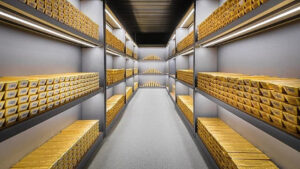
In August 2026, central banks around the world increased their official gold reserves by a total of 39 metric tons in net terms, with the People’s Bank of China emerging as the largest buyer, according to an analysis by Experts Club based on data from the World Gold Council (WGC) published on October 6.
According to the WGC, the main buyers of gold in August were:
China — 20.2 metric tons
Poland — 7.8 metric tons
Uzbekistan — 7.8 metric tons
Kazakhstan — 7.4 metric tons
Turkey — 2.9 metric tons
Czech Republic — 1.7 metric tons
Bolivia—about 1 metric ton
Ghana—about 1 metric ton
China continued to purchase gold for the 22nd consecutive month. In August, the People’s Bank of China increased its gold reserves by approximately 20.2 metric tons—the largest monthly increase since October 2023.
From January through August, China purchased about 80 metric tons of gold. The country’s official gold reserves reached approximately 2,387 metric tons, accounting for about 9% of China’s total international reserves.
Despite China’s lead in August alone, Poland remains the largest buyer of gold since the beginning of 2026. The National Bank of Poland purchased about 7.8 metric tons in August and 98 metric tons since the start of the year. Poland’s gold reserves have grown to approximately 648 metric tons, approaching its stated target of 700 metric tons.
Uzbekistan increased its reserves by approximately 7.8 metric tons. Since the beginning of the year, the country has purchased about 50 metric tons of gold, bringing its total gold reserves to approximately 439 metric tons. Gold accounts for about 90% of Uzbekistan’s reserves.
Kazakhstan purchased about 7.4 metric tons of gold in August, bringing its total purchases since the beginning of the year to approximately 36 metric tons. The country’s gold reserves reached about 377 metric tons, or 79% of its international reserves.
Turkey returned to net purchases after three months of sales, acquiring about 2.9 metric tons. However, since the beginning of 2026, the country has remained a major net seller—the total reduction in reserves amounts to about 82 metric tons, with the bulk of sales occurring in the first quarter.
The Czech National Bank purchased about 1.7 metric tons, thereby extending its streak of net gold purchases to 42 consecutive months. Since the start of the year, the Czech Republic has added about 14 metric tons, increasing its reserves to 86 metric tons.
Overall, from January through August 2026, central banks worldwide reported net purchases of approximately 170 metric tons of gold.
The World Gold Council notes that the composition of the largest buyers remains relatively stable. This indicates that central banks are purchasing gold primarily as part of their long-term reserve management policies, while monthly fluctuations are linked to the timing of program implementation, market conditions, and individual countries’ liquidity needs.
For comparison: in July, central banks worldwide purchased 23 metric tons of gold on a net basis. Thus, in August, the volume of net purchases increased by approximately 70% month-over-month.
Official source: World Gold Council, Central Bank Gold Statistics, published on October 6, 2026.

Retail remains the most popular sector for starting a small business in Ukraine—in the first nine months of 2026, 60,300 new sole proprietorships were registered in this sector, according to Opendatabot data based on the Unified State Register and an analysis by the Experts Club think tank.
Retail accounts for more than a quarter of all new sole proprietorships registered in Ukraine since the beginning of the year. In total, 222,300 sole proprietorships were established from January through September.
Computer programming was the second most popular sector, with 16,700 new sole proprietorships. Wholesale trade showed virtually the same result—16,600
Approximately 10,700 new entrepreneurs were registered in the education sector. The same number of sole proprietorships began operations in the food and beverage sector, which includes, in particular, various formats of food service.
However, the most popular business sectors also lead in the number of closures.
In retail trade, 49,400 sole proprietorships ceased operations over the nine-month period. Thus, despite the large number of closures, the net increase in the number of entrepreneurs in the sector amounted to approximately 10,900.
The situation was different in computer programming. With 16,700 new registrations, 17,100 sole proprietorships ceased operations. Thus, based on the absolute figures published by Opendatabot, the number of closures in the IT segment exceeded the number of new openings by approximately 400.
In wholesale trade, the situation remains positive: with 16,600 new sole proprietorships, 11,700 closed, resulting in a net increase of approximately 4,900 entrepreneurs.
In the food service sector, approximately 10,700 new sole proprietorships were registered, with 7,900 closures—a positive difference of about 2,800.
In total, over the first nine months of 2026, 222,288 sole proprietorships opened in Ukraine, while 155,645 closed. The number of new entrepreneurs exceeded the number of those who ceased operations by 66,643.
Source: Opendatabot — “This year, 66,000 more sole proprietorships were opened than closed”.
entrepreneur, EXPERTS CLUB, IT, Sole proprietorship, TRADE, UKRAINE

A new system of transport routes is taking shape across Eurasia, aimed at expanding connections between China, Central and South Asia, the Gulf states and Europe. Key projects include the trans-Afghan CASA corridor, the Middle Corridor across the Caspian Sea, the China–Kyrgyzstan–Uzbekistan railway, Iraq’s Development Road and the IMEC economic corridor, the Experts Club information and analytical center reports.
At the end of September 2026, Kazakhstan, Uzbekistan and the UAE agreed to study a railway route linking Kazakhstan, Uzbekistan, Afghanistan and Pakistan with access to the ports of Karachi and Gwadar. CASA’s preliminary potential has been estimated at up to 10 million tonnes of freight, although the project remains at the technical and economic assessment stage.
The Middle Corridor is already operating through Kazakhstan, the Caspian Sea, Azerbaijan and Georgia. According to the World Bank, a combination of infrastructure investment and reforms could increase trade volumes along the route by up to four times by 2040 and reduce delivery times by roughly two-thirds compared with 2023. Required investment in core and supporting infrastructure is estimated at more than $55 billion.
The China–Kyrgyzstan–Uzbekistan railway is expected to strengthen eastward connectivity, while Iraq’s Development Road is designed to link the Grand Al-Faw port with Türkiye and the European transport network. IMEC, meanwhile, is intended to connect India, the Gulf and Europe through combined maritime and rail links.
For Ukraine, the restructuring of Eurasian logistics offers an opportunity to expand access to Central Asian and Chinese markets through the Black Sea, the Caucasus and the Caspian Sea. Ukraine’s 2026 government action plan includes negotiations on integrating Ukrainian ports into the Trans-Caspian route.
“Ukraine should not simply watch this transformation from the sidelines. It should seek the physical and tariff integration of its ports and railways into the new routes,” Experts Club founder Maksym Urakin said.

People who regularly consume more coffee may have a lower proportion of total and visceral fat and, at the same time, greater muscle mass, according to the results of a new Finnish study. In men, higher coffee consumption was also found to be associated with characteristics of testosterone levels and more favorable indicators of glucose and insulin metabolism.
The study was published in the scientific journal European Journal of Nutrition. The researchers used data from the large-scale Northern Finland Birth Cohort 1966 project, whose participants have been followed since birth. The analysis included 2,264 people aged 46.
The participants were divided according to their habitual coffee consumption. Seventy people practically did not consume coffee, 296 drank one to two cups a day, 822 drank three to four cups, and another 1,076 participants drank five or more cups daily.
The researchers found an interesting pattern: body mass index did not differ significantly between the groups, but body composition did.
Participants who consumed more coffee had, on average, a lower percentage of body fat, lower total fat mass and a smaller area of visceral fat. At the same time, they had greater skeletal muscle mass. Differences in body composition were observed in both men and women.
“This study is interesting primarily because it demonstrates the limitations of the familiar BMI indicator. Two people may have practically the same body mass index but a completely different ratio of fat to muscle tissue. In the Finnish sample, it was body composition, rather than BMI, that was associated with the level of coffee consumption,” notes Sviatoslav Morozov-Leonov, Doctor of Biological Sciences and head of a division at the Experts Club analytical center.
The researchers separately studied hormonal indicators. In men, each additional cup of coffee per day was statistically associated with an increase in total testosterone of approximately 0.29 nmol/L and in bioavailable testosterone of approximately 0.08 nmol/L. The level of sex hormone-binding globulin — SHBG — also increased. These associations persisted after statistical adjustment for BMI, education, smoking, physical activity and alcohol consumption.
However, the hormonal results turned out to be considerably more complex than the phrase “coffee increases testosterone” might suggest.
Along with higher total and bioavailable testosterone, greater coffee consumption in men was associated with lower free testosterone and a lower free androgen index. In women, the researchers found no statistically significant association between the amount of coffee consumed and total or bioavailable testosterone. At the same time, women also had higher SHBG and lower free androgen indicators.
“Therefore, it would be incorrect to conclude from the study that five cups of coffee a day increase testosterone in men. The hormonal picture is much more complex: total testosterone increased, but free testosterone decreased at the same time. The authors themselves speak of a specific hormonal profile rather than a proven stimulating effect of coffee,” Morozov-Leonov emphasized.
Another interesting result is related to metabolism.
In men with higher coffee consumption, the researchers identified a more favorable profile of glucose and insulin indicators. In representatives of both sexes, coffee consumption was also inversely correlated with blood concentrations of branched-chain amino acids — BCAAs.
Elevated BCAA concentrations have been associated in a number of previous studies with insulin resistance and an increased risk of metabolic disorders. The authors of the Finnish study believe that the detected changes may help to better understand the association between coffee consumption and metabolic health observed in other studies.
At the same time, the scientists specifically warn that the results do not prove a cause-and-effect relationship.
The study was cross-sectional: coffee consumption, body composition, hormones and metabolic indicators were assessed essentially during the same period of time. Therefore, it is impossible to determine whether coffee led to the observed differences or whether people with a particular lifestyle and metabolic profile simply consumed coffee more often.
In addition, the participants self-reported the amount of coffee they consumed, while the group of people who did not consume coffee at all was small — only 70 people out of 2,264. The Finnish population is also relatively homogeneous, so the results cannot automatically be extrapolated to the populations of other countries.
“This is a good example of how nutrition studies should be read. An association between a product and a particular health indicator does not yet mean that the product is the cause of that effect. Practical recommendations require prospective studies and, most importantly, randomized controlled trials,” says Experts Club representative Morozov-Leonov.
The authors also do not recommend increasing coffee consumption on the basis of the results obtained. They point to the need for further research, including intervention studies in humans, which would make it possible to establish whether a causal relationship exists and which specific biologically active components of coffee may be responsible for the observed associations.
Coffee contains more than a thousand different compounds, so the potential mechanism of action remains uncertain. The researchers consider hormonal and metabolic changes to be one of the possible directions for further study of coffee’s effects on health.
“The most interesting result of the work is not the assertion that ‘the more coffee, the better.’ The study shows a much more complex relationship between habitual diet, body composition, hormones and metabolism. Testing these mechanisms in long-term and controlled studies should be the next stage,” Sviatoslav Morozov-Leonov summarized.
The study Associations of habitual coffee intake with testosterone and cardiometabolic markers: the Northern Finland Birth Cohort 1966 study. The analysis included 2,264 participants from the Northern Finland Birth Cohort 1966. The authors declared no conflict of interest.

The intensification of Russian attacks on Ukraine’s production, logistics, retail and digital facilities is increasingly affecting not only individual companies, but also the growth potential of the economy as a whole. The destruction of enterprises and critical business infrastructure leads to downtime, disruptions in supply chains, higher logistics costs and the need to direct investment resources toward recovery instead of development, reports the Experts Club information and analytical center.
According to the UN Human Rights Monitoring Mission in Ukraine, in August 2026 alone, at least 32 attacks on facilities belonging to Fozzy Group, Epicentr, Nova Poshta, Rozetka, Aurora and Varus were recorded, compared with 11 in July. This figure concerns only the specified group of companies and does not reflect the total number of attacks on Ukrainian businesses.
Warehousing and transport logistics remain among the most vulnerable segments. In August, large distribution and logistics complexes belonging to Rozetka, NOVUS, MTI Group and EVA were destroyed or seriously damaged as a result of attacks. On August 31, a strike on a Nova Poshta terminal in Odesa destroyed a key sorting line. In September, production, warehouse and digital facilities of a number of companies were also damaged.
Experts Club founder and Candidate of Economic Sciences Maksym Urakin notes that the economic effect of such attacks significantly exceeds the book value of the destroyed property.
“When a distribution center, factory or data center is destroyed, economic losses cannot be calculated solely on the basis of the value of the facility itself. Along with it, part of production output temporarily disappears, supplies to dozens or hundreds of other companies are disrupted, inventories are lost, logistics and insurance costs increase, and businesses are forced to create backup capacity,” Urakin noted.
According to the joint RDNA5 assessment by the Government of Ukraine, the World Bank, the European Commission and the UN, as of the end of 2025, direct damage to Ukraine from the war amounted to $195.1 billion, while recovery needs over the next decade were estimated at $587.7 billion. Direct damage to trade and industry amounted to $19.2 billion, about 85% of which was attributable to industry. At the same time, these estimates do not yet take into account the new destruction of 2026.
The deterioration of the situation has already affected macroeconomic forecasts. In September, the European Bank for Reconstruction and Development lowered its forecast for Ukraine’s real GDP growth in 2026 from 2.2% to 1.5%. Among the factors, the EBRD cited intensified attacks on enterprises, energy infrastructure and Black Sea ports, as well as labor shortages, weak business confidence and logistical constraints. The IMF had previously forecast growth of the Ukrainian economy in 2026 at 1–1.6%.
Experts Club emphasizes that the downgrade of forecasts cannot be explained solely by the physical destruction of enterprises. GDP is affected by the duration of downtime, the volume of lost production, the possibility of relocating production to other sites, the state of the energy sector and the speed of restoring logistics links.
Of particular concern is the displacement of investment in development by recovery expenditures. Enterprises have to simultaneously finance repairs, generators and electricity storage systems, backup warehouses, servers and the relocation of production facilities. This supports business continuity but limits the ability to invest in modernization, capacity expansion and the creation of new jobs.



