

By the end of September 2026, Apple will expand the iCloud+ package in Ukraine to include access to the Apple TV streaming service and the Apple Arcade gaming platform at no additional charge with all paid plans.
Ukraine has officially joined the list of over 100 countries and territories where Apple is rolling out its new subscription model. At the same time, Apple TV is expanding into 59 new markets and, once the rollout is complete, will be available in approximately 170 countries worldwide.
According to the Ukrainian iCloud website, the cheapest iCloud+ plan—50 GB—costs $0.99 per month and will include Apple TV and Apple Arcade. The 200 GB plan costs $2.99, 2 TB costs $9.99, 6 TB costs $34.99, and 12 TB costs $69.99 per month.
Apple TV provides access to original series, movies, and documentaries from Apple Originals, while Apple Arcade features over 200 games without ads or in-app purchases.
An iCloud+ subscription can be shared with up to five family members via Family Sharing. Each user’s personal files, settings, and recommendations remain separate.
For users who already pay for iCloud+, Apple TV and Apple Arcade should be added automatically at no additional cost. If a user previously subscribed to Apple TV or Apple Arcade separately, Apple plans to transition that access into iCloud+, while progress and saves in Apple Arcade games will remain accessible.
On Apple’s official Ukrainian website, the new bundle is currently listed as coming “soon,” as the company is rolling it out gradually through the end of September.
In addition to Ukraine, the program includes Serbia, Montenegro, Moldova, Georgia, Armenia, Turkey, Kazakhstan, Azerbaijan, the Western Balkan countries, as well as India, Singapore, the UAE, Saudi Arabia, and dozens of countries in Africa, Asia, and the Middle East.

Forbes has published its 50 Over 50: Innovation 2026 list, which includes 50 women over the age of 50 who continue to exert a significant influence on science, medicine, artificial intelligence, robotics, biotechnology, space research, industry and the technology business. The ranking was published on August 11, 2026, and is part of the broader Forbes 50 Over 50 project, which includes a total of 200 women in four categories — Innovation, Impact, Investment and Lifestyle.
An important clarification is that Forbes does not assign all 50 participants positions from No. 1 to No. 50. On the main Innovation page, the names are listed alphabetically. The de facto exception was Ritu Narayan, founder of the transportation startup Zum, whom both the company and the entrepreneur herself describe as the “No. 1 honoree” in the Innovation category and the face of the issue’s cover. However, Forbes did not publish a complete numerical ranking of the remaining 49 positions.
Narayan, who grew up in India and built her career in Silicon Valley, created Zum, a technology platform modernizing the U.S. school bus system using artificial intelligence, GPS and electric vehicles. Forbes values the startup at approximately $1.7 billion, with 2025 revenue of $333 million.
The 50 honorees also include Stanford professor Zhenan Bao, who works on electronic skin and wearable electronics; 2025 Nobel Prize laureate Mary Brunkow; NASA science program leader Nicola Fox; MIT School of Engineering dean Paula Hammond; MIT professor and developer of wireless medical technologies Dina Katabi; Takeda head Julie Kim; astrophysicist and dean of MIT’s School of Science Nergis Mavalvala; former Yahoo chief and Dazzle AI founder Marissa Mayer; HubSpot chief Yamini Rangan; Cummins leader Jennifer Rumsey, and many others.
An analysis by Experts.News reveals an interesting geography of the list. Forbes itself does not publish separate statistics by nationality, so it is more accurate to speak about the countries of birth and origins of the participants. By this measure, the United States clearly dominates: most of the women in the Innovation-50 were born and built their careers specifically within the American scientific and entrepreneurial environment.
Among the participants born outside the United States, several countries stand out. Serbia is represented by two natives — Vunjak-Novakovic and Matarić. India — Ritu Narayan and Yamini Rangan. China — Zhenan Bao and Michelle Zhou. Morocco — Bahija Jallal and Wafaa Mamilli. Serbia therefore belongs to a small group of countries that produced two participants in the Innovation-50. Zhou’s Chinese origin is confirmed by the Association for Computing Machinery, while Mamilli herself lists Casablanca as her city of birth; Roche lists her citizenships as French, Moroccan and U.S.
Among other countries, Pakistan, Syria, South Korea, Thailand, France, the United Kingdom and Israel each have one participant on the list. For example, Nergis Mavalvala was born in Lahore, Pakistan; Dina Katabi in Damascus; Julie Kim in Seoul; Thai Lee in Thailand; Aude Oliva in France; Nicola Fox in Hitchin, England; and Daphne Zohar in Israel.
At the same time, the list’s main geographical conclusion concerns not so much passports as the concentration of talent within the American innovation ecosystem. Even most of the women born in Serbia, India, China, Pakistan, Syria, South Korea or France now work at American universities and companies — MIT, Stanford, Columbia, USC, Berkeley, HubSpot, Cummins and other organizations. Four participants on the list are associated with MIT alone — Paula Hammond, Dina Katabi, Nergis Mavalvala and Aude Oliva.
For a Ukrainian audience, it is notable that there are no Ukraine-born women in the Forbes 50 Over 50: Innovation 2026 category. However, the structure of the list itself demonstrates a model that is also relevant to Ukraine: a significant share of the most successful scientists and technology entrepreneurs are migrants or people originating from other countries who developed and implemented their innovations after integrating into major international universities, research centers and venture ecosystems. In this respect, the example of the two women born in Belgrade is particularly illustrative for Eastern European countries.
The full Innovation-50 includes Maya Ajmera, Lauren Antonoff, Katrina Armstrong, Zhenan Bao, Wendy Barnes, Charlie Blackwell-Thompson, Karen Blanks Ellis, Marsha Anderson Bomar, Christine Brown, Mary Brunkow, Jennifer Tour Chayes, Karen S. Carter, Margaret Dawson, Cindy Eckert, Karen Eng, Katie Farmer, Nicola Fox, Paula T. Hammond, Lisa Harris, Lisa Gelobter, Jacqueline Hinman, Colette D. Honorable, Janice Bryant Howroyd, Bahija Jallal, Sabrina Martucci Johnson, Dina Katabi, Julie Kim, Debra Laskin, Tessa Lau, Thai Lee, Emily Liman, Wafaa Mamilli, Christina Maslach, Maja Matarić, Nergis Mavalvala, Marissa Mayer, Vivienne Ming, Aude Oliva, Ritu Narayan, Yamini Rangan, Shubhi Rao, Jennifer Rumsey, Heather Shoemaker, Ellen Stofan, Gordana Vunjak-Novakovic, Susie Wee, Beth Wozniak, Laura Yecies, Michelle Zhou and Daphne Zohar.
Thus, the 2026 Forbes list demonstrates two trends at once. The first is that an innovation career after the age of 50 increasingly continues for decades and can lead to major scientific and entrepreneurial achievements well beyond the traditional career peak. The second is that the United States remains the main center of attraction for such specialists, while simultaneously making use of the talents of scientists and entrepreneurs born in dozens of other countries.
Original source: Forbes — 2026 50 Over 50: Innovation

According to Experts.news, regular interaction with artificial intelligence and social robots may gradually influence how people communicate, perceive themselves, and shape their behavior, according to a study by researchers from the United Kingdom, Denmark, and Sweden published on August 19, 2026, in the journal AI & Society.
The authors of the study, from the University of Birmingham, Aarhus University, and Linnaeus University, coined the term “robotoid humanness.” By this term, the researchers mean a possible process in which, through repeated interaction with AI, a person begins to adapt their behavior to the machine’s logic—becoming more predictable, standardized, and amenable to algorithmic processing.
This effect could be particularly noticeable in the service sector, where AI is already used in retail, the hospitality industry, tourism, and healthcare. Modern digital assistants and robots mimic human speech and emotional cues and personalize their responses to build trust and facilitate interaction with customers.
Researchers suggest that this process may be two-way. Machines are becoming increasingly human-like, but humans may also unconsciously adopt communication patterns from their interactions with machines.
“The consumer acts, the robot responds, and through repeated interaction, the person eventually adopts this communication model,” explains Selchen Ozturkjan of Linnaeus University, one of the study’s authors. According to her, people’s natural tendency to mimic the behavior of their conversation partner can lead users to begin replicating the communicative traits of AI.
The authors describe a three-stage mechanism. First, a person begins to perceive their interaction with the AI as a social one. Then, the algorithm creates a simplified digital model of the user and feeds it back to the user in the form of personalized responses. Subsequently, the user may gradually adapt their self-presentation and behavior to the patterns that the system more easily recognizes and encourages.
The researchers identify one of the risks as the formation of a kind of feedback loop, in which the algorithm constantly reinforces the user’s characteristics that it already knows. Unlike communication with people, where a conversation partner might unexpectedly disagree, misunderstand, or offer a completely different perspective, algorithmic systems are typically designed for consistency, convenience, and personalization. This has the potential to reinforce existing views and reduce the diversity of self-expression.
At the same time, the authors emphasize an important limitation of their work: this is a theoretical study, not an experiment involving human participants. Scientists have not yet proven that prolonged interaction with ChatGPT, robots, or other artificial intelligence systems actually makes people more “robot-like.” The proposed concept must be tested in further empirical studies.
The research paper “Robotoid humanness: when selfhood becomes machine-legible” was published on August 19, 2026, in the journal AI & Society. The ScienceAlert article highlighting the study was published on August 31.
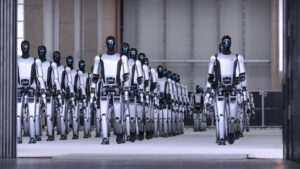
According to Experts.news, global production of humanoid robots has moved from isolated prototypes to the first mass-produced batches; however, the industry remains highly concentrated: Chinese companies accounted for about 85% of shipments in 2025.
According to estimates by the Chinese research center CCID, in 2025, Chinese manufacturers shipped approximately 14,400 humanoid robots, accounting for 84.7% of the global market. Thus, the global total was approximately 17,000 units. Other studies estimate global shipments at approximately 18,000 units.
According to IDC, the number of humanoid robots shipped worldwide in 2025 increased more than sixfold—by approximately 508%. However, statistics from various research organizations differ significantly, as some count only bipedal robots, while others also include wheeled humanoid platforms and general-purpose robots with artificial intelligence.
China remains the only country where humanoid robots are already being produced by the thousands by several manufacturers simultaneously. There are over 140 companies in the country working on humanoid robots, and the number of models available exceeds 330. AGIBOT, Unitree, and UBTECH have become the largest manufacturers.
TrendForce expects Chinese production of humanoid robots to grow by another 94% in 2026. Unitree and AGIBOT are expected to maintain their leading positions thanks to their well-developed supply chains, access to low-cost actuators, batteries, and sensors, and their capacity for mass assembly.
China’s advantage lies not only in artificial intelligence but also in its ability to rapidly reduce the cost of hardware. Some of Unitree’s entry-level models are already priced below $6,000, while most American and European systems are geared toward more expensive industrial pilot projects.
The U.S. lags significantly behind China in terms of the actual number of robots produced, but it has the largest announced manufacturing projects outside of China.
Figure has launched BotQ, a facility whose first production line is designed to produce up to 12,000 humanoid robots per year. In April 2026, the company announced its transition from prototypes to the production phase and that it had reached an assembly rate of one robot per hour.
Agility Robotics operates the RoboFab plant in Oregon with a potential capacity of over 10,000 Digit robots per year. Actual output is currently significantly lower than the stated maximum capacity.
The U.S.-Norwegian company 1X has begun full-scale production of its NEO home robot at a factory in California. Tesla is setting up its first production lines for Optimus but has not yet disclosed confirmed data regarding mass production.
South Korea’s Hyundai Motor Group plans to build a facility in the U.S. with a capacity of up to 30,000 robots per year by 2028. The facility is expected to produce, among other things, the Atlas humanoid robots developed by Boston Dynamics. The first Atlas robots are scheduled to arrive at Hyundai’s U.S. facilities in 2028.
One of the most advanced European projects is Germany’s NEURA Robotics, which has developed the 4NE1 humanoid robot.
The company calls it the first European humanoid robot ready for industrial production. NEURA is collaborating with Bosch and Schaeffler, planning to scale up production of robots for industry, logistics, and service tasks.
In 2026, NEURA announced that it had raised up to $1.4 billion to expand mass production and develop a network of centers where robots will be trained to perform real-world tasks.
In Serbia, AGIBOT and Minth Group are preparing to launch a facility in Šabac. The initial production volume is stated at 1,000–2,000 humanoid robots per year. The facility is expected to open in August 2026, although the timeline has already been revised several times. Therefore, Serbia should for now be classified among countries with announced but not yet confirmed mass production.
If the project is implemented, Serbia could become one of the first countries in Europe where Chinese humanoid robots will be mass-produced and adapted for regional markets.
Japan has many years of experience in developing humanoid robots, but so far has focused primarily on research, components, medicine, and elder care. Kawasaki continues to develop the Kaleido platform but has not announced mass production on a scale comparable to that of Chinese companies. TrendForce believes that Japan’s competitive advantage could lie in actuators, sensors, control systems, and solutions for elderly care.
In South Korea, Samsung has acquired control of Rainbow Robotics and intends to integrate its robotics developments with its own artificial intelligence and software technologies. Hyundai is simultaneously developing Atlas through its subsidiary Boston Dynamics, though the group plans to build a large factory in the U.S.
There is no comprehensive international registry of humanoid robot production. Companies disclose the potential capacity of their factories much more frequently than actual production volumes, and the term “humanoid robot” is applied to various types of devices.
The only reliably confirmed fact is China’s leadership, with a share of approximately 85% of global shipments in 2025. The remaining roughly 15% is accounted for primarily by the U.S. and small batches, prototypes, and pilot series from Europe, Japan, and South Korea.
In 2026–2028, the distribution may change following the launch of plants by Figure, Agility Robotics, Tesla, Hyundai, NEURA, and the Serbian AGIBOT project. However, for now, China retains a significant advantage in terms of actual production volume, component costs, and supply chain readiness.

PJSC Dnipro Metallurgical Plant (DMZ), part of businessman Oleksandr Yaroslavsky’s DCH Steel group, has completed its transition to continuous casting, DCH Steel CEO Vitaliy Bash announced in the corporate newspaper on Thursday.
“DMZ has implemented solutions to maintain competitiveness in difficult economic conditions. The transition of rolling production to continuously cast billets, which we purchase from partners, has been completed, allowing us to reduce the cost of metal production. DMZ has expanded its scope of activities by providing laboratory research, repair, and manufacturing services for metal structures and equipment parts, which is already yielding certain economic results,” the CEO noted.
According to him, in 2025, the Sukha Balka mine continued to develop new horizons and updated its equipment fleet to improve safety and production efficiency. An important step was the construction of a solar power plant, which ensured the energy independence of the Frunze mine.
At the same time, he pointed to negative trends in the market, in particular the increase in imports of metal products to Ukraine and the growth of tariffs for state monopolies.
“Together with other metallurgical companies and industry associations, we are systematically working to solve these problems at the state level. Despite all the challenges facing the industry and the country as a whole today, our teams continue to work, plan, and build the future,” said the CEO of DCH Steel.
DMZ specializes in the production of steel, cast iron, rolled products, and products made from them, such as channels and angles, special profiles for mechanical engineering and the mining industry.
On March 1, 2018, the DCH Group signed an agreement to purchase the Dniprovsky Metallurgical Plant.
The Sukha Balka mine is one of the leading enterprises in the mining industry in Ukraine. It extracts iron ore using underground methods. The mine includes the Yuvileina and Frunze mines.
The DCH Group acquired the mine from the Evraz Group in May 2017.
DCH, metallurgical plant, Mine, SOLAR POWER PLANT, TECHNOLOGY

Over three years, JSC Ukrnafta explored 1,330 square kilometers using 3D seismic exploration to expand its resource base and improve the accuracy of geological modeling.
“One of the main strategic objectives is to increase hydrocarbon reserves,” the company said in a statement.
To this end, Ukrnafta is investing in modern geophysical research, which makes it possible to identify new promising reservoirs and plan drilling more efficiently.
According to Yuriy Tkachuk, acting chairman of the board of Ukrnafta, in 2025, the total area of 3D seismic exploration will be approximately 750 square kilometers.
“The field phase has already been completed at two fields, another is in progress, and research at three new fields is planned by the end of the year. This is consistent work that ensures long-term stability of production,” he said.
The company emphasized that Ukrnafta was the first in Ukraine to apply wireless 3D seismic technology in mountainous conditions. This approach makes it possible to work in difficult geological conditions, minimizes environmental impact, reduces the duration of field work, and ensures higher accuracy of geophysical data. The results obtained form the basis of digital geological and hydrodynamic models that help predict production dynamics and make informed technical decisions.
In 2026, the company plans to continue 3D seismic exploration at the most promising fields.
Ukrnafta is Ukraine’s largest oil production company and operates a national network of gas stations. In March 2024, it took over the management of Glusco’s assets and currently operates a total of 663 gas stations. It holds 92 special permits for industrial development of deposits. It has 1,832 oil and 154 gas production wells on its balance sheet.
The largest shareholder of Ukrnafta is Naftogaz of Ukraine with a 50%+1 share. In November 2022, the Supreme Commander-in-Chief of the Armed Forces of Ukraine decided to transfer the company’s corporate rights, which belonged to private owners, to the state, and they are currently managed by the Ministry of Defense.
Ukrnafta’s net profit for 2024 was UAH 16.38 billion.



