
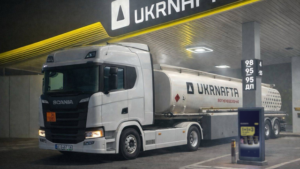
In September 2026, Ukrnafta became the largest importer of diesel fuel to Ukraine for the first time, supplying 105.3 thousand metric tons of the fuel, according to data from the A-95 Consulting Group and its analysis by the Experts Club.
The company’s import volume was 3.3 times higher than in September of last year.
OKKO took second place among the largest importers with 57,500 metric tons, while UPG came in third with 47,000 metric tons.
The top five also included AT Energo Trade with 44,000 metric tons and WOG with 42,500 metric tons.
Next came ZPEK with 29,400 metric tons, “Paid” with 28,900 metric tons, D.Trading with 26,500 metric tons, “Martin Trade” with 18,100 metric tons, and “Gaztrim” with 12,000 metric tons.
Among the largest players, the ZPEK Group showed the most significant growth compared to last year. Over the first nine months of 2026, its imports rose by 228% and approached 250,000 metric tons.
Total diesel fuel imports into Ukraine in September amounted to 537,000 metric tons, which is 21% less than a year earlier.
According to Serhiy Kuyun, director of the A-95 Consulting Group, changes among the largest importers are occurring against the backdrop of logistics transformation, high volatility in global prices, and the need for companies to establish more stable supply channels.
“The fuel market continues to face unprecedented challenges caused by Russian attacks. Importers are actively developing new logistics channels and expanding their vehicle fleets,” notes “A-95”.
The A-95 consulting group has been researching the Ukrainian motor fuel market for over two decades and monitors prices, supplies, and market infrastructure.

The IT sector remains the largest source of export revenue in Ukraine’s service sector: in January–August 2026, computer services accounted for 41% of the country’s total service exports, according to an analysis by Experts Club based on data from the National Bank of Ukraine.
Over the eight-month period, Ukraine exported $10.9 billion in services, which is approximately 6% more than during the same period in 2025.
IT service exports reached $4.46 billion, an increase of 4% year-over-year.
This means that more than $4 out of every $10 the country earns from service exports is generated by the IT sector.
At the same time, services as a whole accounted for about 30% of Ukraine’s total exports. Exports of goods for January–August totaled $24.9 billion, while exports of goods and services combined amounted to $35.8 billion.
This ratio underscores the exceptionally high importance of IT for Ukraine’s foreign trade: a single service sector alone accounts for about 12% of the country’s total export revenue.
To compare the dynamics of the IT sector itself, the figure for the first eight months of 2026 already roughly matches the result for the same period in 2023, though it remains 9% below the record level set in 2022.
Thus, in 2026, the IT sector is simultaneously strengthening its position after several years of decline and remains a key export sector of the Ukrainian economy.
Data source: National Bank of Ukraine.
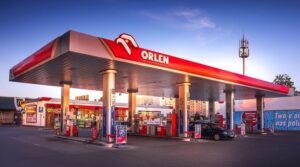
The Polish oil refining group ORLEN S.A. supplied 1.3 million metric tons of diesel fuel to Ukraine from January through September 2026, which is 33% more than during the same period in 2025, according to data from the A-95 Consulting Group.
Compared to the first nine months of 2024, shipments increased by 68%.
ORLEN remains the largest corporate supplier of diesel fuel to the Ukrainian market.
In September, the company shipped a total of approximately 110,000 metric tons of diesel fuel from refineries in Poland and Lithuania. This is 30% less than in September of last year.
The decline in monthly shipments occurred against the backdrop of an overall reduction in Ukrainian diesel fuel imports. In September, the volume of imports amounted to 537,000 metric tons, which is 21% less than a year earlier.
At the same time, Poland retained its status as the largest supplier of diesel fuel to Ukraine. Over the first nine months, shipments from Poland rose by 44% and exceeded 2 million metric tons.
According to Serhiy Kuyun, director of the “A-95” Consulting Group, the role of the northern route in supplying the Ukrainian market has strengthened due to the higher cost of shipments from Southern Europe.
“A-95” notes that due to the significant rise in the price of Southern European supplies, Ukrainian companies are increasingly turning to supplies from Poland and Lithuania.
The “A-95” Consulting Group specializes in research and monitoring of the Ukrainian petroleum products market. The company’s director is Serhiy Kuyun.
In September 2026, Ukraine imported 537,000 metric tons of diesel fuel, which is 21% less than in the same month of 2025 and 9% lower than in August, according to data from the A-95 Consulting Group.
Since the beginning of the year, diesel fuel imports have reached 4.7 million metric tons, which is 3% higher than the January–September figure from last year.
The main feature of September was unusually weak demand. A-95 attributes this, in particular, to massive attacks on industrial enterprises, as well as to problems with the export of agricultural products from the new harvest, including disruptions in maritime logistics.
“We do not yet have precise data, but there are all signs that retail sales of diesel fuel have also declined due to record prices caused by unprecedented global market rates,” note analysts at “A-95”.
The decline in demand is also confirmed by supply trends in the third quarter. During this period, approximately 1.7 million metric tons of diesel fuel were imported into Ukraine, which is about 10% less than a year earlier.
According to Serhiy Kuyun, director of the A-95 Consulting Group, the Ukrainian fuel market continues to operate amid unprecedented logistical and pricing challenges related to the war.
“The fuel market continues to face unprecedented difficulties caused by Russian attacks. Importers are actively developing new logistics channels and expanding their fleets, particularly of gasoline tankers,” the company notes.
The “A-95” consulting group specializes in research on the Ukrainian petroleum products market, price monitoring, logistics, and resource supply for the fuel market. Its director is Serhiy Kuyun.
JSC “Ukrzaliznytsia,” in collaboration with the European Bank for Reconstruction and Development (EBRD), has approved amendments to the loan agreement for the “UZ Energy” project, which will allow EUR130 million from the previously approved EUR180 million loan to be allocated to support the company’s liquidity, specifically for infrastructure restoration and ensuring the transportation of passengers and cargo.
“Funds previously earmarked for the distributed generation project can now also be used for critical repairs, infrastructure restoration, and ensuring the transportation of people and cargo,” wrote Mykola Kalashnyk, Ukraine’s Minister of Recovery, Infrastructure, and Transport, on his Telegram channel on Wednesday following a meeting with EBRD President Odile Renaud-Basso.
According to him, the ministry is working to ensure that “Ukrzaliznytsia” gains access to the relevant funds as early as the first weeks of October.
Among other things, the project to build a 200-MW gas-fired power plant is continuing thanks to grant support from the EU and the United Kingdom, while “Ukrzaliznytsia” is carrying out the construction work on its own.
The minister also noted that the meeting included discussions on additional funding for the modernization of the locomotive fleet.
According to the ministry, since the start of Russia’s full-scale invasion, 550 locomotives have been damaged, with more than 335 of them damaged this year.
“Securing resources to replace and restore them is one of our top priorities,” Kalashnik emphasized.
Separately, the Ministry of Infrastructure discussed the development of international highway corridors and investments in roads—specifically, projects the ministry is implementing jointly with the Recovery Agency.
Other topics for discussion included the development of distributed thermal power generation, backup power supplies, and the protection of critical infrastructure.
Issues related to port concessions were also addressed, particularly the preparation of relevant projects; in this context, the ministry is counting on the EBRD’s expertise in drafting these projects and attracting international operators and investors.
“I would like to thank Odile Renaud-Basso and the EBRD team for their support of Ukraine and their willingness to tailor financing to our urgent needs,” added Ukraine’s Minister of Recovery, Infrastructure, and Transport.
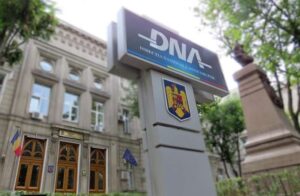
On October 5, Romania’s National Anti-Corruption Directorate (DNA) carried out a large-scale operation as part of an investigation into possible corruption among border police and customs officials on the Romanian-Ukrainian border.
According to “Golos Karpat”, law enforcement officials conducted 96 searches across six Romanian counties—Satu Mare, Bihor, Sălaj, Maramureș, Cluj, and Mureș.
The investigation focuses on border police and customs service officers who worked, in particular, at the Halmeu border crossing, which provides road access between Romania and Ukraine. On the Ukrainian side, it corresponds to the “Dyakovo” border crossing in Zakarpattia Oblast.
According to the DNA, the investigation concerns possible corruption offenses committed in 2025–2026. Investigators are looking into reports that certain border guards and customs officials may have received money in connection with the performance of their official duties.
Searches were conducted both in private homes and on the premises of two government agencies. The operation involved personnel from the Anti-Corruption Directorate, the police, and the gendarmerie. Investigative activities took place, in particular, directly on the territory of the Halmeu border crossing and at a border police unit.
Romanian media, citing sources familiar with the investigation, reported that the alleged corruption scheme may have involved receiving money in exchange for failing to properly inspect vehicles and cargo crossing the border. This could have involved both freight transport and the movement of people.
However, at the time the DNA’s official statement was released, these details had not been fully confirmed. The Anti-Corruption Directorate also did not specify the exact number of suspects or the possible amounts of illicit gains.
The investigation is of particular significance for the Zakarpattia Oblast, as investigative actions were also conducted in Maramureș County, which directly borders Ukraine.
The leadership of the Sighetu Marmației Territorial Border Police Inspectorate stated its readiness to cooperate with the investigation and emphasized that, should the violations be confirmed, measures provided for by law will be applied to the employees.
The Halmeu checkpoint is one of the road crossings on the Romanian-Ukrainian border and is used for passenger and freight traffic between the two countries.



