

Germany has provided 5 pickup trucks and 5 cargo vans for track workers, communications specialists, and power engineers to help restore damaged infrastructure and resume train service as quickly as possible following Russian attacks on the railway, according to a statement by Ukraine’s Ministry of Recovery, Infrastructure, and Transport on its Telegram channel.
“After every strike, repair crews must be dispatched to the site as quickly as possible to restore infrastructure and train service. This requires people, equipment, and, of course, transportation.
We thank the railroad workers for their 24/7 efforts. And we thank Germany for its consistent support and practical assistance. It is important to us that this support continues and intensifies,” said Deputy Minister Volodymyr Shemaev.
The equipment was handed over by Boris Ruge, Ambassador Extraordinary and Plenipotentiary of the Federal Republic of Germany to Ukraine.
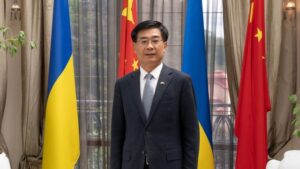
According to Experts.news, China’s foreign trade in goods reached 45.47 trillion yuan in 2025, up 3.8% from the previous year, said Ma Shengkun, China’s ambassador to Ukraine.
“In 2025, the total volume of China’s imports and exports of goods reached 45.47 trillion yuan, an increase of 3.8% year-over-year.
Imports totaled a record 18.48 trillion yuan,” the diplomat wrote in his column on the Interfax-Ukraine website.
According to him, China has remained the world’s second-largest import market for the 17th consecutive year and is the main trading partner for more than 160 countries and regions.
The ambassador also noted that in 2025, China’s imports from the least developed countries increased by 9%, while imports from Asia rose by 3.9%, from Latin America by 4.9%, and from Africa by 6%.
Ma Shengkun highlighted the growth of the high-tech segment of Chinese exports. According to the data he cited, exports of high-tech products reached 5.25 trillion yuan in 2025, an increase of 13.2%.
In particular, total exports of electric vehicles, photovoltaic products, and lithium batteries—referred to in China as the “new trio” of export goods—rose by 27.1%.
As previously reported, China remains Ukraine’s largest trading partner. According to a study by the Experts Club information and analytical center, Ukraine’s trade turnover with China reached $14.68 billion in the first half of 2026, including $13.9 billion in imports of Chinese goods and $778.4 million in exports of Ukrainian goods to China. China accounted for 21.9% of Ukraine’s total trade with its 50 largest trading partners.
According to the latest data from the State Customs Service of Ukraine, in January–August 2026, China retained its top position among suppliers of goods to Ukraine, with imports exceeding $19.6 billion. Ukraine’s total imports during this period amounted to nearly $66.3 billion, while exports totaled over $26.6 billion.
A joint study by Experts Club and Active Group published on September 18 also noted that China remains Ukraine’s largest trading partner; however, Ukrainian exports to the Chinese market lag significantly behind imports from China.

Direct non-financial investments by Chinese companies in countries participating in the “Belt and Road” initiative reached $39.67 billion in 2025, a 17.6% increase from the previous year, according to Ma Shengkun, China’s ambassador to Ukraine.
“Through direct investment, project contracting, and development financing, China has contributed to improving local infrastructure, modernizing industry, and raising the standard of living,” the diplomat wrote in a column on the Interfax-Ukraine website.
According to the data he cited, Chinese investment in Africa grew by 41% in 2025.
Chinese companies have established overseas trade and economic cooperation zones in 46 countries, with total investment in these zones approaching $80 billion.
As an example of industrial cooperation, Ma Shenkun cited a project by the Chinese battery manufacturer CATL in Indonesia. It involves establishing a complete production cycle for traction batteries—from the extraction and processing of nickel and the production of battery materials to the manufacturing and assembly of finished batteries.
According to data cited by the ambassador, the total volume of China’s direct non-financial foreign investment in 2025 reached $145.66 billion.
Ma Shengkun also cited World Bank estimates, according to which the full implementation of transportation projects under the “Belt and Road” initiative has the potential to reduce transit times along the relevant corridors by up to 12% and increase trade among countries located along them by 2.8–9.7%.
As previously reported, China is Ukraine’s largest trading partner. According to calculations by the Experts Club information and analytical center, trade between the two countries in the first half of 2026 totaled $14.68 billion. At the same time, Ukraine imported $13.9 billion worth of Chinese goods and exported $778.4 million worth of goods to China, resulting in a trade deficit of $13.12 billion.
China accounted for 21.9% of Ukraine’s trade with its 50 largest partners and 29.4% of imports from this group of countries. Trade with China accounted for approximately 47.3% of Ukraine’s total trade deficit with its top 50 partners.
According to the State Customs Service, from January through August 2026, imports of goods from China to Ukraine had already exceeded $19.6 billion, maintaining China’s position as the top supplier to the Ukrainian market.
China’s role in Ukraine’s foreign trade is analyzed in more detail in a study by Experts Club and Active Group, published on September 18, 2026.
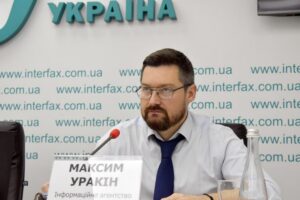
According to Interfax-Ukraine, Ukraine’s economy showed the first signs of emerging from a recession in the first half of 2026, however, the high foreign trade deficit, inflationary pressures, and the dependence of public finances on international aid remain key macroeconomic risks, according to the latest issue of “Economic Monitoring.”
As noted by Maksym Urakin, Ph.D. in Economics and founder of the Experts Club information and analytical center, after real GDP fell by 0.6% year-over-year in the first quarter, the economy returned to growth in April–June.
In the second quarter, Ukraine’s real GDP increased by 0.4% compared with the same period last year and by 0.3% compared with the previous quarter. At the same time, the National Bank’s forecast projected growth of the Ukrainian economy at only 1.3% for the full year of 2026.
“Positive factors in the first half of the year included the resumption of at least minimal GDP growth, the return of international reserves to above $50 billion, stability in the foreign exchange market, more consistent international financing, and the adaptability of Ukrainian businesses. The main risks remain the war, the state of the energy sector, high production costs, a labor shortage, weak commodity exports, and a growing trade imbalance. Ukraine has a significant supply of external liquidity, but it cannot replace domestic economic growth,” Urakin noted.
Consumer inflation slowed to 7.2% in June, while core inflation accelerated to 8.1%. The NBU’s discount rate remained at 15%.
At the same time, after four months of decline, Ukraine’s international reserves increased by 12.1% in June—to $51.27 billion. The NBU’s foreign exchange interventions remained substantial.
Foreign trade remains one of the main structural risks to the Ukrainian economy. From January through June 2026, merchandise imports totaled approximately $49.3 billion, while exports amounted to about $21 billion. Thus, the merchandise trade deficit reached approximately $28.3 billion.
Public finances also remain under significant strain. Revenues to the General Fund of the state budget for the first half of the year totaled nearly 1.9 trillion UAH, while expenditures amounted to approximately 2.23 trillion UAH.
Approximately 1.4 trillion UAH, or about 63% of all General Fund expenditures, was allocated to the security and defense sector. The volume of international grants totaled 569.6 billion hryvnia.
According to Urakin, one of the main objectives of economic policy should be to transform significant imports of equipment, international funding, and defense spending into a foundation for creating new domestic production capacity.
“The next phase of economic policy should consist not only of maintaining financial stability, but also of transforming imported equipment, international funds, and defense spending into new production assets. The foundation for long-term development should be energy self-sufficiency, the defense-industrial complex, agricultural processing, machine building, production localization, logistics, digital technologies, and exports of high-value-added products,” says the founder of Experts Club.
At the same time, the first half of the year revealed significant differences between the world’s largest economies and emerging markets.
The Chinese economy grew by 4.7% in the first six months of 2026, while India posted a growth rate of about 7.8% in April–June.
Turkey continued to combine economic growth with extremely high inflation. In the second quarter, its GDP increased by 2.3% year-over-year and by 1.1% compared to the previous quarter, while annual inflation in June remained near 32%.
Brazil showed more moderate growth: its GDP in the second quarter increased by 2% year-over-year and by 0.5% compared to the previous quarter. In the first half of the year, the country’s economy grew by 1.9%, and annual inflation in June slowed to 4.64%.
“Key emerging economies ended the first half of the year with very different growth patterns. China grew by 4.7%, but its second quarter was weaker than the first, and domestic consumption lags significantly behind industrial output and exports. India continues to grow by nearly 8%, driven by the size of its domestic market and investment. Turkey remains an example of how inflation exceeding 30% limits the quality of economic growth, while Brazil is showing more moderate growth with gradual control of inflation. For Ukraine, the main conclusion remains the same: long-term growth requires its own industrial, technological, and export base,” Urakin emphasized.
In his assessment, the first half of the year confirmed the viability of Ukraine’s macrofinancial stabilization model, but at the same time revealed its limitations.
“The return of GDP to modest growth and the replenishment of reserves are positive signs; however, the $28.3 billion merchandise trade deficit, high underlying inflationary pressures, and the budget’s dependence on external financing reveal the limits of this model. Only by developing its own production and export base will Ukraine be able to transition from an economy of wartime stabilization to a model of sustainable postwar growth,” concluded Maksym Urakin.
“Economic Monitoring” is a monthly analytical and statistical publication led by Maksym Urakin, Ph.D. in Economics. The publication analyzes the main macroeconomic indicators of Ukraine and the world’s leading economies, as well as trends in GDP, inflation, public finances, international reserves, foreign trade, and key risks to economic development.
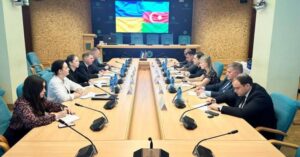
UkraineInvest, Ukraine’s agency for attracting and supporting investment, and Azerbaijan’s Agency for the Promotion of Exports and Investments (AZPROMO) have signed a memorandum of understanding aimed at expanding investment cooperation between the two countries, according to the Ukrainian Embassy in Azerbaijan.
The document was signed in Baku during the 2nd Azerbaijan International Investment Forum by AZPROMO Executive Director Yusif Abdullayev and UkraineInvest Executive Director Marina Khlistun, according to the Ukrainian Embassy in Azerbaijan.
The parties intend to foster direct contacts between businesses in both countries and create conditions for the implementation of joint investment projects.
Ukraine, in particular, is interested in attracting Azerbaijani capital to the country’s reconstruction projects. Potential areas of cooperation include infrastructure, energy, transportation and logistics, the agricultural sector, industry, and technology.
Yuriy Gusev, Ukraine’s ambassador to Azerbaijan, praised the efforts of the leadership and teams at AZPROMO and UkraineInvest in translating the two countries’ strategic partnership into concrete joint investment projects.
AZPROMO also confirmed the signing of the memorandum. According to the Azerbaijani agency, the document between AZPROMO and UkraineInvest was part of a package of 11 agreements signed during the international investment forum.
In total, the agreements concluded during the forum cover construction and development, the digital economy, renewable energy, industry, agriculture, pharmaceuticals, finance, water management, sports, and investment promotion.
The II Azerbaijan International Investment Forum took place in Baku on September 25–26, 2026, under the patronage of Azerbaijani President Ilham Aliyev. The event was organized by the Ministry of Economy of Azerbaijan and AZPROMO in strategic partnership with The European House – Ambrosetti.
UkraineInvest is the state agency responsible for attracting and supporting investment. The organization assists foreign and Ukrainian investors, provides consulting, analytical, and informational support, and participates in promoting Ukraine’s investment projects in international markets.
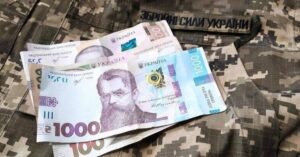
The Ukrainian Ministry of Defense estimates that defense spending will rise to $175 billion in 2027 from $155 billion in 2026; the government’s draft state budget currently allocates $100 billion, First Deputy Minister of Finance Roman Yermolichev said during a budget discussion organized by the Center for Economic Strategy that week.
“There is a need for $70 billion. And here, various instruments must be utilized, including cooperation with international partners, not only to attract funding but also to use various instruments that have been in place for the past four years: ‘Ramstein,’ PURL, and all other mechanisms related to the procurement of military equipment,” the First Deputy Minister noted.
He emphasized that when planning defense expenditures in the 2027 draft state budget, the Ministry of Finance significantly changed its approach compared to previous years, when initial allocations were set below actual needs.
“We have now changed this situation and increased funding for the defense sector immediately: funding has been increased by 518 billion hryvnia—that is, from 4.4 trillion to 4.9 trillion hryvnia next year,” said Yermolichev.
The First Deputy Minister explained that the 2026 state budget does not currently include an additional 300 billion hryvnias for the payment of military pay—which was increased as of July 1—and defense-related social benefits, which will be financed from domestic sources, but this 300 billion UAH has already been included in the 518 billion UAH increase in defense spending in the draft 2027 state budget.
At the same time, he clarified that the calculations were made without taking into account the factor of an increase in military personnel, which is difficult to predict.
“Therefore, we hope that by the beginning of the year, we will be in a more or less stable position. Additionally, we have increased the allocation to the Reserve Fund under the Ministry of Finance: this year, we allocated approximately 140 billion hryvnias from the General Fund, whereas for next year, we have already allocated 200 billion hryvnias from the General Fund,” Yermolichev concluded.
As previously reported, the funding shortfall for the Ministry of Defense’s stated $155 billion war requirement for 2026 was, until recently, estimated at $27 billion, but Prime Minister Serhiy Koretsky and the Ministry of Finance stated that $7 billion—or about 300 billion hryvnias—of this amount has been secured through domestic resources, specifically the Ministry of Finance’s Reserve Fund.
As for next year, according to the agency “Interfax-Ukraine,” out of the $70–75 billion in war-related expenditures not covered by the state budget, sources of funding have been identified for approximately $20 billion, while the remainder still needs to be secured.
DEFENSE, FUNDING, Ministry of Defense, STATE BUDGET, UKRAINE



