

As of September 22, Ukrainian farmers had threshed 7 million hectares, or 61% of the projected area, according to the press service of the Ministry of Agrarian Policy and Food.
The gross harvest of grains and legumes totaled 32.95 million metric tons, with an average yield of 47 ts/ha.
Wheat harvests totaled 25.31 million metric tons from 5.11 million hectares at an average yield of 49.5 centners per hectare, while barley harvests totaled 6.39 million metric tons from 1.48 million hectares at a yield of 43.3 centners per hectare. The harvest of these crops is complete.
Peas were harvested at 812,200 metric tons from an area of 301,900 hectares, with an average yield of 26.9 centners per hectare; millet—62,200 metric tons from 26,900 hectares, with a yield of 23.2 centners per hectare; buckwheat—37,100 metric tons from 26,600 hectares at a yield of 13.9 centners per hectare, and corn—339,800 metric tons from 67,900 hectares at a yield of 50 centners per hectare.
Farmers in the southern and central regions harvested the largest volumes of grain. In the Odesa region, 4.83 million metric tons of grain were harvested from an area of 1.19 million hectares; in the Dnipropetrovsk region, 2.72 million metric tons from 663,300 hectares; and in the Kirovohrad region, 2.43 million metric tons from 561,000 hectares.
The highest average grain yields were recorded in farms in the Khmelnytskyi region (70.6 centners per hectare), the Sumy region (60.6 centners per hectare), and the Kyiv region (55.8 centners per hectare).
More than 6 million metric tons of oilseeds were harvested from approximately 2.4 million hectares. In particular, the rapeseed harvest has been completed, with 3.857 million metric tons harvested from 1.33 million hectares at a yield of 29 centners per hectare.
Sunflower seeds totaled 1.5 million metric tons from 756,200 hectares—or 14% of the projected area—at a yield of 19.8 centners per hectare.
Soybeans totaled 655,400 metric tons from 327,600 hectares—or 21% of the projected area—at a yield of 20 centners per hectare.
Farmers have also begun harvesting sugar beets. 19.3 thousand metric tons have been harvested from an area of 0.45 thousand hectares, with an average yield of 428.9 centners per hectare.
Ukrainian universities are joining the European Researchers’ Night initiative, which will take place on September 25 this year. Specifically, Zaporizhzhia Polytechnic National University will host “Science Night 2026” on that day, while Lviv Polytechnic is coordinating a separate European Researchers’ Night 2026–2027 project as part of the Horizon Europe program.
According to Zaporizhzhia Polytechnic, “Science Night 2026” will take place on September 25 on the university campus and will be aimed primarily at schoolchildren, prospective students, and young people. The program includes interactive experiments, scientific demonstrations, a children’s science conference, and international events featuring foreign partners. The event will be held with due consideration for the security situation; the university notes that shelters are available.
A separate international conference as part of “Science Night” is also scheduled for September 25. Researchers from European universities are expected to participate.
In addition, for the first time at this level, Ukraine is represented by a separate project in the European Researchers’ Night program. Lviv Polytechnic has become the coordinator of the international project STEM for Science, Technology, Awareness & Researchers (STEM4STAR), selected for funding under the
European Researchers’ Night and Researchers at Schools 2026–2027 program of Horizon Europe.
According to the university, 241 applications from various European countries were submitted to the competition, and funding was recommended for 49 projects. STEM4STAR received the highest scores from experts across all criteria. The project involves organizing science festivals, European Researchers’ Night events, demonstrations of modern technologies, geospatial games, mapping challenges, mapathons, STEM programs, and startup competitions in Lviv. Some sessions will also take place in schools and colleges across Western Ukraine.
European Researchers’ Night is a pan-European initiative funded by the EU through the Marie Skłodowska-Curie Actions. In 2026, the main event will take place on September 25. According to the European Research Council, over 1 million participants are expected across approximately 40 countries. Universities and research institutions will host open labs, experiments, science shows, discussions, exhibitions, and interactive events for the general public.

The situation on the Ukrainian wheat market remains largely unchanged due to complicated and expensive logistics, while the corn market is suffering from slow export growth and anticipates a seasonal increase in supply, consulting firm Barva Invest reported on its Telegram channel.
The price of Ukrainian 11.5% wheat on DAP-Danube terms stood at $172–178 per metric ton on September 21.
“The situation on the Ukrainian wheat market remains largely unchanged—exports remain costly and complicated due to Russia’s ongoing attacks on port infrastructure, and the logistics situation is unlikely to improve in the near future,” Barva Invest noted.
According to the company, the most active export routes for Ukrainian wheat remain the Romanian port of Constanta and the Vadul Siret border crossing. At the same time, exports through Ukrainian Danube ports remain extremely difficult due to constant attacks by Russia.
On the Ukrainian corn market, the DAP-Danube price on September 21 stood at $170 per metric ton.
“The Ukrainian corn market continues to suffer from a lack of its usual export pace, while at the same time anticipating a seasonal increase in supply. Logistics are expensive and complicated, which does not facilitate the conclusion of new deals,” Barva Invest noted.

The Ukrainian government has officially approved the country’s participation in the World Specialized Exhibition EXPO 2027 Belgrade, which will take place in the Serbian capital from May 15 to August 15, 2027.
The Cabinet of Ministers of Ukraine adopted the relevant resolution on September 21. Deputy Prime Minister for Humanitarian Policy and Minister of Culture Tetiana Berezhna has been appointed General Commissioner of the Ukrainian national pavilion.
The costs of Ukraine’s participation are to be covered by funds from the EXPO 2027 organizer, donor and sponsor funding, charitable contributions, and other permitted sources. The Ministry of Economy and Environment will coordinate the preparation of the Ukrainian exhibition, and the Ministry of Foreign Affairs will officially notify the Serbian government of the appointment of the Commissioner-General.
Berezhna already has experience organizing Ukraine’s participation in world expos. She served as Commissioner-General of the Ukrainian pavilion at EXPO 2025 in Osaka.
The Belgrade expo will be held under the slogan “Play for Humanity: Sport and Music for All.” Organizers expect more than 4 million visitors over the 93 days of the expo.
EXPO 2027 will be the largest specialized expo in terms of the number of participants in the history of such events. According to the latest data from the organizers, 143 international participants have confirmed their participation. For comparison, the previous record for specialized EXPO events was held by Astana 2017, which featured 117 participating countries.
Among the largest countries that have confirmed or already registered their participation in the Belgrade exhibition are are the United States, China, Russia, India, Germany, France, Italy, Spain, Japan, South Korea, Turkey, Brazil, Mexico, Argentina, Saudi Arabia, the UAE, Israel, South Africa, and Egypt.
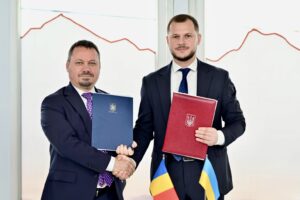
Ukraine and Romania, within the framework of the Carpathian Economic Forum (C8 Summit), signed a memorandum of understanding based on an updated Strategy for the Development of Border Infrastructure between the two countries, which takes into account the needs related to the transportation of cargo and passengers.
According to a statement from Ukraine’s Ministry of Recovery, Infrastructure, and Transport, the document was signed by Minister Mykola Kalashnyk and Ionel Scriostanu, State Secretary of Romania’s Ministry of Transport and Infrastructure.
Under the memorandum, the countries are expected to work on modernizing and developing road border crossing points (BCPs) and access roads, strengthening rail connections, as well as simplifying border control procedures and expanding opportunities for transshipment of Ukrainian cargo in Romanian ports.
Among other things, there are plans to increase the throughput capacity of existing border crossing points and develop new routes; specifically, the updated Strategy identifies 17 border crossing points, 10 of which are new proposals.
“The signed memorandum outlines specific directions for this work. It is important for us to increase the border’s throughput capacity and create stable and predictable routes for Ukrainian businesses to the European Union and Romanian ports,” the press release quotes Ukraine’s Minister of Recovery, Infrastructure, and Transport as saying.
The ministry emphasized that the next step will be to move toward implementing the relevant projects and securing funding for their execution.
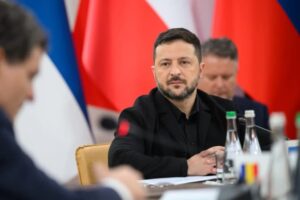
According to “Serbian Economist”, Ukrainian President Volodymyr Zelenskyy visited the Serbian pavilion at the first Carpathian Economic Forum in Bukovel, which is taking place on September 18–19 as part of the summit of the new regional format, the Carpathian Eight (C8). This was reported by the Serbian Chamber of Commerce and Industry.
Serbia is represented at the forum by the Serbian Chamber of Commerce and Industry, the Serbian Development Agency, Expo 2027 Belgrade, as well as Serbian companies, including Mind Park and Millennium Team. The main goal of Serbia’s participation is to present the country’s investment opportunities and establish new contacts with companies, investors, and financial organizations in the region.
The forum itself has become a major business platform: according to the Office of the President of Ukraine, approximately 1,400 people from 25 countries are participating, including representatives of nearly 400 companies from the C8 countries. The forum’s total investment portfolio includes 95 projects valued at over 42.5 billion euros in the energy, industrial, transportation and logistics, technology, agricultural, real estate, and other sectors.
Serbia is particularly interested in projects in the energy, rail and road transportation, logistics, industry, and cross-border trade sectors. At the summit, Aleksandar Vučić stated that trade between Serbia and Ukraine grew by 42% in the first half of 2026.
The new C8 format brings together Serbia, Ukraine, Romania, Poland, Slovakia, the Czech Republic, Austria, and Hungary. Its participants aim to develop infrastructure and energy links, investment projects, and closer integration of the Carpathian and Danube regions.
C8, FORUM, INVESTMENT, SERBIA, UKRAINE



