

Ukraine’s Cyber Police have warned citizens about a scam involving fake electricity bills, which may be sent via email or messaging apps purportedly on behalf of the Ministry of Energy or other government agencies.
According to the statement, scammers may inform recipients of alleged outstanding balances, send payment invoices, or demand immediate payment. To make their messages more convincing, they use official logos, the names of government agencies, and formatting that resembles genuine communications.
The main goal of the attackers is to trick users into clicking a link to a phishing website. There, they may be asked to enter their credit card information, username, password, SMS verification code, or other personal information. Malware may also be distributed under the guise of a bill or document. As a result, scammers can gain access to bank accounts, email, social media, and other accounts.
The Cyber Police emphasize that the Ministry of Energy of Ukraine does not send electricity bills to consumers and does not collect utility payments. Bills are issued directly by the electricity suppliers with whom consumers have signed contracts.
Signs of a fraudulent message may include a demand for immediate payment via a link provided, information about a non-existent debt, a sender’s email address that does not belong to an official institution, a request to enter bank details or a password, as well as unknown attached files.
Grammatical errors, unusual phrasing, and attempts to create a sense of urgency should also raise red flags.
It is recommended to verify information about electricity payments only through your provider’s official website or app. The cyber police advise against clicking on links in suspicious emails and against entering personal or banking information on websites linked to via email or messaging apps.
If a user has already clicked on a suspicious link, entered banking information, or lost funds, they should contact their bank as soon as possible to block their payment instruments. It is also important to save the correspondence, links, phone number, and other evidence to report the incident to law enforcement.
Additional information about current fraud schemes and ways to protect yourself can be found on the “Cyber Brama” portal at stopfraud.gov.ua.

The insurance company VUSO (Kyiv) and the Ukrainian Football Association (UAF) have announced the start of their partnership and that the insurer has been granted the status of official insurance partner of the Ukrainian national soccer team, according to the insurer’s website.
As noted by VUSO CEO Andriy Artyukhov, the company is always on the lookout for projects that embody vibrant energy, character, and a drive to win. The partnership with the Ukrainian Football Association is precisely such an opportunity.
According to the information provided, the partnership includes comprehensive branding of the VUSO brand during the national team’s home and away matches, integration into the UAF’s digital channels, and the implementation of joint media projects.
“In soccer, as in life, it’s important to have reliable support and confidence in those around you. That is precisely why we are pleased to welcome VUSO as the official insurance partner of the Ukrainian national soccer team. It is especially valuable that, even amid the war, Ukrainian businesses continue to support Ukrainian sports and our national team,” noted UAF President Andriy Shevchenko.
VUSO Insurance Company was founded in 2001. On April 23, 2024, the National Bank of Ukraine renewed the company’s licenses to conduct insurance activities (33 for voluntary insurance and 17 for mandatory insurance). The company has 34 representative offices, two branches, and more than 20 agency sales centers throughout the country.
As of the end of 2025, the company’s insurance premiums exceeded 5.1 billion UAH. VUSO ranked second in the voluntary medical insurance and travel insurance segments, third in the comprehensive auto insurance and property insurance segments, and was among the top 10 insurers for mandatory auto liability insurance.

In the 2025–26 marketing year, rapeseed processing in Ukraine increased 2.7-fold, and rapeseed oil exports increased 2.5-fold compared to the previous marketing year. In total, 42% of the rapeseed harvest was processed domestically (last year this figure was 15%), which is an all-time record since the crop began to be grown in Ukraine. Foreign exchange earnings from rapeseed oil exports more than tripled, reaching $588 million.
This was reported by Dmytro Kysilevsky, Deputy Chairman of the Verkhovna Rada Committee on Economic Development, citing data from the “Ukroliyaprom” association. He also noted that the share of domestic processing of the soybean harvest in the 2025–26 marketing year rose from 39% to 54.2% (also a historic record for processing). Despite a decline in the soybean harvest from 6.6 million metric tons to 4.8 million metric tons, foreign exchange earnings from exports of soybean oil and meal rose by 12.3%, to $1.02 billion.
Compared to the previous marketing year, the harvested areas for these crops changed insignificantly: rapeseed +15.7%, soybeans -3.9%. In total, the area planted with these crops increased from 3.25 million hectares to 3.37 million hectares.
According to the Ministry of Agrarian Policy, additional revenue to the state budget from export duties on soybeans and rapeseed amounted to 2.174 billion UAH for the marketing year, i.e., for the period from September 2025 to August 2026.
“These figures show that export duties on soybeans and rapeseed have been effective: the share of processing has increased—Ukrainian plants have seen higher utilization rates; the area under cultivation has expanded—farmers consider these crops profitable to grow; and the budget has received additional revenue from duties as well as from plant operations. Step by step, Ukraine is moving away from low-value commodity exports, increasing processing, foreign exchange earnings, and tax revenues, and developing new plants that offer decent wages for Ukrainians. “When Ukraine exports processed products rather than soybeans and rapeseed, the growth in foreign exchange revenue per metric ton of exports ranges from 30% to 50%,” noted Dmytro Kysilevsky.
On July 16, 2025, the Verkhovna Rada of Ukraine approved the introduction of a 10% export duty on soybeans and rapeseed. The duties took effect on September 4, 2025.
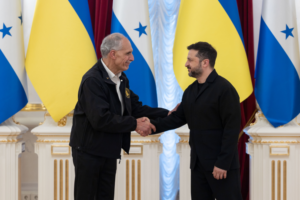
Ukraine and Honduras have signed a “roadmap” for deepening bilateral cooperation for 2026–2029, Ukrainian Foreign Minister Andriy Sibiga announced.
“The signing of a ‘roadmap’ to deepen cooperation between Ukraine and Honduras for 2026–2029 was an important step in strengthening our relations,” he wrote on social media platform X.
Sibiga reported that he had met with Honduran Foreign Minister Mirey Agüero de Corrales following her visit to Kyiv as part of the Honduran president’s delegation.
According to him, the parties agreed on the importance of expanding economic and business ties.
Sibiga thanked Agüero de Corrales for her attention to Ukraine and noted that her visit to Kyiv allowed her to see the consequences of the Russian war firsthand and strengthen mutual understanding between the two countries.
He specifically emphasized Honduras’s position on the illegal activities of the “shadow fleet,” particularly the need to end the practice of registering ships under the Honduran flag.
The parties also discussed the need to restore freedom of navigation in the Black Sea, the protection of Ukrainian ports, global food security, and the unimpeded export of Ukrainian agricultural products.
Sibiga briefed his counterpart on efforts to establish an International Commission for the Settlement of Claims and other international initiatives aimed at ensuring accountability and justice.
The ministers also discussed cooperation on the return to Ukraine of children abducted and deported by Russia, as well as practical steps to intensify these efforts.
According to Sibiga, Ukraine counts on Honduras’ continued support in its efforts to achieve a comprehensive and lasting peace.
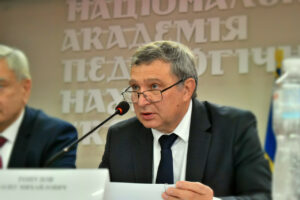
The General Assembly of the National Academy of Pedagogical Sciences of Ukraine elected Oleg Topuzov as president of the Academy for a five-year term—from September 18, 2026, to September 17, 2031.
According to the results of a secret ballot, 185 assembly members supported his candidacy, nine voted against, and two ballots were deemed invalid. Topuzov was the only candidate for the position.
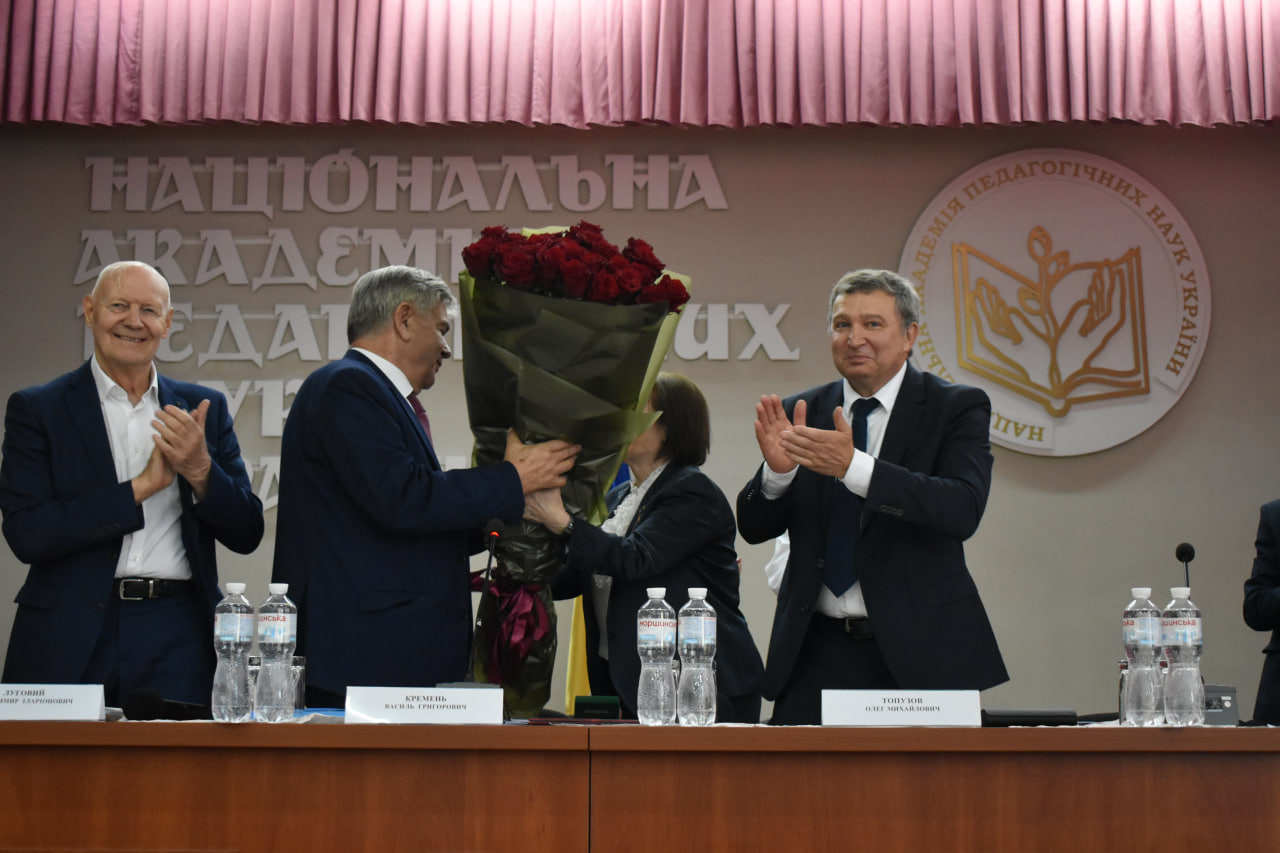
He succeeded Vasily Kremen, who had led the academy since 1997. The General Assembly unanimously elected Kremen as honorary president of the National Academy of Pedagogical Sciences for life.
In presenting the academy’s development program, Topuzov outlined four core principles of operation: continuity, competence, openness, and effectiveness.
“My task is not to start from scratch. My task is to preserve the best of what we have and, together with you, to usher in a new phase of our academy’s development,” he stated.
Among the main areas of focus for the new leadership, Topuzov highlighted strengthening the influence of educational science on the formation of state education policy, rebuilding human capital, overcoming educational gaps, supporting young scholars, and researching the impact of artificial intelligence on the education system.
One of the key initiatives is to be a systematic foresight study on the development of education in Ukraine through 2035. It will cover possible scenarios for the development of preschool, K-12, vocational, higher, and adult education, taking into account demographic changes, labor market needs, technological development, and European integration.
“Our research should not end with just monographs, articles, or recommendations. It must influence government decisions,” Topuzov emphasized.
He identified scientific support for education during wartime and postwar reconstruction as a separate priority. This refers, in particular, to the psychological resilience of children and youth, support for educators, inclusion, and the reintegration of veterans and Ukrainians returning from abroad.
According to the new president of the National Academy of Pedagogical Sciences, Ukraine’s recovery must begin with the restoration of human capital.
Topuzov also proposed launching a university-wide program titled “Artificial Intelligence and the Future of Education.” Research should cover changes in the role of teachers, approaches to assessing knowledge, issues of academic integrity, and the competencies students will need over the next 10–20 years.
The NAPN’s European integration will involve expanding joint research, participating in international consortia and programs such as Horizon Europe, Erasmus+, and COST, promoting academic mobility, and increasing the number of joint international publications.
For young researchers, there are plans to create the “Young Scientist of the National Academy of Pedagogical Sciences of Ukraine” program, which will provide grant support, mentorship, international mobility, and participation in major research projects.
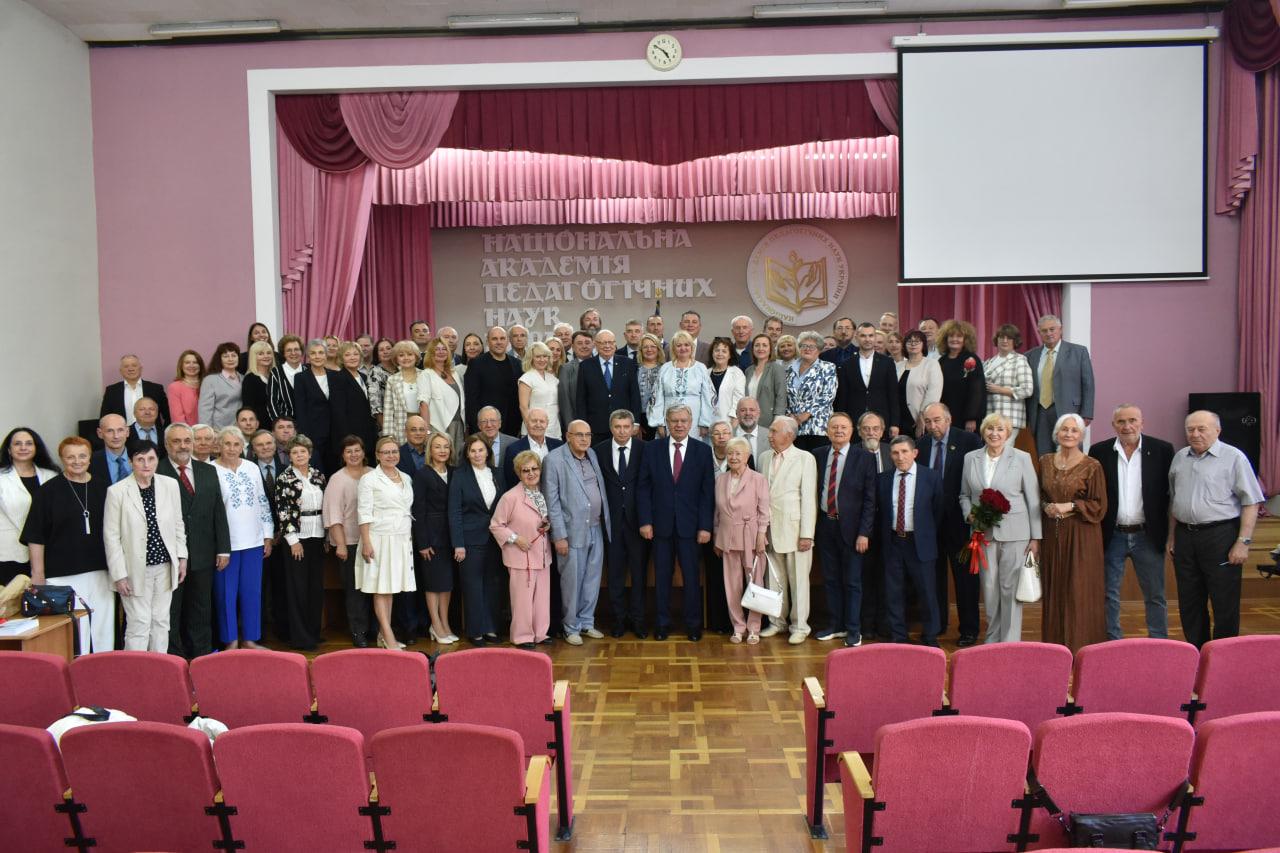
During the annual meeting, the results of the NAPN’s activities for 2017–2026 were also presented. During this period, the Academy’s institutions completed 163 fundamental and 195 applied research projects, produced more than 14,000 scientific articles, and published over 250 monographs, preprints, and other scientific works.
The NAPN’s electronic library collection has grown to 40,000 full-text resources, and the number of downloads has reached 19 million. The Academy’s institutions participated annually in nearly 50 international scientific and educational projects and programs.
During the meeting, the Academy’s new leadership was also formed. Volodymyr Lugovoy and Vitaliy Panko were elected vice presidents of the National Academy of Pedagogical Sciences, and a new presidium was formed consisting of 29 members, 22 of whom had not previously served on it.
The National Academy of Pedagogical Sciences of Ukraine conducts fundamental and applied research in the fields of education, pedagogy, and psychology; participates in the development of educational standards, curricula, and textbooks; and provides scientific support for reforms in the education system.
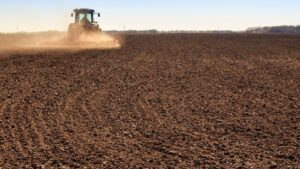
As of September 23, Ukrainian farmers had planted 741,400 hectares with winter grains, or 14.2% of the projected area, and 958,800 hectares with winter rapeseed, or 86.7% of the projection, according to the press service of the Ministry of Agrarian Policy and Food.
Specifically, 662,400 hectares (14.6% of the forecast) have been planted with wheat and triticale (a hybrid of wheat and rye – IF-U), 53,100 hectares (8.9%) with barley, and 25,800 hectares (33.6%) with rye.
The largest areas of winter grains have been planted in the Mykolaiv region—101,000 hectares, including 79,000 hectares of wheat and triticale and 22,000 hectares of barley.
In the Poltava region, 91.3 thousand hectares have been planted, of which 87.3 thousand hectares are wheat and triticale, and 4 thousand hectares are rye.
In the Dnipropetrovsk region, 86,300 hectares have been planted with winter grains, including 84,000 hectares of wheat and triticale, 2,100 hectares of barley, and 200 hectares of rye.



