
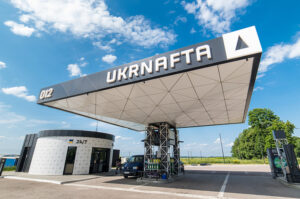
In 2026, Ukrnafta JSC will allocate an additional 2.5 billion hryvnia to protect its production infrastructure from shelling by Russia, which has intensified, said Bogdan Kukura, the company’s chairman of the board.
“We have shifted our priorities toward protecting facilities and ensuring the safety of equipment through underground construction. Therefore, this year we are allocating an additional 2.5 billion hryvnia to protect (production – IF-U) infrastructure; this is a huge investment,” he said in an exclusive interview with Interfax-Ukraine.
According to him, the drilling plan for this year calls for 15 wells to be completed. At the same time, Kukura suggested that, thanks to a balanced drilling program, there is a possibility this figure could increase. (Last year, the company set a drilling record, bringing the total to 25 wells – IF-U).
“A total of 11 wells have already been drilled since the beginning of the year—including those drilled jointly with Ukrgazvydobuvannya. But for us, it is not so much the quantitative figure that matters as, first and foremost, economic efficiency, production rate, and the contribution to increasing output,” Kukura noted.
He noted that the collaboration between “Ukrnafta” and “Ukrgazdobycha” has proven effective, and together the companies have drilled three high-yield wells, each with a depth ranging from 4.5 to 5.6 km.
“This project has confirmed the effectiveness of combining the expertise of state-owned companies, so we plan to continue developing this kind of cooperation in the future,” emphasized the CEO of Ukrnafta.
Kukura also noted that the company has suspended the UKRNAFTA network expansion program in the east due to constant shelling by Russia, which “would render all modernization efforts futile,” and is currently focused on protecting its facilities there. At the same time, he noted that in the west of the country, UKRNAFTA is working as hard as possible to continue modernizing gas stations and is allocating part of the funds received from commercial operations toward this effort.
“Overall, we are trying to maintain a balanced allocation of revenue from both segments—production and commercial operations,” Kukura emphasized.
As previously reported, in this interview, Kukura stated that JSC “Ukrnafta’s” oil production losses for the first half of 2026 amounted to 150,000 metric tons—this includes both physical losses, i.e., oil that burned as a result of shelling, and the volume of oil not produced due to operational shutdowns. According to him, oil losses in the first half of 2026 significantly exceed the figures for the same period of the previous year.
In the first seven months of 2026, Russia destroyed 37 gas stations belonging to the Naftogaz Group; some of them were successfully restored, but the rest sustained critical damage and ceased operations.

The cost of construction and installation work on civil engineering projects in Ukraine in June 2026 rose by 24.3% compared to June of last year—the highest rate among the major construction segments. According to data from the State Statistics Service, nonresidential construction rose in price by 23.8% over the same period, while residential construction rose by 19.2%. On average across the construction industry, the increase was 23.1%.
Civil engineering also led the way in terms of monthly trends. In June, compared to May, prices in this sector rose by another 1.8%, compared to 1.3% in non-residential construction and 0.8% in residential construction.
In the second quarter of 2026, civil engineering and installation work cost 22.4% more than in April–June of the previous year. A similar increase—22.4%—was recorded in non-residential construction, while residential construction prices rose by 18.2%.
The quarterly trends are particularly telling. Compared to the first quarter, prices for engineering work rose by 12.4% in the second quarter, and for non-residential construction by 12%, while the residential sector saw an increase of only 0.4%.
According to Andriy Ozeychuk, owner and director of the engineering and construction company Rauta, the shortage of skilled workers remains one of the key factors driving up construction costs.
“The market is currently short about 30% of construction specialists,” Ozeychuk noted, commenting on the situation in the industry in February 2026.
According to his data, the labor shortage has already led to a noticeable acceleration in wage growth. While wages in the construction sector grew by an average of approximately 15–20% annually between 2022 and 2024, the growth rate reached 25–30% in 2025. Wages rose particularly sharply for concrete workers—by 50%, surveyors—by 44%, and concrete pourers—by 38%.
Thus, the current rise in the cost of construction work is not driven solely by prices for building materials and equipment. The cost of construction work itself and labor is playing an increasingly important role.
Ozeychuk also drew attention to the long-term nature of the labor shortage. According to him, vocational schools are facing both a shortage of students enrolling in construction programs and a high dropout rate as early as the first years of study.
“In the long run, this could lead to an even greater labor shortage and slow down Ukraine’s recovery,” says the owner of Rauta.
According to the company’s estimates, the labor shortage is already forcing the construction industry to seek workers outside Ukraine, particularly in India, Nepal, Bangladesh, and Pakistan.
The rising cost of civil engineering is of particular importance to Ukraine due to the massive need to rebuild energy, transportation, utilities, and other critical infrastructure. According to Rauta’s estimates for 2025, the segment of critical infrastructure restoration and protection already accounted for about 20% of the Ukrainian construction market.
Therefore, further increases in the cost of civil engineering work could directly impact the cost estimates for restoration projects. If the cost of construction and installation work rises by 20–25%, projects whose budgets were established much earlier may require additional funding or a revision of technical solutions and implementation timelines.
At the same time, non-residential and infrastructure construction remain among the most active segments of the market. In 2025, the main targets for investment in commercial real estate were warehouse, industrial, and retail buildings, while the most attractive regions for new construction were the Kyiv, Lviv, and Ivano-Frankivsk regions, Ozeychuk noted.
In the first half of 2026, civil engineering construction costs rose by 16.1% year-over-year, non-residential construction by 16.5%, and residential construction by 13.7%.
“Rauta” operates in the fields of design, construction, and installation of buildings and is a member of the European Construction Industry Association. According to data from the Unified State Register, Andriy Ozeychuk owns 100% of the company’s authorized capital.
CONSTRUCTION, INFRASTRUCTURE, OZEYCHUK, PRICE, RAUTA, RESTORATION, STAFF

According to “Serbian Economist”, on July 30, the Montenegrin government approved a proposal to establish a mechanism for screening foreign investments that could affect the country’s security and the functioning of critical infrastructure.
The new rules have not yet taken effect. A separate law must be passed for them to be implemented.
Prior approval will be required from investors from countries outside the EU who acquire control or at least 10% of the capital or voting rights in companies operating in strategic sectors.
The review may cover the energy sector, ports, airports, railways, banks, payment systems, telecommunications, media, digital infrastructure, technology, food production, and critical raw materials.
Real estate will be subject to review only if it is associated with strategic facilities or located near critical, military, or government infrastructure. This initiative does not directly apply to ordinary apartment purchases by foreigners.
The government will have the authority to approve a transaction, impose additional conditions, or prohibit it entirely. Potential requirements include restrictions on access to confidential data, disclosure of information about ultimate owners, and sources of funding.
The preliminary review is expected to take up to 45 days. Concluding a transaction without authorization may result in a fine, restrictions on voting rights, or the mandatory sale of the acquired stake.
The initiative is part of Montenegro’s efforts to align its legislation with EU rules. The final terms will be determined after the law is drafted and adopted.
Formally, specific countries are not named in the initiative. However, in practice, the mechanism will be particularly important for investors from Russia, Serbia, and China. All three countries are outside the EU, and their capital is significantly represented in Montenegro’s economy.
The possible adoption of this law will, in one way or another, also affect Ukrainian investors. Ukraine ranks high in terms of the number of companies in Montenegro. According to the latest data from MONSTAT, in 2024 there were 1,069 enterprises with Ukrainian owners operating in the country, accounting for 3.6% of all active companies with foreign capital. This places Ukraine fourth, behind Russia, Turkey, and Serbia.
At the same time, Ukrainian investments are concentrated primarily in real estate and small companies. In 2023, the inflow of such investments amounted to 19.1 million euros, of which 15.2 million euros went toward real estate purchases.
Therefore, the impact of the new rules on Ukrainian businesses is likely to be limited. Routine purchases of apartments and the establishment of small companies should not automatically be subject to review. Permission will be required for investments in strategic sectors or projects related to critical infrastructure.
Source: Government of Montenegro

The large-scale reconstruction of Ukraine could serve as the foundation for creating a modern basalt fiber and composite materials industry, which would integrate the extraction of domestic raw materials, the production of construction materials, and the manufacture of high-value-added products.
This was written by Volodymyr Khaustov, Scientific Secretary of the Institute of Economics and Forecasting of the National Academy of Sciences of Ukraine and Honored Economist of Ukraine, in a column for the Interfax-Ukraine news agency published on July 29, 2026.
According to him, future reconstruction efforts will require significant quantities of cement, metal, glass, thermal insulation, and other construction materials. At the same time, this could create a market for more durable, lightweight, and corrosion-resistant composite products.
According to the fifth joint assessment by the Ukrainian government, the World Bank, the European Commission, and the UN, the country’s reconstruction and rehabilitation needs as of the end of 2025 amount to nearly $588 billion over the next ten years. The greatest needs are in transportation, energy, and housing.
Basalt can be used in roads, bridges, and municipal infrastructure
Basalt fiber is produced by melting prepared rock and then forming it into fibers. It is used to manufacture thermal and acoustic insulation, technical fabrics, reinforcing mesh, concrete fiber, composite reinforcement, profiles, and pipes.
These products can be used in the construction of roads and bridges, the rehabilitation of utility networks, industrial flooring, energy facilities, and buildings. Their advantages include resistance to corrosion, high temperatures, and aggressive chemical environments, as well as relatively low weight.
In a study published in 2026 by the European Commission’s Joint Research Center, basalt fibers are identified as among the advanced and innovative construction materials capable of increasing the durability of structures and supporting the construction industry’s transition to more sustainable technologies. At the same time, European researchers point to the need for testing, standardization, and full life-cycle assessment of new materials.
Ukraine has deposits and scientific expertise
The most well-known basalt raw material deposits in Ukraine are located in the Rivne region. Specifically, these are the Berestovtse and Ivano-Dolynske deposits. Rock types promising for fiber production have also been studied in the Zakarpattia and other regions.
Ukrainian scientific institutions were involved in developing technologies for the production of basalt fibers as early as the second half of the 20th century. In the 1980s, dozens of enterprises involved in the production of basalt materials were operating in the country; however, following the collapse of the Soviet industrial system, most of these facilities ceased operations or significantly scaled back their activities.
Khaustov believes that the first step should be an audit of the Ukrainian basalt industry. This audit should cover the condition of deposits, enterprises, equipment, technologies, patents, and scientific developments.
In addition, Ukraine needs modern standards and testing of basalt materials for strength, durability, fire resistance, and resistance to moisture and chemicals. It would be advisable to harmonize national requirements with European standards.
The next step could be the launch of demonstration projects during the restoration of roads, bridges, utility networks, industrial facilities, and damaged public buildings. Support for the industry could include research grants, preferential financing for equipment, investment insurance, and the involvement of European technology partners.
However, the availability of raw materials alone does not guarantee the competitiveness of production. The industry’s development requires a stable energy supply, modern smelting furnaces, high-quality equipment, product certification, trained specialists, and a guaranteed market for the finished products.
The economic efficiency of each product type must be compared with steel, fiberglass, and other traditional materials, taking into account production costs, energy consumption, logistics, maintenance, and the entire service life.

According to “Serbian Economist”, the Hungarian government plans to allocate 3.55 trillion forints, or about 9.8 billion euros, by 2035 for the modernization of the national railway network.
Hungarian Prime Minister Péter Magyar and Minister of Transport and Investment Dávid Vitézi presented the program on July 22 at the Rakospalota-Újpest station in Budapest. Authorities are calling it one of the largest railway projects in the country’s history.
The program is designed to be implemented in several phases. Its main objectives will be to improve the reliability of transportation, reduce travel times, reconstruct tracks and stations, modernize the rolling stock, and develop international rail routes.
The government intends to ensure competitive rail service to all administrative centers in Hungary, modernize regional lines, and expand commuter service around Budapest and other major cities. Specific areas of focus will include the development of freight transport, the establishment of a rail link to Budapest Airport, and the integration of national and urban transportation systems.
It is planned to allocate 1.1 trillion forints from EU Cohesion Funds and 700 billion forints from the European Recovery and Resilience Facility (RRF) to implement the program. An additional 400 billion forints is planned to be raised through loans from the European Investment Bank, with a similar amount to be secured through concession projects. Approximately 950 billion forints will be allocated to projects under the next EU budget cycle for 2028–2034.
The government plans to purchase at least 35 new InterCity trains and 42 commuter electric trains, as well as begin renovating the country’s ten busiest train stations. The average age of MÁV trains and HÉV commuter trains is currently about 43 years, and 42% of the rail network is subject to significant speed restrictions.
On major routes, the government aims to increase the average speed to 100 km/h. Certain sections are planned to be upgraded to accommodate trains traveling at speeds of 160–200 km/h.

Romania, Bulgaria, and Turkey have agreed to expand the mission of the joint Black Sea Mine Countermeasures Task Group by adding the protection of critical infrastructure to its mandate.
The agreement was reached during the NATO summit in Ankara. This involves expanding the authority of the Mine Countermeasures Black Sea Task Group, which had previously focused primarily on locating and neutralizing mines in the Black Sea.
According to Reuters, the new mandate calls for the protection of energy and telecommunications facilities and undersea pipelines owned or operated by the three countries.
The Romanian Ministry of Defense stated that protecting critical infrastructure in the Black Sea requires a comprehensive, integrated, and long-term approach. The ministry also noted that a memorandum establishing the mine countermeasures security group was signed on January 11, 2024, by the defense ministers of Romania, Bulgaria, and Turkey.
The joint group became the first trilateral initiative of its kind among the three NATO countries with access to the Black Sea. Its initial task was to improve the safety of navigation following the appearance of drifting mines in the sea as a result of Russia’s war against Ukraine.
According to Reuters, the group has already neutralized more than 150 mines since its creation. The expansion of its mandate reflects growing concerns among countries in the region regarding the security of maritime infrastructure, particularly against the backdrop of developing gas projects in the Black Sea.
For Ukraine, this decision is of direct importance, as Black Sea security affects shipping, export routes, energy infrastructure, and the overall naval situation in the region. Stronger coordination between Romania, Bulgaria, and Turkey also signals greater NATO focus on the Black Sea region.
BLACK SEA, BULGARIA, DEFENSE, INFRASTRUCTURE, ROMANIA, TURKEY



