

The rise in artisanal gasoline production within Ukraine was one of the factors behind the decline in official fuel imports in August 2026, according to the A-95 Consulting Group.
According to the group, imports of automotive gasoline in August totaled 152,000 metric tons, which is 7% less than a year earlier.
“In August, gasoline shipments were lower due to large carryover stocks and the growth of domestic illicit production, driven by the ability to add tax-exempt solvents,” A-95 reported.
Experts believe that government agencies—primarily the State Tax Service—need to strengthen oversight of this sector.
“This is not only a matter of losses to the state budget but also of the questionable quality of such fuel,” the group emphasized.
The use of components not subject to excise tax as motor fuel potentially allows producers to lower the cost of gasoline blends and gain an advantage over legal market participants who pay fuel taxes in full.
At the same time, there was no overall gasoline shortage on the Ukrainian market in August. Since the beginning of 2026, official import volumes have remained higher than last year’s: 1.12 million metric tons of gasoline were imported over eight months, which is 16% more than a year earlier.
The largest importers remain OKKO, WOG, UPG, and Ukrnafta, while the main supplier countries are Lithuania and Poland.
EXCISE TAX, FUEL, GASOLINE, TAX, UKRAINE

The Greek government plans to increase the tax on the transfer of residential real estate for buyers from countries outside the European Union fivefold—from 3% to 15%. The new measure is set to take effect in 2027 and may directly affect, in particular, buyers from Ukraine if they do not fall into the categories eligible for exemptions under the law.
Greek Prime Minister Kyriakos Mitsotakis announced this decision during a speech at the 90th International Fair in Thessaloniki. On September 7, the government published a detailed description of the tax changes. The authorities explain the increase by the need to limit additional demand for housing from buyers in third countries, which, according to their assessment, contributes to rising prices and reduces the affordability of real estate for permanent residents of Greece.
Currently, the base tax on real estate transfers in Greece is 3% of the property’s taxable value, and when the municipal surcharge is included, the effective rate reaches 3.09%. For homebuyers subject to the new rules, the rate will be 15%, or about 15.45% including the municipal surcharge. Thus, when purchasing an apartment worth 300,000 euros, the tax burden could increase from approximately 9,300 euros to 46,350 euros, and for a property worth 500,000 euros—from 15,450 euros to 77,250 euros.
The increased rate applies specifically to residential real estate. According to the government’s clarification dated September 7, it should not apply to commercial properties, land parcels, or other categories of real estate.
However, not all citizens of non-EU countries will be subject to the increased rate. Exceptions are provided, in particular, for individuals with long-term resident status in Greece, certain citizens of Greek origin, recognized refugees, and holders of specific categories of residence permits. Citizens of the EU and the European Economic Area will also be exempt from the increased rate.
For Ukrainians, the implications of this new measure will depend primarily on their legal and tax status in Greece. Ukraine is not a member of the EU or the EEA, so a Ukrainian citizen purchasing a home as a regular buyer from a third country is potentially subject to the 15% rate. The government’s published clarification does not specifically state whether there will be a special exemption for Ukrainians residing in the country under the temporary protection regime.
Mitsotakis described the tax increase as part of a broader policy to curb housing costs. At the same time, the government intends to extend a number of measures to support the domestic market, including exempting new buildings from VAT, providing tax incentives for long-term leases of vacant properties, and imposing restrictions on new short-term rental properties in certain areas of Athens and Thessaloniki. The government also announced a new €2 billion subsidized housing loan program called “Spiti Mou III.”

As of July 1, 2026, 218,700 Ukrainian companies had tax debt totaling 263.32 billion UAH, according to data from the State Tax Service analyzed by Opendatabot.
On average, each debtor company owes about 1.2 million UAH in tax debt.
Since the beginning of 2026, the number of companies with tax debts has increased by approximately 3%, while the total amount of debt has risen by 4%.
At the same time, tax debt grew much more sharply in 2025. Over the past year, the number of companies in debt increased by only 4%, but the total amount of debt rose by approximately 1.6 times—nearly 100 billion UAH.
Overall, since the start of the full-scale war, the aggregate tax debt of Ukrainian companies has increased by 2.5 times. Based on current figures, it stood at approximately 105 billion UAH at the start of the full-scale invasion, meaning it has increased by roughly 158 billion UAH during this period.
Information on individual companies with the largest tax debts is currently unavailable. Since the start of the full-scale war, the State Tax Service has restricted access to some open data and has been publishing mainly aggregated statistics.
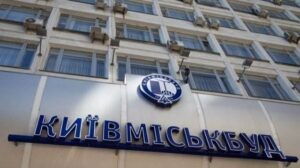
PJSC “Kyivmiskbud” Holding Company contributed 81,364,000 UAH to the state and local budgets between April 1, 2023, and March 31, 2026, the company’s press service reported.
“Kyivmiskbud” once again demonstrates transparency and financial discipline. Even under challenging anti-crisis conditions, the company remains a conscientious taxpayer. We operate transparently, comply with legal requirements, and are systematically moving forward,” said Yuriy Tykhonovych, acting chairman of the holding company’s board of directors.
From July 8 to August 18, 2026, “Kyivmiskbud” underwent a scheduled on-site audit by the Main Directorate of the State Tax Service in Kyiv. The audit examined compliance with tax, foreign exchange, and other laws for the period from April 1, 2023, to March 31, 2026, as well as the timeliness of payments of the unified social contribution (USC) from July 1, 2021, to March 31, 2026. A corresponding report was drawn up based on the results of the inspection.
During the specified period, “Kyivmiskbud” paid 81,364,000 UAH to the state and local budgets, of which land rent amounted to 28,086,000 UAH; Unified Social Contribution (USC) – 20,830,000 UAH; personal income tax (PIT) – 17,764,000 UAH; land tax – 6,143,000 UAH; real estate tax – 5,199,000 UAH; military levy – 3,304,000 UAH; income tax – 34,850 UAH.
At the same time, late payment of land rent for 2023 in the amount of 647,800 UAH was identified, the company’s losses for the reporting period were reduced, and additional income tax for the third quarter of 2023 in the amount of 1,833,000 UAH was assessed.
As previously reported, Kyivmiskbud’s balance sheet includes 24 construction sites where more than 120 residential buildings at various stages of completion have been erected. The total area of unfinished construction exceeds 548,000 square meters. The developer began restoration work in March 2026 at a number of sites. In July, the “Podol Grad” residential complex was commissioned. Five more projects are at an advanced stage of completion (the “Freedom” residential complex, the “Twin House” residential complex, the “Oberig-2” residential complex (Building 1), the “Rainbow” residential complex, and the “Gvardeysky” residential complex).
Active construction and installation work is underway at four additional sites.
Kyivmiskbud Holding Company was established in 1994 on the basis of the assets of the state-owned municipal construction corporation “Kyivmiskbud” by consolidating controlling stakes in 28 enterprises and other assets into its authorized capital. It comprises 40 joint-stock companies in which the company holds shares, as well as six subsidiaries and 51 companies with associate member status.
According to data from the National Securities and Stock Market Commission (NSSMC), the Kyiv City Council is the majority shareholder of Kyivmiskbud Holding Company PJSC.

The Central, Ingulets, and Northern Mining and Processing Complexes (MPCs) of the Metinvest Mining and Metallurgical Group, which were merged into the United Mining and Processing Complex, transferred 2.8 billion hryvnias to budgets at all levels for the January–June period of this year, which is 200 million hryvnias more than in the same period last year.
According to the company’s press release, Metinvest’s Kryvyi Rih mining and processing plants remain a reliable financial foundation for Ukraine even during the war and economic crisis, channeling billions of hryvnias into budgets at all levels. As has traditionally been the case, the main sources of revenue remain subsoil use fees—1.3 billion hryvnias—the unified social contribution—nearly 400 million hryvnias—and personal income tax—350 million hryvnias.
“Ukraine’s mining and metallurgical sector is going through an extremely difficult period; however, thanks to our professional and responsible specialists, Metinvest’s mining and processing plants continue to operate amid shelling and severe logistical and export restrictions. And even despite the decline in production, the United Mining and Processing Complex consistently pays all required taxes and fees. Because taxes right now mean support, protection, and survival for the country as a whole and for local communities in particular,” said Igor Tonev, CEO of the United Mining and Processing Complex.
As previously reported, including its associated companies and joint ventures, the Metinvest Group paid 8.5 billion UAH in taxes and fees to budgets at all levels in Ukraine during the first half of 2026.
In the first quarter of 2026, the United Mining and Processing Complex transferred 1.3 billion UAH to budgets at all levels.
Metinvest is a vertically integrated group of mining and metallurgical enterprises. Its facilities are located in Ukraine—in the Donetsk, Luhansk, Zaporizhzhia, and Dnipropetrovsk regions—as well as in European Union countries, the United Kingdom, and the United States. The holding’s main shareholders are the SCM Group (71.24%) and Smart Holding (23.76%). Metinvest Holding LLC is the management company of the Metinvest Group.
BUDGET, KRYVYI RIH, METINVEST, TAX, ГЗК

As of July 2026, sole proprietors registered in Kyiv owed the state 2.61 billion UAH in taxes, the highest figure among Ukraine’s regions, according to data from the State Tax Service analyzed by Opendatabot.
The capital accounts for about 16% of the country’s total tax arrears owed by sole proprietors, which amount to 16.6 billion hryvnias.
In second place is the Odesa region, with entrepreneurs owing about 1.6 billion hryvnias; in third place is the Kyiv region, with 1.37 billion hryvnias.
Collectively, Kyiv, Odesa, and Kyiv regions account for approximately one-third of all tax debts owed by Ukrainian sole proprietors.
At the same time, Kyiv region leads in the number of debtors, with 182,640 sole proprietors owing tax debt. Over the past year, their number has increased by approximately 1.5 times.
The Odesa Oblast has 119,470 individual entrepreneurs in debt, while the Kharkiv Oblast has 101,500.
In total, approximately 1.5 million individual entrepreneurs in Ukraine owe taxes, amounting to a total of 16.6 billion hryvnias.
Source: Opendatabot, data from the State Tax Service of Ukraine as of July 2026.



