
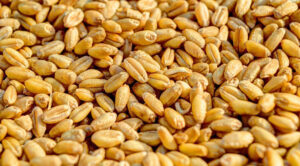
The Ministry of Agriculture and Forestry of the Republic of Turkey will tighten phytosanitary controls on the import, export, re-export, and transit of plants and plant products, including wheat, effective August 4, 2026, according to the State Service of Ukraine for Food Safety and Consumer Protection (Derzhprodsposhchivsluzhba).
The tightening of requirements is related to Turkey’s adoption of a new Plant Quarantine Regulation, which repeals the previous Quarantine Regulation.
“Since wheat imported into the Republic of Turkey serves as a host plant for harmful organisms such as Tilletia barclayana, Tilletia indica, Tilletia caries, Tilletia controversa, and Tilletia laevis (Tilletia foetida), the Republic of Turkey has strengthened controls to detect these harmful organisms in wheat shipments,” the statement said.
If these pests are detected, Ukrainian exporters will be denied a phytosanitary certificate pursuant to Article 46 of Ukraine’s Law “On Plant Quarantine.”
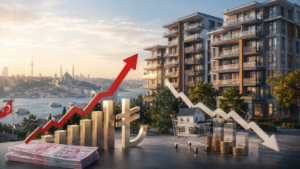
Muğla Province, home to the popular resorts of Bodrum, Marmaris, and Fethiye, remains Turkey’s most expensive region for buying a home. As of June 2026, the average price per square meter there reached 85,182 thousand Turkish lira, or approximately $1,850.
The average price of a residential property in Muğla was 11.074 million lira, which is equivalent to approximately $240,000, according to the June report by Emlakjet and Endeksa.
Istanbul took second place in terms of price per square meter, with an average of 63,788 thousand lira. The average property in Turkey’s largest city is valued at approximately 7.017 million lira.
Antalya ranks third, where a square meter costs an average of 55,264 thousand lira, and a property costs about 6.079 million lira. Next are Izmir, with 52,677 thousand lira per square meter, and Çanakkale, with 52,634 thousand lira.
Aydın also made the list of regions with the highest average property prices. The average housing price in the province, which includes the resort towns of Kuşadası and Didim, reached 6.782 million lira, with a price per square meter of 50,238 thousand lira.
High prices in coastal regions are driven by the concentration of resort real estate, limited land supply in the most sought-after locations, the development of premium projects, and demand from buyers in other regions of Turkey and abroad.
Nationwide, the average price per square meter of housing at the end of June was 40,944 thousand lira, while a standard property with an area of approximately 125 square meters cost 5.118 million lira, or roughly $111 thousand. Over the past year, prices in the national currency rose by 22.3%.
However, when adjusted for inflation, Turkish housing became 7.6% cheaper over the year. A real decline was recorded in all 30 of the country’s largest provinces. In Istanbul, inflation-adjusted prices fell by 5.5%; in Antalya, by 4.1%; in Ankara, by 3.5%; and in Izmir, by 9.5%.
The average payback period for rental investments in Turkey is estimated at 13 years. In Muğla, it reaches 18 years; in Antalya, 16 years; in Istanbul, 12 years; and in Ankara, 11 years. The longer payback period for resort properties is due to the high purchase price relative to long-term rental income.
In June 2026, 129,979 residential properties were sold in Turkey, which is 15.8% more than a year earlier. The number of mortgage transactions increased by 72.1% to 25,993.

Turkey ranked first among the 41 economies surveyed in terms of the price of Apple’s new smartphone, according to a report by the Deutsche Bank Research Institute.
The 256 GB iPhone 17 Pro sells for approximately USD2,592 in the country—2.2 times more expensive than in the U.S. Japan and South Korea were the only markets where the device was cheaper than in the U.S.
The study’s authors attribute the smartphone’s high price in Turkey to taxes, import costs, and the long-term weakening of the Turkish lira.
Istanbul also ranked fourth among 69 cities in terms of the cost of a Volkswagen Golf 1.5. The car’s price is estimated at USD49,121, which is approximately 39% higher than in New York. The car is more expensive only in Singapore, Tel Aviv, and Copenhagen.
The average net monthly salary in Istanbul is about USD1,173. Rent for a three-bedroom apartment is estimated at USD1,943, for a one-bedroom apartment at USD968, and the cost of purchasing a home in the city center is approximately USD3,087 per square meter.
Thus, certain imported consumer goods in Turkey may cost more than in countries with significantly higher per capita incomes.
In January–June of this year, Ukraine reduced its imports of aluminum ores and concentrates (bauxite) by 47.1% in volume terms compared to the same period last year—down to 7,198 thousand metric tons from 13,606 thousand metric tons.
According to statistics released by the State Customs Service (SCS), bauxite imports in monetary terms decreased to $1.402 million from $1.569 million in January–June 2026.
Imports came from China (65.62% of shipments in monetary terms) and Turkey (34.38%).
In addition, Ukraine shipped 45 metric tons of bauxite worth $10,000 to Poland in May, while Ukraine did not re-export any bauxite in 2025.
As previously reported, in 2025, Ukraine increased its imports of aluminum ores and concentrates by 23.7% in volume compared to the previous year—to 43.5 thousand metric tons—and by 15.8% in value, to $4.754 million. These imports came primarily from Turkey (81.84% of shipments in monetary terms), China (15.97%), and Guyana (2.19%).
Ukraine did not re-export bauxite in 2025, just as it did not in 2024 and 2023.
In 2024, Ukraine increased its imports of bauxite by 77.4% in volume terms compared to 2023—to 35,173 thousand metric tons—and by 74% in value terms—to $4.107 million. Imports came primarily from Turkey (78.48% of shipments in monetary terms), China (19.48%), and Spain (1.9%).
Bauxite is an aluminum ore used as a raw material for producing alumina, which is then used to produce aluminum. They are also used as fluxes in ferrous metallurgy.
Bauxite is imported into Ukraine, in particular, by the Mykolaiv Alumina Plant (MGP), which is currently idle.
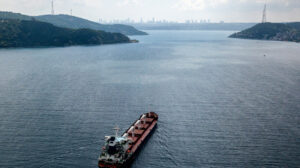
Romania, Bulgaria, and Turkey have agreed to expand the mission of the joint Black Sea Mine Countermeasures Task Group by adding the protection of critical infrastructure to its mandate.
The agreement was reached during the NATO summit in Ankara. This involves expanding the authority of the Mine Countermeasures Black Sea Task Group, which had previously focused primarily on locating and neutralizing mines in the Black Sea.
According to Reuters, the new mandate calls for the protection of energy and telecommunications facilities and undersea pipelines owned or operated by the three countries.
The Romanian Ministry of Defense stated that protecting critical infrastructure in the Black Sea requires a comprehensive, integrated, and long-term approach. The ministry also noted that a memorandum establishing the mine countermeasures security group was signed on January 11, 2024, by the defense ministers of Romania, Bulgaria, and Turkey.
The joint group became the first trilateral initiative of its kind among the three NATO countries with access to the Black Sea. Its initial task was to improve the safety of navigation following the appearance of drifting mines in the sea as a result of Russia’s war against Ukraine.
According to Reuters, the group has already neutralized more than 150 mines since its creation. The expansion of its mandate reflects growing concerns among countries in the region regarding the security of maritime infrastructure, particularly against the backdrop of developing gas projects in the Black Sea.
For Ukraine, this decision is of direct importance, as Black Sea security affects shipping, export routes, energy infrastructure, and the overall naval situation in the region. Stronger coordination between Romania, Bulgaria, and Turkey also signals greater NATO focus on the Black Sea region.
BLACK SEA, BULGARIA, DEFENSE, INFRASTRUCTURE, ROMANIA, TURKEY

U.S. President Donald Trump said Washington will lift sanctions against Turkey that were imposed because Ankara purchased Russian S-400 air defense missile systems.
“We will lift the sanctions,” Trump told reporters on Tuesday in Ankara, responding to a question about the measures imposed against Turkey under the CAATSA law.
The statement came at the start of Trump’s meeting with Turkish President Recep Tayyip Erdogan on the sidelines of the NATO summit in Ankara.
The U.S. imposed sanctions on Turkey in 2020 after Ankara purchased Russian S-400 air defense systems. Washington also excluded Turkey from the F-35 fighter jet program, stating that the use of Russian systems poses risks to American aircraft.
Trump also said that the U.S. would make a decision regarding the possible sale of F-35s to Turkey. According to Reuters, the U.S. administration is ready to support such a deal, but legal and congressional obstacles have not yet been fully resolved.
For Turkey, the lifting of sanctions and a possible return to the F-35 issue would represent a significant breakthrough in relations with the U.S. This is also a sensitive issue for NATO, as Ankara remains one of the alliance’s key members, but its purchase of Russian S-400 systems in recent years has been one of the main sources of friction in its relations with Washington.
The NATO summit in Ankara is taking place against the backdrop of the alliance’s efforts to demonstrate increased defense spending and strengthened military-industrial cooperation. The meeting between Trump and Erdogan has become one of the summit’s central bilateral meetings, as it concerns not only sanctions but also future deliveries of U.S. weapons to Turkey.



