

As of September 22, Ukrainian farmers had threshed 7 million hectares, or 61% of the projected area, according to the press service of the Ministry of Agrarian Policy and Food.
The gross harvest of grains and legumes totaled 32.95 million metric tons, with an average yield of 47 ts/ha.
Wheat harvests totaled 25.31 million metric tons from 5.11 million hectares at an average yield of 49.5 centners per hectare, while barley harvests totaled 6.39 million metric tons from 1.48 million hectares at a yield of 43.3 centners per hectare. The harvest of these crops is complete.
Peas were harvested at 812,200 metric tons from an area of 301,900 hectares, with an average yield of 26.9 centners per hectare; millet—62,200 metric tons from 26,900 hectares, with a yield of 23.2 centners per hectare; buckwheat—37,100 metric tons from 26,600 hectares at a yield of 13.9 centners per hectare, and corn—339,800 metric tons from 67,900 hectares at a yield of 50 centners per hectare.
Farmers in the southern and central regions harvested the largest volumes of grain. In the Odesa region, 4.83 million metric tons of grain were harvested from an area of 1.19 million hectares; in the Dnipropetrovsk region, 2.72 million metric tons from 663,300 hectares; and in the Kirovohrad region, 2.43 million metric tons from 561,000 hectares.
The highest average grain yields were recorded in farms in the Khmelnytskyi region (70.6 centners per hectare), the Sumy region (60.6 centners per hectare), and the Kyiv region (55.8 centners per hectare).
More than 6 million metric tons of oilseeds were harvested from approximately 2.4 million hectares. In particular, the rapeseed harvest has been completed, with 3.857 million metric tons harvested from 1.33 million hectares at a yield of 29 centners per hectare.
Sunflower seeds totaled 1.5 million metric tons from 756,200 hectares—or 14% of the projected area—at a yield of 19.8 centners per hectare.
Soybeans totaled 655,400 metric tons from 327,600 hectares—or 21% of the projected area—at a yield of 20 centners per hectare.
Farmers have also begun harvesting sugar beets. 19.3 thousand metric tons have been harvested from an area of 0.45 thousand hectares, with an average yield of 428.9 centners per hectare.
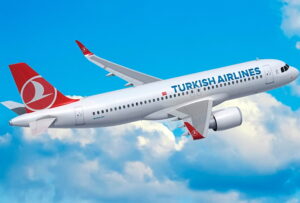
According to Experts.news, Turkish Airlines took first place among European airlines in the regional ranking of the 2026 World Airline Awards by the international organization Skytrax, published on September 18.
Air France took second place among European carriers, and Lufthansa took third. They were followed by Iberia, Virgin Atlantic, Swiss International Air Lines, British Airways, KLM Royal Dutch Airlines, Austrian Airlines, and Finnair.
Thus, the ranking of the top ten European airlines is as follows: Turkish Airlines, Air France, Lufthansa, Iberia, Virgin Atlantic, Swiss, British Airways, KLM, Austrian Airlines, and Finnair.
Skytrax also published separate rankings by European region.
In Western Europe, Air France took first place, Lufthansa second, and Virgin Atlantic third. In Northern Europe, Finnair took the lead, followed by SAS Scandinavian and Icelandair.
In Southern Europe, Turkish Airlines also took first place, Iberia second, and Vueling Airlines third.
In Central Europe, LOT Polish Airlines topped the rankings. Wizz Air took second place, and Croatia Airlines came in third. These carriers are of particular practical importance to Ukrainian passengers, as a significant portion of international flights now operate through airports in neighboring European countries following the closure of Ukraine’s civil airspace.
In Eastern Europe, Latvia’s airBaltic topped the 2026 ranking. Air Serbia came in second, and Georgian Airways took third. Bulgaria Air and Romania’s TAROM also made it into the top five.
The World Airline Awards are based on an international passenger survey. The 2025/2026 survey was conducted from September 2025 through August 2026 and covered more than 300 airlines. Respondents represented over 100 nationalities.
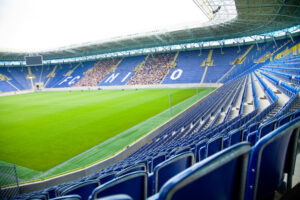
PrivatBank has listed the “Dnipro-Arena” stadium and a training facility in Dnipro for an open auction on the “Prozorro.Sales” platform with a starting price of 140.7 million UAH, excluding VAT, the financial institution’s press service reported.
The auction will take place on October 6 in a three-round English auction format. The security deposit is 7.04 million UAH.
The lot includes a stadium with a total area of 15,950 square meters, a training complex covering 13,060 square meters, and a separate indoor soccer field measuring 7,470 square meters.
“Dnipro Arena” has a capacity of approximately 31,000 spectators, a VIP box with 296 seats, a restaurant with 550 seats, a 105×68-meter soccer field with underfloor heating and automatic irrigation, and parking lots for buses and cars.
The training complex includes four natural-turf fields, three outdoor fields with artificial turf, an indoor field with stands seating 506 people, a cottage village, a dormitory, a medical and rehabilitation center, a swimming pool, a gym, and other infrastructure.
The land plots on which the facilities are located are municipally owned; PrivatBank uses some of them under lease agreements, and the right to use one plot is currently being formalized.
The transfer of the property to the buyer is contingent upon receiving approval from the Antimonopoly Committee of Ukraine (AMCU) for the concentration or a conclusion that such approval is not required, and upon full payment for the property.
Persons subject to sanctions, associated with jurisdictions posing an unacceptably high risk, or involved in corruption offenses, terrorist financing, or money laundering are not permitted to participate in the auction.
Restrictions also apply to companies with opaque ownership structures in offshore jurisdictions, as well as individuals affiliated with oligarchs, former executives, or owners of PrivatBank.
As previously reported, PrivatBank last attempted to sell this complex in the fall of 2025, but the auction scheduled for October 30 did not take place due to a lack of bids. The starting price was 150 million UAH.
After that, the bank tried to lease out “Dnipro-Arena” and the training facility, but the January 2026 auction also did not take place due to a lack of participants. The starting rent was 2.7 million UAH per month, including VAT.
PrivatBank is Ukraine’s largest bank. According to the National Bank, the financial institution’s total assets as of August 1, 2026, amounted to 979.31 billion UAH (22.7% of the total).

According to Experts.news, Singapore Airlines was named the world’s best airline at the 2026 World Airline Awards, the results of which were announced by the international ranking organization Skytrax on September 18 in London.
Qatar Airways, which topped the global ranking in 2025, took second place, while Cathay Pacific Airways came in third. The top five also included Japan’s ANA All Nippon Airways and Turkish Airlines.
The top 10 best airlines in the world in 2026 were:
Singapore Airlines
Qatar Airways
Cathay Pacific Airways
ANA All Nippon Airways
Turkish Airlines
Emirates
Air France
Hainan Airlines
Japan Airlines
Korean Air
Thus, half of the top ten were airlines from East and Southeast Asia. Among European carriers, Turkish Airlines and Air France made the top 10, while Emirates and Qatar Airways represented the Middle East.
Singapore Airlines won the top title of “World’s Best Airline” for the sixth time in the award’s history. In 2026, the carrier was also recognized as the world’s best for economy class and in-flight meals in economy class.
Qatar Airways, which took second place, received the award for Best Business Class and was also named the Best Airline in the Middle East. Additionally, in 2026, Skytrax presented the award for Best In-Flight Wi-Fi for the first time, which was also won by Qatar Airways.
The World Airline Awards have been organized by Skytrax since 1999 and are based on a passenger survey. The survey for the 2026 rankings took place from September 2025 through August 2026. Passengers from over 100 countries participated, and the final results included more than 300 airlines.
Respondents evaluated service at the airport and on board, seat comfort, cabin cleanliness, in-flight meals, staff performance, check-in, boarding, in-flight entertainment, Wi-Fi, and value for money.
Source: Skytrax World Airline Awards.

The Ukrainian Corporation for Viticulture and Winemaking “Ukrvinprom” and the state-owned “Ukrgasbank” have signed a cooperation agreement aimed at supporting the development of the Ukrainian wine industry, implementing joint projects, developing wine tourism, and introducing modern financial instruments for companies in the industry, the corporation reported.
As Ukrvinprom CEO Volodymyr Kucherenko stated in a comment to Interfax-Ukraine, the goal of the agreement is to create opportunities for further cooperation and provide winemakers with access to the bank’s financial instruments.
The agreement does not specify a fixed amount of funding. Industry enterprises will have access to the bank’s financial instruments as needed and within the framework of specific projects, in accordance with the terms of the bank’s programs.
“It is important to us that this particular agreement opens up an additional tool to support our winemakers and industry enterprises. You will see concrete results in certain areas of this cooperation, I think, in the very near future—even before the end of this year,” he said.
According to Kucherenko, the collaboration will also encompass the development of wine tourism and the preservation of Ukraine’s winemaking cultural heritage.
“We see the need to revive, preserve, study, and restore the so-called Mazepa Wine Cellar. We also see other areas that we are currently exploring. We hope that with the help of ‘Ukrgasbank’ and other patrons, we will be able to revive our Ukrainian winemaking heritage. And not only revive and preserve it, but also build upon the achievements of our winemakers,” Kucherenko noted.
He added that “Ukrvinprom” is open to cooperation with all market participants. In the first phase, the corporation plans to help its members gain access to special programs developed jointly with the bank, as well as to inform market participants about available opportunities.
The agreement was signed on September 18 during the 5th International Forum “Ukrainian Wine—Part of the World’s Cultural Heritage: From Trypillia to the Present Day” in Kyiv. One of the forum’s topics was financing opportunities for investments in winemaking and wine tourism.

The Book.ua bookstore chain has opened a new location in Kyiv at 5 Spaska Street; the bookstore in Podil is currently operating in test mode, the company’s press office reported.
“We’re getting to know the new location, fine-tuning all our processes, and preparing for the official opening. But we don’t want to wait for the ‘perfect moment.’ The books are already on the shelves, the coffee is brewing, the team is on site—and we really want to finally see you here,” the chain noted on Facebook.
As previously reported, a Russian attack on August 28 destroyed the warehouse shared by Readeat, Book.ua, and a number of publishers in Sviatopetrivskyi, from which books were shipped throughout Ukraine.
Book.ua has been operating since 2023 and runs an online bookstore as well as bookstore-cafés: seven in Kyiv and one in Khmelnytskyi.



