

Dun & Bradstreet (D&B) is expanding the use of its global corporate data system in artificial intelligence-based solutions: in September, the company announced the integration of D&B Commercial Graph with Microsoft and IBM AI platforms.
On September 16, D&B announced new integrations via the Model Context Protocol (MCP) with Microsoft Copilot Studio and Microsoft Dynamics 365 Sales AI agents. They make it possible to use verified information about legal entities, ownership structures, corporate relationships and risks directly in automated workflows.
As early as September 17, the company announced that D&B Commercial Graph had also become available in the IBM watsonx Orchestrate agent catalog via MCP.
The integration enables corporate AI systems to obtain verified business context while performing tasks in finance, credit analysis, compliance, procurement, sales, marketing and corporate data management.
A key element of the system remains the D-U-N-S Number — a unique nine-digit identifier for a legal entity that allows AI systems to unambiguously identify a company and link information about it from different sources.
Earlier in 2026, Dun & Bradstreet also announced the integration of its business data with OpenAI, Anthropic Claude and Gemini-based solutions. In particular, D&B’s cooperation with OpenAI makes it possible to use D&B Commercial Graph in ChatGPT and Codex via MCP for financial and analytical tasks.
“Artificial intelligence is moving very quickly from search and text generation to real corporate decisions — counterparty verification, supplier assessment, credit analysis or compliance. In such a model, it is critically important what specific data AI uses to make or recommend decisions,” said Maksym Urakin, Director of Development and Marketing at Interfax-Ukraine, Head of the D&B-Interfax-Ukraine business unit, and PhD in Economics.
According to him, publicly available information from the internet is insufficient for critically important business decisions.
“AI can process information very quickly, but speed alone does not guarantee its reliability. If the system has incorrectly identified a legal entity, failed to identify the parent company, beneficiary or a change in the ownership structure, automation will only accelerate the error. That is why verified corporate data are becoming the foundation of corporate AI,” Urakin emphasized.
Dun & Bradstreet reports that its global information infrastructure covers more than 600 million public and private companies in more than 200 countries.
For Ukrainian companies, the development of such technologies means that international business identification and the quality of corporate data will become even more important. Whereas previously information about a company was mainly checked by an employee of a bank, investor or procurement department, in the future part of such verification will increasingly be carried out by automated AI systems.
Discrepancies in a company’s English-language name, address, information about management or owners may, in such a situation, affect not only the speed of manual due diligence, but also the results of automated analysis.
“Ukrainian business must prepare for an environment in which it will increasingly be checked not by a person, but by an algorithm. For this, the corporate profile must be unambiguous, up to date and suitable for machine identification. The D-U-N-S Number and D&B’s global business data are effectively becoming one of the instruments of such digital trust,” Urakin added.
Dun & Bradstreet is an international provider of business data and analytical solutions whose history began in 1841. The company provides tools for business identification, counterparty verification, credit and commercial risk assessment, compliance, supply chain management and working with corporate data.
The official representative of Dun & Bradstreet in Ukraine is the Interfax-Ukraine news agency. The specialized D&B-Interfax-Ukraine unit helps Ukrainian companies work with international business data, verify foreign partners and obtain a D-U-N-S Number.
Questions can be submitted through the specialized D&B resource — dnb.ua, by email at Urakin@interfax.kyiv.ua, or by phone at +38 (044) 270-65-74.
artificial intelligence, BUSINESS DATA, DUN & BRADSTREET, IBM, MICROSOFT
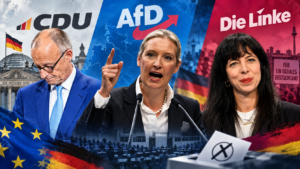
Regional elections in Germany on September 20 demonstrated the weakening positions of traditional parties and the further fragmentation of the German electorate: Alternative for Germany (AfD) won in Mecklenburg-Vorpommern, while in Berlin the Left took first place, according to an analysis by the Experts Club analytical center.
In Mecklenburg-Vorpommern, AfD received 38.2% of the vote, compared with 16.7% in the previous elections in 2021. The Social Democratic Party of Germany received 35.5%, the Left — 6.5%, and the Greens — 5.7%. Chancellor Friedrich Merz’s Christian Democratic Union received 4.9% and, for the first time in history, failed to cross the five-percent threshold in a state election.
The CDU received 13.3% in the previous election in this state, meaning it lost more than 8 percentage points of support. According to the preliminary distribution of seats, AfD receives 32 seats, the SPD — 29, while the Left and the Greens receive five each. Since the other parliamentary forces rule out a coalition with AfD, the voting result alone does not determine the composition of the future state government.
In Berlin, the results demonstrated a different political configuration. The Left received 25.7% of the vote, compared with 12.2% in the previous election. The CDU came second with 18.8%, AfD received 16.3%, the Greens — 14.3%, and the SPD — 12.1%. The incumbent coalition of the CDU and the Social Democrats lost its parliamentary majority.
Experts Club points out that the September 20 results continued a trend that emerged at the beginning of the month. On September 6, AfD took first place in the election in Saxony-Anhalt with 43.8%, while the CDU received 17.2%. In 2021, the CDU had 37.1% in this state, while AfD had 20.8%.
Thus, according to Experts Club, the results of the September elections should not be reduced exclusively to a movement of the German electorate in a single ideological direction. In two eastern states, AfD received the greatest support, while in Berlin the Left strengthened significantly. This indicates that some voters of traditional parties are shifting toward different alternative political forces depending on the region and the structure of local problems.
According to Infratest dimap, in Mecklenburg-Vorpommern AfD managed to mobilize around 66,000 citizens who had previously not voted, as well as attract around 48,000 former SPD voters and approximately 32,000 former CDU supporters.
At the same time, the SPD’s result in this state is largely associated with the personal support enjoyed by Minister-President Manuela Schwesig. Almost half of Social Democratic voters surveyed after the election said that they would not have supported the party without her. This demonstrates the importance of the personal ratings of state-level politicians even when their parties have weaker positions at the federal level.
A separate problem for the CDU was voters’ perception of the party’s economic competence. Only 13% of respondents in Mecklenburg-Vorpommern named the CDU as the political force best able to solve economic problems. Some 89% of respondents also agreed with the statement that before the federal election the party had promised a great deal but delivered little. These results characterize one specific federal state and cannot automatically be applied to Germany as a whole.
In Berlin, one of the central factors of the campaign was the housing issue. The Left focused attention on rental costs, the shortage of affordable housing and regulation of the activities of large property owners. At the same time, migration and security remained among the important issues for AfD voters.
“These elections show not a linear movement of German society in one ideological direction, but a fragmentation of the electorate. In Mecklenburg-Vorpommern, protest is concentrated around AfD, while in Berlin the Left became the main recipient of the protest vote and the vote of young urban residents. In other words, the common denominator is not ideology, but the declining ability of traditional parties to keep different groups of voters within the former model of the political center,” said sociologist and co-founder of the research company Active Group Oleksandr Poznii.
According to him, the mobilization of citizens who had not previously participated in elections is particularly illustrative. This may indicate not only a redistribution of the already established electorate, but also an expansion of the base of individual political forces.
Poznii also drew attention to the decline in confidence among some voters in the CDU’s traditional economic competence. In his view, for centrist parties the coming months will be associated primarily with the need to restore the confidence of different groups of voters, rather than only with personnel discussions.
Federal dynamics also demonstrate changes in party support. In the September ARD-DeutschlandTrend conducted by Infratest dimap from August 31 to September 2 among 1,319 voters, AfD was supported by 27% of respondents, the CDU/CSU by 21%, the Greens by 15%, the SPD by 13%, and the Left by 12%.
At the same time, state elections do not directly change the composition of Germany’s federal government or Berlin’s foreign policy. However, they influence the domestic political debate on the economy, budget spending, energy, migration and other issues.
The preliminary results of the elections in Mecklenburg-Vorpommern and Berlin were released on the night of September 21. The final results are to be approved after the electoral records are checked.
The material was prepared on the basis of a study by the Experts Club analytical center, “AfD won in Mecklenburg, the Left in Berlin: regional elections increased pressure on Germany’s traditional parties,” published on September 21, 2026. Experts Club study on Experts.news

The situation on the Ukrainian wheat market remains largely unchanged due to complicated and expensive logistics, while the corn market is suffering from slow export growth and anticipates a seasonal increase in supply, consulting firm Barva Invest reported on its Telegram channel.
The price of Ukrainian 11.5% wheat on DAP-Danube terms stood at $172–178 per metric ton on September 21.
“The situation on the Ukrainian wheat market remains largely unchanged—exports remain costly and complicated due to Russia’s ongoing attacks on port infrastructure, and the logistics situation is unlikely to improve in the near future,” Barva Invest noted.
According to the company, the most active export routes for Ukrainian wheat remain the Romanian port of Constanta and the Vadul Siret border crossing. At the same time, exports through Ukrainian Danube ports remain extremely difficult due to constant attacks by Russia.
On the Ukrainian corn market, the DAP-Danube price on September 21 stood at $170 per metric ton.
“The Ukrainian corn market continues to suffer from a lack of its usual export pace, while at the same time anticipating a seasonal increase in supply. Logistics are expensive and complicated, which does not facilitate the conclusion of new deals,” Barva Invest noted.

According to Experts.news, more than 551,000 companies registered in Ukraine have at least one signatory in addition to the CEO, and the total number of such authorized persons has exceeded 603,000, according to data from the Unified State Register analyzed by Opendatabot.
According to an Opendatabot study published on September 21, 2026, 551,328 companies—or 38% of all registered companies in Ukraine—have an additional signatory. Another 897,893 companies—or 62%—do not have such representatives. Thus, the total database used for the calculation comprises approximately 1.45 million companies.
As of September, there were 603,304 signatories listed in the Unified State Register. In some cases, a single individual has the right to represent several legal entities at once. The record-holder among signatories currently represents 246 companies.
A signatory is a person authorized to perform certain legally significant actions on behalf of a company. Specifically, this includes signing contracts, submitting documents for state registration, and other actions provided for by the powers granted to them.
However, the mere fact that a person is listed in the registry as a signatory does not imply unlimited authority. The Unified State Register may separately specify permitted transactions, restrictions, maximum contract amounts, and other conditions of representation. Therefore, when verifying a counterparty, it is important to assess not only the presence of a signatory but also the specific scope of their rights.
According to Opendatabot’s assessment, the institution of additional signatories has taken on particular practical significance since the start of the full-scale war. Mobilization, communication disruptions, shelling, executives being abroad, or other circumstances may temporarily hinder a director’s ability to perform their duties.
Having another authorized representative allows a company to avoid concentrating all operational processes on a single executive and to continue entering into contracts, completing registration procedures, and performing other actions necessary for business operations.
At the same time, the significant number of companies that a single person may represent increases the importance of verifying such individuals when entering into agreements. It is advisable for a counterparty to verify the validity of a representative’s authority, any restrictions regarding the amount or type of contract, and whether there have been any changes in the Unified State Register.
You can verify the signatories of a specific company and the scope of their registered powers through services that use open data from the Unified State Register.
BUSINESS, COMPANY, signatory, Unified State Register, Опендатабот
The Ukrainian government has officially approved the country’s participation in the World Specialized Exhibition EXPO 2027 Belgrade, which will take place in the Serbian capital from May 15 to August 15, 2027.
The Cabinet of Ministers of Ukraine adopted the relevant resolution on September 21. Deputy Prime Minister for Humanitarian Policy and Minister of Culture Tetiana Berezhna has been appointed General Commissioner of the Ukrainian national pavilion.
The costs of Ukraine’s participation are to be covered by funds from the EXPO 2027 organizer, donor and sponsor funding, charitable contributions, and other permitted sources. The Ministry of Economy and Environment will coordinate the preparation of the Ukrainian exhibition, and the Ministry of Foreign Affairs will officially notify the Serbian government of the appointment of the Commissioner-General.
Berezhna already has experience organizing Ukraine’s participation in world expos. She served as Commissioner-General of the Ukrainian pavilion at EXPO 2025 in Osaka.
The Belgrade expo will be held under the slogan “Play for Humanity: Sport and Music for All.” Organizers expect more than 4 million visitors over the 93 days of the expo.
EXPO 2027 will be the largest specialized expo in terms of the number of participants in the history of such events. According to the latest data from the organizers, 143 international participants have confirmed their participation. For comparison, the previous record for specialized EXPO events was held by Astana 2017, which featured 117 participating countries.
Among the largest countries that have confirmed or already registered their participation in the Belgrade exhibition are are the United States, China, Russia, India, Germany, France, Italy, Spain, Japan, South Korea, Turkey, Brazil, Mexico, Argentina, Saudi Arabia, the UAE, Israel, South Africa, and Egypt.
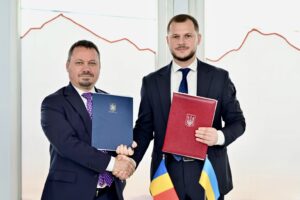
Ukraine and Romania, within the framework of the Carpathian Economic Forum (C8 Summit), signed a memorandum of understanding based on an updated Strategy for the Development of Border Infrastructure between the two countries, which takes into account the needs related to the transportation of cargo and passengers.
According to a statement from Ukraine’s Ministry of Recovery, Infrastructure, and Transport, the document was signed by Minister Mykola Kalashnyk and Ionel Scriostanu, State Secretary of Romania’s Ministry of Transport and Infrastructure.
Under the memorandum, the countries are expected to work on modernizing and developing road border crossing points (BCPs) and access roads, strengthening rail connections, as well as simplifying border control procedures and expanding opportunities for transshipment of Ukrainian cargo in Romanian ports.
Among other things, there are plans to increase the throughput capacity of existing border crossing points and develop new routes; specifically, the updated Strategy identifies 17 border crossing points, 10 of which are new proposals.
“The signed memorandum outlines specific directions for this work. It is important for us to increase the border’s throughput capacity and create stable and predictable routes for Ukrainian businesses to the European Union and Romanian ports,” the press release quotes Ukraine’s Minister of Recovery, Infrastructure, and Transport as saying.
The ministry emphasized that the next step will be to move toward implementing the relevant projects and securing funding for their execution.



