

Czech Prime Minister Andrej Babiš stated that current developments in the international situation could lead the world into World War III, and called on Europe to pay more attention to a diplomatic resolution of Russia’s war against Ukraine.
Babiš made these remarks on September 17 while delivering the opening address at the IISS Prague Defense Summit 2026 in Prague. The Czech government and the conference organizer—the International Institute for Strategic Studies (IISS)—have confirmed that the speech took place.
“I’m not afraid to say this out loud. The path the world is currently on does not lead to security. It leads straight to the gates of hell. It is leading us toward World War III,” Babiš said, according to the Czech news agency ČTK.
According to the Czech prime minister, the European security debate focuses too much on the military aspect and not enough on finding a diplomatic solution. He noted that Europe, together with the United States, must push for direct negotiations between Ukrainian President Volodymyr Zelenskyy and Russian President Vladimir Putin with the aim of ending the war.
At the same time, Babiš emphasized that he considers Russia an aggressor. As reported by the Czech press, the prime minister stated that Putin’s actions are “completely unacceptable,” but diplomacy, in his view, must remain one of the main tools for ending the war.
Babiš also drew attention to the duration of the war. According to him, as of September 17, Russia’s full-scale aggression against Ukraine had been ongoing for 1,666 days—99 days longer than World War I. The prime minister stated that the wars in Ukraine and the Middle East have not only military but also serious economic consequences, including rising costs for energy and food, as well as pressure on European industry.
At the same time, Babiš did not advocate abandoning efforts to strengthen Europe’s defense; rather, he proposed creating a joint European missile defense system called Euro Patriot. Under his plan, European countries could pool their industrial and technological capabilities—similar to the creation of Airbus—and develop their own system to defend against ballistic missiles and drones.
“We must learn from the war in Ukraine and seek solutions, first and foremost in the area of defense against ballistic missiles,” the Czech prime minister said. In his view, such a project would simultaneously strengthen Europe’s contribution to NATO and create additional opportunities for the European defense industry, including the Czech defense sector.
The IISS Prague Defense Summit is taking place in Prague from September 16–18, 2026. It is attended by political and military leaders, representatives of international organizations and the defense industry, as well as experts. The main topics of the conference are the development of European defense capabilities, military mobility, arms procurement, missile defense, and the future of transatlantic cooperation.
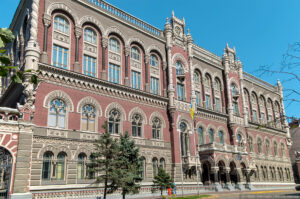
As expected, the Board of the National Bank of Ukraine (NBU) raised the discount rate by 0.5 percentage points to 16% per annum, citing sustained fundamental price pressures, secondary effects from supply shocks, and heightened medium-term inflationary risks as the reasons for this decision.
“This decision will support the attractiveness of hryvnia-denominated assets and the stability of the foreign exchange market, which will help keep inflation expectations under control and return inflation to a sustainable downward trajectory toward the 5% target over the policy horizon,” the regulator noted in a press release on Thursday.
It noted that in August, consumer inflation accelerated to 8.1% year-over-year and slightly exceeded the trajectory of the NBU’s July forecast. The regulator attributed this primarily to a stronger-than-expected rise in fuel prices amid the escalation of the war in the Middle East and faster growth in certain administrative tariffs due to the consequences of Russian attacks on critical infrastructure.
The central bank expects inflation to be slightly higher in the coming months than previously projected, but to return to a downward trajectory in 2027.
The regulator also noted that official external financing in July and August was lower than expected, causing international reserves to decline. At the same time, provided Ukraine fulfills its obligations under support programs, a significant portion of the funding should be replenished in the coming months.
Among other risks, the National Bank cited the possible emergence of additional budgetary needs for defense and reconstruction, as well as increased pressure on wages due to labor shortages. At the same time, a deterioration in the security situation could cool consumer demand and the labor market, which would have a disinflationary effect.
“If, in the coming months, the deterioration in the security situation leads to a noticeable cooling of consumer demand and the labor market, the NBU will consider easing monetary conditions,” the press release states.
As previously reported, in late January 2026, the National Bank lowered the discount rate from 15.5% to 15% per annum and subsequently kept it at that level for three consecutive meetings. At its previous meeting in July, the regulator raised the rate by 0.5 percentage points—to 15.5% per annum—in a move that caught the market by surprise, and announced the possibility of another hike before the end of the year.
The NBU will announce the results of the Monetary Policy Committee’s discussion on raising the discount rate to 16% per annum on September 28.
The next meeting of the National Bank’s Board on monetary policy will take place on October 29, 2026.

According to Experts Club, EU countries issued approximately 3.9 million first-time residence permits to third-country nationals in 2025, which is 10.1%, or 355,350, more than in 2024.
This was the highest figure since Eurostat began compiling comparative statistics in 2008.
Labor migration was the main driver of this growth. The number of first-time work-related permits increased by 179,700, or 16.1%, over the year, reaching approximately 1.3 million. Work-related permits accounted for 33.6% of all first-time residence permits issued.
The number of permits issued for family reasons rose by 14.1%—to approximately 1.1 million, or 28.1% of the total.
Another 600,000 residence permits, or 15.5%, were issued for educational purposes. Their number increased by 9%.
About 22.8% of permits were issued on other grounds, including international protection. In this category, the number of residence permits decreased by 0.9%.
Ukrainian citizens constituted the largest group of first-time permit recipients—335,100—followed by India with 227,600 and Morocco with 202,100.
Spain led all EU countries in the total number of new permits, issuing 635,400 residence permits.
The data does not include individuals under temporary protection, including the millions of Ukrainians who fled the country after the start of the full-scale war.
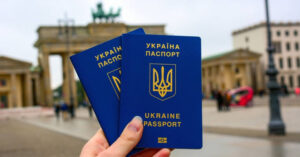
According to Experts Club, Ukrainian citizens received 335,100 first-time residence permits in European Union countries in 2025, ranking first among citizens of all non-EU countries, according to Eurostat data.
Ukrainians accounted for 8.7% of all first-time residence permits issued in the EU to third-country nationals. Citizens of India ranked second with 227,600 permits, or 5.9%, while Morocco ranked third with 202,100 permits, or 5.2%.
Compared to 2024, the number of first-time residence permits issued to Ukrainians increased by 13.6%. A year earlier, there were about 295,000. Thus, despite the continuation of the temporary protection mechanism, the flow of Ukrainians who are transitioning to or initially applying for other grounds for legal residence in the EU remains significant.
The main reason Ukrainians obtained their first residence permit was employment. According to Eurostat, approximately two-thirds of the permits issued to Ukrainian citizens in 2025 were related to employment.
Poland remained the primary destination: it accounted for 72% of all first residence permits issued to Ukrainians in the EU.
At the same time, Eurostat specifically notes that these figures do not include individuals benefiting from temporary protection in connection with Russia’s full-scale invasion of Ukraine. Temporary protection is accounted for in separate statistics; therefore, the 335,100 permits reflect other grounds for residence—primarily work, family, education, and other categories.
In total, EU countries issued approximately 3.9 million first-time residence permits to third-country nationals in 2025.
EU, Eurostat, EXPERTS CLUB, MIGRATION, RESIDENCE PERMIT, UKRAINE

As of September 2026, 1,101 active tobacco industry companies were registered in Ukraine, according to data from the Unified State Register cited by Opendatabot.
During the first eight months of 2026, 39 new companies were registered, while eight enterprises ceased operations. Thus, the net increase amounted to 31 companies.
During the same period last year, the number of companies increased by 35.
Despite the continued growth, the current pace remains significantly below the pre-war level. In 2021, the net increase in the number of enterprises in the tobacco sector amounted to 82 companies.
The industry’s financial indicators also demonstrate growth in turnover. The 41 companies that provided comparable financial statements for the first half of 2025 and 2026 increased their combined revenue by 10% to UAH 198.18 billion.
At the same time, net profit decreased by 8% and amounted to UAH 6.5 billion.
Meanwhile, the share of profitable enterprises increased. In the first half of 2026, 29 out of 41 companies, or 71%, reported a positive financial result, compared with 63% a year earlier.
In total, 50 companies in the industry submitted financial statements for the first half of the current year. A year earlier, there were 13 more such enterprises.
Source: Opendatabot.
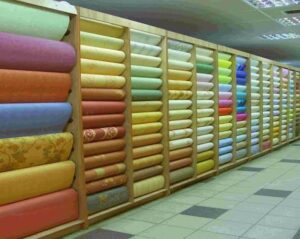
Wallpaper production by the industry’s leading company, which provides data to the UkrPapier Association, fell by 39.6% in August 2026 compared to August of last year—to 0.96 million standard pieces.
Statistics for this segment are based on data from Ukraine’s largest manufacturer, the company “Slovianski Wallpaper—KFTB.”
A significant decline in August was also recorded in the production of school and office notebooks. Output totaled 11.43 million units, which is 17.6% less than a year earlier.
The month-over-month decline was particularly pronounced: compared to July, notebook production fell by as much as 59.7%. This trend may be partly attributed to seasonal production patterns and the build-up of product inventories ahead of the start of the school year.
At the same time, the situation in individual segments of the paper industry remains mixed. Toilet paper production in August rose by 4%—to 49 million rolls—while cardboard output fell by 3.1% and corrugated packaging by 11%.
The total value of commercial output by companies in the industry reached 2.75 billion UAH in August, an increase of 17.5% compared to the same month last year, despite a decline in physical output volumes for a number of key product types.
The “UkrPapier” Association brings together manufacturers and participants in the Ukrainian pulp and paper market. According to the association itself, it comprises 32 companies, including manufacturers, distributors, and suppliers of waste paper.
Source: “UkrBumaga” Association.



