

According to Experts Club, Ukraine remains one of the world’s largest producers of currants and ranks second behind Poland, EastFruit reports, citing data from Oleksandr Yareshchenko and Inna Babiychuk, experts at the Institute of Horticulture of the National Academy of Agrarian Sciences (NAAS).
According to official statistics, the area under currant cultivation in Ukraine exceeds 4,000 hectares, and the annual gross harvest is estimated at approximately 27,000 metric tons. However, experts note that these figures should be interpreted with caution, as about two-thirds of the area is accounted for by private households, which are not fully covered by statistical reporting.
For the commercial sector, experts consider an estimate of about 15,000 metric tons of currants per year to be more realistic. Even with this volume, Ukraine remains one of the key global players and accounts for about 8% of the world’s currant plantation area.
The global market for this berry remains fairly concentrated. The total area of currant plantations is estimated at approximately 50,000 hectares, with over 95% located in Europe. This concentration means that global supply is highly dependent on weather conditions and crop yields in a few major producing countries.
For Ukraine, currants have formed a distinct segment of the berry industry. This crop is in demand both in the fresh produce market and for processing—for freezing, juice production, purees, jams, and other food products.
Ukraine’s strong position in the global market also creates export potential; however, the industry’s development depends on the modernization of commercial plantations, crop yields, the availability of cooling and freezing facilities, and stable demand from processors.
At the same time, official data do not fully reflect the structure of production, as a significant portion of currants is grown by the population for personal consumption and sale on the domestic market.
Source: EastFruit, published on September 15, 2026.

Ukrainian companies in the pulp and paper industry produced approximately 49 million rolls of toilet paper in August 2026, a 4% increase compared to the same month last year, according to the “UkrPapier” association.
The segment of products made from primary raw materials grew particularly rapidly. Production of toilet paper made from 100% pulp reached 23.3 million rolls, an increase of 19.6% year-over-year.
Thus, products made from pure cellulose accounted for nearly 48% of the total toilet paper output by companies providing statistics to the association.
The growth in this segment is occurring against the backdrop of weaker performance in the paper industry as a whole. Total production of paper and cardboard in August decreased by 2.3% to 54.3 thousand metric tons.
Production of base paper for sanitary and hygiene products totaled 11.08 thousand metric tons, which is 1.8% less than in August of last year.
According to the association, sanitary and hygiene products remain one of the most stable segments of the Ukrainian pulp and paper industry. In the first seven months of 2026, production of toilet paper in rolls was 6.6% higher than during the same period in 2025.
Among the companies operating in this segment and providing data to the association are, in particular, the Kokhavynska Paper Mill and “VGP,” which manufactures products under the “Ruta” brand.
Source: “UkrPapier” Association.

The U.S. exchange group Nasdaq has agreed to invest $100 million in Payward, the parent company of the cryptocurrency exchange Kraken.
The investment will be made through Nasdaq Ventures and is intended to deepen the companies’ collaboration in the areas of tokenized stocks, 24/7 trading, and the integration of traditional financial infrastructure with blockchain.
Nasdaq and Payward are working on the Nasdaq Equity Tokens (NETs) system. The idea is to create a digital representation of traditional stocks while preserving ownership rights, transparency, and corporate governance.
The project demonstrates that tokenization is no longer an experiment limited to cryptocurrency companies. Major traditional exchanges are gradually beginning to build their own blockchain infrastructure.
Almost simultaneously, the London Stock Exchange Group announced a partnership with Payward. As part of the project, the plan is to tokenize the 100 largest companies traded on the London Stock Exchange.
In the future, tokenized shares are expected to be admitted to trading on the LSE 24 platform, which is designed to provide significantly longer trading hours compared to a traditional trading session.
According to Reuters Breakingviews, the global market for tokenized shares currently stands at only about $3 billion, with monthly turnover of less than $30 billion—a figure that remains insignificant compared to traditional markets.
Nevertheless, the involvement of Nasdaq, the LSE, and other major operators marks the transition of tokenization to the next phase—the integration of blockchain infrastructure directly into regulated stock markets.
The main advantages of the technology include the ability to settle transactions almost instantly, fractional ownership, expanded trading options, and the use of tokenized securities as collateral in digital financial systems.
The main unresolved issue remains the rights of token holders: not all existing digital equivalents of stocks automatically grant investors voting rights or dividends. This is precisely why traditional exchanges are striving to create models in which a digital token is as legally similar as possible to a conventional stock.
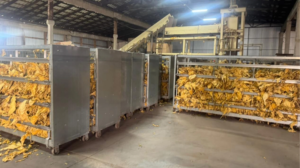
The combined revenue of Ukrainian tobacco companies that reported for the first half of both 2025 and 2026 increased by 10% and reached UAH 198.18 billion, according to Opendatabot.
The analysis included 41 companies that presented comparable financial statements for both periods. In absolute terms, their combined revenue increased by UAH 18.16 billion. Revenues grew at 26 companies, while they declined at 14 market participants.
At the same time, the increase in turnover did not lead to higher net profit. The companies’ combined net financial result decreased by approximately 8% compared with the first half of 2025, to UAH 6.5 billion.
At the same time, the structure of the industry in terms of profitability improved. In the first half of 2026, 29 out of 41 companies, or about 71% of the companies in the sample, made a profit. A year earlier, the share of profitable enterprises stood at 63%.
The number of loss-making companies declined from 14 to 11 over the year.
In total, 50 tobacco industry companies submitted financial statements for the first half of 2026, which is 13 fewer than in the same period last year. The comparison was conducted only among enterprises that submitted reports for both periods.
As of September 2026, 1,101 active companies operating in the tobacco sector were registered in Ukraine.

According to Fixygen, global prediction markets continue to grow rapidly and are becoming one of the most prominent segments at the intersection of cryptocurrencies, trading, and sports betting. During the first weekend of the new NFL season, the total trading volume on the largest prediction markets reached at least $5.83 billion, according to data from Aldrin Research cited by Barron’s.
The bulk of the trading volume came from the U.S.-regulated platform Kalshi—about $4.89 billion over the weekend.
On Sunday alone, the total volume of prediction markets was approximately $3.12 billion, and Kalshi set its own single-day record at $2.433 billion.
On the blockchain platform Polymarket, trading volume on Sunday totaled about $404 million.
Sports events were the main driver of this growth. According to researchers’ estimates, about 91% of the weekend’s activity was related to sports and combination contracts.
At the same time, prediction markets are gradually expanding far beyond elections and sporting events. Contracts on interest rates, inflation, commodity prices, cryptocurrencies, and macroeconomic indicators are already being actively traded on these platforms.
The European regulator ESMA is taking note of the sector’s growth. In July, the agency noted that some event contracts may fall under existing restrictions on binary options, while some products may also be considered by national regulators as bets.
In its September risk review, ESMA also pointed out potential issues regarding the manipulation of prediction markets and the use of insider information.
Thus, prediction markets are following a path similar to that of the early cryptocurrency market: rapid growth in trading volume is gradually attracting the attention of traditional financial regulators.
CRYPTOCURRENCY, KALSHI, Polymarket, Prediction market, TRADING
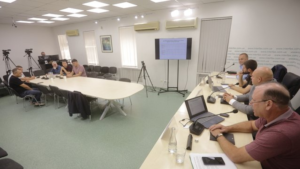
Ukrainian enterprises operating in the ferrous scrap market have called for the abolition of the current zero quota on raw material exports and the introduction of controlled supplies to EU countries, stating that the situation in the industry has sharply deteriorated.
Representatives of companies and the industry association reported this at the press conference “Ukraine’s Scrap Market: Between the Needs of the Economy and Regulatory Uncertainty,” held on September 16 at the Interfax-Ukraine agency.
Volodymyr Bubley, president of the Ukrainian Association of Secondary Metals “UAVtormet,” said that the zero quota on scrap exports to the EU, introduced from the beginning of 2026, is negatively affecting raw material collection and the activities of industry enterprises. According to him, if the current restrictions remain in place, scrap collection volumes may decline significantly by the end of the year.
Serhiy Vovk, CEO of UkrMetInvest LLC, said that the company has already laid off 180 employees, while only four of its 18 production sites continue to operate. More than 14,000 tonnes of scrap that the company is unable to sell have accumulated at its warehouses.
Mykola Klymovych, development director of Mirten LLC, noted that over the eight months of 2026, the volume of scrap collection, according to industry representatives’ estimates, fell by approximately 400,000 tonnes. Market participants estimate losses in tax revenues at more than UAH 1 billion.
Vladyslav Kleshchynskyi, CEO of the UKRMET Group, said that domestic demand from metallurgical enterprises had fallen sharply and that regulated scrap exports to the EU needed to be permitted. Industry representatives had previously proposed setting an export quota at around 200,000 tonnes per year.
According to UAVtormet, around 4.3 million tonnes of steel were produced in Ukraine in January-August 2026, compared with 7.409 million tonnes for the whole of 2025. Scrap metal supplies to metallurgical enterprises over the eight months amounted to 925,400 tonnes, while total collection reached 971,700 tonnes.
The association forecasts that by the end of 2026, steel production will amount to around 6.4-6.5 million tonnes, scrap supplies to metallurgical enterprises to 1.2-1.25 million tonnes, and total collection to approximately 1.22-1.25 million tonnes.
Exports of Ukrainian ferrous scrap in January-August 2026 fell by 95.1% compared with the same period last year, to 13,856 tonnes from 283,055 tonnes. In monetary terms, supplies decreased by 95.4% to $3.93 million.
In 2025, by contrast, scrap exports rose by 45.3% to 448,685 tonnes, while foreign-currency revenue increased by 44.5% to $131.927 million. It was precisely the sharp increase in raw material exports that became one of the reasons for the Ministry of Economy’s introduction of a licensing regime and a zero export quota for 2026.
In April, the government partially adjusted the restrictions, allowing exports under licenses for individual foreign economic activity entities that had won state electronic auctions. However, representatives of the scrap collection industry consider this mechanism insufficient to restore the market to full operation.
Participants in the press conference said that if the current regulatory model remains in place, they will seek a review of the decision and do not rule out protest actions.



