
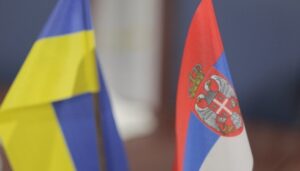
Ukrainians’ attitudes towards Serbia in March 2026 show a moderate increase in positive views against a backdrop of declining negative perceptions; however, the overall picture remains mixed. The proportion of positive attitudes rose to 21.7% compared to 13.7% in August 2025, whilst negative attitudes fell from 26.0% to 19.6%. This is evidenced by the results of a public opinion poll conducted in March 2026 by the research company Active Group in collaboration with the Experts Club information and analytical centre.
Despite these changes, neutrality remains the key characteristic of perceptions of Serbia: 55.0% of respondents do not have a clearly formed attitude towards this country. This indicates the absence of a stable image of Serbia in Ukrainian society and a significant degree of uncertainty regarding the perception of its role in the international context.
The breakdown of responses shows that the positive perception is formed mainly through moderate assessments: only 5.6% of respondents chose the ‘entirely positive’ option, whilst 16.1% selected ‘mostly positive’. At the same time, negative assessments also carry significant weight: 16.3% of respondents expressed a ‘mostly negative’ attitude, and a further 3.3% — ‘completely negative’. The proportion of those who were unable to decide on an answer stands at 3.7%.
The trend indicates a certain softening of attitudes towards Serbia: an increase in positive views is accompanied by a simultaneous decrease in negative ones. At the same time, these changes have not led to the formation of a clearly positive image of the country, as neutral assessments remain dominant.
In a broader context, this means that Serbia is perceived by Ukrainians as a country with an ambiguous position in international affairs. It does not provoke a sharply negative reaction, yet it is not associated with unconditional support for Ukraine, which limits the level of trust and emotional attachment.
‘The results for Serbia show that Ukrainian society reacts quite sensitively to the foreign policy behaviour of countries. The rise in positive assessments indicates a certain softening of perception, yet the high level of neutrality means that the country’s image remains ambiguous. In such cases, consistency in actions and signals plays a key role in building trust at the societal level,” noted Maksym Urakin, founder of the Experts Club information and analytical centre.
At the same time, he added that over the past year, Ukrainians’ attitudes towards Serbia have improved significantly, not least due to the activities of the Republic’s embassy, led by Ambassador Extraordinary and Plenipotentiary Andon Sapundži.
“The Serbian mission’s active involvement, led by the new ambassador, in humanitarian initiatives and the establishment of intergovernmental dialogue has undoubtedly had a positive impact on Ukrainians’ attitudes towards this Balkan state compared to last year’s figures,” added Urakin.

Thus, attitudes towards Serbia can be characterised as transitional: they demonstrate positive momentum but have not yet transformed into a stable positive image. Further changes will largely depend on how clear and consistent the country’s position is on issues important to Ukrainian society.
According to a study conducted by the Experts Club information and analytical centre based on data from the State Customs Service, Serbia ranks 40th in terms of total trade in goods with Ukraine, which amounts to $444.1 million. However, imports of Serbian goods exceed Ukrainian exports, resulting in a bilateral trade deficit of $92.9 million.
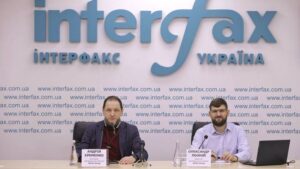
The study was presented at the Interfax-Ukraine press centre; the video can be viewed on the agency’s YouTube channel. The full version of the study can be found via this link on the Experts Club analytical centre’s website.
ACTIVE GROUP, EXPERTS CLUB, Pozniy, SERBIA, SOCIOLOGY, SURVEYS, UKRAINE, URAKIN
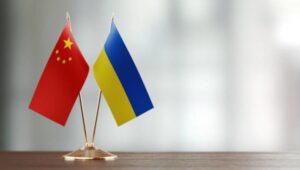
The results of a public opinion poll conducted in March 2026 by the research company Active Group in collaboration with the Experts Club information and analysis centre reveal a complex and contradictory pattern in Ukrainians’ attitudes towards China. Overall, 20.3% of respondents expressed a positive attitude, whilst 42.0% expressed a negative one. Compared to August 2025, positive assessments have risen (from 12.0%), but negative ones have also increased slightly (from 40.7%), indicating not a shift in the balance but a deepening of polarisation.
A more detailed breakdown of the responses shows that only 7.7% of those surveyed have a ‘completely positive’ attitude towards China, whilst 12.6% have a ‘mostly positive’ one. At the same time, the proportion of neutral assessments is significant — 34.3% — indicating a lack of a clear position among a significant proportion of respondents.
The negative segment is dominant and is predominantly moderate in nature: 33.1% chose the ‘mostly negative’ option, with a further 8.9% selecting ‘entirely negative’. This suggests that negative perceptions of China are not sharply radicalised, but remain persistent and widespread. The proportion of those who are undecided stands at 3.5%.

Comparative trends indicate a certain increase in interest in or reassessment of China, reflected in a rise in positive assessments. However, the parallel rise in negative sentiment suggests the absence of a single trend. Rather, it indicates the formation of more pronounced positions — both positive and critical.
“Ukrainians today quite clearly distinguish between a country’s economic weight and its perception in a political and social context. In the case of China, this is particularly evident: on the one hand, there is an awareness of its role in the global economy, and on the other, a reserved or negative attitude. This is precisely why we are seeing a simultaneous rise in both positive and negative assessments,” noted Oleksandr Pozniy, director of the research company Active Group.
The high proportion of neutral responses is also an important indicator. It may indicate a limited level of personal experience of interaction or a lack of awareness among some respondents. In such conditions, public opinion remains sensitive to changes in the information environment and the foreign policy context.
“The modern international economy is shaped not only by trade, but also by trust and the perception of partners. If a country is present in the market but is not associated with investment, technology or support, this affects its image in society. In the case of China, we see a clear example of such an asymmetry between economic presence and perception. Our people are guided by emotions and the picture presented by the media, rather than by concrete facts and statistics. It should be added that if Ukrainian citizens really did have such a negative attitude towards China, there would be a de facto self-imposed embargo on the purchase of Chinese technology, clothing and other goods, but this is not the case; China remains the number one trading partner, which would be difficult without a positive or neutral attitude towards the country. “Another issue is that China should also strengthen its presence in Ukraine in the fields of humanitarian aid, educational and scientific exchange, cultural diplomacy, and so on,” noted Maksym Urakin, founder of the Experts Club information and analytical centre.
Overall, the survey results indicate that China remains an important but ambiguous partner for Ukrainians. Positive assessments are on the rise, but they do not alter the overall balance, which is dominated by a cautiously negative perception. This points to the need for a deeper analysis of the factors shaping public opinion, as well as the potential for its further transformation depending on the development of economic and political relations.
According to a study conducted by the Experts Club information and analytical centre based on data from the State Customs Service, China is the leader in terms of total trade in goods with Ukraine, with a figure exceeding $21 billion. At the same time, imports from China significantly exceed exports of Ukrainian goods, resulting in a substantial trade deficit.
The study was presented at the Interfax-Ukraine press centre; the video can be viewed on the agency’s YouTube channel. The full version of the study can be found via this link on the Experts Club analytical centre’s website.
ACTIVE GROUP, CHINA, EXPERTS CLUB, Pozniy, SOCIOLOGY, SURVEYS, UKRAINE, URAKIN
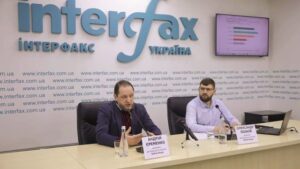
Ukrainians largely do not support the military using its authority to influence electoral processes, indicating a clear public demand to keep the army out of political struggles, particularly electoral ones. This is evidenced by the results of a study conducted by Active Group.
According to the data presented, the actions by the military that received the most support among acceptable activities were calls for politicians to make decisions in the field of defense (30.2%), publicly expressing a position on draft legislation (15.1%), and establishing veterans’ and civic organizations (14.9%). At the same time, the use of military authority to influence electoral sentiment has the lowest rating—a balance of minus 15.9%, which is the worst result among all options.
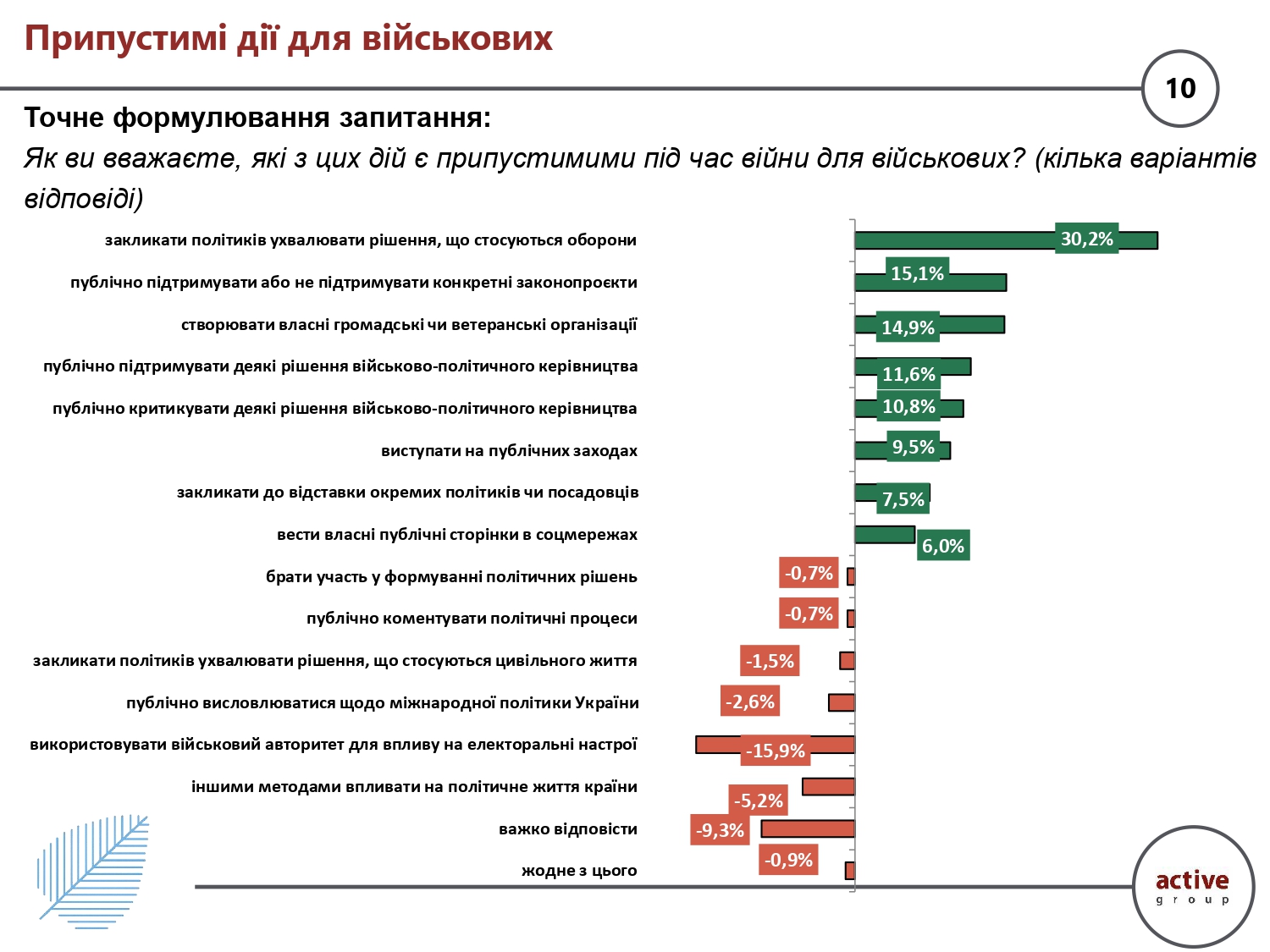
Other forms of direct political influence are also viewed negatively, including participation in shaping political decisions (–0.7%), commenting on political processes (–0.7%), and making statements regarding Ukraine’s international policy (–2.6%).
“We see a very clear stance from society: the military can be an authority on defense matters, but this authority should not be carried over into electoral processes. Any attempts to influence electoral sentiment are viewed negatively and effectively delegitimize such involvement. This is an important signal to political actors regarding the limits of acceptable communication with the military,” noted Active Group Director Oleksandr Pozniy.
At the same time, more than half of Ukrainians believe that the military should remain outside of politics during wartime, which indicates society’s demand to preserve the army’s professional role until Victory is achieved.
According to the presented results, 23.1% of respondents unequivocally support the military’s apolitical stance, while another 27.3% tend to support it (50.4% in total). At the same time, 37.6% allow for their participation in politics (23.1% – somewhat opposed, 14.5% – strongly opposed), while another 12% are undecided.
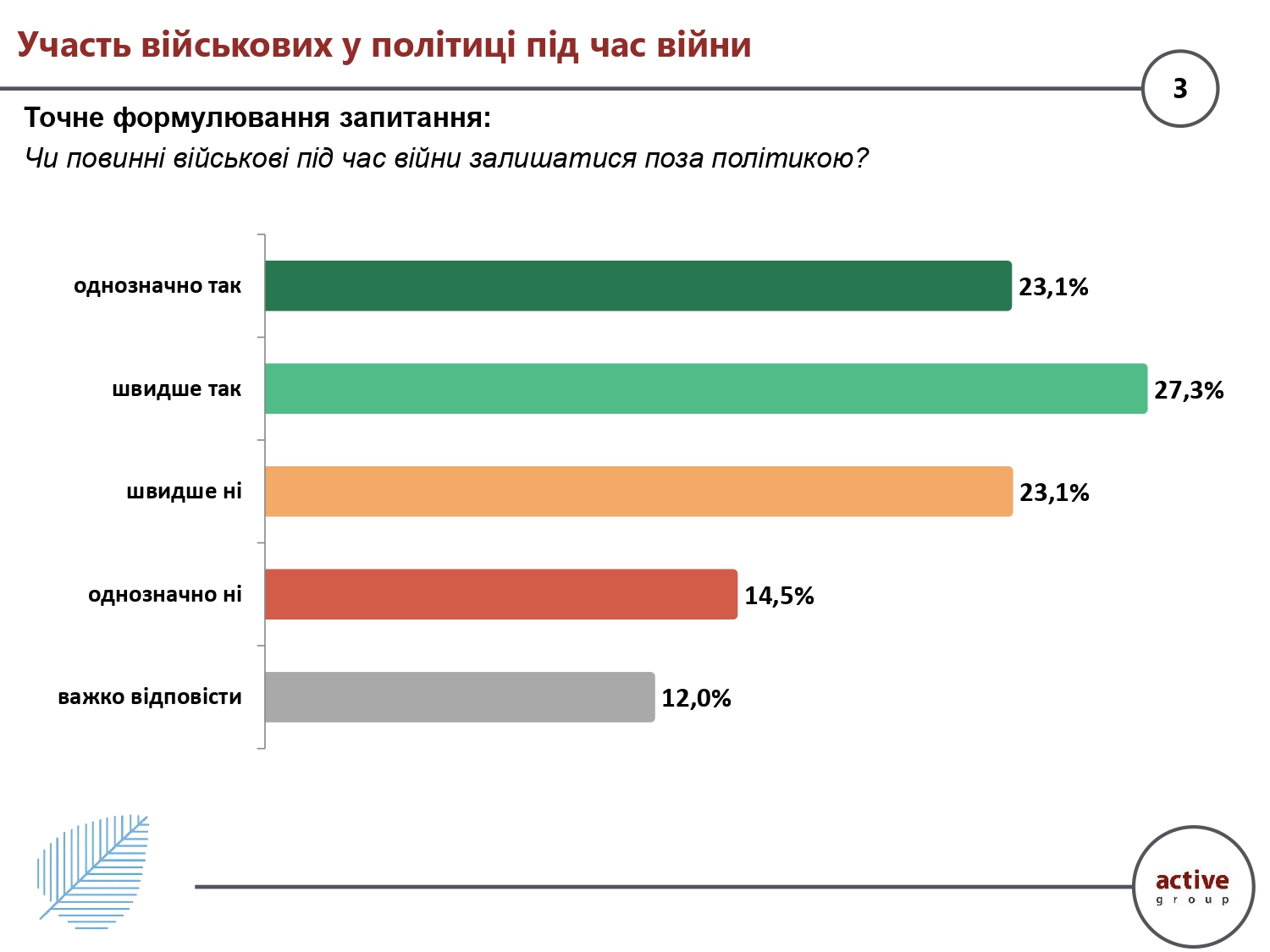
Thus, the prevailing view is that until the war ends, the military should remain focused on performing their immediate duties rather than participating in political processes.
“These results show a clear public demand that the military remain outside of politics until the war ends and concentrate on their key tasks. At the same time, a certain portion of citizens accepts their role in future political processes, but only after Victory,” noted Active Group founder Andriy Yeremenko.
Ukrainians trust the Azov Battalion, the Special Operations Forces, the SBU’s “Alpha” unit, the 2nd Corps of the National Guard of Ukraine (“Charter”), and the 3rd Army Corps the most when it comes to carrying out state tasks. This is according to the results of a survey conducted by Active Group.
When asked which units citizens trust most in carrying out state tasks, respondents most often named the 1st Corps of the National Guard of Ukraine “Azov” (15.2%). Close behind in terms of trust were the Special Operations Forces of the Armed Forces of Ukraine (14.7%) and the Special Operations Center “A” of the Security Service of Ukraine, known by the unofficial name “Alpha” (13.4%).
The 2nd Corps of the National Guard of Ukraine “Charter” received 11.7% of respondents’ support, surpassing the Third Army Corps by 0.7%.
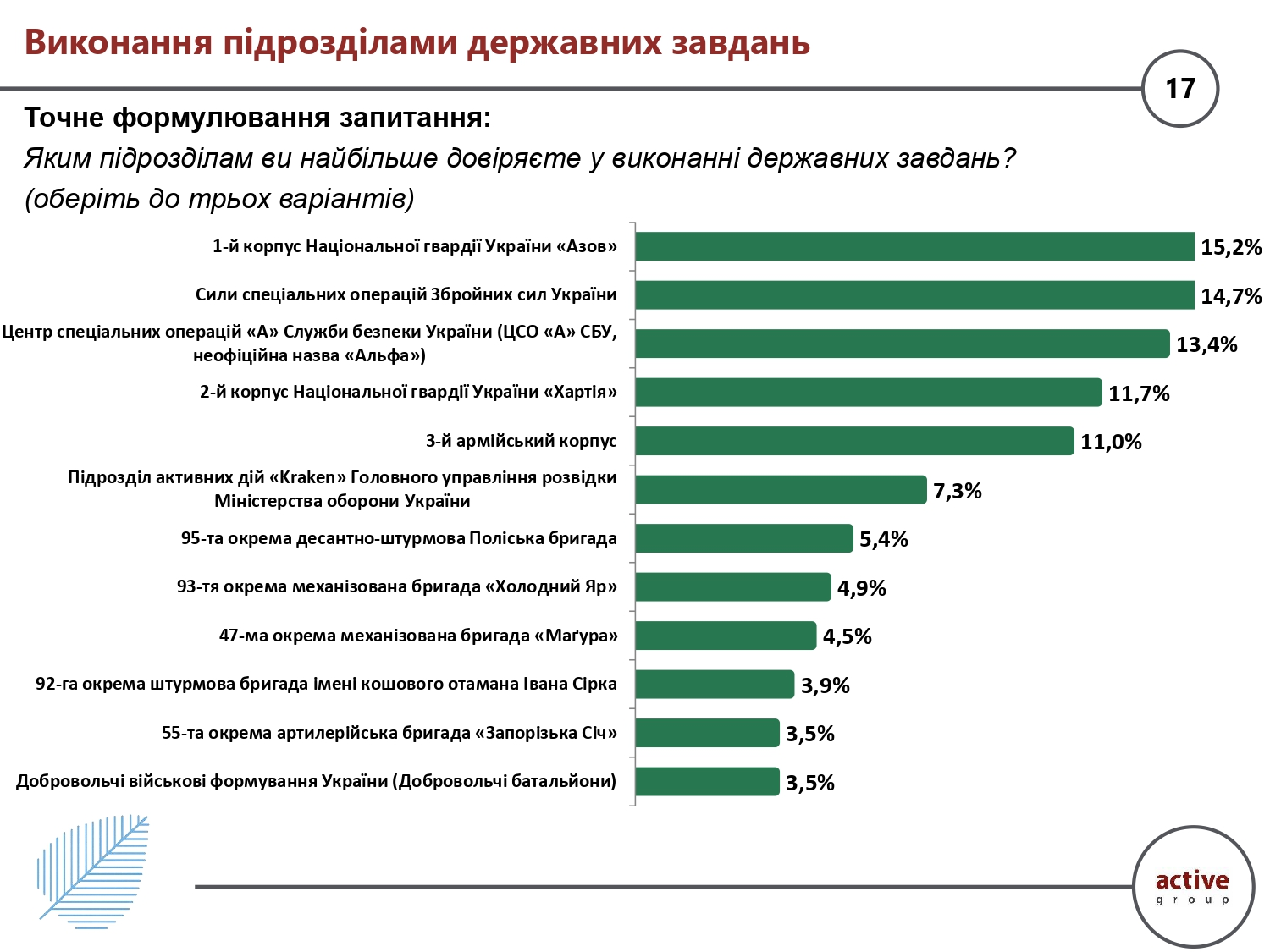
The list of units with a notable level of trust also included the “Kraken” Active Operations Unit of the Main Intelligence Directorate of the Ministry of Defense of Ukraine (7.3%), the 95th Separate Airborne Assault Polissya Brigade (5.4%), and the 93rd Separate Mechanized Brigade “Kholodny Yar” (4.9%). These results indicate stable support for combat units that have a reputation for being effective in carrying out specific operational tasks.
A lower but still noticeable level of trust is demonstrated by the 47th Separate Mechanized Brigade “Magura” (4.5%), the 92nd Separate Assault Brigade named after Cossack Ataman Ivan Sirko (3.9%), as well as the 55th Separate Artillery Brigade “Zaporizhzhia Sich” and volunteer military formations (3.5% each).
“Even the slight difference between the ratings of the ‘Charter’ and the 3rd Corps is telling, as it reflects society’s perception of the units’ roles outside of a political context. Less media-friendly but more apolitical structures may inspire a higher level of trust, especially in wartime, when the key criterion is the fulfillment of tasks,” noted Active Group Director Oleksandr Pozniy.

According to the results of a joint study by Active Group and Experts Club, Ukrainians view Germany, France, the United Kingdom, and Lithuania most favorably, while China and Hungary receive significantly lower ratings, despite their importance in Ukraine’s foreign trade.
“The modern international economy is not just about foreign trade figures, but also about reputation, trust, political proximity, humanitarian presence, and a sense of partnership at the societal level. It is precisely within this framework that both Ukraine’s trade ties and the work of foreign embassies in Ukraine’s information and public spheres should be evaluated,” noted Maksym Urakin, founder of the Experts Club information and analytical center, at a press conference at the Interfax-Ukraine agency on Thursday.
Urakin also cited Ukraine’s overall foreign trade figures for 2025. According to his data, total trade turnover exceeded $125 billion, of which nearly $85 billion was accounted for by imports and about $40 billion by exports, while the trade deficit in goods amounted to approximately $44.5 billion. He noted that this indicates the continued high openness of the Ukrainian economy even amid the war, but at the same time highlights its significant dependence on foreign supplies.
As noted during the presentation, China remains Ukraine’s largest trading partner in terms of trade turnover. At the same time, it is trade with China that creates the largest trade imbalance for Ukraine, as out of $20 billion in total trade, about $19 billion is accounted for by imports, while Ukrainian exports amount to only about $1.8 billion.

“In essence, nearly 39–40% of Ukraine’s entire annual trade deficit is attributable to China. This is a classic example of asymmetric trade: Ukraine sells resources and buys goods with high added value,” Urakin emphasized.
According to him, Ukraine has a different type of relationship with Poland. Poland remains a key neighbor, a logistics hub, an important political ally, and at the same time the largest market for Ukrainian exports. Total trade with Poland exceeds $13 billion, but here too, Ukraine’s trade balance remains negative—at nearly minus $3 billion. At the same time, as noted by participants at the press conference, Poland is not merely a sales market but a bridge connecting Ukrainian producers with the European Union market.
A similar situation is observed in trade with Germany, Turkey, and the United States. According to data presented at the press conference, trade turnover with Germany amounts to about $9 billion, with Turkey—nearly $9 billion, and with the United States—nearly $6 billion, with Ukraine having a negative balance in all three cases. Urakin emphasized that the U.S. market is particularly important, as the significance of the United States for Ukraine is determined not only by trade volumes but also by the role of the United States as a security, financial, technological, and political partner.
At the same time, as noted during the presentation, the most advantageous markets for Ukraine in terms of a positive trade balance are Egypt, Moldova, the Netherlands, Spain, Lebanon, Algeria, Iraq, Libya, Kazakhstan, and the United Arab Emirates.

“Ukraine achieves the best results where it has a strong position in the agricultural sector and where the Ukrainian export offering is well-suited to the respective market. Future improvements in the trade balance lie in the transition to products with higher added value in those markets where Ukraine already has a presence and is proving itself to be a stable partner,” he said.
The sociological part of the study, presented at the press conference, showed that Ukrainians demonstrate the highest levels of positive attitude toward Germany—77.4%, Lithuania—75%, France—74%, the United Kingdom – 74%, Sweden – 72.5%, Japan – 71.8%, Italy – 70%, and the Czech Republic – 67%. Ratings for Spain, Greece, Bulgaria, Poland, and Turkey also remain high. At the same time, 56% of respondents view Poland positively, compared to 14.7% negative ratings, and 55% view Turkey positively, compared to 5.6% negative ratings.
China, however, presents a different picture: 23% of respondents expressed a positive attitude toward it, while 42% expressed a negative one. Assessments of Hungary were even more critical: only 18.6% held a positive view, compared to 52% who held a negative one. 44.1% of respondents view the United States positively, while 24.7% view it negatively.
Oleksandr Pozniy, director of the research company Active Group, emphasized that this is the second study in the series, allowing for tracking the dynamics of public perceptions. According to him, this is not only about the emotional perception of other countries but also about a factor increasingly linked to foreign economic relations, security, and the image of a partner country within Ukrainian society.
“The ratings of some countries have deteriorated slightly compared to the previous survey. In the case of the United States, this could have been influenced by changes in American policy following the arrival of the new president and the corresponding media coverage,” Pozniy noted.
The participants in the press conference paid particular attention to cases where a country’s economic importance does not align with how it is perceived emotionally in Ukraine. Responding to questions from the audience, Pozniy cited China as an example—a country that is viewed quite negatively but remains Ukraine’s largest trading partner. Similarly, he noted, there are cases where a country, such as Iraq, has a positive trade balance with Ukraine, yet attitudes toward it remain reserved or negative.
Olga Bezrukova, Ph.D. in Sociology and head of the Kyiv branch of the Sociological Association of Ukraine, emphasized that public opinion during wartime is particularly sensitive to external factors, and therefore such measurements must be considered within a specific temporal context. “Attitudes toward a country should be viewed as attitudes toward the country as a whole, and they are shaped by Ukrainians’ perception of that country as a strategic partner in achieving peace in Ukraine. The second component is attitudes toward its representatives and citizens, which are based either on personal experience or on the experiences of friends, colleagues, and family members,” she explained.
According to Bezrukova, social media, the political context, cultural stereotypes, and everyday perceptions acquired through socialization play an important role in shaping these assessments. This, in particular, may explain the high proportion of neutral responses regarding certain countries about which Ukrainians have insufficient personal experience or information in the public sphere. She also drew attention to the influence of stereotypes on attitudes toward some countries in the Muslim world, even though, from an economic standpoint, some of them are important partners for Ukraine.

Maksym Urakin noted that foreign missions should communicate with Ukrainian society not in abstract diplomatic language, but in the language of tangible benefits—through jobs, investments, humanitarian projects, educational programs, and logistical opportunities. He also called on diplomatic missions to work more actively not only in Kyiv but also in the regions, and to link their countries’ images not only to political support for Ukraine but also to tangible participation in reconstruction, energy, industry, agricultural processing, healthcare, and education.
“If society sees a massive flow of imports coming into the country but does not see a corresponding flow of investment, technology, or localized production, a sense of imbalance arises. And this directly affects the emotional perception of the partner. That is why countries with a large trade surplus with Ukraine should pay particular attention to the reputational aspect of their presence in the Ukrainian market,” added Urakin
In summary, the participants of the press conference emphasized that the study’s findings could be useful for businesses, government institutions, and Ukraine’s international partners alike. In their view, public opinion can influence economic policy, consumer behavior, and even the perception of goods and services from various countries, and thus becomes a crucial element of today’s foreign economic reality. Oleksandr Pozniy noted that the world is not “black and white” for Ukrainians, and the large proportion of neutral assessments regarding a number of countries indicates caution and a desire for balanced judgment rather than indifference.
The survey was conducted in March 2026; sociologists analyzed Ukrainians’ attitudes toward 50 countries that are among Ukraine’s largest trading partners. The study was conducted using a self-administered questionnaire on an online panel; 800 respondents participated, and the stated margin of error does not exceed 3.5%.
You can view the full presentation of the study by clicking the link.
ACTIVE GROUP, ECONOMICS, EXPERTS CLUB, Pozniy, SOCIOLOGY, URAKIN, БЕЗРУКОВА

According to the results of a survey conducted by the research company Active Group and the Experts Club think tank, 34.1% of respondents described a healthy lifestyle as “very important,” 53.1% as “somewhat important,” 10.8% — “somewhat unimportant,” and 2.1% — “not important at all.” The data was presented at a press conference at the Interfax-Ukraine press center.
“The high value placed on a healthy lifestyle is an opportunity for the system to shift its focus toward prevention and early diagnosis,” said Maksym Urakin.
“People are ready to change their habits, but they need accessible tools—consultations, screenings, and clear recommendations,” added Oleksandr Pozniy.
The study was conducted on the SunFlowerSociology online panel using a representative sample in February 2026. The survey involved 1,000 respondents from a representative sample across all regions of Ukraine, excluding temporarily occupied territories.
ACTIVE GROUP, EXPERTS CLUB, Healthy Lifestyle, Pozniy, URAKIN



