

According to Experts Club, as of November 4, 2026, Ukrainian farmers had planted 1.152 million hectares of winter rapeseed, which is 91,300 hectares, or 8.6%, more than on the same date last year, the Ministry of Agrarian Policy and Food of Ukraine reported.
According to the ministry, farmers have fulfilled 104.2% of the rapeseed planting forecast, exceeding the initially planned area by approximately 46,000 hectares.
Thus, winter rapeseed became the only major winter crop whose planting not only exceeded the forecast but also showed significant growth compared to last year.
By comparison, the total area planted with winter grain crops as of early November decreased by 8.3% compared to the same date in 2025. Wheat and triticale plantings were down by 8.1%, and barley plantings by 12.1%.
At the same time, winter rapeseed is showing the opposite trend, which may indicate increased interest among agricultural producers in growing oilseeds.
The largest areas of winter rapeseed are concentrated in the Odesa region, where 195,000 hectares have been planted. This accounts for about 16.9% of the crop’s total area in Ukraine.
The Vinnytsia region ranks second with 125,000 hectares, and the Mykolaiv region ranks third, with 98,000 hectares sown with rapeseed.
The top five also include the Khmelnytskyi region with 85,700 hectares and the Ternopil region with 79,300 hectares.
In total, these five regions account for 583,000 hectares, or 50.6% of all winter rapeseed acreage in Ukraine.
Over the past week, the area under cultivation has increased by 16,900 hectares. As of October 28, 1.135 million hectares had been planted, or 102.7% of the forecast.
Winter rapeseed is one of Ukraine’s main oilseed crops and an important raw material for the production of vegetable oil, feed ingredients, and biofuel. A significant portion of the rapeseed grown in Ukraine is traditionally exported, primarily to European countries, where it is used in the food industry and biodiesel production.
The increase in planted area sets the stage for growth in rapeseed production during the 2027 season; however, the final harvest volume will depend on weather conditions, the condition of the crops after winter, and yield.
As reported, as of November 4, 2025, 1.060 million hectares had been planted with winter rapeseed in Ukraine.
Sources: Ministry of Agrarian Policy, press release dated November 4, 2026; Ministry of Economy, Environment, and Agriculture, data as of November 4, 2025.

On December 4, the 18th International Conference “Agribusiness in Ukraine” (#DoAgro26) will take place in Truskavets (Lviv Oblast). The event will be attended by government officials, market leaders, and leading agricultural producers.
This was reported by the press service of the organizers—the “Ukrainian Agribusiness Club” and the UCABevent agency.
This year, the event is completely revamping its format and usual venue to take stock of the past year and develop a roadmap for the coming season.
This isn’t about monologues or dry reports—those are a thing of the past. Ahead lies the search for new operating models: open dialogue with government officials, collective brainstorming, and making strategic decisions right here and now. The main goal is to find effective operating models under the new rules of the game.
Participating in #DoAgro26 means:
The program will focus on key issues:
The “Agribusiness in Ukraine” conference will be held in cooperation with the International Finance Corporation (IFC), a member of the World Bank Group, and in partnership with the Ministry of Finance of the Czech Republic. Valtra, part of AGCO Corporation, is the exclusive technical partner, and Credit Agricole is the gold financial partner.
Agricultural producers and participants in previous UCAB events are eligible for a 20% discount off the base price, while association members receive special terms.
For more information about the event, visit: https://cutt.ly/9yQmTlnY
Open4Business is the conference’s media partner.
AGRIBUSINESS, AGRICULTURAL MARKET, CONFERENCE, DoAgro26, planting season, TRUSKAVETS, УКАБ
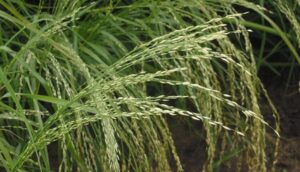
Kolos Agricultural Firm LLC, based in the Kyiv region, is successfully growing teff—a grain crop that is not widely cultivated in Ukraine—which is known for its drought resistance and can be used in the food industry, livestock farming, and for improving soil health. The farm is also working to register this crop in Ukraine.
As reported by the agricultural publication SEEDS on October 16, 2026, citing the company’s experience, teff holds promise for the Ukrainian agricultural sector amid climate change, rising temperatures, and water shortages.
According to Leonid Tsentilko, the owner and director of the agricultural firm, teff is a cereal crop with a well-developed fibrous root system that helps the plant withstand arid conditions.
“Teff is a cereal crop that is interesting because it has a powerful fibrous root system rich in living microorganisms and is capable of surviving even under arid conditions,” Tsentilo noted during a training and practical field seminar organized as part of the FarmForce project.
According to him, the unique characteristics of the root system allow the crop to continue growing even with insufficient rainfall. Additionally, teff can be used in mixtures with other green manure crops to improve soil structure and biological activity.
One of teff’s distinctive features is its extremely small seeds. At the same time, as the farm manager noted, this does not pose any critical technical limitations for harvesting, since the crop can be threshed using a standard combine harvester.
The agricultural enterprise has also experimented with processing the harvested grain. Specifically, it was ground in a stone mill to produce flour suitable for baking whole-grain bread.
Teff (Eragrostis tef) originates from Ethiopia, where it is one of the traditional food crops. Its grains are used to produce flour for baking bread, including the traditional Ethiopian injera. The crop is naturally gluten-free, making it a promising raw material for the production of specialized food products.
According to the Food and Agriculture Organization of the United Nations (FAO), teff is also grown as a forage crop. Thanks to its rapid growth and relative drought tolerance, it is used for hay production and to provide a forage base for livestock, particularly in South Africa, Australia, and the United States.
For Ukrainian farmers, teff may be of interest as a dual-purpose crop, allowing them to harvest grain for food processing and green forage for livestock. At the same time, its use as a green manure crop opens up additional opportunities for incorporating the crop into conservation tillage systems.
This approach may become particularly relevant for farms seeking alternatives to traditional crops due to increasing droughts, uneven rainfall distribution, and the need to diversify production.
At the same time, the prospects for industrial teff cultivation in Ukraine will depend on the availability of seeds, agricultural technologies, yields in various natural and climatic zones, and the development of stable demand from processing enterprises. Data on the area under cultivation, yield, and production costs for teff at the “Kolos” agricultural firm have not yet been made public.
“Kolos” Agricultural Firm LLC is an agricultural enterprise in the Kyiv region engaged in crop production, livestock farming, and the development of agricultural technologies. The company’s director and owner is Leonid Tsentylo. The company is experimenting with the cultivation of alternative crops and the use of technologies to restore soil fertility.
Sources: SEEDS, October 16, 2026; AgroPortal, originally published on October 10, 2026.

Tbilisi is preparing to host the international conference AgriFuture Georgia 2026, which will bring together representatives of the agribusiness sector, technology companies, investors, producers, and experts to discuss new opportunities for agricultural development, the implementation of innovations, and the attraction of investment.
The event will serve as a platform for direct dialogue between agricultural producers, suppliers of modern technologies, financial institutions, and companies interested in developing agricultural projects in Georgia and the region.
One of the central themes of AgriFuture Georgia 2026 will be the transformation of agriculture driven by modern technologies. Participants will discuss the automation of production processes, the digitalization of agribusiness, and the application of innovative solutions in crop production, horticulture, and other areas of agricultural production.
Special attention will be given to investments in agriculture and the search for new financing models for agricultural projects. Representatives from the business and investment communities will have the opportunity to discuss promising investment areas, opportunities for scaling up existing operations, and launching new projects.
Another key focus of the conference will be the development of exports. For Georgian and regional producers, entering new markets remains one of the key drivers of further growth; therefore, participants will examine the requirements of international buyers, changes in demand patterns, and opportunities to enhance the competitiveness of agricultural products.
The organizers expect the conference to serve not only as a forum for discussion but also as a venue for establishing new business contacts. As part of AgriFuture Georgia 2026, agribusiness representatives will be able to interact directly with potential partners, technology providers, investors, and experts.
The practical application of technologies will play a special role in the program. Participants will be presented with solutions that enable agricultural enterprises to increase productivity, use land, water, and energy resources more efficiently, reduce production costs, and improve product quality.
The holding of AgriFuture Georgia 2026 reflects the growing interest of the business community in the modernization of Georgia’s agricultural sector. The country has favorable conditions for producing fruits, vegetables, nuts, grapes, and other agricultural products; however, the sector’s further development increasingly depends on technological modernization, access to financing, and producers’ ability to operate in international markets.
The conference is aimed at owners and managers of agricultural enterprises, farmers, producers and exporters of agricultural products, investors, representatives of the banking sector, suppliers of equipment and technology, trading companies, international organizations, and industry experts.
AgriFuture Georgia 2026 is set to become a platform where representatives from various segments of the agricultural sector can discuss specific projects and form new partnerships to develop agribusiness in Georgia and the region.
Open4Business – Information Partner of the AgriFuture Georgia 2026 International Conference

The cost of grapes in Ukraine in 2026 remained roughly at the same level as last season, despite a significant increase in the cost of fertilizers, plant protection products, fuel, and logistics, which is leading to a decline in the profitability of grape-growing operations.
Tetyana Shmaglyuchenko, head of the company “VIN’S,” discussed this in an interview with the agricultural publication SEEDS.
According to her, prices for most grape varieties have essentially remained at last year’s levels. Only a few large rosé varieties have become slightly more expensive. At the same time, production costs have increased significantly.
Producers cite rising costs of mineral fertilizers, vine protection products, and fuel as the main factors. Logistics have added to the burden, especially for farms in Bessarabia, where transportation costs have risen due to infrastructure damage and restrictions on traditional routes.
The situation is further complicated by a decline in the harvest. According to producers’ estimates, the gross grape harvest at some farms this season could be 20–30% lower than last year. Winter frosts and a cold spring have negatively affected yields.
The war is also directly affecting vineyards in southern Ukraine. Some vineyards have sustained damage as a result of hostilities, falling drone debris, and other war-related factors.
The combination of virtually unchanged selling prices, rising production costs, and reduced harvests is forcing producers to seek additional sources of income.
One such avenue is the further processing of grapes. Farms are investing in the production of fruit leather, raisins, and other products with higher added value, and are using infrared dryers and vacuum equipment to process fruit puree.
Another trend is cooperation with producers of other fruits. This allows for the production of combined products using local peaches, plums, and other raw materials.
Producers are also investing in energy self-sufficiency. In particular, solar power plants are used to power wells and irrigation systems, which helps to partially reduce dependence on external energy supplies.
At the same time, some farms are considering a shift from selling fresh grapes to winemaking. With grant support from the FAO, technical grape varieties are being planted that can later be used for wine production.
Thus, for Ukrainian viticulture in 2026, the key challenge will be not so much a lack of demand for products as the gap between the selling price and the cost of production. Under these conditions, processing allows farms to derive greater added value from their own raw materials while simultaneously maintaining production capacity and preserving employment for workers after the harvest season ends.
Viticulture remains one of the most labor-intensive sectors of horticulture in Ukraine. Most commercial grape production is concentrated in the southern regions of the country and in Zakarpattia, and a significant portion of the industry has been directly affected by the full-scale war.
Source: SEEDS.

Around $680 billion in financing annually is needed to transform global agrifood systems by 2030, but the effectiveness of international programs will depend not only on the amount of funding, but also on farmers’ and agribusinesses’ access to finance, markets and economic incentives.
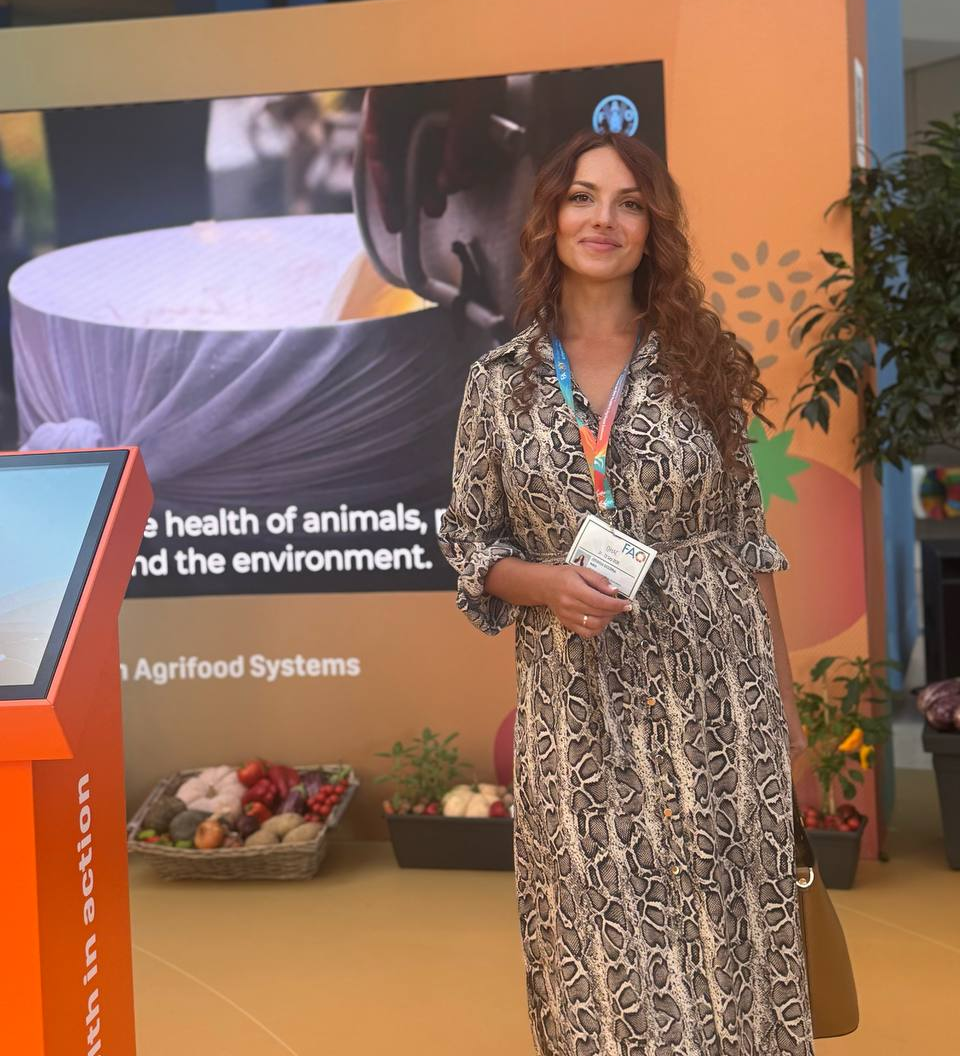
According to SEEDS, financing issues were discussed in Rome during the FAO Global Conference “Actions in One Health in Agrifood Systems,” which took place on September 21–23 and was dedicated to implementing the One Health approach in agrifood systems.
According to FAO estimates, the annual financing requirement for the transformation of agrifood systems in low- and middle-income countries amounts to around $680 billion. Of this amount, approximately $425–426 billion should go directly to investments, with another approximately $255 billion allocated to social protection systems.
International expert on sustainable agriculture and agrifood systems and founder of Sapienza.media Kateryna Zvierieva, who participated in the conference, stressed that the volume of international financing alone does not guarantee results if resources do not reach direct producers.

“We can develop effective environmental and veterinary solutions, but they will not become widespread practice if the farmer does not have access to financing, sales markets and economic incentives for their implementation,” she said in a comment to SEEDS.
Rwanda became one example of effective fundraising. About $25 million in financing from the Pandemic Fund was accompanied by the mobilization of approximately another $160 million in additional resources and related investments. The program is aimed at strengthening epidemiological surveillance, early warning systems and coordination between human and animal health services. FAO, WHO and UNICEF are involved in its implementation.
During the conference, programs in Zimbabwe and Afghanistan were also discussed, where the One Health approach is used to combine veterinary safety, healthcare, food security and support for agricultural production. Participants stressed that animal diseases, climate risks and water-related problems often extend beyond individual states and require regional investment programs.
The reduction of international assistance remains a separate problem. Representatives of the European Commission drew attention to the need to involve the World Bank, IFC, the International Fund for Agricultural Development and private capital more broadly in financing, since grant resources are insufficient for a large-scale transformation of the agricultural sector.
For Ukraine, these approaches are particularly important due to the need to simultaneously restore agricultural production, infrastructure, the veterinary system and water resources, as well as adapt the sector to EU standards.
According to Zvierieva, international programs should be accessible not only to large institutions, but also directly to agricultural enterprises, cooperatives and small producers. Farmers, in her opinion, should be involved in the development of such programs already at the planning stage, since it is they who can assess the real cost of introducing new technologies and the economic risks for farms.
FAO also emphasizes that without the involvement of the private sector, financial institutions and direct producers, it will be impossible to overcome the global financing gap in agrifood systems.
Source: SEEDS — “$680 billion for the transformation of agrifood systems”



