
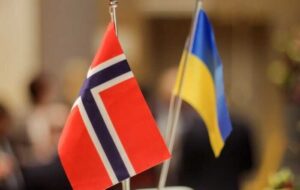
The Norwegian government will propose to the Storting (parliament) to extend emergency aid to Ukraine in the amount of 85 billion Norwegian kroner (approximately $9.1 billion) into 2027 as well, the government’s press service reported.
“Norway will continue to support Ukraine’s defense efforts. Ukraine is facing a difficult winter. We are now sending a clear signal that Norway will continue to support Ukraine, both through civilian and military aid,” said Prime Minister Jonas Gar Støre.
As noted, the government’s proposal was conveyed to Ukrainian President Volodymyr Zelenskyy during a meeting between Stere and Zelenskyy in Kyiv on Sunday.
The Norwegian prime minister noted that supporting and rebuilding Ukraine is also important for European security. Norwegian support is provided through the Nansen Program for Ukraine and is directed toward both civilian and military purposes.
“The bulk of the funds will go toward military support, specifically purchases from the Ukrainian defense industry. The government will revisit the distinction between military and civilian services at a later date,” the press release states.
The Nansen Program for Ukraine is Norway’s long-term government program to support Ukraine, launched in February 2023 with broad cross-party support from the Norwegian parliament—the Storting. It initially allocated 75 billion NOK for 2023–2027, but the program was subsequently expanded and extended through 2030.
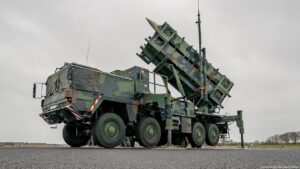
Norway has announced the allocation of 3 billion kroner (268 million euros) to strengthen Ukraine’s air defense, specifically as part of the PURL program and to purchase Patriot missiles from countries that already have them, the Norwegian government’s press service reported.
“Norway is now providing an additional 3 billion Norwegian kroner to strengthen Ukraine’s air defense systems,” the government press service stated on its website.
It is reported that Norway, together with Denmark, Germany, and Canada, will order new Patriot air defense missiles directly from the manufacturer in the U.S. as part of the PURL program.
“Given the long delivery times for some of these missiles, Norway also plans to purchase Patriot missiles from countries that already have them in order to deliver them to Ukraine as quickly as possible,” the Norwegian government emphasized.
Norway is also allocating funds to join Ukraine’s initiative to jointly develop anti-ballistic systems with European partners. “Ukraine has invited European partners to participate in the development of a specialized missile defense system. This could also be significant for the defense of Norway and other NATO member states. Norway is allocating funding to be able to contribute to this initiative,” the statement said.
“In the future, ballistic missiles may also pose a serious threat to Norway and its allies. Therefore, the Ukrainian initiative is of interest from the perspective of strengthening Norway’s defense capabilities,” said Defense Minister Tore O. Sandvik.
During the NATO summit in Ankara, Ukrainian President Volodymyr Zelenskyy stated that a key topic of discussion with partners would be the supply of interceptor missiles for the Patriot air defense system, which are critical to Ukraine’s ability to shoot down Russian ballistic missiles—and noted that these missiles are not exclusive to the United States.
As previously reported, the Netherlands, Germany, Finland, Sweden, Lithuania, Estonia, Latvia, Denmark, and Poland have appealed to the European Commission to grant authorization as soon as possible for the purchase of missiles for U.S.-made air defense systems as part of the 90 billion euro “defense” component that the EU is providing to Ukraine in 2026–27.
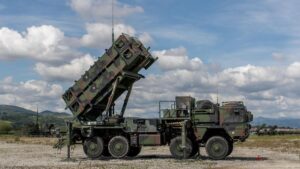
Norway is now providing an additional 3 billion Norwegian kroner to strengthen Ukraine’s air defense systems, according to the Norwegian government.
“Ukraine has been successful in intercepting most drones and cruise missiles, but it needs to strengthen its defenses against ballistic missiles. This is one of Ukraine’s most urgent priorities. That is why Norway is now allocating 3 billion Norwegian kroner for air defense,” said Prime Minister Jonas Gar Støre.
On Tuesday, the prime minister met with Ukrainian President Volodymyr Zelenskyy at the NATO summit in Ankara, Turkey.
“Russia is sending hundreds of drones and missiles into Ukraine day and night. The Patriot air defense system is highly effective and can counter a wide range of threats, including ballistic missiles,” said Defense Minister Tore O. Sandvik.
Together with Denmark, Germany, and Canada, Norway will order new Patriot air defense missiles directly from the manufacturer in the United States. Norway will continue to support the U.S.-led PURL program. PURL is a NATO program for coordinating the funding and donation of advanced U.S. military equipment to Ukraine, including air defense systems. Given the long lead times for some of these missiles, Norway also plans to procure Patriot missiles from countries that already possess them to facilitate rapid donations to Ukraine.
According to the Norwegian government, Ukraine has asked its European partners to participate in the development of a specialized missile defense system. This could also be significant for the defense of Norway and other Alliance member countries. Norway is allocating funding to be able to contribute to this initiative.
“In the future, ballistic missiles could also pose a serious threat to Norway and its allies. Therefore, the Ukrainian initiative is of interest in terms of strengthening Norway’s defense capabilities,” Sandvik said.
The government noted that between 2023 and 2025, Norway provided Ukraine with air defense support totaling 30 billion Norwegian kroner. Norway is also providing significant funding to strengthen Ukraine’s air defense in 2026.
The Norwegian government has proposed tightening the conditions for obtaining citizenship by changing the requirements regarding length of residence in the country and knowledge of the Norwegian language for certain categories of applicants.
Under the government’s initiative, applicants will be required to have lived in the country continuously for eight years to obtain a Norwegian passport. Currently, most applicants must have resided in Norway for a total of eight years over the past 11 years, provided they hold a permanent residence permit. The new model is intended to simplify the calculation of residency periods and reduce the number of different requirements for specific groups of applicants.
Norway’s Minister of Labor and Social Integration, Kjersti Stenseng, stated that obtaining citizenship should be viewed as a privilege, and that the current rules are too complex, particularly regarding residency requirements.
Separately, the government proposes to increase the residency requirement for stateless persons from three to seven years. For applicants in this category who were born in Norway or arrived in the country before the age of 18, the plan is to set a residency requirement of five years.
The changes will also affect foreigners who are married to, in a registered partnership with, or in a de facto relationship with a Norwegian citizen. For them, the period required to obtain citizenship is proposed to be increased from a minimum of five years of residence and marriage to six years of continuous residence in the country.
In addition, the government wants to raise the Norwegian language proficiency requirements for stateless persons aged 18 to 67—from level A2 to B1. Residence on the Svalbard archipelago will no longer be considered grounds for applying for Norwegian citizenship.
The government explains the changes as necessary to make the rules more consistent and understandable, as well as to speed up the processing of applications. At the same time, the stricter requirements effectively make the path to a Norwegian passport longer for a number of categories of foreign nationals.
In total, as of early 2026, there were 987,120 immigrants in Norway, accounting for 17.5% of the country’s population. Another 238,507 people were born in Norway to immigrant families, accounting for 4.2% of the population. Collectively, people of immigrant origin make up more than one-fifth of the country’s population.
The largest group of immigrants in Norway remains those from Poland—111,740 thousand people. Next are Ukraine—85,461 thousand, Lithuania—43,065 thousand, Syria—42,040 thousand, Sweden—37,732 thousand, Germany—28,145 thousand, Somalia—27,769 thousand, Eritrea—25,819 thousand, the Philippines—25,673 thousand, and Pakistan—24,821 thousand people.
The structure of immigration to Norway reflects a combination of several waves: labor migration from EU countries and Eastern Europe, refugee migration from Syria, Somalia, Eritrea, and Ukraine, as well as long-standing diaspora communities from Pakistan, Iraq, Turkey, and other countries. Ukrainian migration is characterized by rapid growth over a short period and a high proportion of women and children among those who arrived after 2022.
Norway remains one of the countries with the most powerful passports in the world. According to the Henley Passport Index, the Norwegian passport is among the most prestigious and grants visa-free or simplified entry to over 180 countries. Since 2020, Norway has allowed dual citizenship.

Norway is allocating over €9 million to repair the protective sarcophagus covering the Chernobyl Nuclear Power Plant following damage caused by a Russian drone, the Norwegian Embassy in Ukraine reported.
“Norway is allocating 100 million kroner (approximately 9.1 million euros – IF-U) for the repair of the protective structure covering the No. 4 reactor at the decommissioned nuclear power plant in Chernobyl. The structure was damaged as a result of a Russian drone strike in February 2025.”
The aid will be provided through the European Bank for Reconstruction and Development (EBRD) fund, the International Chornobyl Cooperation Account (ICCA).
State Secretary Eivind Vad Petersen announced the support during a visit to Kyiv, also mentioning the incident on June 7, when a spent nuclear fuel storage facility in the Chernobyl zone was hit by a Russian strike.
“These attacks also pose a threat to European and international security. Norway will make efforts to reduce the risk of radioactive emissions and ensure that the Chernobyl NPP continues to operate safely,” Petersen said.
In April, the U.S. expressed its readiness to provide up to $100 million as part of the Group of Seven’s joint efforts to repair the new sarcophagus over the Chernobyl NPP. Ahead of the 40th anniversary of the Chernobyl accident, the EU called on Russia to stop attacks on nuclear facilities in Ukraine.
Ukraine and Norway are establishing their first joint production facility for Ukrainian drones. Several thousand mid-strike drones are planned to be manufactured in Norway, with the first deliveries expected by summer, according to the Ministry of Defense’s website.
The agreement was signed in Kyiv by Norway’s Ambassador to Ukraine Lars Ragnar Aalered Hansen and Ukraine’s Deputy Minister of Defense for European Integration Serhiy Boev.
The agreement also provides for the development of comprehensive industrial cooperation, including research.
The project will be funded by the Norwegian side. In total, Norway plans to allocate over $1.5 billion this year to purchase Ukrainian-made weapons for the Ukrainian Armed Forces.
The first systems manufactured in Norway are expected to be delivered to Ukraine as early as this summer.
“Norway gains the opportunity to produce technologies that have proven their effectiveness, while Ukraine receives the drones necessary to seize the initiative on the front lines. This is a true win-win partnership,” noted Ukrainian Defense Minister Mykhailo Fedorov.
In turn, Tore Onshuus Sandvik emphasized that “supporting Ukraine’s fight is the most important thing we are doing for Norway’s security. This is a collaboration that benefits both countries.”
According to him, the experience gained through this project will allow Norway to expand its production capabilities in a critically important area.
The Ministry of Defense notes that mutually beneficial technological and industrial cooperation with partners is one of Ukraine’s top priorities.



