
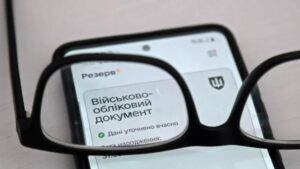
The Ukrainian government has changed the procedure for verifying military registration documents when obtaining consular services abroad: men aged 18–60 are no longer required to specifically generate an electronic military registration document no earlier than 72 hours before visiting an embassy or consulate.
Now, to receive consular services, it is sufficient to present an electronic military registration document that is valid at the time of the visit to the diplomatic mission, according to the Consular Service Department of the Ministry of Foreign Affairs of Ukraine. The new rules are already being implemented by Ukrainian diplomatic missions abroad.
The electronic military registration document, or e-MRD, is generated via the “Reserve+” mobile app and is used by the consul to verify a citizen’s military registration data.
Previously, men aged 18 to 60 were required to present an e-VOD—generated no earlier than 72 hours before visiting a diplomatic mission—when applying for virtually any consular service. The 72-hour requirement has now been abolished. The main condition is that the document must remain valid, and the personal data it contains must be up to date.
In what cases may the consulate refuse service
A consular service may be denied if the e-VOD is invalid or if verification reveals that the data needs to be updated, if the applicant has not presented a valid document at all, or if the document lacks confirmation that the personal data is current.
However, the requirement to present a military registration document does not apply to all consular services.
An e-VOD is not required when applying for an identity certificate to return to Ukraine. An exception also applies when performing consular services for children of Ukrainian citizens if the other parent is a foreign national or a stateless person, as well as for applications from Ukrainians who are under arrest, detained, or imprisoned abroad.
What Should Ukrainians Do If They Cannot Log In to “Reserve+”?
The Ministry of Foreign Affairs has also announced additional simplifications for citizens abroad who are unable to log in to “Reserve+.”
In the near future, they plan to allow these citizens to update their military registration data through Ukrainian embassies and consulates. By the end of 2026, the Ministry of Foreign Affairs, in cooperation with the Ministry of Defense, intends to introduce a mechanism for updating data through consular registration.
To do this, a citizen will need to register with the consulate if they have not already done so, or update their information at a diplomatic mission if they are already registered with the consulate.
A separate procedure is provided for Ukrainians who cannot update their information through “Reserve+” due to the lack of a taxpayer identification number. Such citizens may personally contact the nearest Ukrainian embassy or consulate to obtain a taxpayer identification number using the “e-Consul” system.
Thus, the changes do not eliminate the requirement for men aged 18–60 to have a valid military registration document for most consular services, but they significantly simplify the procedure: it is no longer necessary to regenerate the e-VOD specifically within 72 hours before each visit to the consulate.
The Ministry of Foreign Affairs recommends checking “Reserve+” before your visit to ensure that your e-VOD is valid and that your personal information is up to date.
Official clarification from the Ministry of Foreign Affairs of Ukraine: procedure for verifying military registration documents at Ukrainian consulates and embassies abroad. A similar clarification has been published by Ukrainian embassies and consulates in other countries.
CONSULATE, military registration, MINISTRY OF FOREIGN AFFAIRS, reserve, е-ВОД
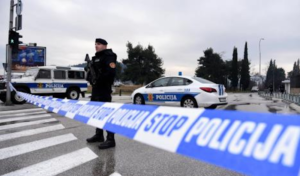
Montenegrin police are conducting a large-scale investigation into more than 50 foreign nationals, most of whom are Ukrainian citizens, who were found in a rented house in the Mareza district of Podgorica together with hundreds of digital devices, specialised equipment and a significant amount of cash, the Serbian Economist Telegram channel reports.
This was reported by the Police Directorate of Montenegro. In addition to Ukrainian citizens, Moldovan and Slovak citizens were among those present in the house.
The operation was conducted on 10 August after law enforcement officers had located and identified the premises in advance. Police seized equipment and other materials that may be relevant to the investigation.
According to the police, several hundred digital devices and items of specialised equipment were found in the building. The amount of equipment seized was so large that a lorry was required to remove it. In addition, a significant amount of money was found, the origin of which is also being investigated.
The police are establishing the grounds for the foreigners’ stay and employment in Montenegro, the nature of their activities and movements, as well as the purpose of the digital equipment discovered. The group’s possible connection to illegal activities is being investigated separately.
The Montenegrin publication Vijesti, citing preliminary investigation data, reported that the group’s possible involvement in online fraud is among the theories under consideration.
The director of the Montenegrin police formed a special operational group to conduct the investigation. It includes specialists in cybersecurity and high-tech crime, financial investigations and money laundering, international police cooperation, as well as matters involving foreigners and migration. Montenegro’s National Security Agency has also joined the investigation, which is being coordinated with the prosecutor’s office.
The police stressed that, due to the complexity of the investigation, they cannot disclose additional details at this stage. After the initial investigative and expert procedures have been completed, the authorities have promised to announce the results of the inquiry.
Azerbaijan intends to increase electricity exports to neighboring countries and enter the European energy market, said the country’s president, Ilham Aliyev.
“By expanding our export capabilities to neighboring countries, we will also enter the European market. After all, we have already entered the European market with our oil and gas, but we want to enter it with electricity as well,” Aliyev said in an interview with the Azerbaijani state television channel AzTV.
According to him, the only route for supplying electricity to Europe currently runs through Georgia and Turkey, but Azerbaijan intends to expand the number of export routes. In this regard, a feasibility study for the Black Sea Energy project has already been prepared.
In addition, in November 2024, as part of COP29, Azerbaijan, Kazakhstan, and Uzbekistan signed an agreement to lay an electrical cable along the bottom of the Caspian Sea.
“Azerbaijan will establish itself as a country that generates, receives, transmits, and exports electricity,” Aliyev said.
He also noted that the capacity of solar power plants in the Nakhchivan Autonomous Republic (NAR) could reach 500 MW, and up to 1 GW in the future.
“The main issue here is export capacity. To achieve this, of course, negotiations must be held with the relevant authorities in the respective countries, and these are already underway,” the president said.
At the same time, Aliyev noted that the existing power transmission lines from the NAR to Iran and Turkey have limited capacity, which needs to be increased.
“That is, for exporting 500 megawatts—or even 1,000 megawatts—of electricity, there are currently two routes: one to Turkey and the other to Iran. But in the future, this could also include Europe,” he said.
The head of state added that Azerbaijan’s plans to export electricity are in line with the interests of the countries “surrounding us.”
“It’s just that coordination efforts here must be carried out properly, at the necessary level, and negotiations must be accelerated. I can say that negotiations on this matter are currently underway with both Turkey and Iran. It’s too early to say anything for sure,” the president said.
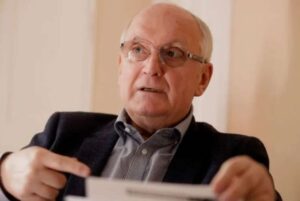
András Baku has become Hungary’s new president, according to Hungarian media reports.
“On Tuesday, the Hungarian Parliament elected 73-year-old lawyer and former Chief Justice of the Supreme Court András Baku as the country’s new president,” the reports state.
It is noted that 140 lawmakers voted in favor of his candidacy, while six voted against it. Representatives of the former ruling coalition, Fidesz—the Christian Democratic People’s Party—had announced in advance that they would not participate in the vote.
Hungary’s new Prime Minister, Péter Magyar, has repeatedly stated since his election in May that he intends to reform the Hungarian government; in particular, he has sought the resignation of President Tamás Szujók. Magyar believes that Szujók was not fulfilling his role and was serving the interests of former Prime Minister Viktor Orbán and his government.
Szujok refused to step down voluntarily, stating that he saw neither constitutional nor legal grounds for doing so. Later, in July, the Hungarian parliament approved a package of constitutional reforms that, among other things, provided for the president’s resignation. As a result, last week Szujok signed the constitutional amendments and stepped down from his post.
Magyar nominated renowned Hungarian chess grandmaster Judit Polgár for the position of the country’s new president, but she declined the offer.
The president in Hungary performs mainly ceremonial functions. The government is headed by the prime minister.
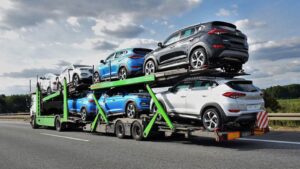
In July 2026, Ukrainians purchased 22,600 used passenger cars imported from abroad, which is 1% more than during the same period in 2025, according to a report by “Ukravtoprom” on its Telegram channel.
Gasoline-powered cars accounted for the largest share of this segment of the auto market, increasing their share by 7 percentage points compared to July 2025—to 55%.
Next came diesel cars at 17% (19%), while the share of electric vehicles fell to 15% from 24%, though they still outpaced hybrids, which accounted for 10% (6%). The share of cars with LPG systems remained unchanged at 3%.
The average age of imported used cars was 8.8 years.
The Volkswagen Tiguan confidently tops the list of the ten most popular imported used models with 937 units. It is followed by the VW Golf with 862 units, the Audi Q5 with 803 units, the Nissan Rogue with 799 units, the Skoda Octavia with 661 units, the Renault Megane with 618 units, the Tesla Model Y with 509 units, the Ford Escape with 465 units, the Tesla
Model 3 with 456 units, and the Mazda CX-5 with 432 units.
As reported with reference to “Ukravtoprom,” in 2025 Ukrainians purchased 274,300 used passenger cars imported from abroad, which is 24% more than in 2024, and the top three most popular models after the Volkswagen Golf included two Tesla electric vehicles—the Model Y and Model 3.
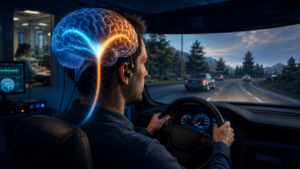
Nur ein kleiner Teil der Menschen ist in der Lage, zwei komplexe Aufgaben gleichzeitig zu erledigen, ohne dass sich die Ergebnisse merklich verschlechtern. Dies zeigte eine Studie der Psychologen Jason Watson und David Strayer von der University of Utah.
Die Arbeit mit dem Titel Supertaskers: Profiles in Extraordinary Multitasking Ability wurde in der wissenschaftlichen Fachzeitschrift Psychonomic Bulletin & Review veröffentlicht. An der Studie nahmen 200 Personen teil.
Die Teilnehmer wurden in einem hochrealistischen Fahrsimulator getestet. Zunächst erledigten sie die Aufgaben getrennt. Anschließend steuerten sie gleichzeitig ein Auto und absolvierten den komplexen auditiven OSPAN-Test, der das Einprägen von Informationen und die Lösung kognitiver Aufgaben erforderte.
Bei der überwiegenden Mehrheit der Teilnehmer verschlechterten sich beim Übergang zum Multitasking entweder die Ergebnisse beim Autofahren, beim kognitiven Test oder bei beiden Aufgaben gleichzeitig.
Allerdings zeigten 2,5 % der Teilnehmer – also etwa fünf von 200 Personen – bei der gleichzeitigen Ausführung beider Aufgaben keinerlei Verschlechterung ihrer Ergebnisse. Die Forscher bezeichneten sie als „Supertaskers“ – Menschen mit einer ungewöhnlich hohen Fähigkeit zum Multitasking.
Darüber hinaus erzielten diese Teilnehmer auch bei der getrennten Ausführung jeder einzelnen Aufgabe hohe Ergebnisse: Bei allen wichtigen Messwerten des Fahrens und des Arbeitsgedächtnistests gehörten sie zum besten Viertel der Stichprobe. Statistische Modellierungen zeigten, dass das Auftreten einer solchen Gruppe nur mit geringer Wahrscheinlichkeit durch reinen Zufall erklärt werden konnte.
Die Studie stellte die Annahme infrage, dass die Fähigkeit, die Aufmerksamkeit effektiv auf mehrere komplexe Aufgaben zu verteilen, bei allen Menschen gleich ausgeprägt ist. Die Autoren kamen zu dem Schluss, dass erhebliche individuelle Unterschiede bei den Mechanismen der Aufmerksamkeit und der kognitiven Kontrolle bestehen.
Dabei sollte der Wert von 2,5 % nicht unmittelbar als Beweis dafür interpretiert werden, dass genau dieser Anteil der gesamten Weltbevölkerung über außergewöhnliche Multitasking-Fähigkeiten verfügt. Die Studie wurde mit einer Stichprobe von 200 Teilnehmern durchgeführt und untersuchte eine konkrete Kombination von Aufgaben – das Autofahren und eine komplexe Belastung des Arbeitsgedächtnisses.
Die Arbeit hat zudem praktische Bedeutung für die Frage der Nutzung von Telefonen am Steuer. Ihre Ausgangsannahme basierte auf früheren Studien, die zeigten, dass Telefongespräche in der Regel die Fähigkeit des Fahrers beeinträchtigen, die Verkehrssituation zu kontrollieren. Die Entdeckung einer kleinen Gruppe von „Supertaskers“ war eine Ausnahme von der allgemeinen Regel und kein Beweis dafür, dass Multitasking für die meisten Fahrer sicher ist.
Die Studie wurde am Fachbereich Psychologie der University of Utah durchgeführt.



