
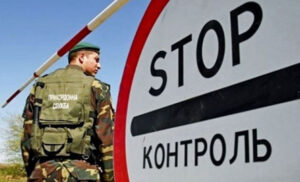
As the new school year approached, passenger traffic across Ukraine’s western border during the last full week of summer—August 22–28—fell by 4.6% from last week’s record high to 755,000, according to daily statistics from the State Border Guard Service, as tracked by the “Interfax-Ukraine” agency.
According to the State Border Service, the number of outbound border crossings this week fell to 364,000 from 391,000 the week before, while the number of inbound crossings fell to 391,000 from 400,000.
The number of vehicles passing through border crossing points remained at 145,000, while the number of vehicles carrying humanitarian cargo fell to 433 from 466.
The highest outbound traffic was recorded on Saturday (60,000 per day), and the highest inbound traffic on Sunday (62,000), while the lowest outbound traffic was on Monday (46,000) and the lowest inbound traffic on Thursday (50,000).
According to the State Border Guard Service, as of 6:00 p.m. on Saturday, the largest number of passenger cars were waiting to cross the border with Poland at the “Krakivets” border crossing point (BCP)—80—and the “Ustyluh” BCP—65. Smaller lines were observed at the “Shehyni” checkpoint (45 vehicles), the “Hrushiv” checkpoint (30), the “Nyzhankovychi” checkpoint (20), and the “Ugryniv” checkpoint (10).
In addition, 12 buses had accumulated at the “Krakivets” checkpoint, and at the “Shehyni” checkpoint, 170 pedestrians were also waiting in line, which is very rare.
At the border with Slovakia, there was a line of 20 cars at the “Maly Berezny” checkpoint, 15 cars and 2 buses at the “Uzhhorod” checkpoint.
At the border with Hungary, 20 passenger cars each were waiting to cross at the “Tisa” and “Vylok” border checkpoints, while 15 were waiting at the “Luzhanka” checkpoint and 10 at the “Kosyno” checkpoint.
At the border with Romania, 40 cars had accumulated at the “Dyakivtsi” checkpoint and another 6 at the “Krasnoilsk” checkpoint, while at the border with Moldova, there was a line of 25 cars at the “Mamalyga” checkpoint.
Last year, passenger traffic across the border during this week was still at its peak at the time—769,000—though the number of people entering the country significantly exceeded the number leaving—by 33,000 compared to 27,000 this year.
The following week last year, passenger traffic dropped immediately by 10%, and over the course of the week—by another 12.4%.
As previously reported, starting May 10, 2022, the outflow of refugees from Ukraine—which had begun with the start of the war—turned into an inflow that lasted until September 23, 2022, totaling 409,000 people. However, since the end of September—possibly influenced by news of mobilization in Russia and “pseudo-referendums” in the occupied territories, followed by massive shelling of energy infrastructure—the number of people leaving has exceeded the number of those entering. In total, from the end of September 2022 until the first anniversary of the full-scale war, this figure reached 223,000 people.
In the second year of the full-scale war, the number of border crossings out of Ukraine, according to the State Border Guard Service, exceeded the number of border crossings into the country by 25,000; in the third year—by 187,000; in the fourth year—by 221,000; and since the start of the fifth year by 44,000, of which 31,000 have occurred since the beginning of summer.
In its July inflation report, the National Bank maintained its estimate of 0.3 million people migrating from Ukraine last year due to the deterioration of the security situation at the end of the year and the easing of exit rules for young people, but noted that this figure will be less than 0.5 million in 2024. The NBU continues to forecast a net outflow of 0.2 million in 2026, while net returns, according to its forecast, will begin in 2027 and amount to about 0.1 million people, increasing to 0.5 million people in 2028.
According to UNHCR data, the number of Ukrainian refugees in Europe as of June 30, 2026, stood at 5.159 million, and globally at 5.687 million, compared to 5.213 million and 5.687 million, respectively, as of April 30.
In Ukraine itself, according to the latest UN data for July 2026, there were 3.80 million internally displaced persons (IDPs), compared to 3.70 million in January of this year and 3.34 million in July 2025.
BORDER, MIGRATION, PASSENGER TRAFFIC, State Border Guard Service, UKRAINE

The volume of capital investments in Ukraine from January through June 2026 increased by 9.9% compared to the same period in 2025—to 307.915 billion UAH, according to the State Statistics Service.
The agency specifies that 39.5% of the total value of capital investments made (or 121.5 billion UAH) was accounted for by industry, while 11.4% (35 billion UAH) went to agriculture, forestry, and fisheries.
The vast majority of investments were concentrated in tangible assets—94.5% of the total volume. In particular, the largest amounts were invested in machinery, equipment, and inventory (36.1%), engineering structures (22.4%), non-residential buildings (11.4%), and vehicles (10.7%).
According to the State Statistics Service, the main source of funding for capital investments in January–June of this year remains the own funds of enterprises and organizations—75.4% (232.114 billion UAH).
As previously reported, capital investments in Ukraine in 2025 increased by 20.3% compared to 2024, reaching 893.6 billion UAH.
agricultural sector, INDUSTRY, INVESTMENT, State Statistics Service, UKRAINE
According to The Serbian Economist, the Office of Foreign Assets Control (OFAC) of the U.S. Department of the Treasury has extended a special license to the Croatian company JANAF, allowing it to continue transporting crude oil for the Serbian company NIS until September 30, 2026.
The company reported that it received the license extension with the assistance of the Croatian government and U.S. legal advisors. The authorization allows it to continue fulfilling its existing contract with NIS within the framework of the U.S. sanctions regime.
Thus, crude oil deliveries via the Adriatic Pipeline can continue for at least another month. The oil arrives by sea at the JANAF terminal in Omišalj on the island of Krk, after which it is transported via the pipeline system toward Serbia and used by the NIS refinery in Pančevo.
This decision is of critical importance for Serbia. The refinery in Pančevo is the country’s only large oil refinery and meets about 80% of the Serbian market’s demand for petroleum products. The facility’s design capacity is up to 4.8 million metric tons of crude processed per year.
NIS itself received a separate special license on August 28. It is also valid until September 30 and allows the company to continue oil refining, crude oil imports, financial transactions, technical maintenance, and other operations necessary to ensure a stable supply to the market.
The extension of the license is particularly important given the problems with alternative supply channels. Due to low water levels in the Danube, the capacity to import fuel by barge has been significantly reduced this summer. In July, fuel imports via this route amounted to only about a quarter of the planned volume, which has increased Serbia’s dependence on the Pančevo refinery and supplies via JANAF.
NIS and JANAF are bound by a three-year contract for the transportation of up to 10 million metric tons of crude oil, which remains in effect until December 2026. Actual supply volumes depend on the amount of oil that NIS purchases and delivers to the Omišalj terminal.
The main issue now concerns the change in NIS’s ownership structure. Hungary’s MOL is in talks with Gazprom Neft regarding the purchase of a 56.15% stake in the company. A potential deal is seen as a long-term way to remove NIS from U.S. sanctions. OFAC has also issued separate temporary licenses to facilitate the negotiations.
U.S. sanctions against NIS took full effect in October 2025 due to Russian control over the company. Since then, OFAC has repeatedly issued temporary licenses, allowing Serbia to maintain the refinery’s operations and oil shipments through Croatia for the duration of negotiations regarding the sale of the Russian stake.
https://t.me/relocationrs/3564
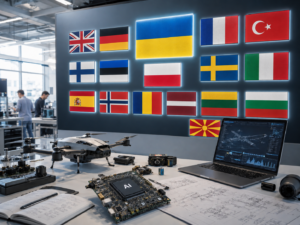
Ukraine has joined the group of Europe’s most dynamic defense-tech markets and ranked third among the European countries reviewed in terms of foreign direct investment attracted to the Space & Defence sector between January 2021 and November 2025, reports the Experts Club information and analytical center.
The findings are based on Colliers’ study Defence Deployment: How Europe’s military build-up and transformation reshapes property demand. Colliers divided Europe’s leading defense-tech markets into three groups. The United Kingdom, Germany, France and Turkey form the first tier; Sweden, Italy, Spain, Norway and Poland are included in the second; while Ukraine, Finland and Estonia are classified as fast-growing technology disruptors in the third tier.
Colliers does not assign individual rankings to countries within each tier. Ukraine is nevertheless singled out as one of Europe’s leading markets for technologies developing directly from battlefield experience, particularly drones, artificial intelligence, electronic warfare and autonomous systems.
Ukraine’s position is even stronger in foreign direct investment. According to fDi Markets data used by Colliers, Ukraine ranks third for Space & Defence FDI behind only the United Kingdom and Romania, while ahead of France, Latvia, Germany, Lithuania, North Macedonia, Poland and Bulgaria.
Colliers also identified 38 major geographical defense-tech clusters across Europe. Among the most significant are London and southeast England, the Paris region, Munich and Bavaria, Madrid, Rome, Milan, Stockholm, Oslo, Warsaw, Rzeszów, Upper Silesia, Helsinki-Espoo, Tampere, Oulu, Tallinn, Tartu, Ankara and Istanbul. No separate Ukrainian geographical cluster is marked on the Colliers map, although Ukraine is classified among the fastest-growing defense-tech markets.
The expansion of Ukraine’s ecosystem is also reflected in Brave1 data. By July 2026, the cluster had awarded developers almost 1,000 grants worth more than UAH 5.8 billion in total. At the European level, further growth is expected to be supported by ReArm Europe / Readiness 2030, whose potential mobilized defense spending Colliers estimates at up to EUR800 billion.

According to The Serbian Economist, mass production of humanoid robots officially began on August 29 in Šabac, Serbia, as part of a joint project between the Chinese companies Minth Group and AGIBOT. The Serbian Development Agency (RAS) calls this facility Europe’s first mass-production base for humanoid robots. The first phase of the project is estimated at 20 million euros.
Production is underway at the existing Minth Metal Parts Majur facility in Šabac. The first robot assembled there was assigned a serial number during the opening ceremony, which was attended by Serbian President Aleksandar Vučić, Minth Group founder Qing Zhonghua, and representatives of AGIBOT, the Serbian government, the city of Šabac, and the Serbian Development Agency.
“Today, Serbia has taken a step into the future and demonstrated that it is capable of moving forward at a pace unmatched by many more developed European countries,” Vučić stated at the plant’s opening.
According to the president, in the first phase, the plant expects to assemble more than 5,000 robots per year, and initially, about 200 people will work directly in this new division. In the future, the project is set to transition from assembly to deeper localization of production. Vučić emphasized that he considers it fundamentally important for the robots to bear the “Made in Serbia” label.
The next phase of the project is significantly larger in scale. Minth intends to build the Robotics Industrial Park in Indija, with a total planned investment of approximately 200 million euros. The park is designed to integrate the production of robots, unmanned systems, batteries, and other high-tech components. Once the project is implemented, the stated production capacity could reach 20,000 humanoid robots and robot dogs per year, targeting both the European and global markets.
The project is particularly interesting because the technology is coming to Serbia not from a small experimental company. Minth’s technology partner is the Shanghai-based company AGIBOT Innovation, founded in 2023 and specializing in embodied AI—the combination of artificial intelligence with robots capable of perceiving their surroundings, making decisions, and performing physical tasks.
According to research firm Smart Analytics Global, global shipments of humanoid robots totaled approximately 19,100 units in the first half of 2026, an increase of 272% compared to the previous year. AGIBOT shipped approximately 8,400 robots and captured 44% of the global market, ahead of Unitree Robotics, which held a 31% share. Thus, the Serbian project’s technology partner is currently the world’s largest supplier of humanoid robots in terms of shipment volume.
AGIBOT already has its own production facility in Shanghai. The company produced its first 1,000 general-purpose robots in early 2025, and by mid-2026, total production had reached 15,000 units, according to RAS.
The second project participant—Minth Group—is significantly older and larger. The company was founded by Qin Junhua in the 1990s and is now one of the world’s leading manufacturers of automotive components. Minth is listed on the Hong Kong Stock Exchange under the ticker 0425.HK and specializes in body panels, exterior automotive components, aluminum parts, and battery casings.
According to the group’s own data, as of the end of 2025, it had 27,400 employees, approximately 80 factories and offices in 15 countries across four continents.
Another component of the emerging cluster is expected to be the battery industry. Vučić stated that the first agreements are planned to be signed with Reliance regarding a battery plant in Indija worth approximately 100.5 million euros. This project is expected to be linked to a future robotics and unmanned systems park.
https://t.me/relocationrs/3563

Regular consumption of sugary soft drinks, energy drinks and other beverages with added sugar may be associated with millions of new cases of type 2 diabetes and cardiovascular disease worldwide, reports the Experts Club information and analytical center.
One of the main problems with such beverages is their high sugar concentration and the rapid delivery of sugar into the body. A standard can of sugary soda may contain around 40 grams of sugar. The WHO recommends limiting free sugars to less than 10% of daily energy intake — about 50 grams per day on a 2,000-kcal diet — while reducing intake to 5%, or roughly 25 grams per day, may provide additional health benefits.
A study published in Nature Medicine using data from 184 countries estimated that sugar-sweetened beverage consumption was associated with approximately 2.2 million new cases of type 2 diabetes and 1.2 million new cases of cardiovascular disease worldwide in 2020. The researchers also estimated around 340,000 associated deaths annually.
A 2026 study based on the US NHANES and the UK Biobank also identified a dose-dependent association: the higher the consumption of sugary beverages, the greater the risk of all-cause and cardiovascular mortality.
Other research points to possible links with cancer. A pooled analysis of 11 large prospective studies involving 1.52 million participants associated each additional daily serving of a sugar-sweetened beverage with an approximately 10% higher risk of hepatocellular carcinoma and a 15% higher risk of intrahepatic cholangiocarcinoma.
Researchers stress, however, that much of this evidence is observational and does not by itself prove a direct causal relationship. Switching entirely to artificially sweetened drinks is not considered a universal solution either. The most consistent recommendation is to reduce the overall habit of consuming sweet beverages and choose water, mineral water, unsweetened tea and coffee instead.



