
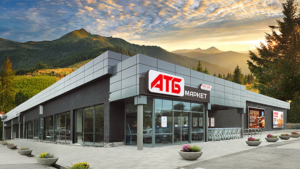
According to Experts.news, Ukraine’s largest retailers continued to increase their revenue in the first half of 2026, with the growth rates of leading chains in most cases exceeding that of the country’s retail market as a whole. ATB remains the leader in terms of revenue, while among the largest companies, Aurora and Fora posted the highest growth rates, according to an analysis by the Experts Club research center based on data from OpenDataBot.
As of mid-August 2026, there were 41,235 companies operating in the retail sector in Ukraine. Their number has been increasing for the fifth consecutive year. Since the beginning of the year, the number of registered retailers has exceeded the number of those that closed by 796 companies, which is practically in line with the pre-war level of net growth—804 companies over a comparable period. A total of 969 new companies were registered in 2026, 32% more than the previous year. (OpenDataBot)
To assess financial trends, OpenDataBot identified 2,073 companies that submitted financial statements for both the first half of 2025 and the corresponding period of 2026. Their combined revenue increased by 18%—from 692.29 billion UAH to 817.14 billion UAH.
The ranking of Ukraine’s largest retailers by revenue for the first half of 2026 is as follows:
ATB-Market – 135.99 billion UAH, up 16.1% compared to 117.15 billion UAH a year earlier.
Silpo-Food – 59.55 billion UAH, +18.2%.
Vygodna Kupka / “Aurora” – 28.26 billion UAH, +30.0%.
Fora – 26.83 billion UAH, +29.4%.
Comfi Trade – 20.16 billion UAH, +27.5%.
Novus Ukraine – 19.65 billion UAH, +20.6%.
RUSH / EVA – 18.02 billion UAH, +21.4%.
Metro Cash & Carry Ukraine – 17.70 billion UAH, +14.5%.
Petrol Contract / WOG – 16.35 billion UAH, +17.2%.
Omega / Varus – 13.72 billion UAH, +21.6%.
According to Experts Club’s calculations, the combined revenue of the top ten companies reached 356.23 billion UAH, an increase of approximately 19.7% compared to the first half of 2025. Thus, the top 10 grew slightly faster than the entire comparable group of retailers.
The ten largest companies accounted for about 43.6% of the total revenue of the 2,073 retailers included in the OpenDataBot sample. ATB and Silpo alone generated approximately 195.5 billion UAH, or nearly 24% of the total revenue of the entire group studied, while the top five companies generated approximately 270.8 billion UAH, or one-third of the total.
ATB remains the undisputed market leader: its revenue is more than double that of Silpo and nearly five times that of Aurora. Furthermore, ATB recorded the largest absolute increase in revenue—18.84 billion UAH over the year.
However, in terms of growth rates, “Aurora” and “Fora” stand out the most. “Aurora’s” revenue increased by 30%, or 6.52 billion UAH, while “Fora’s” rose by 29%, or 6.1 billion UAH. “Komfi” saw an increase of about 27.5%.
Outside the top ten in terms of revenue, FTD-Retail—which operates the “Foxtrot” chain—demonstrated strong growth, increasing its revenue by 4.47 billion hryvnia. OKKO-Light added 3.88 billion UAH, while Glusko Retail—whose gas station network is managed by Ukrnafta—added 2.76 billion UAH.
The financial results also reveal another trend. The combined profit of the companies surveyed grew by 17%—from 14.91 billion UAH to 17.44 billion UAH—but the number of profitable retailers decreased.
In the first half of 2025, 1,354 companies in the comparable group reported a profit; in 2026, that number dropped to 1,272. Their share fell from 65% to 61%.
This means that growth in the Ukrainian retail sector is becoming more concentrated. The sector’s total revenue and profit are increasing, and leading chains are posting double-digit growth rates; however, operating conditions remain challenging for some small and medium-sized companies.
According to Experts Club’s assessment, the discrepancy between the 18% increase in total revenue for the surveyed group and the decline in the share of profitable companies is particularly telling. It may indicate rising operating expenses, labor costs, logistics costs, rent, electricity costs, and financing costs, as well as intensified competition from the largest chains.
At the same time, the financial statements for the first half of the year do not yet reflect the consequences of subsequent massive Russian strikes on distribution centers, warehouses, and other infrastructure of Ukrainian businesses, a point specifically highlighted by OpenDataBot. Their impact may become apparent in the results of the coming quarters.
General government statistics also confirm the continued growth of the consumer market. As previously reported by Open4Business, citing the State Statistics Service, in January–July 2026, the physical volume of Ukraine’s retail trade turnover increased by 9% compared to the same period last year, while its nominal volume reached approximately 1.7 trillion UAH.
Retail turnover of legal entities grew slightly faster over the seven-month period, by 9.1%. In July alone, total retail turnover increased by 8.7% year-over-year and by 4% compared to June, while turnover of legal entities rose by 8.8% and 3.7%, respectively. Overall, Ukrainian retail grew by 8.1% in 2025, so the figures for the first seven months of 2026 indicate that consumer activity continues at a higher pace.

From September 4 to 17, special regulations governing vehicle entry, exit, and movement will be in effect in Uman in connection with the Rosh Hashanah celebrations, according to Ihor Taburets, head of the Cherkasy Regional State Administration.
“Vehicle entry is prohibited: from Highway M-30 to Uman—onto Derevyanka Street, near the ”Standard Budivelnij” LLC facility; from the M-30 highway to Uman—on Gorikhov Street; from the village of Rodnikovka to Uman—on Pavlova Street,” Taburets wrote on his Telegram channel.
In addition, enhanced checkpoint controls will be implemented at the following entry points: from the M-30 onto Derevyanka Street; from the M-05 onto Ednannia Street; from the village of Gorodetske (Palanska Territorial Community) to the intersection of Gorodetska Street and Maksym Zaliznyak Street; from the M-30 highway onto Mykhailivska Street, from the M-30 highway onto Vokzalna Street, and from the village of Rodnykivka (Palanska Territorial Community) onto Kyivska Street.
It is specifically noted that traffic from the M-05 Kyiv-Odesa highway to Uman, on Vyzvolyteliv Street, will be permitted only for Hasidic pilgrims.
In the pilgrimage district, the sale of alcoholic beverages, fireworks and pyrotechnics, knives and other sharp or cutting objects, air guns, and toys that imitate them is also prohibited.
“I ask everyone—local residents and visitors alike—to take these restrictions into account in advance and plan their routes accordingly,” Taburets urged.
Every year on the Jewish New Year, Rosh Hashanah, tens of thousands of Hasidic pilgrims arrive in Uman, Cherkasy Oblast, to visit the grave of Rabbi Nachman, the founder of Bratslav Hasidism. Despite Russia’s full-scale war against Ukraine, the pilgrimage continues, although Ukrainian authorities regularly urge foreigners to be aware of security risks. In 2025, more than 35,000 pilgrims arrived in Uman for the Rosh Hashanah celebrations.
In 2026, the Ukrainian Ministry of Foreign Affairs recommended that Hasidic pilgrims refrain from traveling to Uman, as Russia’s full-scale aggression against Ukraine, constant massive rocket attacks on Ukrainian cities and communities, civilian and transportation infrastructure, as well as ongoing Russian terror, sabotage, and provocations pose real threats to people’s lives and safety.
The Ministry of Foreign Affairs also noted that a legal regime of martial law is in effect in Ukraine. If pilgrims visit Uman despite the warnings from Ukrainian authorities, they should be aware of restrictions on freedom of movement, curfews, increased patrolling, and a ban on mass gatherings; violators may be subject to coercive measures.

From August 1 to 27, Ukraine exported 47.5% less agricultural produce than during the corresponding 27 days in July—1.726 million metric tons versus 3.287 million metric tons, according to a weekly market review by the brokerage firm Spike Brokers.
According to its data, the decline was less significant in monetary terms—25.6%: exports of goods in groups 01–24 of the Ukrainian Classification of Goods for Foreign Economic Activity (UKT ZED) for the first 27 days of August totaled $1.060 billion, compared to $1.424 billion in July. At the same time, the average price per metric ton of the export basket rose from about $433 to $614, primarily due to a shift in the commodity structure of exports.
The main decline in physical volumes was in grains. Total exports of wheat, corn, and barley fell by 69.5% to 740,000 metric tons. Specifically, 486,600 metric tons of wheat were shipped (-49.8% compared to July), 190,700 metric tons of corn (-84.3%), and 62,600 metric tons of barley (-74.5%). The share of these three crops in total agricultural exports fell from 73.9% to 42.9%, respectively.
At the same time, rapeseed exports surged in August as seasonal shipments began. From August 1–27, rapeseed exports reached 255,200 metric tons, compared to 11,800 metric tons during the same period in July. Rapeseed’s share of total exports rose from 0.4% to 14.8%. Rapeseed oil exports increased more than 4.5-fold, reaching 69,400 metric tons.
The processed products segment contracted significantly less than the grain segment. Exports of the three main vegetable oils—sunflower, rapeseed, and soybean—totaled 234,000 metric tons, down 16.7% from the corresponding period in July.
Exports of sunflower and soybean meal fell to 153,800 metric tons (-6.4%), and sunflower oil exports dropped to 131,300 metric tons (-42.5%); however, shipments of sunflower meal rose to 83,100 metric tons (+28%).
The geography of exports also changed. The largest destinations by physical volume in August were Germany—195.7 thousand metric tons, Italy—159.7 thousand metric tons, Poland—151.9 thousand metric tons, the Netherlands—147.2 thousand metric tons, and Spain—125.3 thousand metric tons. Exports to Turkey fell by 79%—to 114,000 metric tons, down from 544,800 metric tons in July. In contrast, Germany increased its imports from Ukraine by approximately fourfold, largely due to rapeseed.
According to Spike Brokers, 279,3 thousand metric tons of agricultural products were exported by road through border crossings from August 1–27, which is 11.3% more than during the same period in July.
At the same time, rail shipments of grain as of August 26 fell by 42.4% compared to July—to 951,000 metric tons—and by 57% compared to August 2025. The average daily shipment volume was 37,600 metric tons.
Meanwhile, the average daily transit of grain railcars through western border crossings over the first 25 days of August rose to 173.7 railcars, compared to 71.3 railcars in July—a 2.4-fold increase. As of August 26, 9,822 railcars had accumulated en route to the border crossings, of which 1,508 were carrying grain.
At the same time, rail transportation of grain to port stations—including domestic transport to Izmail—decreased by 81.8% during the current period in August, to 230,600 metric tons, compared to 1.265 million metric tons in July.
Only 55,700 metric tons of grain were transported to the ports of Greater Odesa, which is 95.5% less than the July figure. Specifically, shipments to Chornomorsk-Port-Export totaled 31,600 metric tons (-93.5%), to Odesa-Port—17,200 metric tons (-92.2%), and to Chornomorska for TIS—6,600 metric tons (-97.8%).

Starting September 1, the Registry of Type Approval Certificates and Manufacturer-Issued Certificates of Conformity for Wheeled Vehicles and Equipment will become operational in Ukraine, marking a full transition from paper-based records to a unified electronic system, according to a statement from the Ministry of Recovery, Infrastructure, and Transport of Ukraine.
“We are digitizing a procedure that has essentially remained paper-based for years. The registry makes it possible to view all necessary information in a single system and verify it without paper documents,” said Serhiy Derkach, First Deputy Minister of Recovery, Infrastructure, and Transport, as quoted in the press release.
The ministry clarified that the registry is currently operating in a pilot phase, with 33 vehicle manufacturers and 20 certification bodies participating in the testing.
The next phase is expected to begin on September 27, when the new technical regulation for the approval of the design of wheeled vehicles, their components, and equipment takes effect.
Under the technical regulation, certificates will be issued exclusively in electronic form and entered into the Registry.
It is noted that previously issued paper certificates will remain valid, and once the relevant information about them is entered into the registry, no separate reissuance will be required.
Among other things, the ministry reported that it is working on changing the approach to vehicles imported into Ukraine from abroad.
“The current practice in Ukraine of certifying such vehicles prior to their first state registration does not correspond to the model applied in the European Union,” the ministry explained.
Specifically, as part of European integration, Ukraine must transition from certifying imported used vehicles to requiring mandatory technical inspections prior to their first state registration in Ukraine.

The price of food-grade wheat in Ukraine fell by $10 over the week—to $185 per metric ton on a CPT Odessa basis—while feed-grade wheat also dropped by $10, to $175 per metric ton, according to a weekly market review by the brokerage firm Spike Brokers.
“The global grain market ended the week with a further rise, but this trend did not carry over to Ukrainian basis prices,” the review noted.
Wheat exports from Ukraine during August 1–27 fell by half (-49.8%) compared to the same period last month—to 486,600 metric tons from 969,400 metric tons. The main destinations were Bangladesh—251,000 metric tons, Indonesia—243,500 metric tons, and Algeria—226,300 metric tons. These three countries accounted for about 74% of total exports of this product. Saudi Arabia and Yemen followed in terms of volume, with approximately 54,500 metric tons each.
The price of corn on a CPT Odessa basis fell by $5 to $185 per metric ton, while on an FCA Chop basis, it rose by $5 to $225 per metric ton.
Corn exports from August 1–27 totaled 190.7 thousand metric tons, which is 84.3% less than during the same period in July.
According to Spike Brokers, trading in next year’s corn crop is already active along the western border. During the week, October–December quotes on an FCA Zahony–Chop–Batyovo basis ranged from EUR188 to EUR191 per metric ton.
Brokers note that this trade route faces physical constraints on both sides of the border, particularly due to transshipment capacity in Ukraine and the EU, the availability of rail logistics, and the fleet of Euro-standard railcars.
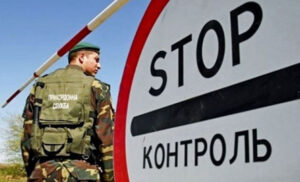
As the new school year approached, passenger traffic across Ukraine’s western border during the last full week of summer—August 22–28—fell by 4.6% from last week’s record high to 755,000, according to daily statistics from the State Border Guard Service, as tracked by the “Interfax-Ukraine” agency.
According to the State Border Service, the number of outbound border crossings this week fell to 364,000 from 391,000 the week before, while the number of inbound crossings fell to 391,000 from 400,000.
The number of vehicles passing through border crossing points remained at 145,000, while the number of vehicles carrying humanitarian cargo fell to 433 from 466.
The highest outbound traffic was recorded on Saturday (60,000 per day), and the highest inbound traffic on Sunday (62,000), while the lowest outbound traffic was on Monday (46,000) and the lowest inbound traffic on Thursday (50,000).
According to the State Border Guard Service, as of 6:00 p.m. on Saturday, the largest number of passenger cars were waiting to cross the border with Poland at the “Krakivets” border crossing point (BCP)—80—and the “Ustyluh” BCP—65. Smaller lines were observed at the “Shehyni” checkpoint (45 vehicles), the “Hrushiv” checkpoint (30), the “Nyzhankovychi” checkpoint (20), and the “Ugryniv” checkpoint (10).
In addition, 12 buses had accumulated at the “Krakivets” checkpoint, and at the “Shehyni” checkpoint, 170 pedestrians were also waiting in line, which is very rare.
At the border with Slovakia, there was a line of 20 cars at the “Maly Berezny” checkpoint, 15 cars and 2 buses at the “Uzhhorod” checkpoint.
At the border with Hungary, 20 passenger cars each were waiting to cross at the “Tisa” and “Vylok” border checkpoints, while 15 were waiting at the “Luzhanka” checkpoint and 10 at the “Kosyno” checkpoint.
At the border with Romania, 40 cars had accumulated at the “Dyakivtsi” checkpoint and another 6 at the “Krasnoilsk” checkpoint, while at the border with Moldova, there was a line of 25 cars at the “Mamalyga” checkpoint.
Last year, passenger traffic across the border during this week was still at its peak at the time—769,000—though the number of people entering the country significantly exceeded the number leaving—by 33,000 compared to 27,000 this year.
The following week last year, passenger traffic dropped immediately by 10%, and over the course of the week—by another 12.4%.
As previously reported, starting May 10, 2022, the outflow of refugees from Ukraine—which had begun with the start of the war—turned into an inflow that lasted until September 23, 2022, totaling 409,000 people. However, since the end of September—possibly influenced by news of mobilization in Russia and “pseudo-referendums” in the occupied territories, followed by massive shelling of energy infrastructure—the number of people leaving has exceeded the number of those entering. In total, from the end of September 2022 until the first anniversary of the full-scale war, this figure reached 223,000 people.
In the second year of the full-scale war, the number of border crossings out of Ukraine, according to the State Border Guard Service, exceeded the number of border crossings into the country by 25,000; in the third year—by 187,000; in the fourth year—by 221,000; and since the start of the fifth year by 44,000, of which 31,000 have occurred since the beginning of summer.
In its July inflation report, the National Bank maintained its estimate of 0.3 million people migrating from Ukraine last year due to the deterioration of the security situation at the end of the year and the easing of exit rules for young people, but noted that this figure will be less than 0.5 million in 2024. The NBU continues to forecast a net outflow of 0.2 million in 2026, while net returns, according to its forecast, will begin in 2027 and amount to about 0.1 million people, increasing to 0.5 million people in 2028.
According to UNHCR data, the number of Ukrainian refugees in Europe as of June 30, 2026, stood at 5.159 million, and globally at 5.687 million, compared to 5.213 million and 5.687 million, respectively, as of April 30.
In Ukraine itself, according to the latest UN data for July 2026, there were 3.80 million internally displaced persons (IDPs), compared to 3.70 million in January of this year and 3.34 million in July 2025.
BORDER, MIGRATION, PASSENGER TRAFFIC, State Border Guard Service, UKRAINE



