

The newly appointed Japanese Ambassador to Ukraine, Yo Osume, has arrived in Kyiv, according to the Japanese Embassy in Ukraine.
“We are pleased to announce that on August 29, the newly appointed Japanese Ambassador to Ukraine, Mr. Osume Yo, arrived in Kyiv. A new phase in the development of strong friendly relations between Japan and Ukraine lies ahead,” the embassy said in a post on social media platform X on Saturday.
Since the start of the full-scale invasion, Japan has become one of Ukraine’s largest bilateral donors. As of February 2026, Tokyo has pledged and is providing approximately $20 billion in aid to Ukraine, including financial, humanitarian, and recovery and reconstruction assistance. Japan’s direct budgetary support alone has exceeded $9.8 billion since February 24, 2022.
In 2026, Ukraine has already received $850 million in budgetary support from Japan through World Bank projects. In addition, Tokyo’s contribution to the ERA mechanism, funded by proceeds from frozen Russian assets, amounts to more than $3 billion.
Japan also supplies Ukraine with energy equipment, generators, vehicles, demining equipment, and other non-lethal aid.
In May 2026, Tokyo contributed an additional $14.658 million to NATO’s PURL mechanism for the procurement of non-lethal equipment for Ukraine. At the same time, Japan continues to apply sanctions pressure on Russia.

Investments in commercial real estate across the six largest markets of Central and Eastern Europe reached EUR5.8 billion in the first half of 2026, increasing by approximately 7% compared with the same period last year, according to the Colliers CEE Investment Scene H1 2026 report.
The study covers Poland, the Czech Republic, Hungary, Romania, Slovakia and Bulgaria. The investment volume was above the average for the first halves of the past five years, which amounted to EUR4.6 billion, and above the ten-year average level of EUR5.1 billion.
Poland became the largest market, where the volume of transactions exceeded EUR3 billion. It accounted for around 52% of all CEE-6 investments. The Czech Republic ranked second with more than EUR1.4 billion, while Hungary attracted almost EUR600 million, showing the best first-half result since 2021.
According to Colliers, the market recovery differs from previous investment cycles. Capital is returning selectively, with investors giving preference to properties with stable income, good locations, high energy efficiency and long-term demand from tenants.
Offices became the largest segment, followed by retail real estate, residential properties and institutional rental, as well as industrial and logistics real estate.
Colliers forecasts that by the end of 2026, the volume of investments in CEE-6 commercial real estate may reach EUR12.5-13 billion, compared with EUR11.6 billion in 2025, and approach the peak levels observed before the pandemic.
Among the main risks for the market, experts cite high interest rates, rising refinancing costs, geopolitical tensions, weakness in German industry and energy costs. At the same time, additional investment opportunities are being created by infrastructure projects, the defense industry, the energy transition, artificial intelligence, reindustrialization and the relocation of production closer to European consumers.
Colliers is a global professional services and investment management company operating in more than 70 countries. Its annual revenue amounts to around $6 billion, its workforce totals around 28,000 people, and assets under management amount to approximately $110 billion.
BUSINESS, COLLIERS, EUROPE, EXPERTS CLUB, INVESTMENTS, REAL ESTATE
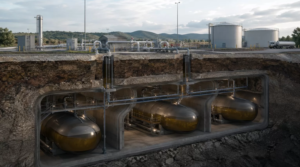
Starting in 2027, Ukraine will launch a pilot project for the underground storage of petroleum products from the minimum reserves of oil and petroleum products (MROPP), according to Cabinet of Ministers Resolution No. 1037 dated August 13, 2026, published on the government portal.
According to the resolution, the pilot project, initiated by the Ministry of Energy, is to last no more than two years.
“Starting from the beginning of the third base year (2027), market participants and operators are required to store a portion of diesel fuel—amounting to at least 20% of the total volume of this type of petroleum product—from the MRPS in underground petroleum product storage facilities,” – states the procedure for implementing the pilot project attached to the resolution.
The project provides for the creation of an extensive system of underground petroleum product storage facilities and conditions for their safe storage, as noted in the procedure.
The Ministry of Energy has been designated as the coordinator of the pilot project, and JSC “Ukrtransnafta” as the specialized responsible storage operator.
At the same time, the operation of the specialized responsible storage operator grants other market participants the right to store petroleum products in their own underground storage facilities.
The list of state-owned facilities whose property may be used as underground storage facilities is specified in the confidential section of the resolution.
The Ministry of Energy must ensure the implementation of the project in cooperation with, among others, NJSC “Naftogaz of Ukraine,” “Ukrtransnafta,” and the “Market Operator.”
Serhiy Kuyun, director of the consulting firm A-95, commented on the pilot project, noting that there are currently no underground storage facilities in the country, and that with only four months remaining before the deadline, no one will even have time to develop a project. At the same time, he pointed out that the resolution provides for the use of oil pipelines, salt caverns, depleted oil or gas fields, and other geological formations for these purposes.
Kuyun also noted that in the near future, state-owned banks, by government decision, may begin providing loans for underground petroleum product storage facility projects at 10% per annum, with the state compensating for the remaining interest. According to his information, the loan amount could range from 100 million UAH to 1 billion UAH. At the same time, Kuyun suggested that in such cases, a strict condition would be imposed requiring the storage facilities to be put into operation within a year.
However, in his opinion, a year is an unrealistic deadline, so the government needs to speed up the approval of project documentation, a process that currently takes one to one and a half years. The director of A-95 also noted that private gas station network operators have already begun construction of underground storage facilities “at their own risk,” while simultaneously seeking approval for their projects.
He also drew attention to the broader issue of MZNN storage starting in 2027.
“The law (on MZNN), although blocked by subordinate regulations, is formally in effect, and currently the MZNN quota stands at 6% (of the market—ER), or approximately 600,000 metric tons. This is a volume that physically has nowhere to be stored—neither underground nor above ground. And no one is going to store it on land, because that would be business suicide. If nothing changes, the quota will automatically increase to 9% starting in 2027,” Kuyun explained.
He added that the Ministry of Energy understands the problem and has prepared amendments to the law, which already number 300.
“The positions are as follows: everyone, without exception, understands the main point—reserves are necessary, but they must be protected. And these reserves must remain in Ukraine; fantasies about storing them abroad are quickly dispelled,” the director of A-95 concluded.
As reported, parliament passed the MZNN law on November 21, 2023.
The explanatory note to Bill No. 9024-d stated that its adoption would allow for the creation of a system of minimum reserves of crude oil and petroleum products in Ukraine and would regulate relations in the sphere of managing such minimum reserves, as well as ensure Ukraine’s compliance with its obligations regarding the implementation of Directive 2009/119/EU.
According to Vasyl Danylyak, CEO of OKKO Group, establishing minimum oil and petroleum product reserves is only feasible once Ukraine has a sufficient network of underground storage facilities.
FUEL, petroleum product, storage facility, UKRAINE, UKRTRANSNAFTA
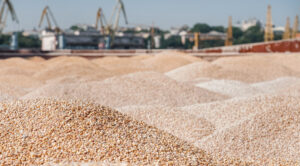
From August 1 to 26, Ukraine exported 1.423 million metric tons of grains, oilseeds, and their processed products via alternative routes, which accounts for one-third of the volume required for this period, Minister of Agrarian Policy and Food Taras Vysotsky said at a briefing on Friday.
“From August 1 to 26, 1,423 thousand metric tons of grains, oilseeds, and products derived from them were exported. This accounts for 33% of the demand for this period. Grains accounted for the smallest share—822 thousand metric tons. For grains, we exported only 21% of the potential demand. The rest consists of oil, oilseeds, and meal. In principle, export volumes in these categories meet current demand,” he said.
Vysotsky noted that exports by rail and via the Danube each amounted to approximately 600,000 metric tons, while road transport remains the smallest in volume—about 80,000 metric tons. Of this volume, about 40,000 metric tons are oilseeds, which is due to the high cost of road transport.
According to him, if the current pace is maintained, Ukraine could export about 1.5 million metric tons of agricultural products via alternative routes by the end of August.
By the end of September, up to 2 million metric tons could be exported via alternative routes, as previously forecast by the Ministry of Agrarian Policy.

Since the beginning of the year, 6,864 agricultural enterprises have raised 46.29 billion UAH under the state program “Affordable Loans 5-7-9%,” according to the press service of the Ministry of Agrarian Policy and Food of Ukraine.
The program was most actively utilized in the Odesa (6.14 billion UAH for 817 agricultural enterprises), Kyiv (4.49 billion UAH for 577 agricultural enterprises), Kirovohrad (4.26 billion UAH for 817 agricultural enterprises), Vinnytsia (4.12 billion UAH for 731 agricultural enterprises), and Kharkiv (3.17 billion UAH for 402 agricultural enterprises) regions.
In total, since the beginning of the year, 11,887 agricultural enterprises have secured over 105.63 billion UAH in loan funds through all financing programs.
In 2025, 15,574 agricultural enterprises received 131.47 billion UAH in bank loans for development.
Under the state program “Affordable Loans 5-7-9%,” 7,978 farms were financed in the amount of 53.76 billion UAH.
agricultural enterprise, agricultural sector, FINANCING, LOAN, MINISTRY OF AGRARIAN POLICY
Agricultural holding company Astarta reported a net loss of EUR14.07 million in the first half of 2026, compared to a net profit of EUR42.27 million for the same period last year, according to a report filed by the company with the Warsaw Stock Exchange on Thursday.
According to the report, while all segments generated net profit in January–June of last year, each segment recorded a loss this year: in sugar production, a loss of EUR3.83 million replaced a profit of EUR8.35 million; in crop production, a profit of EUR20.07 million turned into a loss of EUR3.76 million; in cattle farming, a loss of EUR2.41 million was recorded instead of a profit of EUR10.68 million; and in soybean processing, a loss of EUR2.27 million was recorded instead of a profit of EUR5.84 million.
Crop production and soybean processing reported operating profits, while sugar production and livestock farming posted operating losses. Furthermore, livestock farming also reported a gross loss.
According to the report, Astarta’s consolidated revenue for the first half of the year decreased by only 0.1% to EUR 226.47 million, with export sales accounting for 62% compared to 61% in the first half of last year.
The agriculture sector led the way, with sales growing by 27% to EUR78 million, or 34% of total revenue. In sugar production, sales fell by 10% to EUR72 million, or 32% of total revenue; in soybean processing, by 7% to EUR51 million; and in livestock farming, by 15% to EUR25 million.
Gross profit for January–June of this year fell by half—to EUR46.01 million—as the cost of goods sold rose by 10% compared to the same period last year, and the estimated value of crops and livestock was reduced due to falling agricultural prices and rising costs.
Consolidated EBITDA fell 2.4-fold compared to the same period last year, to EUR34.32 million.
It is noted that net investments decreased by 41% to EUR27 million following the completion of investments in a protein concentrate production plant and ongoing planned capital expenditures in other segments.
According to the report, in the first half of 2026, net financial debt (excluding lease obligations) amounted to EUR81 million, compared to EUR28 million in the first half of 2025. Total net debt (including leases) increased by 44% to EUR220 million.
“Astarta” is a vertically integrated agro-industrial holding operating in eight regions of Ukraine and is the largest sugar producer in Ukraine. It comprises six sugar plants, agricultural enterprises with a land bank of 220,000 hectares, dairy farms with 22,000 head of cattle, an oil extraction plant in Hlobine (Poltava Oblast), seven grain elevators, and a biogas complex.
Astarta’s net profit for 2025 fell 4.2 times—to $19.94 million—while consolidated revenue decreased by 23%—to $472 million.



