
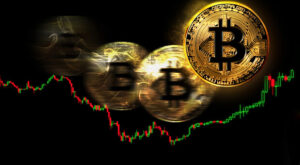
According to Fixygen, the cryptocurrency market is closing out the last week of August near local highs: Bitcoin is holding steady at around $80,000 after rising above $81,000, investors are once again actively investing in spot ETFs, and the stablecoin sector continues to evolve from a primarily trading instrument into a full-fledged payment infrastructure.
On August 25, Bitcoin rose to $81,240, its highest level since mid-May. By the morning of Friday, August 28, the leading cryptocurrency had corrected to approximately $79,700; however, for the month of August, it remains up by about 26.7%, which could be its best monthly performance since the end of 2024.
Unlike many previous waves of growth, one of the key factors now is not so much speculative demand as it is investors’ concerns about U.S. government debt, the long-term value of the dollar, and the situation in the Treasury bond market.
Following the U.S. Treasury Department’s decision to increase the repurchase of long-term Treasury bonds, market participants have once again begun discussing the so-called “debasement trade”—the purchase of gold, Bitcoin, and other scarce assets as a hedge against potential currency devaluation.
Standard Chartered noted that such a policy creates precisely the macroeconomic environment for which Bitcoin was originally created. Some analysts suggest that a sustained break above the current resistance zone could pave the way to $95,000–100,000.
That said, this week was significantly calmer than the previous one. By last Friday, Bitcoin had already surged to around $77,000–78,000, posting its best weekly performance in over two years. This week, the market focused more on consolidating this gain than on launching a new upward surge.
Ether also remained relatively stable and was trading near $2,500 by the end of the week. Thus, Ethereum did not replicate the scale of Bitcoin’s August rally but continued its recovery following a weaker first half of the year.
One of the most important signals for the market was the return of funds to U.S. spot Bitcoin ETFs. According to market participants’ estimates, inflows into these funds in August approached $2.4–2.5 billion, with investors directing approximately $2.5 billion into ETFs over the last seven trading sessions.
BlackRock, the largest operator of Bitcoin ETFs, believes that institutional investors are increasingly viewing Bitcoin not only as a high-risk technology asset but also as a potential diversification tool amid debt and currency risks. BlackRock’s IBIT, the largest U.S. fund, already manages over $76 billion in assets.
This is particularly important for the market following a prolonged period of capital outflows from ETFs earlier this year. The return of institutional demand significantly increases the likelihood that August’s growth will prove more sustainable than the short-lived speculative rallies of previous months.
Another significant trend of the week is the accelerating development of stablecoins.
The volume of payments made using cards pegged to stablecoins exceeded $1 billion for the first time in July. RedotPay forecasts that by 2028, the annual volume of such payments could increase approximately fourfold—to $50 billion.
Stablecoins are being used more and more actively not only within crypto exchanges but also for cross-border transfers, corporate settlements, holding dollar liquidity, and everyday payments. This market is growing particularly rapidly in Latin America and Africa, where access to dollar-denominated banking instruments is limited.
This week, another signal came from the United Kingdom: the government proposed expanding the Bank of England’s mandate to include supporting innovation in the payments sector, particularly innovations related to stablecoins and digital currencies.
Another telling development was Chelsea Football Club’s decision to make Circle—the issuer of USDC—the title sponsor of its jerseys. The logo of one of the largest dollar-pegged stablecoins will now appear on the jerseys of the English Premier League club—a level of mainstream integration that would have seemed nearly impossible for the crypto industry just a few years ago.
Consolidation is also continuing in the industry’s institutional segment.
Crypto custodian BitGo has agreed to acquire NYDIG’s institutional trading business. With this acquisition, BitGo will gain a presence in derivatives, structured products, financing, and other services for institutional clients. Approximately 30 NYDIG employees are moving to BitGo. The parties did not disclose the value of the deal.
BitGo previously went public in 2026 and raised approximately $213 million during its IPO. The acquisition of part of NYDIG signals the continued emergence in the crypto market of companies seeking to provide institutional investors with a full range of services—from asset custody to trading, settlement, and structured financing.
Regulation in the U.S., however, remains one of the main sources of uncertainty.
President Donald Trump continues to urge Congress to pass the Clarity Act, which is intended to more clearly delineate the powers of regulators and establish rules for the operation of the cryptocurrency market. The legislative process remains protracted, but the industry is already actively preparing for the midterm congressional elections.
Stand With Crypto, an organization supported by Coinbase, announced this week its endorsement of 32 candidates who have previously voted in favor of cryptocurrency legislation. According to Reuters estimates, the crypto industry as a whole has already allocated approximately $200 million to political activities as part of the 2026 election cycle.
Thus, the last week of August cemented several trends at once: Bitcoin once again reached a level of around $80,000, institutional capital returned to ETFs, stablecoins are increasingly being used for real-world payments, and the largest crypto companies continue to build infrastructure that increasingly resembles the traditional financial sector.
The main risk for the market in the coming weeks remains macroeconomic. Investors are awaiting signals from the Federal Reserve regarding interest rates. Persistently high inflation has already reignited market expectations of a potential rate hike in the U.S., which is traditionally a negative factor for cryptocurrencies.
In September, attention will focus on the Fed meeting on September 16, U.S. labor market data, and trends in U.S. Treasury yields. Provided the dollar remains weak and demand for alternative assets stays high, the $80,000–83,000 range for Bitcoin will become a key technical threshold. A sustained breakout above this level could reignite market talk of $100,000, while rising yields and a hawkish stance from the Fed could push Bitcoin back into the mid-$70,000 range
Fixygen will continue to monitor the dynamics and trends of the crypto market.

Andriy Butenko, Ukraine’s Minister of Education and Science, together with Marcin Kulasek, Poland’s Minister of Science and Higher Education, opened a new International Center for the Shared Use of Scientific Equipment on Mount Pip Ivan and signed a declaration of cooperation.
“We agreed to develop the Carpathians as a shared European space for science and education: joint research, student and researcher exchanges, and support for young researchers. A telescope has been installed here under a dome, specifically designed for challenging high-altitude weather conditions. Next, a robotic system will be added to the telescope—and it will be possible to control it remotely. This is one of four high-altitude observatories of this caliber,” Budenko wrote on Facebook.
According to him, the observatory was restored by the Vasyl Stefanyk Carpathian National University in collaboration with Polish partners.
“They will work here together, but the equipment is also open to others: any research team will be able to submit an application,” the minister said.
He noted that astronomy is not the only field of study here, as the Chornogora range features high-altitude flora and distinct ecosystems where the climate and nature can be studied. There are meteorological laboratories on site.
The minister recalled that the observatory was built back in 1938 as a research station for the University of Warsaw. Later, the Soviet authorities destroyed it, and for decades, ruins stood on the mountaintop. Ukrainians and Poles restored it together. The project began back in 2012.

In the 2025/26 season, Ukraine significantly increased domestic rapeseed processing—to 43% of the harvest, compared to 16% a year earlier, according to “Agribusiness Today.”
Of the approximately 3.3 million metric tons of rapeseed available, Ukrainian companies processed about 1.4 million metric tons, while about 1.9 million metric tons were exported.
The shift in market structure is already affecting shipments to the European Union. Ukraine is exporting fewer rapeseed seeds while simultaneously increasing shipments of products with higher added value.
During the first eight weeks of the new season, Ukrainian rapeseed oil exports to the EU increased approximately fivefold—to 24,000 metric tons. According to the publication’s estimates, processing about 60,000 metric tons of seeds was required to produce this amount of oil.
During this period, Ukraine accounted for about 56% of rapeseed oil imports into the European Union.
Thus, the Ukrainian rapeseed sector is gradually shifting its business model: instead of primarily exporting raw materials, an increasing portion of the harvest is being processed domestically into oil and meal.
This allows most of the value added to remain in Ukraine while reducing processors’ dependence on imported raw materials and the need to utilize other oilseed crops at processing facilities.
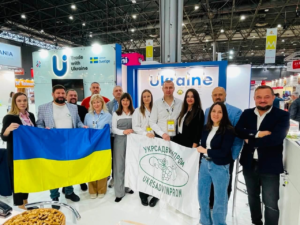
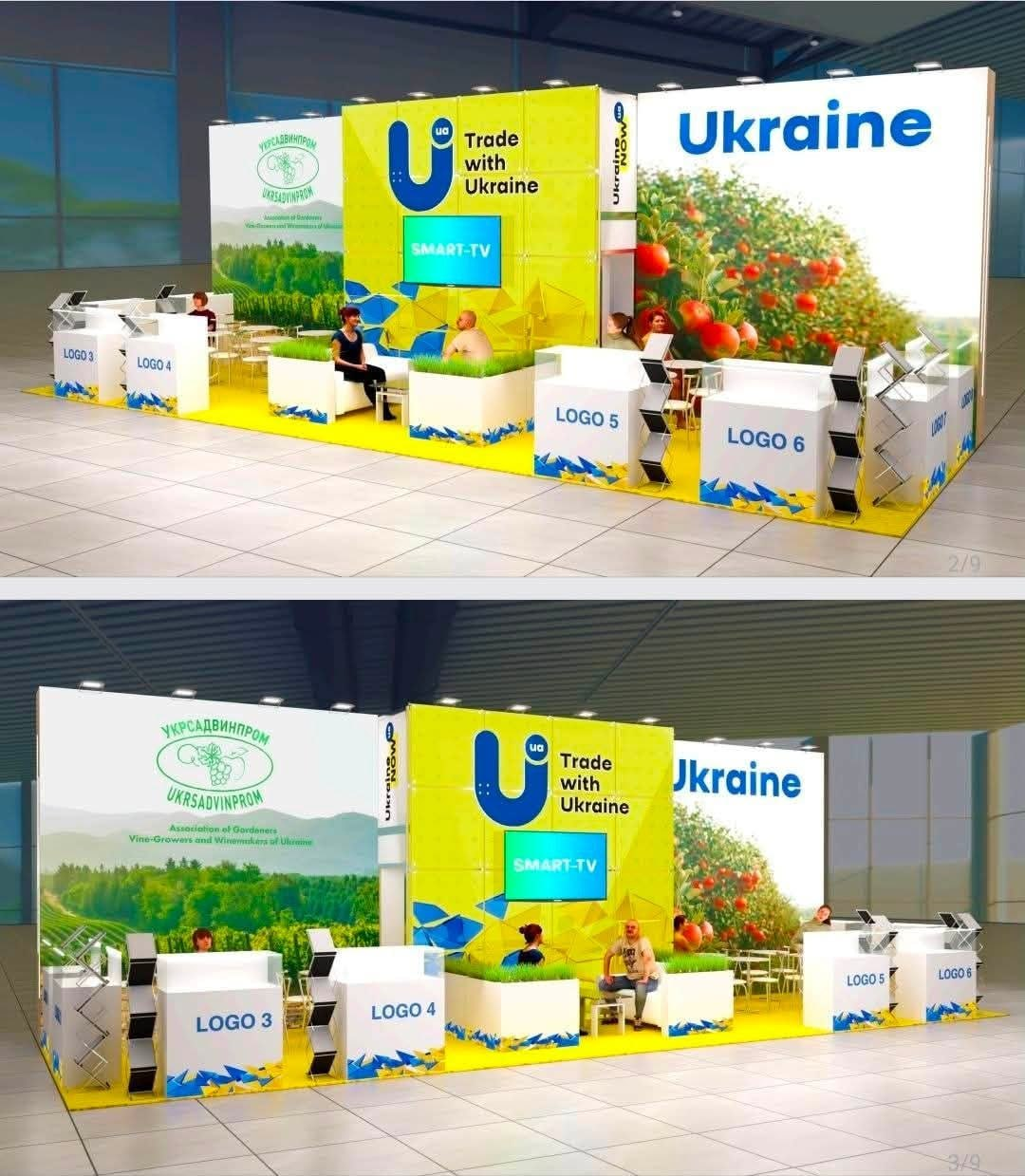
The Public Union UkrSadVinProm has begun recruiting Ukrainian companies to participate in the international food industry exhibition SIAL Paris 2026, which will take place on 17–21 October at the Paris Nord Villepinte exhibition centre in France.
Ukrainian producers of food products and beverages, fruit, vegetables, berries, nuts, processed products, and other representatives of the agri-food sector are invited to participate.
According to the association, participation in SIAL Paris gives Ukrainian companies an opportunity to present their products to international importers, distributors, and retail chains, hold negotiations on future contracts, and expand the geography of their exports.
A separate area of work for the Ukrainian delegation will be familiarisation with global food industry trends, including new product and packaging formats, changes in consumer preferences, and technological innovations.
UkrSadVinProm notes that companies that participated in SIAL Paris together with the association in previous years gained new business contacts, expanded the geography of their exports, and established international partnerships.
The official organiser of SIAL Paris confirms that the exhibition in 2026 will be held from 17 to 21 October. Around 295,000 professionals from 205 countries are expected to participate. The organisers also report around 5,000 key buyers with a combined purchasing power of more than EUR60 billion. Following the previous exhibition in 2024, 88% of exhibitors reported concluding contracts with partners from countries that were new to them.
Participation in such exhibitions remains one of the channels for Ukrainian food products to enter new markets, especially for companies planning to work not only with local importers but also with international retail chains, the HoReCa sector, and major distributors.
To obtain information about the participation terms, UkrSadVinProm invites companies to contact it at info@ukrsadvinprom.com.
The Public Union UkrSadVinProm is the Association of Horticulturists, Grape Growers and Winemakers of Ukraine. According to the organisation, it brings together around 200 producers of fruit, berries, nuts, and grapes, processing and winemaking enterprises, as well as scientific institutions. The association works to develop exports, introduce modern production, storage, and transportation technologies, and implement the GlobalG.A.P., ISO, and HACCP international standards. Products made by members of the association are exported to various markets around the world.
SIAL Paris is held once every two years and is one of the largest international B2B exhibitions in the food industry. Its participants include food and beverage producers, importers, distributors, retail chains, HoReCa representatives, buyers, technology companies, and start-ups. The 2026 exhibition will take place at Paris Nord Villepinte and will be open only to a professional audience.
According to Experts Club, the largest companies in Ukraine’s non-bank consumer lending market significantly increased their revenue in the first half of 2026. The combined revenue from financial services provided by the five largest players in the segment reached 7.55 billion UAH, which is 24.5% more than in January–June 2025, according to calculations by the Experts Club analytical center based on reports from the National Bank of Ukraine.
When compiling the ranking, Experts Club considered companies whose primary business is issuing consumer and short-term non-bank loans. Therefore, the leasing companies “OTP Leasing” and “ULF-Finance,” which are included in the NBU’s general ranking, were not included in the microcredit ranking.
First place goes to “Ukr Credit Finance,” which operates under the CreditKasa brand. The company’s revenue from financial services for the first half of the year reached 1.977 billion UAH, compared to 1.871 billion UAH a year earlier. This represents growth of approximately 5.7%. The company’s net profit reached 172.6 million UAH, compared to 68.1 million UAH in the first half of 2025, meaning it increased by approximately 2.5 times.
In second place is “Spozhyvchyi Tsentr” LLC (TM “ShvydkoGroshi”) with revenue of 1.504 billion UAH. A year earlier, this figure stood at 1.032 billion UAH, meaning growth reached 45.8%. At the same time, the company became the leader in net profit among leading microcredit providers—361.3 million UAH compared to 186.1 million UAH a year earlier.
Third place goes to FC “Ye Hroshi” with revenue of 1.482 billion UAH, which is 34.7% higher than the figure for the first half of 2025—1.100 billion UAH.
In fourth place is “Aventus Ukraine,” operating under the CreditPlus brand. The company increased its revenue from 1.169 billion UAH to 1.413 billion UAH, or by approximately 20.9%. CreditPlus’s net profit nearly doubled—from 128.3 million UAH to 233.4 million UAH.
Miloan ranks fifth with revenue of 1.172 billion UAH, compared to 893.4 million UAH for the same period last year. Thus, the company increased this figure by approximately 31.2%.
The ranking of the largest microcredit companies by revenue for January–June 2026 is as follows:
CreditKasa — 1.977 billion UAH, +5.7% year-over-year
“ShvidkoGroshi” — 1.504 billion UAH, +45.8%
“Ye Groshi”—1.482 billion UAH, +34.7%
CreditPlus—1.413 billion UAH, +20.9%
Miloan—1.172 billion UAH, +31.2%
The combined revenue of these five companies grew from 6.07 billion UAH to 7.55 billion UAH.
Three other notable online lending companies made it into the top ten of all financial companies in Ukraine by revenue from financial services. MyCredit earned 1.071 billion UAH, which is 4% less than a year earlier, while Credit7 earned 1.012 billion UAH, or 6.8% more. “Bizpozika,” which specializes, in particular, in lending to entrepreneurs and small businesses, increased its revenue by a whopping 91.7%—to 1.066 billion UAH.
Thus, a significant portion of Ukraine’s highest-revenue non-bank financial companies today are involved specifically in lending to individuals and small businesses.
Experts Club notes that the first-half results indicate not only the recovery of the non-bank lending market following the shock of the first years of full-scale war but also its continued concentration around a few major digital brands.
The difference in growth rates is particularly telling. CreditKasa remains the largest company in terms of absolute revenue, but “ShvidkoGroshi,” “Ye Groshi,” and Miloan grew the fastest among the top five in the first half of the year. This means that the gap between market leaders is gradually narrowing.
At the same time, revenue growth should be evaluated alongside profitability. For example, “ShvidkoGroshi,” with revenue of approximately 1.5 billion UAH, reported a net profit of 361.3 million UAH, while CreditKasa, with nearly 2 billion UAH in revenue, earned 172.6 million UAH. CreditPlus, with revenue of 1.41 billion UAH, reported a profit of 233.4 million UAH.
In total, the NBU’s report for the first half of 2026 includes 381 financial companies, compared to 422 a year earlier. A total of 318 companies reported profits, with their combined financial result amounting to 10.8 billion UAH, compared to 8.7 billion UAH for the same period in 2025.
Another 64 financial companies ended the half-year with losses totaling 245.5 million UAH.
According to Experts Club, market dynamics point to two parallel processes: demand for fast non-bank loans remains high, and the sector itself is growing and becoming more financially stable, despite a decline in the total number of active financial companies.
Going forward, key factors for the market will include the cost of customer acquisition, the level of non-performing loans, regulation of the maximum cost of consumer loans, and the ability of companies to retain borrowers amid growing competition from banks’ digital lending products.
Data source: National Bank of Ukraine statistics for the first half of 2026, published in the NBU’s supervisory statistics section.
NBU Statistics on the Nonbank Financial Market
According to the “Serbian Economist,” Serbia’s economic ties with the European Union are now significantly more extensive than its trade with Russia, while Belgrade’s main dependence on Moscow remains primarily in the energy sector, said Andon Sapundži, Serbia’s ambassador to Ukraine.
According to him, about 70% of Serbia’s exports and imports go to European Union countries, with another approximately 15% going to countries in the region that are candidates or seeking to join the EU, including Bosnia and Herzegovina, Montenegro, North Macedonia, and Albania.
“The remaining countries account for the rest of Serbia’s foreign trade, including the United States, China, and Russia. Russia’s share is approximately 7–8%, and a significant portion of this trade consists of energy resources, primarily natural gas,” Sapundži said in an interview with “Apostrophe.”
According to him, dependence on Russian energy resources remains one of the most sensitive aspects of Serbian-Russian economic relations, which is why Belgrade is working to diversify its sources and supply routes.
Separately, the ambassador commented on the situation surrounding Serbia’s largest oil and gas company, NIS, which has come under U.S. sanctions due to Russian ownership stakes.
According to him, the process of changing NIS’s ownership structure is in full swing. Serbia is discussing the company’s future structure with Hungary’s MOL, while negotiations with Russia’s Gazprom Neft are ongoing. To finalize the deal, appropriate approvals under the U.S. sanctions regime are required, among other things.
Sapundži identified Serbia’s two main priorities as maintaining energy security and finding a long-term, sustainable ownership structure for NIS.
The company is of strategic importance to the country’s economy, as it operates Serbia’s only oil refinery in Pančevo.
At the same time, the diplomat emphasized that a change in trade structure does not mean Serbia is completely abandoning its economic relations with Russia.
Belgrade, meanwhile, continues to pursue EU accession. According to Sapundži, European integration remains a strategic priority for the country, although Serbia’s refusal to join sanctions against Russia is creating difficulties in negotiations with Brussels.




 Image
Image