

The Cabinet of Ministers of Ukraine has so far rejected the idea of mobile gas stations in order to protect consumers from low-quality fuel and avoid risks related to tax payments, but gas station operating schedules will be revised, according to Serhiy Kuyun, director of the consulting firm “A-95.”
“The idea of mobile gas stations has been put on hold to avoid facing the situation currently unfolding in Russia, where many people no longer drive anywhere due to the authorization to sell low-quality fuel. Moreover, the state’s need for fuel taxes hasn’t gone away, and in this chaos, it will be even harder to collect them,” Kuyun wrote on his Facebook page on Friday.
At the same time, as he noted, certain measures regarding gas station operations under shelling were discussed at a recent meeting with the prime minister.
“At the meeting, representatives of the gas station network assured that they would continue operating, as they have gradually adapted to the new realities. But operating hours will obviously be changed (shortened), and service operations in dangerous areas will be temporarily suspended… The less often and the less time you spend at a gas station, the better,” Kuyun noted.
He also noted that the issue of fuel delivery remains critical, as the enemy has begun targeting fuel tankers.
The director of “A-95” noted that, according to estimates, up to 200 gas stations and oil depots have already been damaged, including four oil depots and nine “OKKO” gas stations, 22 “WOG” facilities, and 12 “Ukrnafta” facilities.
As previously reported, on July 7, the Prime Minister of Ukraine held a meeting with oil traders to discuss the necessary measures to ensure continued fuel supplies to frontline regions amid ongoing Russian attacks on gas stations and fuel complexes.
At the time, Danylo Getmantsev, chairman of the Verkhovna Rada’s Tax Committee, noted following the meeting that the government and market representatives have a clear plan of action to ensure uninterrupted supplies and prevent losses. He also announced that the necessary decisions would be adopted in the near future.

Ukraine has received $3.35 billion as part of the First Labor Market Development and Private Sector Growth Program, implemented jointly with the World Bank; the funds have already been transferred to the state budget and will be used to support macrofinancial stability and finance priority expenditures under martial law, Prime Minister Yulia Svyrydenko announced.
According to her, the funds were the result of agreements signed by Ukraine and the World Bank on June 24 as part of the Ukraine Recovery Conference (URC 2026).
“This funding was made possible by a large-scale reform package. To fulfill the program’s conditions, the government and the Verkhovna Rada adopted 13 laws and 7 subordinate regulatory acts,” Svyrydenko stated in a post published on Facebook.
The reforms covered a number of areas, including improving the public procurement system, developing factoring, integrating energy markets with the European Union, transforming the agricultural sector, supporting veteran entrepreneurship, developing housing policy, modernizing preschool and vocational education, and restoring the system for monitoring greenhouse gas emissions.
“The next phase of the program provides for the allocation of an additional $1 billion by the end of 2026, subject to the fulfillment of certain conditions,” the prime minister noted.
She also reported that part of the funding under the program is backed by guarantees from the governments of the United Kingdom and Japan.
Source: https://www.facebook.com/share/p/18v8tuSZnE/?mibextid=wwXIfr

Agroenergy Group plans to implement a project in the Kyiv region to build a deep-processing plant for yellow peas with a total cost of $24.2 million, of which $20.6 million is expected to be raised through financing.
According to the Ukraine Investment Guide 2026, presented at the Ukraine Recovery Conference 2026 (URC2026) in Gdańsk, the plant will have a design capacity of 35,000 metric tons of yellow peas per year.
Once operational, the plant will produce approximately 8,800 metric tons of protein concentrate, 22,000 metric tons of pea starch, as well as pea flour, fiber, and other processed products. The primary target markets are Ukraine, European Union countries, the United States, and Canada.
The catalog states that the project is based on “dry” fractionation technology and involves the creation of a vertically integrated complex that will cover the full cycle of raw material processing and the production of five types of value-added products.
A preliminary feasibility study has already been completed, and the project is ready for implementation. The payback period is 6.5 years at an IRR of 18.3%. The estimated project implementation period is two years.
Agro Energy Group is a diversified Ukrainian agro-industrial group operating in crop production, livestock farming, seed production, agricultural processing, and bioenergy. The group’s land bank totals approximately 10,000 hectares, with its main production facilities located in the Cherkasy, Vinnytsia, and Zhytomyr regions.
The group owns a farm with a herd of 900 head of cattle, including nearly 350 dairy cows.
The group consists of the following companies: Urozhay LLC, Nasinnya LLC, Iskra LLC, Veremiyivka LLC, and Enerhiya LLC.

Passenger traffic across Ukraine’s western border during the week of July 4–10 increased by another 1.2%—to 734,000—following a 6.0% increase the previous week, with inbound and outbound flows nearly balancing out, according to daily statistics from the State Border Guard Service monitored by the Interfax-Ukraine news agency.
According to this data, while the number of outbound border crossings rose to 365,000 from 348,000 the previous week, the number of inbound crossings fell to 369,000 from 377,000.
The number of vehicles passing through border checkpoints also rose this week—to 139,000 from 138,000 the previous week—while the number of vehicles carrying humanitarian cargo fell to 371 from 434.
According to the State Border Guard Service, as of 9:00 a.m. on Sunday, the largest number of passenger cars—40—were waiting to cross the border with Poland at the “Krakovets” checkpoint. Smaller lines were observed at the “Ustyluh” checkpoint (35 vehicles), the “Hrushev” checkpoint (20 vehicles), the “Nyzhankovychi” checkpoint (15 vehicles), and the “Shehyni” checkpoint (10 vehicles).
At the border with Hungary, 30 vehicles were waiting to cross at the “Luzhanka” checkpoint, while 25 were waiting at the “Kosyno” checkpoint, 20 at the “Tisa” checkpoint, and 15 at the “Dzvinkovo” checkpoint.
At the border with Slovakia, there was a line of 15 vehicles at the “Uzhhorod” checkpoint and 5 at the “Malyi Berezny” checkpoint.
At the border with Romania, 50 vehicles were lined up at the “Porubne” checkpoint, while there were no lines at other checkpoints, nor at the border with Moldova.
Last year, passenger traffic across the border during this week was slightly lower—718,000—and the outbound and inbound flows were nearly equal—360,000 and 358,000, respectively. The number of vehicles last year was also lower—133,000. Last year, passenger traffic remained at this level or slightly higher until early September.
As reported, starting May 10, 2022, the outflow of refugees from Ukraine—which began with the start of the war—turned into an inflow that lasted until September 23, 2022, totaling 409,000 people. However, starting in late September—possibly influenced by news of mobilization in Russia and “pseudo-referendums” in the occupied territories, followed by massive shelling of energy infrastructure—the number of people leaving exceeded the number of those entering. In total, from the end of September 2022 until the first anniversary of the full-scale war, this figure reached 223,000 people.
In the second year of the full-scale war, the number of border crossings out of Ukraine, according to the State Border Guard Service, exceeded the number of crossings into the country by 25,000; in the third year, by 187,000; in the fourth year, by 221,000; and by 157,000 since the start of the fifth year—144,000 of which occurred since the beginning of summer.
In its April inflation report, the National Bank maintained its estimate of last year’s migration from Ukraine at 0.2 million due to the deterioration of the security situation at the end of the year and the easing of exit rules for young people, but noted that in 2024 this figure will be less than 0.5 million. The NBU continues to forecast a net outflow of 0.2 million in 2026, while net returns, according to its forecast, will begin in 2027 and amount to about 0.1 million people, increasing to 0.5 million people in 2028.
According to UNHCR data, the number of Ukrainian refugees in Europe as of April 30, 2026, stood at 5.213 million, and globally at 5.762 million, compared to 5.375 million and 5.924 million, respectively, as of February 19.
In Ukraine itself, according to the latest UN data for January 2026, there are 3.70 million internally displaced persons (IDPs), compared to 3.34 million in July and 3.76 million in April 2025.
Data: State Border Guard Service

A group of 50 young athletes from the Sumy and Kherson regions of Ukraine has arrived in Serbia. The delegation comprises pupils from the ‘Barsa’ Regional Sports Lyceum and the Novovorontsov Children’s and Youth Sports School, according to the Telegram channel ‘Serbian Economist’.
During their stay in Serbia, the children will take part in training sessions, sports competitions and joint activities with their Serbian peers.
The organisation of the camp was made possible thanks to the support of the Government of Serbia, the Ministry of Sports and the Football Association of Serbia. Similar programmes have been held for several years and are aimed at the rehabilitation and recreation of Ukrainian children affected by the consequences of the war.
In recent months, humanitarian and public cooperation between Serbia and Ukraine has also noticeably intensified, facilitated by the work of the new Ukrainian ambassador in Belgrade.
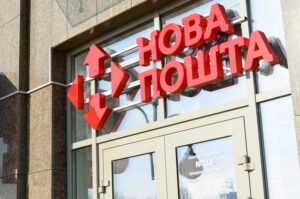
“Nova Poshta,” Ukraine’s leading express delivery service, has consolidated its digital and offline channels into a single platform, Nova Media, and claims to offer advertisers access to over 35,000 advertising spaces with monthly omnichannel reach to an audience of more than 10 million users.
“Today, Nova Media already has over 475 clients—ranging from major national brands to small and medium-sized businesses. The repeat business rate exceeds 60%,” said Ivan Bilokonny, head of the new product development department at Nova Poshta, in a company statement released on Wednesday.
It is noted that access to the platform is provided through a personal account, where users can independently configure and launch flexible advertising campaigns tailored to their own budget, using a variety of engagement formats: from notifications in the mobile app to screens in branches, branded packaging, parcel lockers, and corporate vehicles.
“Nova Poshta” clarified that it currently generates approximately 600 million ad impressions and over 180 million offline customer interactions each month.
The company added that it plans to continue expanding Nova Media’s capabilities and launching new engagement formats and technological solutions.
As previously reported, in 2025, Nova Poshta increased its revenue by 21.6% compared to 2024—to 54.2 billion UAH—and its net profit by 4.4%, to 2.6 billion UAH.
The number of parcels and shipments delivered last year rose by 7.4%—from 486 million to 522 million—including international shipments, which increased by 52.6%, from 19 million to 29 million.



