

Oleksandr Symchyshyn, mayor of Khmelnytskyi, has been awarded the title of “Mayor of the Year (Large Cities)” in the 30th anniversary edition of the nationwide “Person of the Year 2025” program.
Symchyshyn has led Khmelnytskyi since 2015. He also serves as chairman of the Khmelnytskyi regional branch of the Association of Ukrainian Cities.
Supporting the Ukrainian Armed Forces remains one of the key priorities for the Khmelnytskyi community amid the full-scale war. In recent years, the city has consistently ranked among the leaders in the volume of such assistance, according to various rankings. Local authorities also devote significant attention to veteran and social policies.
Based on the results for 2025, the Khmelnytskyi City Territorial Community took first place in the “Best Social Community” competition.
Transparency in governance remains a priority for city officials. The Khmelnytskyi community received the national award “For Consistency in Open Governance,” and according to research by Transparency International Ukraine’s “Transparent Cities” program, Khmelnytskyi was included in the list of cities with high transparency scores, particularly in the financial and budgetary spheres.

At the same time, the city continues to modernize its public infrastructure. According to data provided by the program’s organizers, nearly 90% of Khmelnytskyi’s trolleybus and bus fleet has been updated, and 44 new trolleybuses have entered service over the past year.
Another major infrastructure initiative has been the modernization of the waste management system. Khmelnytskyi is implementing a comprehensive project designed to transform the system for collecting, sorting, and recycling municipal waste.
The community is paying special attention to energy sustainability and the development of distributed generation. The “2 MWe of Sun” project for the municipal utility “Khmelnytskyi Vodokanal” won the 100 gREen AWARD-2025. In 2025, the Khmelnytskyi community also joined the European Energy Award program.
Khmelnytskyi’s international ties are actively expanding. The community is developing partnerships with Stuttgart and Dresden in Germany, and in 2025 received the “Best Practice 2025” award from the U-LEAD with Europe program.
A new direction in international cooperation was the establishment of a sister-city relationship with the American city of Tampa, Florida. The parties signed not only a main partnership agreement but also cooperation agreements in several areas.
In particular, Khmelnytskyi and Tampa plan to develop cooperation in the fields of business and investment, education, renewable energy, healthcare, digitalization, and culture. For Khmelnytskyi, the partnership with one of Florida’s major economic centers opens up additional opportunities to attract international projects and investments.
Oleksandr Symchyshyn was born on November 4, 1980, in the village of Yosypivka in the Khmelnytskyi region. He graduated from the History Department of the Kamianets-Podilskyi State Pedagogical University, completed graduate studies, and defended his dissertation, earning a Candidate of Historical Sciences degree.
The nationwide “Person of the Year” program has been held in Ukraine since 1995 and honors representatives from various spheres of public, economic, cultural, and professional life. “Person of the Year 2025” marks the program’s 30th anniversary.
Open4Business is the information partner of the nationwide “Person of the Year” program.
community, KHMELNYTSKYI, local self-government, PERSON OF THE YEAR, Олександр Симчишин

Democratic staff members of the U.S. Senate’s Permanent Subcommittee on Investigations (PSI) published a study on the use of the USDT stablecoin in financial transactions linked to Iran and sanctioned entities.
The report was released on September 28, 2026, by Senator Richard Blumenthal, the senior Democrat on the PSI. It is important to note that the report’s findings represent the position of the subcommittee’s Democratic investigators and do not constitute a judicial determination of wrongdoing on the part of Tether.
The authors conducted a blockchain analysis of 846 cryptocurrency wallets that had been included on U.S. or Israeli sanctions lists or were subject to confiscation measures due to alleged ties to Iran and its regional entities.
According to the investigation, 84% of the wallets examined used USDT exclusively or almost exclusively. The authors assert that the stablecoin has become one of the primary tools for moving funds within the Iranian-linked shadow financial infrastructure.
The report also asserts that such transactions were used by entities linked to the Central Bank of Iran, oil operations, and regional organizations.
Blumenthal called on the U.S. Department of the Treasury and the U.S. Department of Justice to investigate possible violations of sanctions and banking laws.
Tether, for its part, claims to be cooperating with U.S. law enforcement agencies. According to Reuters, the company states that in 2026 it froze nearly $550 million in USDT linked to Iran.
The new report may intensify the debate surrounding AML control requirements for stablecoin issuers, particularly as the U.S. is establishing a new federal regulatory framework for this market.

According to an overview article by the Serbian business publication Parametar, the campaign leading up to the general elections on October 4 is coming to a close in Bosnia and Herzegovina. The vote will determine not only the internal balance of power in one of Europe’s most complex countries in terms of its political structure, but also future relations between Banja Luka and Sarajevo, the position of the Republika Srpska, and the nature of Bosnia and Herzegovina’s interactions with Serbia, the EU, the U.S., and Russia.
There are 3,414,364 registered voters. They will elect three members of the Presidency of Bosnia and Herzegovina, the State Parliament, the Parliament of the Federation of Bosnia and Herzegovina, the National Assembly of the Republika Srpska, the president and vice presidents of the Republika Srpska, as well as the parliaments of the Federation’s ten cantons.
Current Prime Minister Savo Minic is running for the office of President of the Republika Srpska on behalf of the SNSD, while Branko Blanusa is the SDS’s lead candidate. Bogdan Jovanovic and independent candidate Marko Jorgic are also running.
Milorad Dodik’s name does not appear on the ballot, but he remains the leader of the SNSD and is actively participating in the party’s election campaign. RTS notes that Dodik’s political presence remains a key factor in the campaign in the Republika Srpska.
The race for the Serbian seat on the three-member Presidency of Bosnia and Herzegovina features incumbent Presidency member Želka Cvijanović of the SNSD, Marinko Božović of the SDS, and Nebojša Vukanović of the “List for Justice and Order.”
Another race of fundamental importance to the country’s political structure is the selection of the Croatian member of the Presidency. The HDZ BiH has nominated Dariana Filipović, the bloc of Croatian opposition parties supports Zdenko Lukić, and the Democratic Front supports Slaven Kovačević.
A dispute has been raging over this position for many years: Croatian parties are demanding a change to the election mechanism, arguing that the current system allows the more numerous Bosniak voters to influence who will represent the Croats. Opponents of changing the model cite the need to preserve the existing voting rights of Federation citizens.
Competing for the Bosniak seat are incumbent Presidium member Denis Bečirović, SDA leader Bakir Izetbegović, Semir Efendić, and Fahredin Radončić.
Another major experiment in these elections involves technology. For the first time on this scale, biometric voter identification and ballot scanning are being used. The Central Election Commission has purchased the necessary system for polling stations, and observers are closely monitoring how it handles the workload following years of disputes over election transparency.
As Parametar notes, Bosnia and Herzegovina effectively exists simultaneously on several political levels. Under the 1995 Dayton Agreement, the country consists of the Republika Srpska and the Federation of Bosnia and Herzegovina, while Brčko has special status. The Federation, in turn, is divided into ten cantons.
Above this structure are state-level institutions, notably the three-member Presidency. At the same time, the Republika Srpska and the Federation have their own parliaments, governments, and a wide range of powers.
There is also another level—international oversight.
BiH is sometimes referred to in the media as an international protectorate, but legally this is inaccurate. It is a sovereign state. Following the Dayton Accords, the position of High Representative of the international community was created; this official oversees the implementation of the peace agreement in the civilian sphere and is vested with exceptionally broad powers, known as the “Bonn Powers.” These powers allowed the High Representative to make decisions and remove politicians from office.
Therefore, the outcome on October 4 is of great significance far beyond the borders of Bosnia and Herzegovina. It will determine the balance of power between Banja Luka and Sarajevo, the composition of the country’s collective leadership, and the alignment of forces regarding further European integration; it will also serve as an indicator of how the Serb, Bosniak, and Croat political components of the complex Dayton system will interact following the elections.
Bosnia and Herzegovina, Dayton Agreement, ELECTIONS, Presidency, Republika Srpska

According to Fixygen, Citi, one of the largest U.S. banks, and the cryptocurrency platform Coinbase have expanded their partnership in the areas of corporate payments and stablecoins.
Coinbase announced this on September 28.
As part of the partnership, Coinbase has selected Citi’s Virtual Account Wallet technology for its Coinbase Virtual Accounts system. This will allow clients to receive traditional funds into virtual accounts, with the proceeds then automatically converted into stablecoins.
At the same time, Coinbase’s payment infrastructure is being integrated with Citi’s corporate service, Spring by Citi.
This will enable Citi’s institutional clients to accept payments in stablecoins, using Coinbase’s infrastructure for processing digital assets and Citi’s banking infrastructure for traditional settlements.
This partnership signals a further convergence of traditional banking payments and public blockchain infrastructure.
For businesses, this model allows them to use stablecoins as a payment instrument without having to build their own infrastructure for storage, conversion, and interaction between bank accounts and the blockchain.
At the same time, Citi is developing its own tokenized payments infrastructure. In September, the bank also announced that it had conducted real dollar transactions via the Swift blockchain ledger in collaboration with First Abu Dhabi Bank and OCBC.
The expansion of the partnership between Citi and Coinbase is taking place as the U.S. is developing a separate regulatory framework for payment stablecoins and the Federal Reserve is drafting detailed requirements for their issuers.
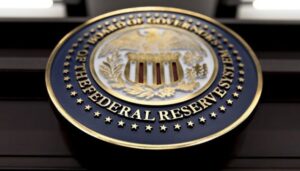
On September 24, the U.S. Federal Reserve (Fed) unveiled two draft rules for issuers of payment stablecoins as part of the implementation of the previously enacted GENIUS Act.
Under the regulator’s proposal, issuers supervised by the Fed would be required to fully back issued stablecoins with eligible reserve assets. These include, in particular, short-term U.S. Treasury bonds and other high-quality, highly liquid assets.
At the same time, the proposal calls for establishing standardized capital requirements for issuers to cover credit and operational risks, risk management requirements, as well as specific rules for companies responsible for safeguarding stablecoin reserve assets.
The second document establishes a special procedure for banks under the Fed’s supervision that wish to issue their own payment stablecoins. Banks will be required to submit a business plan, financial information, and other documents.
Thus, following the legislative framework for the stablecoin market, U.S. regulators are moving toward creating a practical system for supervising issuers.
Federal Reserve Board Member Michael Barr separately emphasized the need to ensure that stablecoins can be reliably redeemed at par value even under conditions of market stress.
The public comment period for the proposals will last 60 days following their publication in the Federal Register.

The National Bank of Ukraine (NBU) revoked the license of LLC “FC ”Artificial Finance Intelligence“” to operate as a financial company providing financial services such as lending funds and precious metals.
According to the NBU’s website, the reason for this decision was the company’s refusal to provide documents and information requested by the inspection team, which made it impossible to conduct the unscheduled inspection that began on June 30, 2026.
The Committee on Supervision and Regulation of Non-Bank Financial Services Markets adopted the corresponding decision on September 28, 2026.
Artificial Finance Intelligence LLC (Dnipro) was registered on February 3, 2020. Its authorized capital amounts to 21 million UAH.



