

PJSC “Slavuta Brewery” (Slavuta, Khmelnytskyi Oblast) will begin paying dividends for the 2025 fiscal year on July 15.
As the company reported on Tuesday via the disclosure system of the National Securities and Stock Market Commission (NSSMC), the supervisory board adopted the relevant resolution on June 30, also setting July 15 as the record date for shareholders.
Dividends will be paid directly to shareholders by November 4, 2026.
As previously reported, the annual general meeting of shareholders on April 23 approved the allocation of 1.75 million UAH from the 2025 net profit for dividend payments. The dividend amount is 2 UAH per ordinary registered share, representing an annual yield of 117.6%.
According to data from the Opendatabot service, at the end of 2025, PrJSC “Slavutsk Brewery” reported UAH 16.97 million in net profit, which is 27.1% higher than the 2024 figure. At the same time, the company’s net revenue increased by 28.2% to 120.07 million UAH.
The number of employees at the plant rose from 95 to 105 over the course of the year. The company’s authorized capital currently stands at 1.49 million UAH.
PJSC “Slavuta Brewery” (Slavuta, Khmelnytskyi Oblast) was founded on January 31, 2008. The company specializes in the production of beer and malt, and also manufactures plastic containers.
According to the company’s website, the plant has its own malt house and three production workshops: the brewhouse, the fermentation and lagar workshop, and the bottling workshop. Its production capacity allows it to produce more than 10 varieties of unpasteurized beer, which are sold under the brand names “Slavutskoye,” “Prince Sangushko,” “Princess Sangushko,” and “Zhigulivskoye.” The company operates its own retail chain of draft beer stores, as well as a network of distributors in the western and central regions of Ukraine.
The main shareholders of the private joint-stock company are Tetiana Kmytiuk (17.89%), Stanislav Pavlovskyi (14.65%), Larysa Lavreniuk-Ulyanich (6.72%), and “Greenesis Plus” LLC (5.7%).
The EFI Group investment group has invested EUR5 million in a new packaging plant in Zhytomyr, which has become the fourth packaging manufacturer in the group’s portfolio, according to EFI Group CEO Olga Batova.
“A month ago, we launched a small plant in Zhytomyr with a EUR5 million investment. This is our fourth packaging plant; it uses virgin pulp, while the other three use recycled paper,“ Batova wrote in the comments section of her post about the NovaSklo project presented at URC 2026, responding to a question from Denis Myrhorodskyi, co-owner of ”Zavod Preform,” regarding new projects.
The EFI Group’s press office has not yet provided details about the new facility in Zhytomyr.
Currently, according to information on the group’s website, the company’s portfolio of packaging manufacturers includes the Zhytomyr Cardboard and Paper Mill, which specializes in the production of corrugated egg trays, as well as corrugated cardboard and its components (containerboard and fluting paper).
The group also includes Sem Ecopack LLC, which was relocated in 2023 from the town of Tomakivka in Dnipropetrovsk Oblast to Sambir in Lviv Oblast, where a main production line was established for packaging made of pulped cardboard for food products—specifically for fruits (apples, melons, kiwis, etc.), berries, and bottle packaging.
In April of this year, EFI Group founder Ihor Liski wrote on Facebook about the Pulp Master project—the creation of disposable paper tableware and paper packaging made from cellulose fiber.
“Today, Ukraine does not have its own primary cellulose fiber—the market depends on imports. We have decided to change that. Our goal is to create a system for producing cellulose from byproducts of crop and fruit cultivation,” he wrote at the time.
He did not provide any further details.
EFI Group was founded in 2007. It focuses on implementing business projects in Ukraine. Its investment areas include healthcare and medtech, the paper, food, and woodworking industries, and the supply of agricultural products.
Its portfolio includes Feednova, a manufacturer of animal fats and feed additives; the “Bihive” honey production plant; the “Medical Star” honey retail chain; the Zhytomyr Cardboard Plant; “Sem Ecopack,” the timber processor “Forest Technology,” the agricultural products supplier “Efi Agro,” the online medical hub Doc.ua, and others.

Uzbekistan and the United States of America have launched the “U.S.–Uzbekistan” Joint Investment Platform, designed to expand bilateral cooperation in the areas of investment and export financing, as well as to attract additional resources for the implementation of strategically important projects.
The new platform is being created to identify, support, and promote strategic investment projects of mutual interest to Uzbekistan, the U.S., and their partners. The mechanism also provides for the development of cooperation in the field of export financing and the attraction of international capital to priority sectors of the economy.
The platform’s key areas of focus include energy, infrastructure, transportation and logistics, information and communication technologies, the pharmaceutical industry, as well as the exploration and development of critical mineral resources.
Particular attention will be paid to projects capable of strengthening production and logistics supply chains, ensuring a sustainable energy supply, and promoting the development of modern high-tech manufacturing.
The new mechanism is expected to serve as a tool for mobilizing private capital and to enable sovereign wealth funds, international financial institutions, multilateral development banks, and other major investment organizations to participate in financing promising projects.
According to DFC estimates, Uzbekistan and Central Asia have significant economic potential due to growing global demand for critical minerals, an increasing need for reliable energy supplies, and expanding trade flows along the Trans-Caspian Transport Corridor.
DFC CEO Ben Black noted that the launch of the platform is the first step toward implementing investments that align with the strategic interests of both countries. According to him, the new mechanism will help strengthen supply chains and create additional opportunities for economic growth in the United States and Uzbekistan.
At the same time, the parties are discussing moving toward the practical implementation of a number of major joint projects. Promising areas include the construction of a new airport in Tashkent, the creation of a modern medical complex in the Fergana region, and the launch of a digital bank.

Coal Energy S.A. (Luxembourg), having lost all its coal assets in Ukraine due to Russian aggression and shifted its focus to operations in Poland, reported a net loss of $1.46 million for the first nine months of fiscal year 2026 (FY, July 2025 – March 2026), the company reported a net loss of $1.46 million, whereas for the same period of FY 2025, its net profit was $1.6 million.
According to the company’s report to the Warsaw Stock Exchange, where its shares are listed, revenue for this period decreased by 31.8% to $2.06 million, while the operating loss increased by 82.1% to $0.55 million.
Coal Energy specified that from January through March of this year, its net loss amounted to $0.11 million, compared to a net profit of $1.97 million in the same quarter last year; revenue increased by 2.5% to $0.88 million; and the operating loss decreased by 33.3% to $0.05 million.
A week earlier, Coal Energy announced the suspension of a deal with Global Tech Opportunities 31, a fund belonging to the ABO Securities group, which involved the issuance of interest-free convertible bonds worth up to 14.5 million zlotys.
In the first half of 2026F, bonds worth 2.5 million zlotys ($0.67 million at the exchange rate at the time) had already been converted into newly issued shares, and as of mid-year, bonds worth 2 million zlotys remained unconverted.
As previously reported, Coal Energy posted a consolidated net profit of $4.12 million in FY2025, compared to a net loss of $2.12 million in FY2024, primarily due to the sale of four assets to the group. The company’s consolidated revenue grew by 52.4% in FY 2025, reaching 3.76 million.
In September 2025, the board approved the company’s Updated Development Strategy for 2025–2027, which reflects the recently secured financing, current investment projects, and the ongoing war in Ukraine.
“The updated strategy is built on four pillars: 1. coal mining in Poland and Romania, 2. providing mineral extraction services in Poland and Romania, 3. developing the extraction of critical raw materials in Central and
Eastern Europe and Ukraine, and 4. global consulting services for the mineral resources sector,” the previous report stated, whereas the new report does not include a description of these activities.
Coal Energy’s shares have been listed on the Warsaw Stock Exchange since August 8, 2011. Its main line of business was coal mining at two underground mines and operations at coal dumps in the Donetsk region.
Vyshnevetsky currently controls 58.74% through Lycaste Holdings, while Global Tech Opportunities holds 2.34%. A total of 24.42% of the shares are traded on the Warsaw Stock Exchange.
The company’s market capitalization as of June 30 stood at PLN 92.18 million ($24.45 million at the current exchange rate) at a share price of 2.00 zlotys, which had fallen by 1.28% since the start of the trading day following the publication of the financial report.
bond, Coal Energy, LOSS, POLAND, REVENUE

The government of Argentine President Javier Milei is preparing a citizenship-by-investment program that could become one of the largest in the global “golden passport” market, according to the Financial Times.
According to sources, authorities are considering two options for investor participation: a non-refundable donation to a state fund in the amount of approximately $500,000, or the purchase of special zero-coupon sovereign bonds worth approximately $1 million.
It is expected that the funds raised could be used to service and repay Argentina’s national debt. Following its 2020 debt restructuring, the country continues to face limited access to international capital markets and is seeking additional sources of foreign currency inflows.
If the program is implemented, Argentina could become the largest G20 country to offer a direct path to citizenship through investment. This is particularly notable against the backdrop of a crackdown on “golden passports” in Europe, where such programs face political and legal pressure.
One of the key advantages of the Argentine passport is said to be its high level of global mobility. It provides visa-free access to nearly 170 countries, including the Schengen Area and the United Kingdom. For investors, this could make Argentina more competitive compared to smaller Caribbean and Pacific jurisdictions that have traditionally offered investment citizenship.
Another important condition may be the absence of a requirement for permanent residence in the country. For wealthy investors, this is crucial, as it allows them to obtain a passport without relocating and without automatically becoming full-fledged tax residents of Argentina.
However, the draft is not yet a definitively approved program. Details are still being finalized, and the initiative is already facing criticism within the country. Opponents point out that, according to the Argentine Constitution, citizenship matters must be regulated by Congress, not solely by presidential decrees.
There are also external risks. International partners are taking an increasingly critical view of citizenship-by-investment programs due to the risks of money laundering, sanctions evasion, and insufficient vetting of applicants. Previously, the United Kingdom restricted visa-free travel for a number of countries precisely because of concerns regarding their citizenship programs.
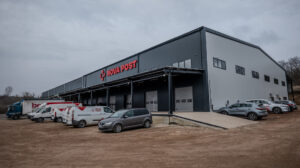
Nova Post announced the opening of a new 3,800-square-meter logistics hub near Chisinau (Moldova) with a throughput capacity of up to 10,000 packages per hour, having invested EUR800,000 in the facility.
According to the company’s press release on Tuesday, the new terminal operates 24 hours a day, seven days a week, and handles all processes—from sorting shipments to customs clearance.
Among other things, Cargo Branch No. 25 operates on the hub’s premises, handling shipments weighing over 30 kg.
It is noted that the terminal handles all types of shipments—from documents and parcels to oversized cargo.
Currently, an average of 35,000 parcels pass through the terminal daily, and the most recent record was 80,000 shipments in a single day.
“Shipment volumes in Moldova are steadily growing, and consolidating all processes in one location has enabled us to meet this demand much more efficiently,” said Serhii Shapran, CEO of Nova Post in Moldova, as quoted in the press release.
According to him, thanks to the opening of the new terminal, the company has reduced the average delivery time by two hours. Consequently, shipments to intercity destinations are dispatched twice a day, and to local branches every 2.5 hours.
The company added that the first fulfillment hub has been opened at the terminal, and a Ukrainian brand became one of its first clients.
Nova Post emphasized that the company plans to further develop its logistics infrastructure in Moldova, specifically by launching a new sorting center in Bălți.



