
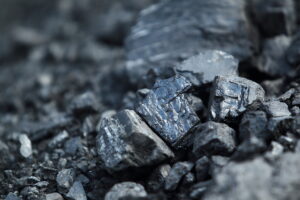
Global demand for coal will rise this year and reach a new all-time high amid a surge in natural gas prices and a summer heat wave that has increased electricity consumption from air conditioners, according to forecasts by the International Energy Agency (IEA).
According to the agency’s estimates, global coal demand will rise by 1.2% in 2026 to 8.94 billion metric tons.
“Coal is virtually not shipped through the Strait of Hormuz, as the Middle East is neither a major producer nor a significant consumer of coal, but the closure of the strait still affected the coal market due to rising natural gas prices,” the IEA said in a statement. “This has stimulated an increase in electricity generation at coal-fired power plants in countries where there is a choice between gas and coal.”
If shipping through the Strait of Hormuz resumes and liquefied natural gas (LNG) supplies return to the levels seen before the start of hostilities in the Middle East, global demand for coal will decline next year. Otherwise, 2027 will once again set a record for coal consumption, IEA analysts noted.
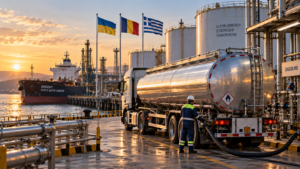
In August 2026, Ukraine significantly reduced purchases of motor gasoline from the southern direction: imports from Romania decreased by approximately one third, while those from Greece fell by 40%, according to calculations by the Experts Club analytical center and data from the A-95 Consulting Group.
Supplies of Romanian gasoline amounted to 23.4 thousand tonnes compared with 34 thousand tonnes in July.
Imports from Greece decreased to 15 thousand tonnes from 24.9 thousand tonnes a month earlier.
Thus, total supplies from the two countries decreased over the month from approximately 58.9 thousand to 38.4 thousand tonnes.
“The main reason for the significant drop in imports from the south was the price factor. In August, when the market was no longer threatened by a shortage, companies reduced purchases of more expensive fuel from Romania and Greece,” the A-95 Consulting Group reported.
A similar trend was also observed in the diesel fuel market.
At the same time, the bulk of Ukrainian gasoline imports continued to arrive from the northwestern direction. In August, Lithuania supplied 51.8 thousand tonnes of gasoline, while Poland supplied 40.1 thousand tonnes.
These two countries accounted for about 60% of total imports.
Overall, gasoline supplies from abroad in August amounted to 152 thousand tonnes, which is 7% less than a year earlier. Since the beginning of 2026, Ukraine has imported 1.12 million tonnes of gasoline — 16% more than in January-August 2025.
The decline in purchases from the southern direction shows that after supply stabilized, Ukrainian traders began more actively redistributing flows in favor of cheaper European sources.
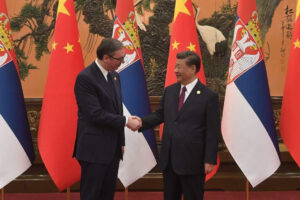
According to the Serbian business publication Parametar, Serbia’s investment landscape has changed significantly over the past 15 years. While European capital dominated almost unchallenged in the early 2010s, China has now become the largest investor among individual countries.
Between 2010 and 2025, Serbia attracted approximately 47.5 billion euros in foreign direct investment. Between 2010 and 2024 alone, EU countries accounted for about 24.5 billion euros, or 56% of all FDI.
During this period, China invested about 7.17 billion euros, surpassing any single European country. Next among the largest sources of capital are Russia—about 3.15 billion euros, Switzerland—2.52 billion euros, the United Kingdom—2.14 billion euros, and the United States—about 1 billion euros.
Moreover, China’s surge has essentially taken place over the past eight years. About 96% of Chinese investments between 2010 and 2023 occurred after 2016. In 2022, China invested approximately 1.38 billion euros; in 2023, 1.37 billion euros; and in 2024, 1.63 billion euros.
The main distinction of Chinese capital is its focus on large industrial facilities.
HBIS controls the steel mill in Smederevo, Zijin has become a key player in the Bora copper-gold complex, and Linglong has built a tire plant in Zrenjanin. HBIS Serbia and Serbia Zijin Copper are both among the country’s largest exporters.
That said, it would be incorrect to claim that China has displaced Europe from Serbia at this point. Total EU investment is approximately 3.4 times greater than that of China. European capital is distributed among thousands of companies, banks, retail chains, and manufacturing facilities, whereas Chinese investments are much more heavily concentrated in a few giant projects.
Another important trend is that the investment boom has begun to slow down. After a record 5.23 billion euros in foreign direct investment in 2024, the inflow in 2025 fell by about one-third—to 3.48 billion euros.
As a result, a unique two-tier investment model has emerged in Serbia: the EU remains the top investor as an economic bloc, while China has already become the top investor among individual countries. In fact, the structure of foreign investment increasingly mirrors Belgrade’s multi-vector foreign economic policy.

According to Fixygen, the value of cryptocurrencies held on the balance sheets of public companies has reached approximately $123 billion, with Bitcoin accounting for over 81% of corporate digital reserves.
According to The Block’s Corporate Crypto Treasury Tracker as of September 10, 2026, the database lists 119 public companies, of which 109 hold active cryptocurrency reserves. The total value of their digital assets is estimated at approximately $123 billion.
Bitcoin accounts for about $99.8 billion, or 81.1% of the total. Public companies that use Bitcoin as their primary digital reserve asset collectively control about 1.274 million BTC.
Strategy, formerly known as MicroStrategy, remains the undisputed leader. As of September 7, the company held 845.05 thousand BTC. $63.73 billion was spent to acquire this amount, and the average purchase price was approximately $75,400 per Bitcoin. Strategy disclosed this information on September 8 in a Form 8-K filing with the U.S. Securities and Exchange Commission (SEC).
According to The Block’s current estimate, the value of Bitcoin on MicroStrategy’s balance sheet exceeds $66 billion. Thus, a single company accounts for approximately two-thirds of the value of corporate Bitcoin reserves tracked by the index.
Other major holders include Twenty One Capital with 43,514 thousand BTC, Japan’s Metaplanet with 43 thousand BTC, and mining company MARA with 35,303 thousand BTC. Another approximately 30 thousand BTC belongs to Cantor Equity Partners I, an entity linked to the upcoming BSTR deal.
The second-largest corporate cryptocurrency position after Strategy is no longer Bitcoin, but Ethereum. BitMine Immersion Technologies has accumulated nearly 5.93 million ETH worth approximately $14.7 billion.
The expansion of corporate crypto reserves means that digital assets are gradually transforming from a tool primarily used by private crypto investors into a separate line item on the balance sheets of public companies.
At the same time, the digital reserve strategy creates additional market risk. The stock prices of such companies are beginning to depend simultaneously on their core business, the value of the cryptocurrency they hold, capital-raising conditions, and the premium or discount to the value of crypto assets at which the stock market values the company.
Data source: Corporate Crypto Treasury Tracker
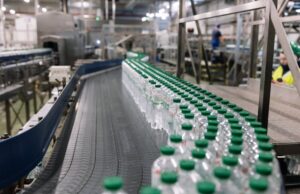
From February 2022 to February 2026, the IDS Ukraine Group of Companies allocated 875 million UAH of its own funds to business development, the company’s CEO, Marko Tkachuk, said in an interview with Interfax-Ukraine. External financing was virtually unavailable to the group during this period.
Of the total amount, 161 million UAH was invested in equipment upgrades, 220 million UAH in the refrigerated fleet, and 87 million UAH in infrastructure projects.
The largest single area of investment was digital transformation and software, in which the company invested 363.4 million UAH.
IDS Ukraine invested another 43.6 million UAH directly in ensuring the energy independence of its facilities. A powerful generator was installed at the plant in Morshyn, and a solar power plant was built in Myrhorod. The company’s total in-house power generation capacity reached 1.6 MW.
Even with backup capacity, it is not yet possible to completely replace the centralized power supply. In Myrhorod, during a blackout, one or two of the four power lines may remain operational, and at the “Oskar” plant in Morshyn, one of the five lines may remain operational. This allows production of the most in-demand drinking water to continue even during prolonged outages.
Separately, IDS Ukraine has invested 9.2 million UAH in providing backup power to schools and kindergartens in Myrhorod and the Morshyn community. The project covers educational institutions attended by more than 6,000 children. The company announced that this program will be completed on August 31, 2026.

Mining company Ferrexpo, with its core assets, will hold general meetings of shareholders on September 21 and October 9 of this year to review its 2025 performance and the results of raising $100 million through an additional share issuance.
According to a stock exchange announcement, Ferrexpo plc is convening the meetings to consider certain standard resolutions that are typically submitted to shareholders for approval at the company’s annual general meeting, which took place on June 29, 2026. However, additional time was required to finalize the Group’s financial results for the year ended December 31, 2025, as the implementation of the relevant financing decision—necessary for the preparation of financial statements on a going-concern basis—was pending.
On September 3, 2026, the company announced plans to raise capital through a $100 million stock offering, and on September 4, 2026, it reported the results of this offering (during which $100 million was successfully raised). The fundraising process is expected to be completed on September 22, 2026, subject to shareholder approval at a separate general meeting of the company scheduled for September 21, 2026.
It is clarified that the matters to be considered at the meeting on October 9 differ from those to be considered at the general meeting on September 21, 2026, regarding the capital raise.
“Shareholders are advised to review the separate circular and notice of the general meeting, published on September 4, 2026, for more detailed information regarding the raising of share capital and the voting procedure at that meeting. The following matters will be considered at this general meeting (in a form generally consistent with that proposed to shareholders in previous years): consideration of the annual report and financial statements of the Group for the year ended December 31, 2025; approval of the directors’ compensation report; approval of the reappointment of the Group’s auditor, MHA Audit Services LLP; and authorization of the Audit Committee of the Board of Directors to determine the auditor’s compensation,” the announcement states.
Ferrexpo owns a 100% stake in Yeristivskyi Mining and Processing Plant LLC, a 99.9% stake in Bilanivskyi Mining and Processing Plant LLC, and 100% of the shares in Poltava Mining and Processing Plant PJSC.
CAPITAL, FERREXPO, MINING AND PROCESSING PLANT, share issue, SHAREHOLDER



