
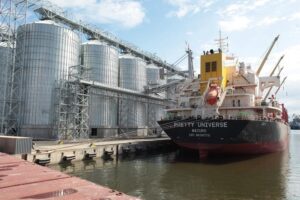
Ukraine’s agricultural exports in August 2026 are expected to total approximately 1.33 million metric tons, which is 54% less than in July and could mark the lowest August figure since the full-scale war began, according to brokerage firm Spike Brokers.
“Expected August exports will be 68% lower than the average August export volume for 2022–2025—4.19 million metric tons—and 64% lower than the previous August low during the full-scale war—3.71 million metric tons in 2025,” the company noted.
According to the brokers, 641,900 metric tons of agricultural products were exported via all modes of transport in the first half of August, compared to 2.889 million metric tons for the entire month of July.
The share of maritime transport in total exports fell from 86.5% in July to 51.4% in the first 15 days of August, while the share of rail transport rose from 11.2% to 38.5%.
At the same time, the increase in the share of rail transport does not indicate a resumption of grain shipments: grain exports by rail fell by 68% compared to July and by 77% compared to the same period last year.
So far in August, 250,000 metric tons have been shipped by rail through western border crossings, which is 126% more than in the corresponding period of July, while shipments to the ports of Greater Odesa totaled only 53,200 metric tons—a decrease of 94.5%.
“The increase in land-based shipments offset only about 15% of the loss in seaport traffic; even when combined with the increase in exports via Izmail, the offset does not exceed 19%,” the report states.
The volume of grain railcars transported through western border crossings during the first 18 days of August increased 2.3-fold—to 160.6 railcars per day, compared to 71.3 railcars in July. The Romanian route had the highest volume—49.1 cars per day, followed by Poland—47.9 cars, Slovakia—34.8 cars, and Hungary—28.8 cars.
As of August 19, there were 9,524 thousand railcars en route to the border, which is 21% more than at the end of July; specifically, the number of grain railcars rose to 979 from 369.
The Izmail route is also increasing its shipments, but cannot compensate for the loss of maritime exports: grain exports via Izmail rose from 10 thousand to 38.8 thousand metric tons, while shipments to the ports of Greater Odesa fell by more than 0.9 million metric tons.

The Ukrainian Cabinet of Ministers’ action plan calls for increasing the share of processed goods in Ukraine’s agricultural export mix to 63% by 2027 and raising the volume of agricultural exports by at least $4 billion.
To achieve this goal, the government plans to expand the use of state support mechanisms for Ukrainian agricultural producers of goods with a significant share of imports and to open new markets for at least 10 new commodity lines by 2027.
It is also planned to introduce the position of agricultural attaché in 2027, along with a new instrument to guarantee loans for processing through the Partial Agricultural Loan Guarantee Fund.
A separate priority is to increase the level of processing of agricultural waste and raw materials—particularly from crop and livestock production—into biofuels.
The Ministry of Agrarian Policy’s programmatic goal is to transform the agricultural sector into a highly productive, technologically advanced, innovative, and investment-attractive industry with high added value and a significant share of processing.
As reported, on August 17, the Cabinet of Ministers of Ukraine approved the Government Action Program. Verkhovna Rada Chairman Ruslan Stefanchuk stated that parliament will review the Program in the near future in accordance with established procedure.
According to the Ministry of Economy, Environment, and Agriculture, by the end of 2025, processed products accounted for 47.8% of Ukraine’s agricultural exports, while raw materials accounted for 52.2%. In 2024, this ratio stood at 40% and 60%, respectively.
Agricultural exports, agricultural sector, EXPORTS, GOVERNMENT, PROCESSING

The Ministry of Agrarian Policy and Food of Ukraine, in collaboration with insurance companies, the agribusiness sector, and relevant government agencies, is developing additional mechanisms for insurance protection of port logistics and agricultural products against military risks, the ministry’s press service reported.
Taras Vysotsky, Minister of Agrarian Policy and Food of Ukraine, noted that the extent of damage to port infrastructure, logistics facilities, and agricultural products resulting from the recent massive attacks requires further improvement of existing support mechanisms.
“Maritime exports are critical for Ukraine’s agricultural sector and economy. Amid intensifying Russian attacks, businesses must have clear and accessible protection tools,” the minister’s press service quoted him as saying.
Meeting participants paid particular attention to state mechanisms for supporting businesses in the area of military risk insurance, which are implemented by the Export-Credit Agency of Ukraine.
Currently, companies can take advantage of two instruments. The first is partial compensation for the cost of property damaged or destroyed as a result of armed aggression by the Russian Federation. The maximum compensation amount is up to 30 million hryvnias for companies operating in 10 high-risk regions.
The second instrument is compensation for insurance premiums under military risk insurance policies. The state compensates for the portion of the insurance cost exceeding 1% of the insurance rate, up to 3 million UAH, which allows businesses to significantly reduce the cost of insuring their production assets.
The Ministry of Agrarian Policy noted that the stable operation of the Ukrainian Maritime Corridor is critically important for the agricultural sector, as it ensures the export of products, foreign currency inflows to the budget, and supports global food security. Since the corridor opened in August 2023, 209 million metric tons of cargo have been exported through Ukrainian ports, of which 123 million metric tons were grain products.
Agricultural exports, INSURANCE, MINISTRY OF AGRARIAN POLICY, of which 123 million metric tons were grain products., PORT, PORTS, ЭКА
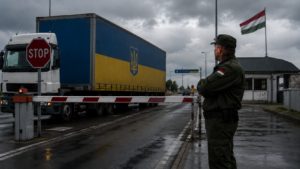
Hungary is reinstating a ban on imports of Ukrainian agricultural products, which had earlier temporarily ceased to be in force due to the expiration of emergency decrees. The new decision is intended to maintain restrictions on Ukrainian goods in the domestic Hungarian market, while the transit of products through the country’s territory, as before, may remain permitted.
According to Hungarian media, the previous ban on the import of more than 20 categories of Ukrainian agricultural products ceased to be in force on May 14 after the expiration of the legal regime on the basis of which it had been introduced. The list of restrictions included grain, oilseeds, flour, poultry meat, eggs and a number of other goods.
After that, Budapest announced its intention to restore the ban, explaining the decision by the need to protect Hungarian farmers and the domestic market. Earlier, Hungarian Minister of Agriculture István Nagy repeatedly stated that the country would not open its market to Ukrainian agricultural products even after the renewal of the trade agreement between the EU and Ukraine.
Hungary’s position remains part of a broader conflict around Ukrainian agricultural exports to the EU. After the start of the full-scale war, the European Union abolished duties and quotas for Ukrainian goods in order to support the Ukrainian economy and compensate for problems with maritime logistics. However, EU border countries, including Hungary, Poland and Slovakia, have stated that cheap Ukrainian products were putting pressure on local farmers.
The Hungarian ban is not a general ban on all Ukrainian exports. It primarily concerns supplies to Hungary’s domestic market. The transit of Ukrainian products to other EU countries or beyond the union had previously been maintained, since for Ukraine land and Danube routes remain an important part of export logistics.
Hungary explains the restrictions by the need to protect farmers from sharp price fluctuations. In 2022, flows of Ukrainian grain and oilseeds to neighboring countries increased sharply due to the reorientation of exports from the Black Sea to European routes. Reuters noted that before the war Hungary annually imported up to 50,000 tonnes of grain and oilseeds from Ukraine, while in 2022 the volume of such supplies rose to 2.5 million tonnes, and in 2023, before the introduction of the ban, amounted to up to 300,000 tonnes.
Corn became the main problematic category for Hungary. According to The Cattle Site, citing customs statistics, during the year after the start of the full-scale war, Ukraine exported 1.7 million tonnes of corn to Hungary, compared with about 30,000 tonnes before the war.
For Ukraine, the Hungarian decision has more political and logistical significance than critical trade significance. The main markets for Ukrainian agricultural exports in the EU are not in Hungary, but in larger consumer and processing countries. However, for border trade and certain commodity groups, the ban limits exporters’ flexibility and increases dependence on licensing, transit routes and agreements with the European Commission.
In 2025, the EU had already revised trade conditions with Ukraine, increasing quotas for a number of goods: for wheat — from 1 million to 1.3 million tonnes, sugar — from 20,000 to 100,000 tonnes, barley — from 350,000 to 450,000 tonnes, and poultry meat — from 90,000 to 120,000 tonnes. These changes were intended to balance support for Ukrainian exports and the interests of farmers in EU countries.
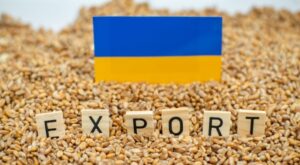
The export potential of Ukraine’s agricultural sector in the upcoming 2026/2027 season will grow significantly thanks to the sale of accumulated record-high stocks.
This was announced by Maksym Kharchenko, an analyst at UkrAgroConsult, during the Black Sea Grain.Kyiv conference on Wednesday.
According to the agency’s forecast, the total harvest of major grain crops in Ukraine next season is expected to reach 59.4 million tons, while oilseeds are projected at 23 million tons. Meanwhile, the total volume of carryover grain stocks will increase by 293% and reach nearly 13 million tons. The most significant growth is expected for wheat—up to 4.7 million tons (370% more than previous figures), barley—up to 1.36 million tons, and peas—up to 222,000 tons.
Due to active warehouse unloading, wheat exports in the new season could rise to 20 million tons, and corn exports to 28.5 million tons. At the same time, production growth is forecast in the oilseed segment: the sunflower harvest could reach 13.7 million tons compared to 10.8 million tons last year, rapeseed—3.6 million tons, and soybeans—5.7 million tons. At the same time, carryover stocks of sunflower seeds are expected to decrease by 61%, while soybean stocks will increase by 50%—to 101,000 tons.
The forecast for the production and export of processed products also shows positive trends. Specifically, sunflower oil production is expected to reach 6 million tons, with exports at 5.6 million tons. Sunflower meal production is projected at 5.8 million tons, with an export potential of 4.65 million tons.
Analysts expect soybean oil production in the 2026/2027 season to reach 1 million tons, of which 950,000 tons are planned for export. Soybean meal output will total 4.4 million tons, with an export potential of 3.55 million tons.
In the rapeseed processing segment, oil production is projected at 1.55 million tons, with nearly the entire volume (1.5 million tons) to be exported, while rapeseed meal production and exports will amount to 1.95 million tons and 1.8 million tons, respectively.
According to experts, an analysis of production in the Black Sea region indicates a stabilization of the overall harvest. In particular, wheat production in Russia for the 2026/2027 season is projected at 85.8 million tons, compared to 92.8 million tons this year, though exports will remain consistently high—around 47 million tons. As for the countries of the Danube region, the total harvest is expected to reach 64.96 million tons. An increase in grain production is forecast in Hungary—to 8.88 million tons in total for wheat and corn—as well as in Poland—by 1.7%. In contrast, Bulgaria is expected to see a 13.4% decline, to 6.2 million tons of wheat, while in Romania, wheat and corn production will stand at 9.1 million tons and 10.8 million tons, respectively.
“We see two main factors as we enter this season: rising prices for diesel fuel and nitrogen fertilizers. Small producers have been hit the hardest, as they are forced to purchase inputs right before the start of the planting season. This problem will have an even greater impact on the 2027 harvest. There is a realistic scenario of lower yields not only in Ukraine but also globally, which will put significant pressure on prices,” Kharchenko concluded.

In January-February 2026, Ukraine exported 9.95 million tons of agricultural products worth $4 billion, which is 9.3% higher than the figure for the same period last year in monetary terms, according to Taras Vysotsky, Deputy Minister of Economy, Environment, and Agriculture.
“Despite the conditions of war, the agricultural sector is maintaining stable export volumes and increasing revenue. We see a positive trend—the share of processed products is growing, in particular, rapeseed oil exports have increased significantly. Diversifying export markets remains an important task,” the press service of the Ministry of Economy, Environment, and Agriculture quoted Vysotsky as saying.
The Ministry of Economy clarified that the EU remains Ukraine’s key partner (50% of revenue), while the share of the Middle East and North Africa accounted for 20%. Turkey’s role in the export structure grew to 13%, and shipments to that country more than doubled in monetary terms—reaching $507 million. The main export items remain corn, sunflower oil, wheat, soybeans, and meat.
Rapeseed oil exports showed the most rapid growth, reaching $102 million compared to $3 million last year (8th place in the agricultural goods ranking). Corn exports rose by 20%—to 5.6 million tons, mainly due to shipments to Turkey. At the same time, wheat exports fell by 43% to 1.2 million tons, due to a record harvest in the EU (134.4 million tons in 2025) and a drop in demand for Ukrainian grain in that region.



