

Ukraine did not export any titanium-bearing ore or concentrate from January through April of this year, whereas in the first four months of last year it exported 277 tons worth $496,000.
According to statistics released by the State Customs Service (SCS), this raw material was not exported in December of last year either.
In January–April 2026, Ukraine did not export niobium, tantalum, vanadium, or zirconium ores and concentrates, but imported 115 tons of such ores worth $265,000 from Spain (91.32% of imports by value) and the Czech Republic (8.68%).
As reported, in 2025 Ukraine reduced exports of titanium-bearing ores and concentrates by 96.2% in volume terms compared to 2024—to 277 tons; in monetary terms, exports fell by 95.7%—to $496,000. The main export destinations were Uzbekistan (35.61% of shipments in monetary terms), Turkey (35.01%), and Egypt (29.38%).
In addition, Ukraine imported 78 tons of titanium-bearing ore worth $118,000 from China (98.29%, shipments took place in January) and Kazakhstan (1.71%, shipments took place in May) last year.
During this period, Ukraine exported 2,466 thousand tons of niobium, tantalum, vanadium, and zirconium ores and concentrates worth $3.954 million to Spain (48.90%), Germany (24.53%), and Italy (17.19%). At the same time, the country imported 469 tons of such ores worth $1.194 million from Spain (72.86%), the Czech Republic (13.82%), and China (11.14%).
At the same time, experts pointed out discrepancies in the statistics on exports of titanium-bearing ores. However, in response to a request from the Interfax-Ukraine agency, the State Customs Service reported that complete data on titanium raw material exports is not provided due to restrictions on the volume of export and import operations involving military and dual-use goods, which are reflected in aggregate form under the heading “Other goods.” At the same time, they explained that, in particular, shipments of titanium-bearing ores from companies differ from the State Customs Service’s data.
“We would like to inform you that these shipments are included in the statistical exports from Ukraine, but are not reflected in the foreign trade statistics published by the State Customs Service (…) under the UCCTZED commodity code 2614 ‘Titanium ores and concentrates’ due to the following (…) In accordance with the provisions (…), for the purpose of data protection and confidentiality, any information deemed confidential is reported in full at the next, higher level of data aggregation regarding the goods,” the State Customs Service explained in its response to the agency.
It was clarified that information regarding customs clearance and the movement across Ukraine’s customs border of goods subject to export control is included in the list of information containing official data at the State Customs Service, in accordance with the relevant order.
In Ukraine, titanium-bearing ores are currently mined primarily by PJSC “United Mining and Chemical Company” (UMCC), which now manages the Vilnohirsk Mining and Metallurgical Plant (VGMC, Dnipropetrovsk Oblast) and the Irshansk Mining and Processing Plant (IGZK, Zhytomyr Oblast), as well as to Mezhyrichyn Mining and Processing Plant LLC and Valky-Ilmenite LLC (both LLCs are located in Irshansk, Zhytomyr Oblast). In addition, the production and commercial firm “Velta” (Dnipro) built a mining and processing plant at the Birzulivskoye deposit with a capacity of 240,000 tons of ilmenite concentrate per year.
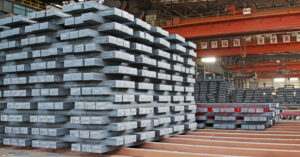
In January–April of this year, Ukraine’s exports of carbon steel semi-finished products fell by 0.4% in volume terms compared to the same period last year, to 438,370 metric tons.
According to statistics released by the State Customs Service (SCS), 116,550 thousand tons of semi-finished products were exported in April, 138,203 thousand tons in March, 61,629 thousand tons in February, and 121,988 thousand tons in January.
In monetary terms, exports of carbon steel semi-finished products during this period decreased by 1.3% to $212.512 million.
The main export destinations were Bulgaria (44.73% of shipments in monetary terms), Turkey (15.42%), and Poland (13.55%).
In the first four months of 2026, Ukraine imported 40,501 thousand tons of semi-finished products worth $26.704 million from Oman (81.57%), the Czech Republic (13.17%), and Germany (4.98%), (there were no imports in March), whereas in January–April 2025, it imported 3,303 thousand tons worth $2.687 million.
As reported, in 2025 Ukraine reduced exports of steel semi-finished products by 26.4% in volume terms compared to the previous year—to 1,388,183 thousand tons, while revenue fell by 28.9%—to $659.625 million. The main exports went primarily to Bulgaria (32.73% of shipments in monetary terms), Poland (22.13%), and Turkey (14.88%).
Last year, Ukraine imported 88,923 thousand tons of semi-finished products worth $65.989 million, mainly from Oman (37.42%), Germany (22.21%), and the Czech Republic (16.71%), whereas in 2024, it imported 306 tons of semi-finished steel products worth $278,000.
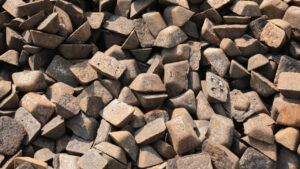
In January–April of this year, Ukraine increased its exports of processed pig iron by 11.2% in volume terms compared to the same period last year—to 638,303 thousand tons from 574,057 thousand tons.
According to statistics released by the State Customs Service (SCS), 181,670 thousand tons of pig iron were exported in April, 168,493 thousand tons in March, in February – 194,345 thousand tons, and in January – 93,795 thousand tons.
In January–April, pig iron exports in monetary terms increased by 7.6% – to $243.568 million from $226.282 million.
Exports were primarily directed to the United States (91.92% of shipments in monetary terms), Italy (3.73%), and Turkey (2.65%).
In the first four months of this year, the country did not import any pig iron, whereas in the first four months of last year, it imported 29 tons worth $55,000.
As reported, in 2025 Ukraine increased its pig iron exports by 53.5% in volume terms compared to the previous year—to 1,980,620 tons—and by 51.9% in revenue—to $759.882 million. Exports were mainly directed to the United States (68.25% of shipments in monetary terms), Italy (20.26%), and Turkey (3.63%).
Over the past year, the country imported 39,000 tons worth $78,000 from Germany (51.95%) and Brazil (48.05%), while in January–December 2024, 38 tons of pig iron worth $90,000 were imported.
Starting March 12, 2025, pursuant to a decision by President Donald Trump, a 25% tariff began to be levied on imports of Ukrainian steel products, excluding cast iron.
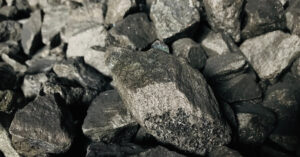
In January–April of this year, Ukraine reduced its ferroalloy exports by 89.9% in volume terms compared to the same period last year—down to 3,929 thousand tons from 38,963 thousand tons.
According to statistics released by the State Customs Service (SCS), 2,755 thousand tons of ferroalloys were exported in April, 337 tons in March, 72 tons in February, and 765 tons in January.
In monetary terms, ferroalloy exports for January–April fell by 88.5%—to $4.894 million from $42.657 million. The main export destinations were Poland (56.81% in monetary terms), Romania (13.01%), and Slovakia (12.81%).
In addition, during the first four months of the year, Ukraine imported 9,751 thousand tons of this product—a 32% decrease compared to January–April 2025. In monetary terms, imports fell by 37.2% to $17.469 million. Imports came mainly from Kazakhstan (20.81%), France (16.85%), and Norway (15.34%).
As reported, the Pokrovsky Mining and Processing Plant (PGZK, formerly the Ordzhonikidze Mining and Processing Plant) and the Marganetsky Mining and Processing Plant (MGZK, both in Dnipropetrovsk Oblast), which are part of the Privat Group, ceased the extraction and processing of raw manganese ore in late October–early November 2023, while the NZF and ZZF stopped smelting ferroalloys. In the summer of 2024, the ferroalloy plants resumed production at a minimal level.
Since January 19, 2026, due to problems with electricity supply and high electricity prices, NZF has been idle, while ZZF is operating at a minimal level.
In 2025, ferroalloy plants increased ferroalloy exports by 21.4% in volume terms compared to 2024—to 93,841 thousand tons, while revenue rose by 19%—to $105.441 million. At the same time, the main exports went to Poland (28.69% of shipments in monetary terms), Turkey (21.62%), and Algeria (21.48%).
In 2025, Ukraine imported 38,434 thousand tons of this product—a 53.3% decrease compared to 2024. In monetary terms, imports fell by 47.5% to $73.839 million. Imports came mainly from Norway (16.11%), Kazakhstan (15.89%), and France (12.56%).
Prior to the nationalization of the financial institution, PrivatBank organized the business of ZZF, NZF, Stakhanovskyi ZF (located at NKT), Pokrovskyi, and Marganetskyi GZK. The Nikopol Ferroalloy Plant is controlled by the EastOne Group, established in the fall of 2007 as a result of the restructuring of the Interpipe Group, as well as the Privat Group.
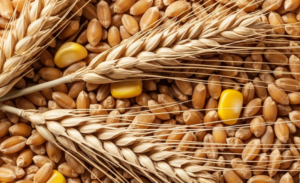
In its May report, the U.S. Department of Agriculture (USDA) issued its first forecast for wheat and corn exports from Ukraine in the 2026/2026 marketing year (MY) – 13 million tons and 23 million tons, respectively, which is 0.5 million tons and 1 million tons more than in the current MY.
According to USDA estimates, Ukraine’s wheat harvest in the next MY will decline to 23 million tons from 24.1 million tons last year, but ending stocks for the year will increase by only 0.9 million tons—to 4.53 million tons—while this year they are expected to rise by 2.9 million tons.
As for the corn harvest, USDA analysts forecast it at 30 million tons this year, compared to 30.9 million tons last year. The increase in exports is also expected to result from a decrease in ending stocks by 0.19 million tons, while this marketing year they are projected to increase by 1.91 million tons.
Taking other crops into account, the U.S. Department of Agriculture expects this year’s forage grain harvest to decrease to 36.08 million tons from 37.22 million tons last year, but an increase in its exports next marketing year to 25.19 million tons from 24.30 million tons this marketing year, also due to carryover stocks accumulated this year.
As reported, the Ministry of Economy forecasts a grain harvest of approximately 60.4 million tons in 2026, which is only 1%, or 0.64 million tons, less than last year. According to preliminary estimates by the Ministry of Economy, the harvest of major crops may amount to: wheat – about 22.4 million tons, barley – about 4.7 million tons, and corn – about 31.6 million tons.
According to the State Statistics Service, the wheat harvest in 2025 increased by 3.6% to 23.34 million tons, corn by 14.6% to 30.9 million tons, while the barley harvest decreased by 2.4% to 5.2 million tons.
The U.S. Department of Agriculture expects this year’s wheat harvest to decrease to 819.06 million tons and its exports to 211.70 million tons, down from 843.84 million tons and 222.68 million tons, respectively, last year.
The USDA’s first forecast for global corn production this year is 1,295.38 million tons, with exports for the 2026/27 marketing year at 206.91 million tons, while last year’s harvest was 1,312.68 million tons, and exports for the 2025-26 marketing year are expected to reach 213.59 million tons.

Ukrainian exports of high-oleic sunflower oil in the 2025/26 season are expected to drop to 207,000 tons, which is 8% lower than the figures for the previous marketing year, according to the information and analytical agency “APK-Inform.”
“The high-oleic sunflower sector has not yet been able to return to pre-war production levels. Even a partial recovery in planted areas is offset by weather anomalies and extremely unstable premiums for farmers. Under such conditions, producers often opt for less risky crops, which automatically limits the export potential of the oil,” analysts explained.
According to their information, the geography of product shipments has undergone a significant transformation this season: the share of the traditional EU market in September–March fell from 72% to 60% (84,300 tons). At the same time, Ukrainian companies are actively expanding their presence in Asia and North America. In particular, exports to Malaysia rose by 82%, to Saudi Arabia by 47%, and Singapore increased its purchases more than 30-fold.
APK-Inform forecasts that reducing dependence on the European market and expanding sales to 50 countries worldwide will be the main driver for Ukraine’s vegetable oil segment in the coming years.



