

The IDS Ukraine Group of Companies has restructured its logistics, reorganized distributor territories, and increased the number of transportation partners by 30% by incorporating small carriers and sole proprietors, said Marco Tkachuk, CEO of IDS Ukraine.
“Shelling poses additional challenges, as it destroys our partners’ logistics centers and warehouses. We have to constantly change routes and deliver water directly to stores more often. We’ve increased the number of partners by 30% by bringing in small carriers and sole proprietors who own several vehicles,” he said in an interview with the “Interfax-Ukraine” news agency.
When asked about the main challenges facing the company, aside from logistics and rising fuel prices, Tkachuk cited migration and, as a result, a decline in consumption. Declining household incomes and migration trends have forced the company to seek new business channels, which is why it was decided to launch the B2B platform e-Morshynska, which accounts for 10% of sales in traditional retail through direct ordering without the involvement of sales agents.
In addition, staffing remains a challenge. According to Tkachuk, because the reservation system covers only half of the employees, there is an acute shortage of drivers.
To improve planning amid uncertainty, IDS Ukraine is in the final stages of implementing an ERP system for inventory management, he added.
IDS Ukraine is a Ukrainian group of companies founded in 1996. It owns the “Morshynska,” “Myrhorodska,” “Alaska,” and “Aqua Life” brands. The group includes the Morshyn “Oscar” Mineral Water Plant, the Mirgorod Mineral Water Plant, the distribution company “IDS,” and the water delivery operator “IDS Aqua Service.”
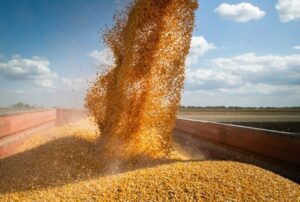
Rail shipments of grain to Danube ports in August 2026 nearly tripled compared to July—reaching 248.8 thousand metric tons, while shipments to the ports of Greater Odesa fell by 94.9%—to 68.5 thousand metric tons, according to a weekly review by the brokerage firm Spike Brokers.
Overall, rail grain shipments to seaports, including domestic shipments to Izmail, totaled approximately 317,300 metric tons in August, compared to 1.440 million metric tons in July. According to the brokerage firm, there was a sharp shift in cargo flows from the Greater Odessa region to the Danube.
In August, 1.297 million metric tons of grain were transported by rail—34.7% less than in July and 53.9% less than in August 2025. The average daily load amounted to 39.2 thousand metric tons, which is 22.5% lower than in July and 55% lower than in August 2025.
Exports of grain and milled products totaled 672.2 thousand metric tons, down 58.5% month-over-month and approximately 74% year-over-year. A total of 113,000 metric tons of vegetable oil were transported—15.4% more than in July and 54.7% more than in August 2025. Transportation of oilcake and meal totaled 167.1 thousand metric tons, down 9.3% month-over-month and 7.4% year-over-year.
In August, 501.8 thousand metric tons were transported via land crossings, compared to 208.8 thousand metric tons in July—a 2.4-fold increase.
The average daily throughput of grain cars through the main western border crossings in August was 192.8 cars, compared to 71.3 cars in July. The highest average daily figure was on the Polish route—56.6 cars. Through Hungary, 49.4 cars were transported per day; through Romania, 45.5; and through Slovakia, 41.4 cars.
Unlike in July, the August flow was distributed much more evenly among the four corridors.
As of September 3, there were 8,221 railcars en route to border crossings, of which 1,346 were loaded with grain, compared to 9,273 and 1,414 railcars, respectively, at the end of August. During the first days of the month, the total backlog decreased by approximately 11%, while the grain backlog decreased by 5%.
In August, 325,000 metric tons of agricultural products were exported via road border crossings, compared to 289,200 metric tons in July—an increase of 12.4%. Compared to August 2025, the volume was 23.7% higher.
Nearly half of August’s road freight traffic was destined for Poland—150,100 metric tons, or 46.2%. Among the largest categories in August were poultry meat—30,200 metric tons, sunflower oil—24,800 metric tons, ethyl alcohol—23,100 metric tons, sugar—18,600 metric tons, fruits and nuts—16.9 thousand metric tons, and soybean meal—15 thousand metric tons.
During the first three days of September, 33 thousand metric tons were exported by road, or about 11 thousand metric tons per day, compared to an average of 10.5 thousand metric tons per day in August.
In August, Ukraine exported 2.146 million metric tons of agricultural products in UKT ZED groups 01–24, worth $1.280 billion. The grain segment accounted for 987,100 metric tons, or 46% of the total volume, in the final August statistics: 612,700 metric tons of wheat, 305,700 metric tons of corn, and 68,700 metric tons of barley were shipped. Rapeseed accounted for another 292,600 metric tons, or 13.6% of exports. The three main vegetable oils totaled 279,100 metric tons, while sunflower and soybean meal totaled 187,200 metric tons.
The largest physical volumes went to Germany—227.1 thousand metric tons, Turkey—203.8 thousand metric tons, Italy—188.1 thousand metric tons, Poland—179.3 thousand metric tons, and the Netherlands—171.7 thousand metric tons. Together, these five countries accounted for about 45% of August’s exports.
From September 1–3, Ukraine exported 331.4 thousand metric tons of agricultural products worth $167.7 million, or about 110.5 thousand metric tons per day.

Fozzy Group is restructuring its logistics operations and opening new stores; there are currently 1,614 job openings, according to Lyubov Ukraintseva, HR Director at Silpo
“We currently have more than 1,600 job openings throughout Ukraine. We are actively looking for people to join the Silpo and Fozzy Group Logistics teams. The past few weeks have brought us many new challenges. In the wake of the Russian attacks, we are rapidly restructuring our logistics to ensure goods reach supermarket shelves on time. At the same time, we continue to open new Silpo stores. In the last week alone, we opened three supermarkets and hired 170 “Outstanding Performers” for them. So there’s a lot of work to be done. And we need a lot of people,” she wrote on LinkedIn.
The HR director specified that there are currently 1,614 open positions: 940 in logistics, 535 in supermarkets, and 139 in production. The company is primarily looking for loaders, receiving clerks, sales associates, cooks, bakers, order pickers, and mid-level managers.
“I’d like to clarify one thing in particular. Recently, there have been reports in the media that Fozzy Group has suspended hiring office staff. It’s important to note that we are continuing to hire people for our supermarkets, logistics, and production facilities,” she noted

Nova Post, part of the Nova Group, has entered the Canadian market, bringing the total number of countries where it operates to 18, according to a company statement released on Wednesday.
“Canada, like all of North America, is one of the key directions for Nova Post’s international expansion,” Oleksiy Taranenko, CBDO of the NOVA Group, is quoted as saying in the release.
According to him, the company has already processed over 3,000 shipments, most of which consisted of goods from Ukrainian manufacturers.
The next steps are expected to include further network expansion, the introduction of a franchise program, the launch of new products, and faster delivery times.
Nova Post clarified that customers can arrange international shipments from Canada online via the company’s website or mobile app, as well as drop off a package at one of 1,100 partner UPS stores or hand it over to a courier.
It is noted that delivery time between Canada and Ukraine starts at 5 days. Shipping costs from Canada to Ukraine are CAD 37 for documents and packages up to 1 kg; CAD 47 for packages up to 2 kg; CAD 99 for packages up to 10 kg; and CAD 215 for packages up to 30 kg.
Nova Post reminded customers that it is possible to ship goods from Ukraine to Canada without paying import duties. This service is made possible by the Canada-Ukraine Free Trade Agreement (CUFTA).
Specifically, for most shipments, only the harmonized sales tax (HST) is payable, which the sender can pay when arranging delivery; however, no tax applies to packages valued at up to 20 CAD (625 UAH).
As reported in early August, Nova Post has opened 266 new service locations since the beginning of 2026, thereby expanding its presence to 16 countries and 235 cities.
The largest number of new service points were opened in Moldova—155—followed by Poland—63—Spain—18—the Czech Republic—14—Germany—11—Slovakia—2—and one service point each in Austria, Italy, and Romania.
Vyacheslav Klimov, co-owner of Nova Poshta, noted during the “Dialogues with NV” event dedicated to European integration that Nova Post Europe, part of the NOVA Group, plans to double its network of branches in Europe by 2026 and keep its strategic focus on ensuring the fastest possible delivery times.

From August 1 to 27, Ukraine exported 47.5% less agricultural produce than during the corresponding 27 days in July—1.726 million metric tons versus 3.287 million metric tons, according to a weekly market review by the brokerage firm Spike Brokers.
According to its data, the decline was less significant in monetary terms—25.6%: exports of goods in groups 01–24 of the Ukrainian Classification of Goods for Foreign Economic Activity (UKT ZED) for the first 27 days of August totaled $1.060 billion, compared to $1.424 billion in July. At the same time, the average price per metric ton of the export basket rose from about $433 to $614, primarily due to a shift in the commodity structure of exports.
The main decline in physical volumes was in grains. Total exports of wheat, corn, and barley fell by 69.5% to 740,000 metric tons. Specifically, 486,600 metric tons of wheat were shipped (-49.8% compared to July), 190,700 metric tons of corn (-84.3%), and 62,600 metric tons of barley (-74.5%). The share of these three crops in total agricultural exports fell from 73.9% to 42.9%, respectively.
At the same time, rapeseed exports surged in August as seasonal shipments began. From August 1–27, rapeseed exports reached 255,200 metric tons, compared to 11,800 metric tons during the same period in July. Rapeseed’s share of total exports rose from 0.4% to 14.8%. Rapeseed oil exports increased more than 4.5-fold, reaching 69,400 metric tons.
The processed products segment contracted significantly less than the grain segment. Exports of the three main vegetable oils—sunflower, rapeseed, and soybean—totaled 234,000 metric tons, down 16.7% from the corresponding period in July.
Exports of sunflower and soybean meal fell to 153,800 metric tons (-6.4%), and sunflower oil exports dropped to 131,300 metric tons (-42.5%); however, shipments of sunflower meal rose to 83,100 metric tons (+28%).
The geography of exports also changed. The largest destinations by physical volume in August were Germany—195.7 thousand metric tons, Italy—159.7 thousand metric tons, Poland—151.9 thousand metric tons, the Netherlands—147.2 thousand metric tons, and Spain—125.3 thousand metric tons. Exports to Turkey fell by 79%—to 114,000 metric tons, down from 544,800 metric tons in July. In contrast, Germany increased its imports from Ukraine by approximately fourfold, largely due to rapeseed.
According to Spike Brokers, 279,3 thousand metric tons of agricultural products were exported by road through border crossings from August 1–27, which is 11.3% more than during the same period in July.
At the same time, rail shipments of grain as of August 26 fell by 42.4% compared to July—to 951,000 metric tons—and by 57% compared to August 2025. The average daily shipment volume was 37,600 metric tons.
Meanwhile, the average daily transit of grain railcars through western border crossings over the first 25 days of August rose to 173.7 railcars, compared to 71.3 railcars in July—a 2.4-fold increase. As of August 26, 9,822 railcars had accumulated en route to the border crossings, of which 1,508 were carrying grain.
At the same time, rail transportation of grain to port stations—including domestic transport to Izmail—decreased by 81.8% during the current period in August, to 230,600 metric tons, compared to 1.265 million metric tons in July.
Only 55,700 metric tons of grain were transported to the ports of Greater Odesa, which is 95.5% less than the July figure. Specifically, shipments to Chornomorsk-Port-Export totaled 31,600 metric tons (-93.5%), to Odesa-Port—17,200 metric tons (-92.2%), and to Chornomorska for TIS—6,600 metric tons (-97.8%).
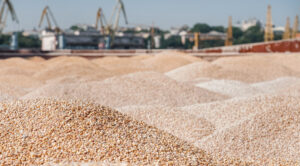
From August 1 to 26, Ukraine exported 1.423 million metric tons of grains, oilseeds, and their processed products via alternative routes, which accounts for one-third of the volume required for this period, Minister of Agrarian Policy and Food Taras Vysotsky said at a briefing on Friday.
“From August 1 to 26, 1,423 thousand metric tons of grains, oilseeds, and products derived from them were exported. This accounts for 33% of the demand for this period. Grains accounted for the smallest share—822 thousand metric tons. For grains, we exported only 21% of the potential demand. The rest consists of oil, oilseeds, and meal. In principle, export volumes in these categories meet current demand,” he said.
Vysotsky noted that exports by rail and via the Danube each amounted to approximately 600,000 metric tons, while road transport remains the smallest in volume—about 80,000 metric tons. Of this volume, about 40,000 metric tons are oilseeds, which is due to the high cost of road transport.
According to him, if the current pace is maintained, Ukraine could export about 1.5 million metric tons of agricultural products via alternative routes by the end of August.
By the end of September, up to 2 million metric tons could be exported via alternative routes, as previously forecast by the Ministry of Agrarian Policy.



