
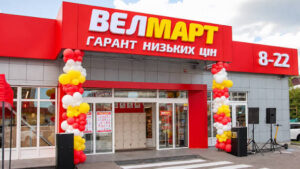
The “Velmart” discount hypermarket chain has restructured its supply chains and increased the share of direct shipments from manufacturers to stores to 53%, its press service reported.
“As of September, deliveries to the chain cover more than 11,000 SKUs, supplied by over 570 partner suppliers. In September, the share of direct deliveries from manufacturers in the total value of goods received rose to about 53%, while in August this figure stood at 12%,” the chain’s press release states.
According to the report, local producers supply goods to their own regions without shipping them to a distribution center. This approach reduces the burden on interregional transportation routes and allows for faster delivery of goods to stores.
In addition, “Velmart” prioritizes the supply of everyday consumer goods: dairy products, deli items, meat, baked goods, groceries, vegetables, fruits, sugar, salt, and flour. If Ukrainian-produced goods are out of stock, the chain seeks alternatives manufactured in Poland or Romania.
The “Velmart” chain is part of the multi-brand holding company Retail Group. It has 34 stores in 18 cities across Ukraine. It develops 10 private-label brands and operates seven full-cycle production facilities: meat and fish products (chilled and smoked), prepared foods, baked goods, and confectionery.
The company is also expanding the Graan Café chain of modern food courts within “Velmart” supermarkets and its “Pukhnastye Sprawy” line of pet products.
According to data from the YouControl analytics system, based on 2025 results, Foodcom LLC, which operates the “Velmart” chain, increased its net revenue by 18.7% to 23.6 billion UAH and its net profit by a factor of 3.2 to 378.6 million UAH.
Retail Group JSC is listed as the owner of Foodcom LLC, with Roman Lunin as the ultimate beneficiary.

In Ukraine, 222,300 new sole proprietorships were registered from January through September 2026, while 155,600 sole proprietorships ceased operations. Thus, the number of new registrations exceeded the number of closures by 66,600, according to data from the Unified State Register analyzed by Opendatabot.
The number of new sole proprietors remained virtually unchanged compared to the same period in 2025, while the number of closures dropped by 27% at once.
In total, since the beginning of the year, 222,288 new sole proprietors have been registered in Ukraine, while 155,645 have ceased operations. The net increase amounted to 66,643 entrepreneurs.
However, the trend throughout the year was uneven. More new sole proprietorships were registered in January, March, April, and May than in the corresponding months of the previous year. In February, June, July, August, and September, the number of registrations was lower than last year’s.
Despite this, September set a record for 2026 in terms of the number of new businesses—approximately 27,400 new sole proprietorships were registered.
Opendatabot notes that any comparison with the beginning of 2025 must take a technical factor into account. The sharp increase in the number of business closures in January of last year was due to the suspension of state registries in December 2024, when entrepreneurs were effectively unable to register the opening or closure of a business.
The largest number of new sole proprietorships over the nine-month period was registered in Kyiv—27,300. Dnipropetrovsk Oblast ranked second with 22,300, followed by Lviv Oblast with 17,200, Odesa Oblast with 16,700, and Kyiv Oblast with 16,500.
Retail trade remains the leading business sector. It was chosen by 60,300 new entrepreneurs, accounting for more than a quarter of all sole proprietorships registered since the beginning of the year.
Computer programming attracted 16,700 new entrepreneurs, while wholesale trade drew 16,600. Another 10,700 registrations each were recorded in education and food and beverage services.
At the same time, retail trade also leads in the number of business closures—over the course of nine months, 49,400 sole proprietorships in this sector shut down. In computer programming, 17,100 entrepreneurs ceased operations; in wholesale trade, 11,700; and in the food service sector, 7,900.
In 22 regions of Ukraine, the number of sole proprietorships opened exceeded the number that closed. A negative balance was recorded in only three frontline regions—the Donetsk, Kherson, and Luhansk regions.
Source: Opendatabot’s “FOPonomics” study for the first nine months of 2026.

Retail remains the most popular sector for starting a small business in Ukraine—in the first nine months of 2026, 60,300 new sole proprietorships were registered in this sector, according to Opendatabot data based on the Unified State Register and an analysis by the Experts Club think tank.
Retail accounts for more than a quarter of all new sole proprietorships registered in Ukraine since the beginning of the year. In total, 222,300 sole proprietorships were established from January through September.
Computer programming was the second most popular sector, with 16,700 new sole proprietorships. Wholesale trade showed virtually the same result—16,600
Approximately 10,700 new entrepreneurs were registered in the education sector. The same number of sole proprietorships began operations in the food and beverage sector, which includes, in particular, various formats of food service.
However, the most popular business sectors also lead in the number of closures.
In retail trade, 49,400 sole proprietorships ceased operations over the nine-month period. Thus, despite the large number of closures, the net increase in the number of entrepreneurs in the sector amounted to approximately 10,900.
The situation was different in computer programming. With 16,700 new registrations, 17,100 sole proprietorships ceased operations. Thus, based on the absolute figures published by Opendatabot, the number of closures in the IT segment exceeded the number of new openings by approximately 400.
In wholesale trade, the situation remains positive: with 16,600 new sole proprietorships, 11,700 closed, resulting in a net increase of approximately 4,900 entrepreneurs.
In the food service sector, approximately 10,700 new sole proprietorships were registered, with 7,900 closures—a positive difference of about 2,800.
In total, over the first nine months of 2026, 222,288 sole proprietorships opened in Ukraine, while 155,645 closed. The number of new entrepreneurs exceeded the number of those who ceased operations by 66,643.
Source: Opendatabot — “This year, 66,000 more sole proprietorships were opened than closed”.
entrepreneur, EXPERTS CLUB, IT, Sole proprietorship, TRADE, UKRAINE
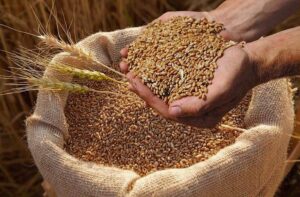
Global grain trade in the 2026/27 agricultural year (July–June) will total 505.8 million metric tons, down 3.5% from last year, according to a forecast by the FAO (Food and Agriculture Organization of the United Nations).
According to the organization’s monthly grain report, the new estimate is 3.5 million metric tons lower than the previous forecast made in September. “This reflects a downward revision of wheat and corn export forecasts, driven primarily by shipping difficulties through the Black Sea and insufficient capacity on alternative transport routes,” the report states. “The upward revision to the barley trade forecast only partially offsets the lost corn and wheat trade volumes.”
Forecasts for corn exports from the EU were lowered due to reduced supply from Ukraine resulting from logistical difficulties. At the same time, an increase in export supply from Australia has allowed for an upward revision of the forecast for barley trade, a significant portion of which will be shipped to China.
The improved forecast for wheat exports from Kazakhstan has not fully offset the decline in shipments from Russia and Ukraine.
According to the forecast, international rice trade will decline by 2.2% in calendar year 2026; however, it may increase by 1.7% in 2027, reaching 61.2 million metric tons. “In 2027, a recovery in import demand is projected in most regions; however, the availability of sufficient domestic stocks in East Asian countries suggests that the downward trend in their purchasing volumes may continue for the third consecutive year,” the document states.
According to the FAO forecast, the wheat harvest in 2026 will total 813.9 million metric tons, which is 3.3% less than last year, while the total grain output will be 2 billion 979 million metric tons (2.1% less).

Ukraine and Uzbekistan are introducing a “transport visa-free regime,” which provides for the abolition of permits and related quotas for direct and transit international freight truck transportation between the two countries.
A corresponding protocol between the governments of Ukraine and the Republic of Uzbekistan amending the bilateral Agreement on International Road Transport was signed on September 30, 2026, according to the Ukrainian Embassy in Uzbekistan.
According to the diplomatic mission, the preparation of the document took nearly a year.
The main change will be the simplification of direct and transit freight transport by eliminating the need to obtain permits, as well as quantitative quotas for such transport. This regime, by analogy with other agreements in the field of international road transport, is referred to as “transport visa-free travel.”
For Ukrainian and Uzbek carriers, this will mean the removal of one of the administrative barriers to organizing freight transport between the two countries and transit through their territories.
The embassy expects that the liberalization of road transport will contribute to the restoration of Ukraine’s trade and economic ties with Uzbekistan, which were partially disrupted due to logistical problems following the start of full-scale Russian aggression.
The agreement takes on particular significance amid the restructuring of Ukraine’s foreign trade and the search for alternative transport corridors to Central Asia.
“The removal of bureaucratic barriers should soon facilitate the restoration of full-fledged trade and economic ties between Ukraine and the Republic of Uzbekistan,” the embassy noted.
The diplomatic mission also described the new agreement as one of the steps toward Ukraine’s return to Central Asian markets via new logistics routes.
The protocol, signed on September 30, amends the existing intergovernmental Agreement between Ukraine and Uzbekistan on international road transport. Specifically, it concerns the liberalization of direct and transit freight transport by road. The embassy’s statement does not provide for the abolition of other customs, border, or transportation procedures required for the international transport of goods.
Original source – Embassy of Ukraine in the Republic of Uzbekistan.
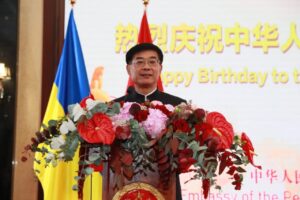
China is ready to remain a reliable partner of Ukraine and to expand mutually beneficial cooperation between the two countries, said Ma Shenkun, Ambassador of the People’s Republic of China to Ukraine.
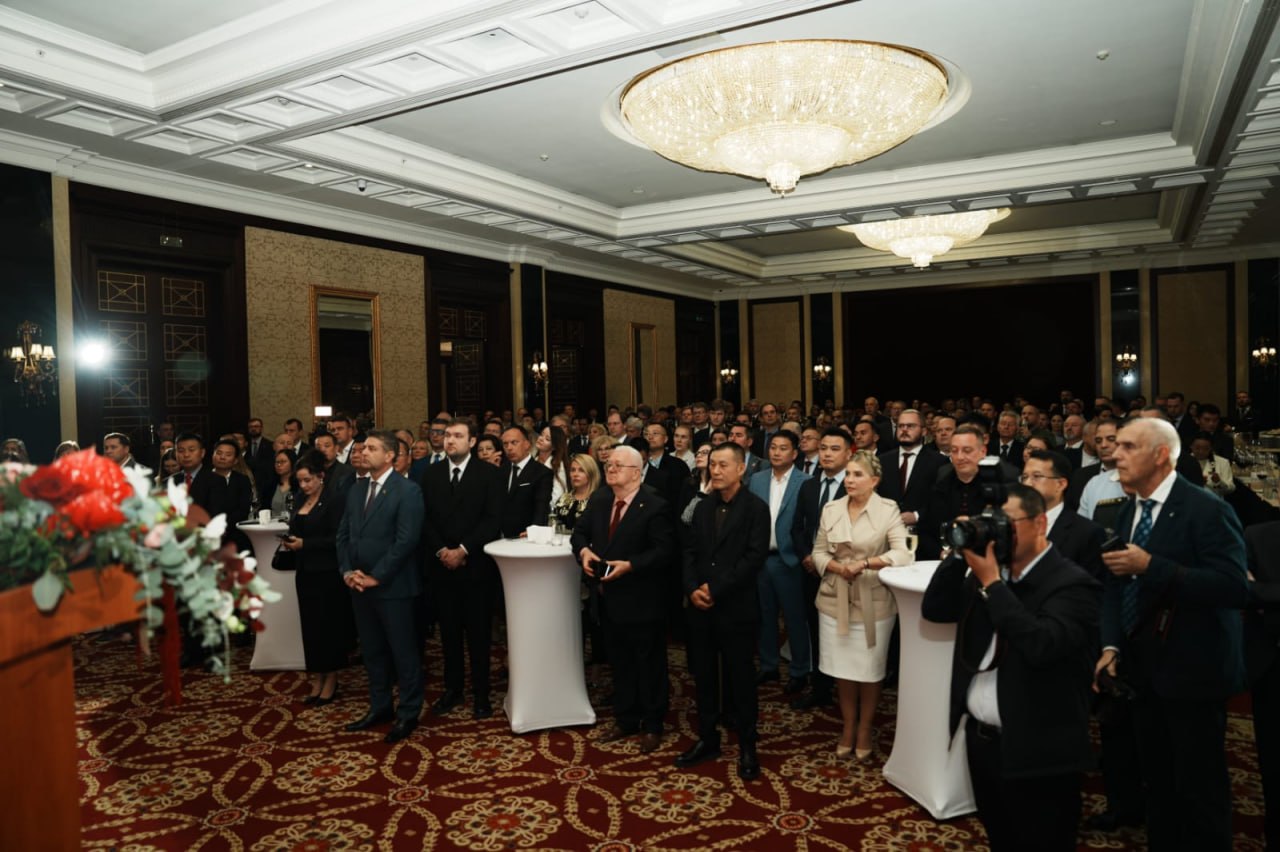
“The economies of China and Ukraine are highly complementary, so cooperation between the two countries has broad prospects. China is ready to be a reliable partner of Ukraine. We are committed to further expanding mutually beneficial cooperation, bringing greater benefits to the peoples of both countries, and jointly opening up new prospects for the development of China-Ukraine relations,” the ambassador said during a reception in Kyiv marking the 77th anniversary of the founding of the People’s Republic of China.
The event was attended by Ukraine’s Deputy Minister of Foreign Affairs Yevhen Perebyinis, as well as representatives of the diplomatic corps, Ukrainian government and civil society organizations, the business community, and the Chinese community.
Ma Shengkun noted that 2026 will mark the 15th anniversary of the establishment of the China-Ukraine strategic partnership, and in 2027, the two countries will celebrate the 35th anniversary of the establishment of diplomatic relations.
According to him, China has remained Ukraine’s largest trading partner for many years and is one of the main sources of Ukrainian imports.
The ambassador highlighted the development of bilateral trade in agricultural products. Specifically, in 2025, Ukraine and China signed protocols opening opportunities for the export of Ukrainian peas and wild-caught aquatic biological resources, and in 2026, they signed a protocol regarding the export of Ukrainian wheat flour to China.
“This creates a solid foundation for the further expansion of Ukrainian agricultural exports,” noted Ma Shenkun.
Speaking about the state of the Chinese economy, the diplomat reported that China’s GDP in the first half of 2026 reached 69.6 trillion yuan, an increase of 4.7% compared to the same period last year.
According to him, China intends to continue developing high-tech manufacturing, new energy, artificial intelligence, robotics, and innovative pharmaceuticals, while simultaneously opening its economy further to the outside world.
Ma Shengkun also addressed Beijing’s position on the war in Ukraine. He stated that China advocates for a political settlement and the continuation of diplomatic efforts.
“China will continue to stand firmly on the side of peace and support all efforts that promote peace. In turn, China will continue to play a constructive role in facilitating the swiftest possible ceasefire and cessation of hostilities and, ultimately, the achievement of a peace agreement,” the ambassador stated.
He noted that nearly two years of work in Ukraine have convinced him that the Ukrainian economy has significant potential for further development and cooperation with China.
A significant portion of the ambassador’s speech was devoted to the achievements of the PRC’s 77-year development. Ma Shengkun noted that China has become the world’s second-largest economy, a global leader in the volume of merchandise trade, and one of the main trading partners of more than 160 countries and regions.
The diplomat also stated Beijing’s intention to continue international cooperation within the framework of the “Belt and Road” initiative, which, he said, has been joined by over 150 countries and more than 30 international organizations, with the number of infrastructure and industrial projects currently underway exceeding 4,000.
According to a study by the Experts Club think tank, China ranked first among Ukraine’s largest trading partners in the first half of 2026. Trade between the countries totaled approximately $14.68 billion, including imports of Chinese goods to Ukraine of about $13.9 billion and Ukrainian exports to China of about $778 million. China accounted for about 21.9% of Ukraine’s total trade with its 50 largest trading partners and 29.4% of imports from this group of countries. At the same time, Ukraine’s trade deficit with China amounted to approximately $13.12 billion. Experts Club study on Ukraine’s largest trading partners in the first half of 2026
According to data from the State Customs Service, this trend continued in January–August 2026: China remained the largest supplier of goods to Ukraine, with imports totaling over $19.6 billion.
The People’s Republic of China recognized Ukraine’s independence on December 27, 1991, and diplomatic relations between the two countries were established on January 4, 1992. The Embassy of the People’s Republic of China in Kyiv began operations in 1992. That same year, the Embassy of Ukraine in Beijing began operations. In 2011, Ukraine and China established a strategic partnership.



