
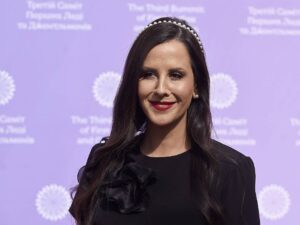
According to The Serbian Economist, Tamara Vučić, the wife of the President of Serbia, participated in the 6th Summit of First Ladies and Gentlemen, which took place on August 24 in Kyiv on Ukraine’s Independence Day. The theme of this year’s meeting was “Peace-2026: Finding Stability in Times of Uncertainty.”
The First Lady of Lithuania, Diana Nausėdenė; the wife of the President of Estonia, Sirje Karis; the wife of the President of Finland, Susanna Innes-Stubb; the First Lady of Romania, Mirabela Gredinaru; Tamara Vučić; and the First Gentleman of Slovenia, Ales Musar, all traveled to Kyiv in person. As is tradition, Olena Zelenska served as the host of the summit. Representatives from Germany, Turkey, Israel, the Czech Republic, Georgia, Belize, and Guatemala joined online. In total, the event brought together representatives from 14 countries.
An interesting part of the summit was the presentation of a unique “dictionary of resilience”—words and traditions from various nations that help society maintain unity in times of crisis.
Serbia presented “krsna slava”—a unique Serbian tradition of honoring the family’s patron saint.
Vucic called the slava “the living code of our identity” and explained that this tradition unites the family regardless of where its members are.
Speaking about the historical roots of Serbian resilience, she recalled the medieval rulers who, instead of palaces, left behind monasteries and charitable foundations. Vucic specifically mentioned the Serbian monasteries in Kosovo and Metohija, which are on UNESCO’s List of World Heritage Sites in Danger.
According to her, during difficult historical periods, Serbs effectively “brought the church under their own roof”: the home became a place for preserving faith, memory, and family unity, while glory became an intangible legacy passed down from generation to generation.
The First Ladies and Gentlemen Summit was launched at the initiative of Olena Zelenska in 2021 as an international platform for humanitarian and social projects. This year, the main focus was on what helps people, families, and nations maintain resilience during times of war and global uncertainty.
https://t.me/relocationrs/3532
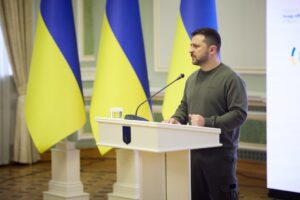
Ukrainian President Volodymyr Zelenskyy accepted letters of credence from the newly appointed ambassadors of Bulgaria, Estonia, India, and Germany and congratulated them on the start of their missions in Ukraine.
“He discussed diplomatic efforts to bring about peace and the importance of supporting Ukraine amid intensified Russian shelling and preparations for winter,” according to the president’s Telegram channel.
According to reports, they discussed shared priorities: the development of trade and economic relations and specific areas of cooperation—“everything that can make our nations stronger.”
“I am grateful to all partners who are truly helping Ukraine,” Zelenskyy emphasized.
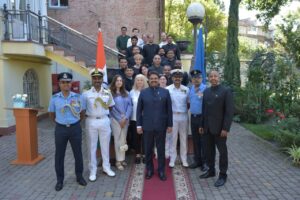
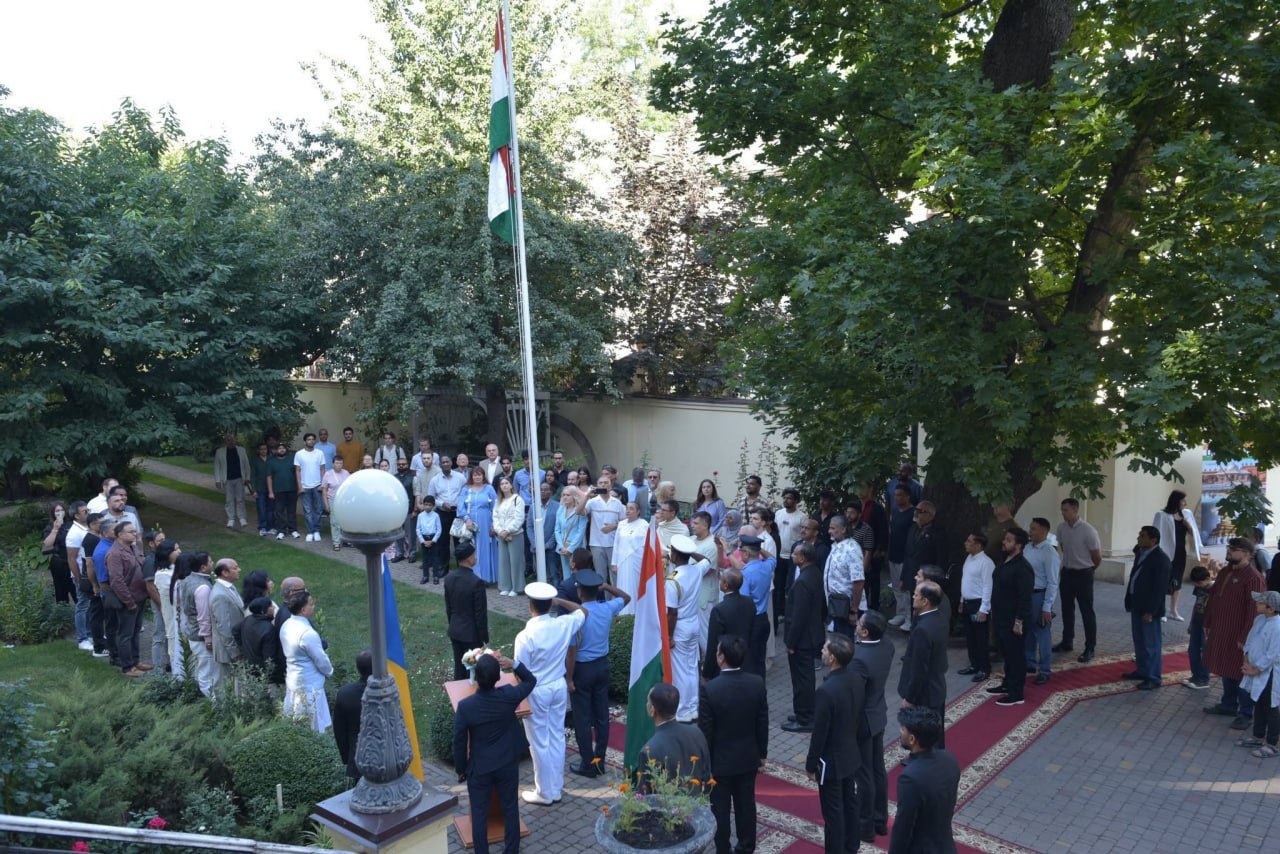
The Indian Embassy in Ukraine held a ceremonial event in Kyiv to mark India’s 80th Independence Day. The celebration took place at India House and was attended by representatives of the Indian community, Ukrainian government agencies, the business sector, the cultural sector, and civil society organizations.
At the ceremony, the recently appointed Indian Ambassador to Ukraine, Anjani Kumar, raised the national flag and read a message from Indian President Draupadi Murmu to those in attendance on the occasion of the holiday.
The event was attended by members of the Indian community living in Ukraine—including students and entrepreneurs—as well as representatives of Ukrainian government agencies, politicians, Indologists, writers, dancers, representatives of cultural and spiritual organizations, and Ukrainian friends of India. The embassy described the guest list as a broad representation of people connected to Indian-Ukrainian cultural and civic relations.
Anjani Kumar was appointed India’s new ambassador to Ukraine by a decision of the Indian Ministry of External Affairs on July 8, 2026. On August 10, Ukraine’s Deputy Minister of Foreign Affairs Oleksandr Mishchenko accepted copies of his credentials from him.
In an address on the eve of Independence Day, President Draupadi Murmu emphasized that India is moving toward its goal of becoming a developed nation by the centennial of its independence, and that development must provide opportunities for all segments of the population. She particularly highlighted the contributions of students, scholars, engineers, doctors, workers, farmers, entrepreneurs, and the Indian diaspora to the nation’s development.
“The true meaning of freedom lies in ensuring that all citizens can seize opportunities to realize their aspirations,” the President of India stated in her address to the nation.
Murmur also highlighted the role of Indians living abroad and diplomatic mission staff in strengthening the country’s international standing. Among the priorities for further development, she cited digitalization, economic growth, expanding opportunities for women and youth, developing modern infrastructure, and preserving cultural heritage.
India gained independence from Great Britain on August 15, 1947. Therefore, in 2026, the country will celebrate its 80th Independence Day, even though 79 years have passed since independence was achieved: the 1947 celebration is considered the first Independence Day. Indian authorities are referring to this year’s celebration specifically as the 80th Independence Day.
The holiday is one of India’s major national holidays. The central ceremony is traditionally held in Delhi, where the prime minister raises the national flag near the Red Fort and delivers an address to the nation.
India was among the first countries to recognize Ukraine’s independence following the collapse of the Soviet Union. Diplomatic relations between the two countries were officially established on January 17, 1992.
The Indian Embassy in Kyiv began operations in May 1992. Prior to that, India had a Consulate General in Odesa, which had been operating since 1962 and was closed in 1999.
The Embassy of Ukraine in New Delhi was opened in February 1993 and became one of the first diplomatic missions of independent Ukraine in Asia. It continues to represent Ukraine’s interests in India and to develop political, economic, cultural, and humanitarian ties between the two countries.
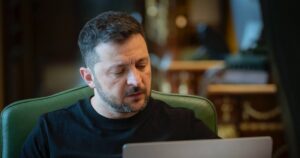
Ukrainian President Volodymyr Zelenskyy continues to overhaul the diplomatic corps, a process that is gradually extending to include not only countries in the European Union and the Western Balkans but also nations in Asia and the Middle East.
On August 6, the president dismissed four ambassadors at once: Vasyl Kyrylych in Croatia, Volodymyr Shkurov in Albania, Oleg Gerasymenko in Montenegro, and Markiyan Chuchuk in Pakistan.
The relevant personnel decisions were formalized by decrees No. 709/2026–No. 712/2026.
According to the Experts Club think tank, the simultaneous replacement of the heads of four diplomatic missions appears to be part of a broader restructuring of Ukraine’s foreign policy apparatus, rather than an isolated personnel move.
As early as May 18, Zelenskyy had spoken of the need for “replacements and adjustments” within the diplomatic corps, and on July 15, he explicitly stated that he was discussing with First Deputy Head of the Office of the President Serhiy Kyslytsya and Minister of Foreign Affairs Andriy Sybiga a list of Ukrainian ambassadors who needed to be replaced.
The rotation began even before a series of decisions were made in August. Specifically, on June 26, the president dismissed the Ukrainian ambassadors to Oman, Cyprus, Vietnam, and Cambodia. At the same time, new appointments were made to other diplomatic posts.
Thus, this represents a gradual renewal of Ukraine’s network of diplomatic missions over the course of several months.
Three of the four ambassadors had served for more than six years
The length of the diplomats’ tenures also suggests that the August decisions should be viewed primarily in the context of rotation.
Vasyl Kyrylych was appointed Ukraine’s ambassador to Croatia on December 24, 2019, and served in Zagreb for more than six and a half years.
Volodymyr Shkurov took the helm of the Ukrainian Embassy in Albania on April 13, 2020, and also served for over six years.
Markiyan Chuchuk was appointed Ukraine’s ambassador to Pakistan on April 17, 2020. His diplomatic mission lasted over six years.
Oleg Gerasymenko headed the Ukrainian Embassy in Montenegro starting May 4, 2022—a little over four years.
The very fact that three of the four diplomats held their posts for such a long time is further evidence supporting the theory of a planned personnel rotation. The published decrees do not specify the reasons for the dismissals.
It is particularly telling that three of the four August decisions concern Southeast Europe—Croatia, Albania, and Montenegro.
Experts Club notes that the importance of this region for Ukrainian diplomacy has grown significantly.
Croatia is a member of the EU and NATO and remains one of Ukraine’s steadfast partners. Croatia’s experience with postwar reconstruction, demining, the return of the population, and the integration of territories following the conflicts of the 1990s is also important for Kyiv.
Albania is also a NATO member and actively supports Ukraine in international forums. Tirana hosted one of the previous summits in the “Ukraine–Southeast Europe” format.
Montenegro presents another area of interest. It is a NATO member and, at the same time, the most promising candidate for EU accession among the countries of the Western Balkans. Therefore, relations with Podgorica are becoming important for Kyiv in the context of its own European integration.
On July 15, Kyiv hosted the fifth “Ukraine–Southeast Europe” summit, attended by representatives from Albania, Croatia, and Montenegro. The participants reaffirmed their support for Ukraine and the need to expand regional cooperation.
Against this backdrop, the nearly simultaneous replacement of three Ukrainian ambassadors to Balkan countries may indicate Kyiv’s desire to inject additional momentum into this direction.
Of the three Balkan appointments, Montenegro may prove to be the most interesting.
Podgorica expects to conclude negotiations on accession to the European Union and become one of the next new EU members. For Ukraine, which is also negotiating membership, Montenegro’s experience could be of practical value.
In addition, Ukraine is gradually building a separate network of relations with countries in the Adriatic region—Croatia, Montenegro, Albania, and neighboring Serbia.
The most recent example is Zelenskyy’s official visit to Belgrade on August 8 and his talks with Serbian President Aleksandar Vučić, during which they discussed free trade, energy, agriculture, Ukraine’s recovery, and political cooperation.
Thus, the Balkans are gradually transforming from a secondary focus of Ukrainian diplomacy into an independent regional track.
The replacement of the ambassador to Pakistan presents a completely different challenge.
Islamabad is important to Ukraine as one of the largest centers in South Asia and a representative of the so-called Global South. Pakistan’s population is approaching 250 million; the country wields significant regional political influence and is a nuclear power.
At the same time, Pakistan’s foreign policy is based on a complex system of relations with China, the United States, Turkey, Saudi Arabia, India, Russia, and the Gulf states.
For Ukraine, expanding ties with Pakistan could be significant in several areas at once—food trade, industry, international organizations, and building support for Kyiv among Asian nations and the Muslim world.
As Ukraine’s foreign policy increasingly shifts away from focusing exclusively on the EU and the U.S., embassies in countries such as Pakistan, India, the Gulf states, Indonesia, and African nations are gaining greater importance.
That is precisely why replacing the ambassador in Islamabad after a mission lasting more than six years appears to be a logical part of the renewal of Ukraine’s Asian policy.
The August dismissals are likely not the end of the process.
As early as July 15, Zelenskyy publicly spoke about forming a “pool of ambassadors” slated for replacement. This suggests that new personnel decrees may be issued in the coming weeks.
At the same time, the current diplomatic rotation coincides with more extensive personnel changes in Ukraine’s government system, which took place in July and affected the government, security agencies, and other state institutions.
According to Experts Club, what matters most will not be the number of diplomats dismissed, but who Kyiv appoints to replace them.
If key posts are filled not only by career diplomats but also by former ministers, representatives of the Office of the President, economic negotiators, or prominent public figures, this could signal Ukraine’s transition to a model of so-called “political diplomacy,” in which embassies are assigned more specific economic, investment, and negotiating tasks.
As of August 10, 2026, presidential decrees appointing new Ukrainian ambassadors to Croatia, Albania, Montenegro, and Pakistan have not been published.
Experts Club believes that future appointments will provide a clearer understanding of the logic behind the current rotation.
If diplomats with significant European and economic experience are sent to Zagreb, Tirana, and Podgorica, this will confirm a strengthening of the Balkan focus. The appointment to Islamabad of a specialist in Asian affairs, trade diplomacy, or relations with the Global South, in turn, could signal an expansion of Ukraine’s activities beyond its traditional circle of Western partners.
Overall, the current rotation signals a transition of Ukrainian diplomacy to a new phase: after four years of full-scale war, embassies are now expected not only to secure international support for Ukraine but also to work toward EU membership, the country’s recovery, exports, attracting investment, and forging long-term regional alliances.
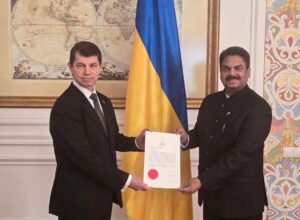
Oleksandr Mishchenko, Ukraine’s Deputy Minister of Foreign Affairs, accepted copies of the credentials from Anjani Kumar, the newly appointed Ambassador of the Republic of India to Ukraine. According to the press service of the Ukrainian Ministry of Foreign Affairs, the parties emphasized the importance of further developing bilateral cooperation and maintaining regular political dialogue at all levels.
The Deputy Minister emphasized Ukraine’s expectations that India play a more active role in promoting the restoration of a just and lasting peace in Ukraine and in holding the aggressor state accountable for the crimes it has committed.
“The parties discussed the agenda for upcoming high-level events, particularly in the context of implementing the agreements reached during Indian Prime Minister Narendra Modi’s visit to Ukraine on August 23, 2024,” the statement reads.
Special attention was paid to the development of interparliamentary cooperation and the further strengthening of collaboration in the humanitarian sphere. The parties also discussed ways to intensify bilateral economic cooperation and restore positive momentum in contacts between business representatives of the two countries.
“Following the meeting, the parties agreed to continue active cooperation and promote the further development of Ukrainian-Indian relations in areas of mutual interest. Oleksandr Mishchenko wished the Ambassador of the Republic of India success in his diplomatic mission in Ukraine and the achievement of significant results for the benefit of both countries and their peoples,” the Ministry of Foreign Affairs added.
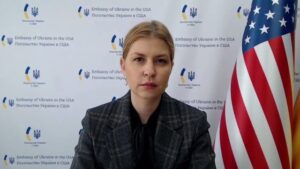
Ukrainian President Volodymyr Zelenskyy has signed a decree relieving Olga Stefanishyna of her duties as Ukraine’s Ambassador Extraordinary and Plenipotentiary to the United States.
The corresponding decree, No. 696/2026, has been published on the president’s website.
In a Facebook post, Stefanishyna announced that she had decided to step down as Ukraine’s ambassador to the United States due to personal circumstances.
“This is my own decision, dictated by personal circumstances that I have mentioned previously,” she noted.
According to Stefanyishyna, representing Ukraine in Washington during a full-scale war was the greatest honor of her life.
At the same time, the diplomat emphasized that the main tasks she came to Washington to accomplish have been fulfilled. In particular, she said, she succeeded in increasing U.S. arms supplies and maintaining support for Ukraine amid changes in the U.S. political landscape, enshrining that support in law, and shifting Ukraine’s role “from a country that receives aid to a country in which investments are made and whose technologies are purchased.”
Stefanyishyna also stated that she would comment separately and publicly on issues that have recently been raised in the media, and assured that she would continue to work for the benefit of Ukraine “wherever she can be of use.”
Olga Stefanyishyna was born on October 29, 1985, in Odesa. In 2008, she graduated from Taras Shevchenko National University of Kyiv with a degree in international law and as an English translator; in 2016, she received a specialist degree in finance and credit from Odesa National Economic University.
From 2006 to 2007, she worked in private legal practice. Since 2007, she has worked at the Ministry of Justice of Ukraine, where she held positions in departments responsible for European integration and international law. From 2017 to 2019, she headed the Office for European and Euro-Atlantic Integration at the Secretariat of the Cabinet of Ministers of Ukraine.
In June 2020, the Verkhovna Rada appointed Stefanyishyna as Deputy Prime Minister for European and Euro-Atlantic Integration of Ukraine and included her in the National Security and Defense Council.
In 2021, Stefanyishyna was appointed to the Political Council of the “Servant of the People” party.
In 2024, the Verkhovna Rada appointed Stefanyishyna as Minister of Justice of Ukraine following the dismissal of Denys Malyuska. She retained her position as Deputy Prime Minister for European and Euro-Atlantic Integration.
In July 2025, Stefanyishyna lost her positions as Minister of Justice and Deputy Prime Minister following the resignation of Denys Shmyhal’s government. Subsequently, President Volodymyr Zelenskyy appointed her as the President of Ukraine’s Representative for the Development of Cooperation with the United States, and in August 2025, as Ambassador Extraordinary and
Ambassador Extraordinary and Plenipotentiary of Ukraine to the United States.
On July 23, 2026, Zelenskyy announced that he had offered Yulia Svyrydenko the position of U.S. Ambassador to Ukraine.
AMBASSADOR, DIPLOMACY, Stefanyishyna, UKRAINE, UNITED STATES



